One Number Decides Who Gets the New Alopecia Drugs. Learn to Read It.
Every JAK inhibitor approved for alopecia areata was licensed on the same endpoint — a SALT score of 20 or less — and the arithmetic behind it is simple enough to follow before somebody else does it for you.
Read the preview
Can one number decide whether an alopecia drug works? It can: the SALT score. It weights the scalp by area — the crown counts for forty percent — and the finish line is twenty or less. In one drug's trials, over a third on the higher dose got there. But eyebrows and lashes aren't counted at all. The Dermington Gazette does the arithmetic.
A disease with no approved treatment, then several, all in one currency
For most of its history, alopecia areata was managed with borrowed drugs and improvisation: intralesional steroids into patches, contact immunotherapy at specialist centres, off-label immunosuppressants, and a great deal of waiting. There was no approved systemic therapy, and the wait was made harder by the fact that hair sometimes returned on its own and sometimes did not.
That changed quickly. Janus kinase inhibitors — drugs that interrupt the cytokine signalling driving the immune attack on the follicle — moved from case reports to phase 3 trials to approvals in a compressed period, and every one of those trials measured the same thing in the same way. Not "improvement," not photographs graded by impression: a Severity of Alopecia Tool score of 20 or less.
Which makes SALT more than a research instrument. It is the number that determines whether someone is severe enough to be a candidate, and later whether the drug is working well enough to continue. If a number is going to be used as a gate in your care, the sensible thing is to understand how it is built.
How the number is assembled
SALT, set out in the National Alopecia Areata Foundation assessment guidelines published in 2004, solves an obvious problem: not all parts of the scalp are the same size, so a patch on the crown is not equivalent to a patch behind the ear.
The scalp is divided into four regions, each weighted by its share of the total surface: the vertex counts for 40%, the posterior for 24%, and the right and left sides for 18% each. You estimate the percentage of hair loss within each region, multiply that percentage by the region's weight, and add the four products together. A completely intact scalp scores 0; complete loss scores 100.
Work through it once and the weighting becomes intuitive. Total loss over the vertex alone puts you at 40 before anything else is counted, while losing every hair on one side contributes 18 — which is why two people with visually similar patchiness can land far apart, and why estimating your own severity by eye tends to be unreliable in both directions. The SALT Calculator does the arithmetic if you give it four quadrant estimates, and doing it yourself before an appointment is a good way to arrive with a question rather than a vague worry.
The derived measures follow the same logic. SALT50, SALT75 and SALT90 describe percentage improvements from your own baseline, so someone starting at 90 who reaches 30 has achieved SALT75 without coming anywhere near the absolute threshold used for licensing.
Scalp hair only, in severe disease. Everyone enrolled started at SALT 50 or higher. The score leaves out eyebrows, lashes and nails, and relapse after stopping is common.
Why 20, and what the trials actually showed
A SALT score of 20 means roughly four-fifths of scalp hair is present. It was chosen as a threshold that corresponds to a visually acceptable result rather than to complete regrowth, and it has become the common endpoint that lets otherwise dissimilar trials be compared.
The baricitinib programme set the pattern. Two randomized, placebo-controlled phase 3 trials enrolled adults with severe disease — a SALT score of 50 or higher at entry — with 654 patients in one and 546 in the other. At week 36, the estimated proportion reaching SALT ≤20 was 38.8% on the higher dose, 22.8% on the lower dose and 6.2% on placebo in the first trial; 35.9%, 19.4% and 3.3% respectively in the second. Acne, raised creatine kinase and increased cholesterol were more common on the drug.
Other agents were measured the same way. A phase 3 trial of the oral JAK1/JAK2 inhibitor deuruxolitinib enrolled adults with at least 50% hair loss and used the proportion achieving SALT ≤20 at 24 weeks as its primary endpoint; long-term data for ritlecitinib now runs to three years on the same scale.
Read those figures honestly. Roughly a third of patients with severe disease reaching the threshold at nine months is a transformation of a field that previously had nothing — and it also means the majority did not reach it in that window. Response can continue to build with time, some people respond partially, and relapse on stopping is common because the drugs suppress an ongoing immune process rather than curing it. That is a real treatment with a real effect size, described accurately.
This is not the hair loss most people are talking about
The conflation of alopecia areata with common pattern hair loss causes genuine harm, because they are different diseases with different mechanisms, different scoring systems and drugs that do not cross over.
Alopecia areata is autoimmune: the immune system attacks anagen follicles, producing well-demarcated round or oval patches with abrupt onset, sometimes progressing to loss of all scalp hair or all body hair. The follicles are not destroyed, which is why regrowth remains possible even after long periods and why an immune-modulating drug can work.
Androgenetic alopecia is hormonally driven follicular miniaturisation over a characteristic pattern — receding temples and vertex thinning, or diffuse widening of the part — and it is scored on the Norwood and Ludwig scales rather than SALT. The Hair Loss Stages tool covers that staging, and it is the right frame for the majority of people who search for help with thinning hair.
The practical import: a JAK inhibitor is not a treatment for pattern hair loss, and minoxidil or finasteride is not a treatment for active alopecia areata. Nor are the cosmetic scalp products people reach for first. A stimulating formula such as The INKEY List Caffeine Stimulating Scalp Treatment is aimed at a different problem entirely, and while a randomized comparative trial in Skinmed found rosemary oil performed comparably to minoxidil 2% over six months in androgenetic alopecia — the study behind the whole rosemary-oil phenomenon — that finding belongs to pattern hair loss and says nothing about an autoimmune process. Using either while an active autoimmune disease goes untreated costs time that matters.
The regrowth that confuses everyone
Limited patchy alopecia areata frequently regrows without any treatment at all. That single fact wrecks most of what you will read online about what worked for whom, because anything applied during a spontaneous recovery gets the credit — the oil, the supplement, the elimination diet, the dermarolling.
It also complicates real decisions. When a small patch appears, watchful waiting with review is a legitimate option rather than neglect. When disease is extensive, rapidly progressive, or has persisted for a long time, the odds of spontaneous recovery fall and the case for systemic treatment strengthens. Trials of the new drugs deliberately enrolled the severe end for exactly this reason, and they included placebo arms because without one you cannot tell a drug from a remission.
For an individual, the counter to this noise is documentation. Photograph the scalp under the same lighting, from the same angles, on a schedule — the Photo Tracker keeps the series dated on your own device — and score SALT at intervals rather than continuously. Hair moves slowly, and a fortnightly photograph plus a monthly score will tell you more than a mirror consulted daily ever can. It also gives a clinician something objective at the appointment, which matters when access to these drugs is decided on documented severity and duration.
What the score leaves out, and what to do meanwhile
SALT is a scalp instrument. Eyebrows, eyelashes and body hair are captured, if at all, by separate clinician-reported measures used as secondary endpoints, and nail involvement — the fine pitting or rough, sandpapered trachyonychia that accompanies more active disease — sits outside the score entirely.
That gap is not academic. For many people the eyebrows and lashes are what they notice in the mirror first, and losing lashes has functional consequences for eye protection. A regimen can move SALT substantially while leaving the features that prompted the appointment unchanged, and it is worth raising those explicitly rather than assuming a single number covers them.
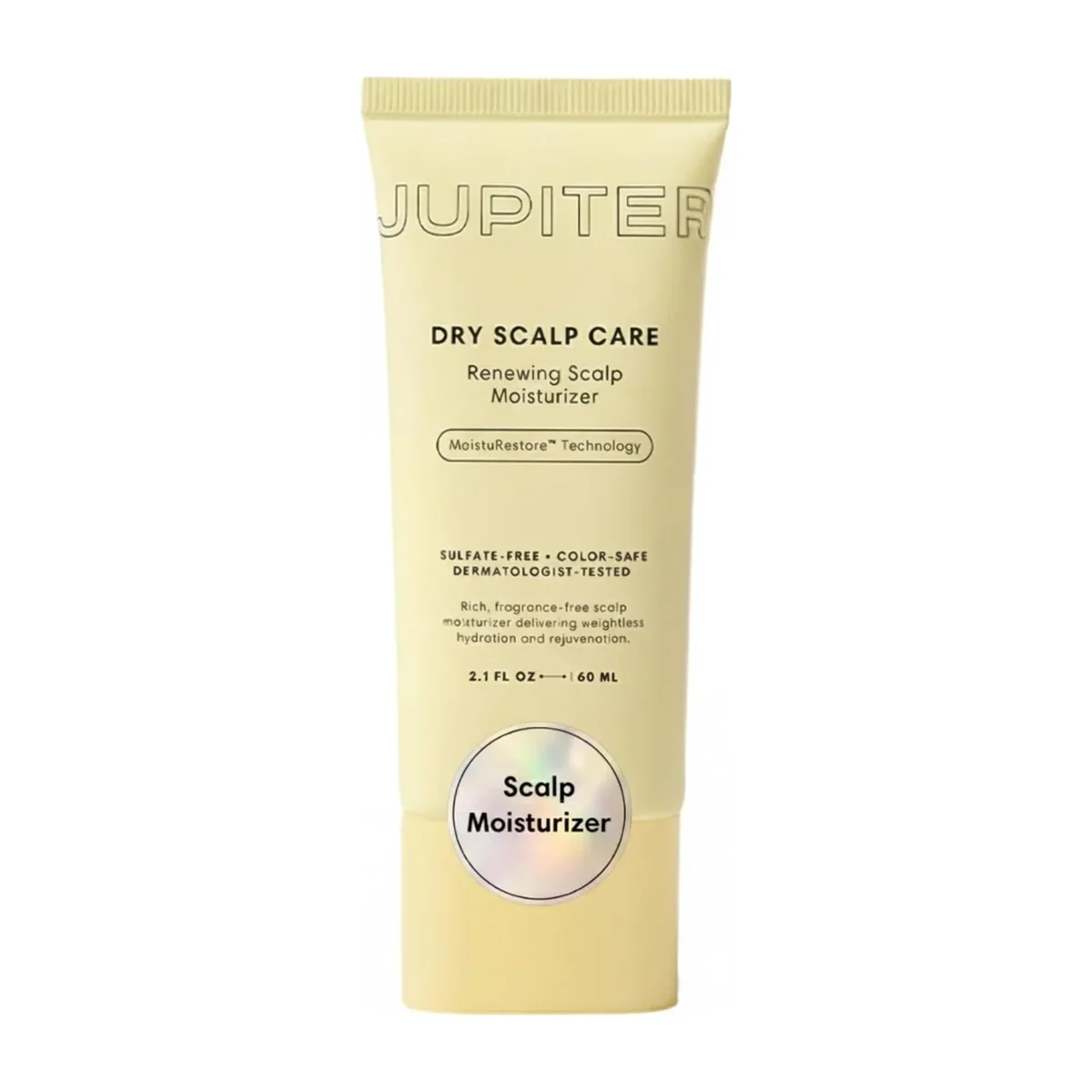
The score also says nothing about how the exposed scalp is doing, which is where ordinary skincare finally becomes relevant. Skin that has spent decades under hair is unaccustomed to sunlight, and a bare crown collects real ultraviolet exposure — a hat first, and a lotion like Neutrogena Sheer Zinc Dry-Touch SPF 50 on the days that isn't practical. Newly exposed scalp is also prone to dryness and irritation, and a light non-medicated moisturiser such as Jupiter Renewing Scalp Moisturizer is more useful than anything marketed for growth. Abrasive scrubs and aggressive stimulating treatments are worth avoiding during active disease; there is no evidence they help, and inflamed skin is not the goal.
None of that treats the disease. It keeps the skin comfortable and protected while the actual decision — watchful waiting, intralesional treatment, or a systemic drug gated on a number you can now calculate yourself — gets made properly.
References
- Alopecia areata investigational assessment guidelines--Part II. National Alopecia Areata Foundation — Journal of the American Academy of Dermatology, 2004
- Two Phase 3 Trials of Baricitinib for Alopecia Areata — New England Journal of Medicine, 2022
- Efficacy and safety of deuruxolitinib, an oral selective Janus kinase inhibitor, in adults with alopecia areata: Results from the Phase 3 randomized, controlled trial (THRIVE-AA1) — Journal of the American Academy of Dermatology, 2024
- Long-Term Efficacy and Safety of Ritlecitinib in Adults and Adolescents with Alopecia Areata: 3-Year Results from the ALLEGRO Phase 2b/3 Study — American Journal of Clinical Dermatology, 2026
- Rosemary oil vs minoxidil 2% for the treatment of androgenetic alopecia: a randomized comparative trial — Skinmed, 2015
Every cited link is verified to resolve to the paper named. Where a source could not be independently confirmed, it is listed without a link rather than pointing you somewhere wrong.
Frequently asked
How do I work out my own SALT score?
Estimate the percentage of hair loss in each of four scalp regions, then weight them: vertex 40%, posterior 24%, right side 18%, left side 18%. Multiply each percentage by its weight and add the four results, giving a score from 0 for a full head of hair to 100 for none. Doing this before an appointment is useful, though the clinical number that gates treatment will be the one recorded in the clinic.
Why is SALT 20 the number that matters?
Because it is the endpoint the modern trials were designed around. A score of 20 or less means about 80% or more of scalp hair is present — a visually acceptable result rather than complete regrowth — and using the same threshold across programmes is what makes different drugs comparable. It has consequently become the practical benchmark for whether treatment is working.
How well do the JAK inhibitors actually work?
In two phase 3 trials in adults with severe disease, 38.8% and 35.9% of patients on the higher baricitinib dose reached SALT ≤20 at week 36, against 6.2% and 3.3% on placebo. That is a substantial effect in a condition that previously had no approved therapy, and it also means most participants had not reached the threshold at that point. Responses can keep building, and relapse after stopping is common.
Is alopecia areata the same as male or female pattern hair loss?
No. Alopecia areata is an autoimmune attack on the follicle producing sharply defined patches of sudden loss, scored with SALT. Pattern hair loss is hormonally driven miniaturisation following a predictable pattern, staged on the Norwood or Ludwig scales. The treatments do not transfer in either direction, which is why getting the diagnosis right precedes everything else.
Does SALT account for eyebrows and eyelashes?
It does not — SALT scores scalp hair only. Eyebrow and eyelash involvement is captured by separate clinician-reported measures used as secondary endpoints in trials, and nail changes such as pitting sit outside the system altogether. Since those features often matter most to the person affected, they are worth naming explicitly rather than assuming one number covers them.
Each shelf lists every product in the catalogue built on the ingredient, graded live against your profile — the shelf stays current when a single pick would not.
Products named in this piece
Independently reviewed, with a verdict per concern — the real products behind this piece.