Building a Routine Entirely From The Ordinary (Without the Decision Paralysis)
The brand solved pricing and created a different problem: fifty-odd single actives presented without hierarchy. The missing piece was never the products — it's the editorial judgement the brand deliberately declines to supply.
Read the preview
How many products from one famously cheap, single-ingredient brand does a full routine need? Four or five, not eight. The range offers fifty-odd actives with no hierarchy — mostly serums, two cleansers, one sunscreen. Three of its own products can each exfoliate, and stacking them is the commonest way people injure their barrier. Which ones make the cut? The Dermington Gazette edits the shelf.
The problem the pricing created
The Ordinary's founding argument was that the markup on cosmetic actives was indefensible, and it was right. Stripping the story off a bottle of niacinamide and selling it near cost was a genuine consumer good, and the industry has still not fully recovered from it.
What that solved was price. What it created was a different failure, and it is a design consequence rather than an accident.
A conventional brand sells you a routine — a curated set with an implied hierarchy, where the hero product is obvious and the supporting cast is obvious. That curation is part of what the markup buys, and dispensing with the markup dispenses with the curation too. What you get instead is a catalogue: dozens of isolated actives, presented as equals, alphabetised rather than ranked, with names that are chemical specifications rather than promises.
Add the price. At these costs, adding one more bottle never feels like a decision worth agonising over — which means people make that non-decision repeatedly until they own eight actives and a barrier that has stopped coping. The brand's own guidance exists but is deliberately reference-shaped: it tells you what conflicts, not what matters.
So building a routine here needs one thing the range does not supply, and it is not more products. It is a hierarchy.
What the shape of the catalogue tells you
Look at how the range distributes across categories and its intended use becomes obvious.
Serums outnumber everything else by a wide margin — more than twenty of them, covering hydration, pigment, peptides, and a long tail of specifics. Exfoliants and retinoids each field a handful of concentrations of essentially the same idea. And then the foundations: two cleansers, three moisturisers, one toner, one sunscreen.
That is not a routine catalogue. It is an actives catalogue with a small support wing, and it is telling you exactly how the brand expects to be used — as the treatment layer inside somebody else's routine.
Read that way, most of the confusion resolves. You are not supposed to buy fifteen of these. You are supposed to buy the one or two that address what you are actually trying to change, put them inside a routine whose foundations may well come from elsewhere, and ignore the other forty-eight bottles no matter how little they cost.
The built version of this routine sequences the range step by step, and the thing worth noticing when you look at it is how short it is.
The core, and the order
A defensible full routine from this range runs to four or five products. Not eight.
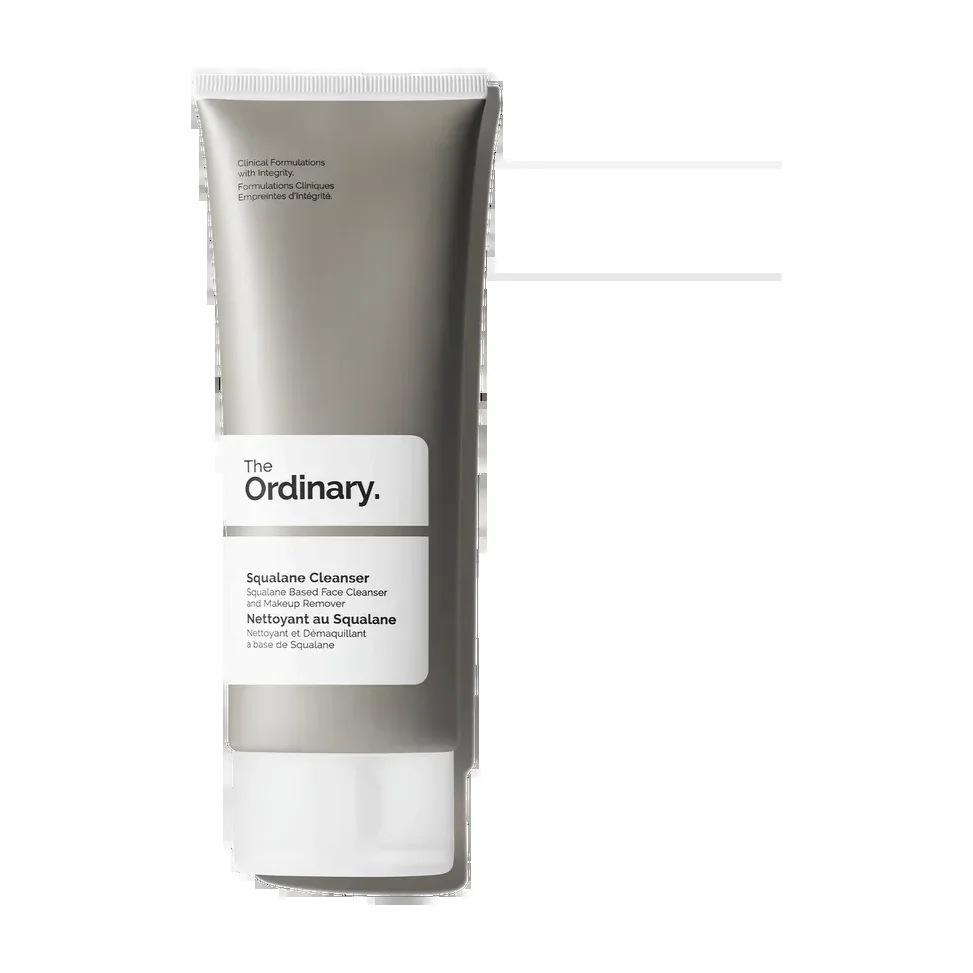
Cleanse. The Squalane Cleanser is the more interesting of the two — an oil-based, non-foaming texture that removes sunscreen without stripping, which is the harder job. The Glucoside Foaming Cleanser covers the second-cleanse case if you want one.
One treatment active, chosen by what you're treating. This is the decision the range refuses to make for you, so make it deliberately. Niacinamide 10% + Zinc 1% is the brand's most famous product and a reasonable general-purpose choice, though the evidence for niacinamide sits comfortably below that concentration for most of what people buy it for — the lower-strength face-and-body emulsion is arguably the better-formulated expression of the same idea. For pigment and inflammation together, the Azelaic Acid Suspension is the range's genuine standout and the one product here I would recommend without qualification. For texture and turnover, pick one retinoid concentration and stay on it.
Hydrate. Hyaluronic Acid 2% + B5 is the well-known option and needs something over it to hold, per the humectant rule. Amino Acids + B5 does a similar job with less drama.
Moisturise. Natural Moisturizing Factors + Phytoceramides is the sensible default, and the range's moisturisers are better than their reputation.
Protect — and see below.
Order runs thinnest to thickest, water-based before oil-based, with the retinoid at night and nothing acidic layered on top of it. The routine order tool sorts a specific shelf into sequence if yours has grown past what you can hold in your head.
The conflicts that matter are inside the range
Most conflict advice concerns combining brands. Here, the dangerous stacking is internal, and it is easy to do accidentally because the products don't announce their overlap.
The range sells several things that exfoliate. A salicylic solution, a lactic solution, a glycolic toning solution, a high-strength peeling solution, a salicylic masque, and a lip exfoliant. Each is presented as a distinct product addressing a distinct concern. Mechanically, several of them are doing the same thing to the same skin, and someone using a glycolic toner daily plus a weekly peel plus a salicylic treatment has built an aggressive regimen without ever deciding to.
This is the single most common way people damage their barrier with this brand, and the price is complicit: nobody stacks three exfoliants from a prestige line, because the cost forces a choice the pricing here removes.
The practical rules are short. One exfoliating mechanism, on defined nights. One retinoid concentration — the range sells four strengths of essentially the same molecule, and owning three of them means you are experimenting on yourself rather than progressing. Direct acids and retinoids on separate nights. And strong vitamin C is a morning-only, alone-ish proposition.
The conflict checker will flag what clashes across a specific shelf, which is worth running once if you have accumulated more than four bottles. The answer is usually to stop buying rather than to reorganise.
Where the range genuinely runs out
Two places, and one of them matters far more than the other.
Sun protection is the one to buy elsewhere, and it isn't close. The range's single sunscreen is a mineral formula, and the whole category is one where filter access and cosmetic elegance decide whether a product gets used at an adequate dose — neither of which is a place this brand competes. Given that sun protection has the strongest evidence base of any step in skincare, inheriting a compromise here to keep a routine single-brand is a poor trade at any price.
Eye care and the long tail are the softer case. The eye products are fine and unnecessary; the exotic single actives — the powders, the specialised suspensions — exist for people who know precisely why they want them, which is a much smaller group than the number who buy them.
The broader point is that the range's weakness is not formulation quality. Several of these products are genuinely well built for what they cost, and the azelaic suspension and the squalane cleanser would be respectable at several times the price. The weakness is that a catalogue of actives cannot tell you which active you need, and the pricing removes the friction that would otherwise force you to decide.
So the discipline is entirely on your side of the transaction: pick the fewest products that address what you are actually trying to change, buy the foundations wherever they are best, and treat the other forty bottles as what they are — a well-priced pharmacy, not a shopping list.
Frequently asked
How many products from The Ordinary do I actually need?
Four or five for a complete routine — a cleanser, one treatment active chosen for what you're treating, a hydrating layer, a moisturiser, and sun protection you should probably buy elsewhere. Most additions beyond that duplicate a mechanism you already own rather than adding a new one.
Which single product is worth buying if I only get one?
The azelaic acid suspension, for most people. It addresses pigment and inflammation simultaneously, conflicts with almost nothing, is safe in pregnancy, and is the range's most clearly differentiated formulation. The niacinamide serum is more famous and less distinctive.
Can I use several of the acids together?
You can, and it's the most common way people damage their barrier with this brand. Several products in the range exfoliate by different names — salicylic, lactic, glycolic, the peeling solution, the masque — and stacking them builds an aggressive regimen nobody consciously chose. One exfoliating mechanism, on defined nights.
Why does the brand sell four strengths of the same retinoid?
To let people titrate upward, which is sound in principle. In practice it means many people own three of them simultaneously and rotate unpredictably, which is experimenting rather than progressing. Pick one concentration, stay on it long enough to judge it, and only then consider moving up.
Is it worth buying sunscreen from the range to keep things simple?
No. Sun protection is the step with the strongest evidence behind it, and the one where filter access and wearability decide whether you apply enough. The range fields a single mineral option, and inheriting that compromise for the sake of a single-brand routine is a poor trade.
Each shelf lists every product in the catalogue built on the ingredient, graded live against your profile — the shelf stays current when a single pick would not.
Products mentioned
Independently reviewed, with a verdict per concern — the real products behind this piece.