Hurley Stage vs the HS Severity Scores: What Your Dermatologist Is Actually Measuring
"You're still Stage II" and "the treatment is working" are not contradictory statements. They are answers to two different questions, measured by two different instruments — and only one of them is designed to move.
Read the preview
How can hidradenitis be still stage two and improving at once? Those answer different questions. A stage records structure — tunnels and scarring treatment can't reverse — so it can sit unchanged for years. Activity scores count nodules, abscesses and draining tunnels, and those can fall substantially. Yet the counts only capture the day of the visit. The Dermington Gazette keeps score in between.
Two true sentences that sound like a contradiction
Someone six months into a biologic hears both of these in the same appointment: the treatment is working, and you are still Stage II. They leave deflated, and reasonably so — if nothing changed on the official scale, what exactly is working?
Both statements are accurate. They come from different instruments answering different questions, and nobody explained that there were two.
One is a staging system, and it describes what has been built in your skin. The other is a lesion count, and it describes what is inflamed right now. Treatment acts on the second and is largely powerless over the first. When those two facts are not separated out loud, the person in the room quite naturally uses the number that didn't move as the verdict on the number that did.
This is not an obscure technicality. It is the most common reason people conclude a working treatment has failed them, and it takes about four minutes to explain.
A stage describes the building, not the weather
Hurley staging sorts the disease by physical structure: whether tracts and scarring exist, and how widely they connect. It was designed as a surgical-planning shorthand — a way to say what the tissue looks like — and it does that job well.
What it cannot do is track a treatment. Consider what the categories actually turn on. A tunnel is an epithelialised channel through the dermis. Scarring is deposited fibrous tissue. Neither of those unbuilds itself because inflammation quietened down. You can go from twenty active lesions to three and still have exactly the tracts you had in January, because tracts are architecture and the drug is weather.
So a stage is best read as a floor rather than a status. It tells you what damage has accumulated, which is genuinely useful information — it predicts whether surgery will eventually be part of the plan, and it justifies moving faster in someone whose disease is still early. It is close to useless as a monthly progress measure, and it was never meant to serve as one.
The corollary is uncomfortable and worth saying plainly: the years before diagnosis are priced permanently into your stage. Nothing later takes them off.
IHS4: the arithmetic designed to move
The score that does respond to treatment is the International Hidradenitis Suppurativa Severity Score System, developed through a European consensus process and validated in a multicentre study in 2017.
It is genuinely simple. Count the inflammatory nodules and multiply by one. Count the abscesses and multiply by two. Count the draining tunnels and multiply by four. Add them. Three or below is mild, four to ten is moderate, eleven or more is severe.
The weighting is the interesting part, because it encodes a clinical judgement about which lesions matter. A draining tunnel counts four times a nodule — not because it is four times more painful, but because it represents established, chronic disease with a fundamentally worse trajectory. Two people can carry the same number of visible lesions and land in different severity bands entirely based on what kind they are.
Because it is a count, it moves. A person can drop from severe to moderate to mild on IHS4 across a treatment year while their Hurley stage sits perfectly still, and a post-hoc analysis of the secukinumab phase 3 programme examined exactly this — comparing what IHS4 captured against what Hurley staging did across the same patients.
The practical value at home is that IHS4 is arithmetic you can actually do. Nodules, abscesses, tunnels; one, two, four. It requires honesty about what you are looking at, not clinical training, and the HS severity check walks the count without you having to remember the multipliers.
HiSCR: the pass/fail that decides access
The third measure is the one with real consequences outside the room, and it is not a scale at all — it is a threshold.
Hidradenitis Suppurativa Clinical Response is defined as at least a 50% reduction in the combined count of abscesses and inflammatory nodules from baseline, with no increase in abscesses and no increase in draining fistulas. You either achieve it or you don't. It was developed and validated as a clinical trial endpoint, with the validation work showing that people who hit it also reported meaningful improvements in how the disease affected them, and later reliability work confirming that different assessors counting the same patient reach acceptable agreement.
That threshold is the number every modern HS drug is judged against. When you read that a treatment worked in roughly 42% or 59% of patients, or that a newer agent produced rapid improvement sustained to a year, HiSCR is the yardstick generating those percentages.
And this is where measurement stops being academic. Trial eligibility is written in lesion counts — a minimum number of inflammatory lesions to enrol. Approvals are written in HiSCR rates. Reimbursement decisions and treatment-continuation reviews frequently reference the same arithmetic. If you have ever wondered why a clinician counts your lesions with such deliberateness, that is why: the count is the currency.
It also has a well-known blind spot. A 50% reduction in inflammatory lesions is a real, defensible improvement and it is not remission, and it says nothing directly about pain — which is, for most people, the symptom that actually runs their week.
The count is only as good as the day it was taken
Every one of these measures is a snapshot of what is visible at the moment of examination. HS does not cooperate with that.
The disease cycles. You can be seen on a genuinely quiet week and be counted as improved when the month was terrible, or arrive mid-flare and be counted as worse when the trend is good. Neither reading is wrong; both are single frames of something that moves. And the gap between appointments is typically filled by recall, which is where the trouble compounds — people reliably remember their worst week as typical, so the reconstruction skews severe in a way nobody intends.
The fix is unglamorous and it works. Photograph the same sites, the same way, at fixed intervals — the progress photo tracker exists to keep distance, lighting and framing consistent enough that two dates are actually comparable. Log flares and pain as they happen rather than reconstructing them later. Run your own IHS4 monthly; it takes two minutes and the trend line is worth more than any individual value.
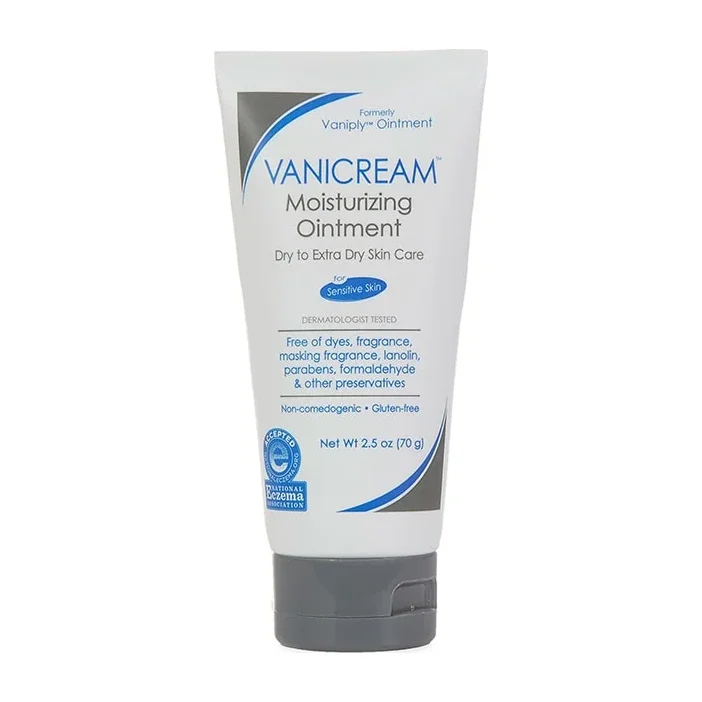
Supportive care belongs in the same log, because it is a variable rather than background noise. If you are washing with an antiseptic like PanOxyl's 4% creamy wash, using a keratolytic such as CeraVe's SA Smoothing Cleanser on affected areas, dropping to something bland like Illiyoon's Ceramide Ato wash on raw days, or dressing friction points under Vanicream's Moisturizing Ointment, record what changed and when. Without that, a change in your count has three possible explanations and no way to choose between them.
If extent rather than lesion count is the question — how much of you is involved — the body surface area painter answers a different and sometimes more relevant question than any of the three scores.
Using the numbers in the room
The single most useful question to ask at an HS appointment is which measure is being applied, and to what end.
"Am I improving on IHS4?" is a different question from "has my Hurley stage changed?", and only the first one has a plausible yes attached to it in a six-month window. If a clinician says you are unchanged, the follow-up worth asking is unchanged by which measure — because a static stage alongside a falling lesion count is a treatment succeeding, and it should not be filed as a failure by either party.
Bring your own numbers. A monthly self-scored IHS4 with dates, alongside consistent photographs, converts "it's been up and down" into a trajectory. That matters most at the two moments where evidence decides something: arguing that a current treatment deserves more time, and arguing that it does not and something stronger is warranted. Both cases are made in counts.
And hold the honest limitation in view. None of these instruments measures pain, and none measures what the disease costs you socially or at work. A person can improve on every scale here and still be having a difficult year, which is not a failure of the treatment but a limitation of what a lesion count was ever built to see. The scores are how access gets granted and progress gets proven. They are not a description of your life, and a clinician who treats them as one is reading the instrument wrong.
References
- Development and validation of the International Hidradenitis Suppurativa Severity Score System (IHS4), a novel dynamic scoring system to assess HS severity — British Journal of Dermatology, 2017
- International Hidradenitis Suppurativa Severity Scoring System (IHS4) as a holistic measure of hidradenitis suppurativa disease severity compared with Hurley staging: A post hoc analysis of the SUNRISE and SUNSHINE phase 3 trials of secukinumab — Journal of the European Academy of Dermatology and Venereology, 2024
- HiSCR (Hidradenitis Suppurativa Clinical Response): a novel clinical endpoint to evaluate therapeutic outcomes in patients with hidradenitis suppurativa from the placebo-controlled portion of a phase 2 adalimumab study — Journal of the European Academy of Dermatology and Venereology, 2016
- Reliability of the hidradenitis suppurativa clinical response in the assessment of patients with hidradenitis suppurativa — Journal of the European Academy of Dermatology and Venereology, 2018
- Two Phase 3 Trials of Adalimumab for Hidradenitis Suppurativa — The New England Journal of Medicine, 2016
- Secukinumab in moderate-to-severe hidradenitis suppurativa (SUNSHINE and SUNRISE): week 16 and week 52 results of two identical, multicentre, randomised, placebo-controlled, double-blind phase 3 trials — The Lancet, 2023
- Hidradenitis Suppurativa Area and Severity Index Revised (HASI-R): psychometric property assessment — British Journal of Dermatology, 2021
Every cited link is verified to resolve to the paper named. Where a source could not be independently confirmed, it is listed without a link rather than pointing you somewhere wrong.
Frequently asked
Why hasn't my Hurley stage improved after a year of treatment?
Because staging describes physical structure — tunnels and scarring — rather than active inflammation, and structure does not reverse with medication. A static stage alongside a falling lesion count means treatment is doing what treatment can do. Ask specifically whether your IHS4 has changed.
How do I calculate my own IHS4 score?
Count inflammatory nodules and multiply by one, abscesses by two, draining tunnels by four, then add the three figures. Three or below is mild, four to ten moderate, eleven or above severe. The difficulty is honest lesion identification rather than the arithmetic.
What does HiSCR mean when I read it in a drug's trial results?
It means at least half the person's abscesses and inflammatory nodules resolved, with no increase in abscesses or draining fistulas. A reported HiSCR rate of 50% means half of treated patients cleared that bar — it is a threshold that participants pass or fail, not an average improvement.
Which score decides whether I can get a biologic?
In practice, lesion counts do most of the work. Trial eligibility is written in minimum inflammatory lesion counts, approvals are written in HiSCR rates, and continuation reviews often reference the same arithmetic. Hurley stage is usually part of the picture but rarely the deciding number on its own.
Do any of these scores account for pain?
Not directly, and it is their most-criticised gap. All three count or classify lesions, while pain is the symptom most people would rank first. Separate patient-reported measures exist for it, which is a strong argument for logging your own pain scores rather than assuming the lesion count speaks for you.
Each shelf lists every product in the catalogue built on the ingredient, graded live against your profile — the shelf stays current when a single pick would not.
Products named in this piece
Independently reviewed, with a verdict per concern — the real products behind this piece.