The Nordic Case for Doing Less: Why Scandinavian Skincare Is Built for Brutal Weather
Scandi minimalism isn't just an aesthetic — it's a barrier-first response to cold, dry, low-UV air. Here's where the logic is real, and where it's just a nice-looking bottle.
Read the preview
What does one hour of dry air do to your skin? In a lab model of skin, an hour of low humidity raised water loss and dialed down key barrier proteins. That's the physics behind Nordic skincare's barrier-first, fewer-steps approach. But minimalism can slide into just a nice-looking bottle — and one bottle can't do everything. The Dermington Gazette weathers the cold.
A climate problem wearing a design-forward label
Strip away the muted packaging and the word 'lagom,' and Scandinavian skincare is a response to a physics problem. Cold air holds very little water. Heat it indoors and the relative humidity collapses further. That widens the vapor-pressure gradient between your damp skin and the parched air around it, and water is pulled out of the stratum corneum faster than it can be replaced. This is transepidermal water loss, and in a Nordic winter it runs high for months.
The damage is not slow or subtle at the cellular level. In a 2025 reconstructed human epidermis study, a single hour of low-humidity exposure was enough to raise transepidermal water loss and drop the expression of cornified-envelope proteins like filaggrin and loricrin, along with the tight-junction proteins claudin-1 and ZO-1. Those are the literal bricks and mortar of the barrier, dialing down within an hour of dry air.
So the Scandinavian instinct — fewer products, richer textures, everything pointed at keeping water in — is not a lifestyle pose. It is the correct engineering answer to a leaky barrier in a dry climate. The ten-step routine assumes a skin barrier robust enough to absorb repeated actives. Nordic minimalism assumes the opposite: that the barrier is the patient, and the job is to stop the leak first.
There is also a low-UV dimension people underrate. The far-northern winter runs on short days and a weak, low-angle sun, which shapes the regional routine in two directions at once. It means daily photodamage pressure is lower for part of the year — but it also breeds a dangerous complacency, because UV does not vanish, snow reflects it, and the summer sun at those latitudes stays up for absurd hours. A climate-smart routine is not an excuse to abandon sunscreen; it is a reason to think carefully about when the barrier work matters most and when protection has to move back to the front.
Barrier-first formulating, decoded
Minimalism only works if the few products you keep are the right ones. The Scandi playbook concentrates on three jobs a stressed winter barrier actually needs: replace lipids, hold water, and calm inflammation — and skips most of what a ten-step routine adds on top.
Lipids come first because the barrier's mortar is ceramides, cholesterol, and fatty acids, and cold weather depletes them. A ceramide-forward cream like Byoma Barrier+ Treatment is a good illustration of the logic: it pairs ceramides with ectoin, a molecule originally isolated from bacteria that survive extreme, water-scarce environments, which helps cells hold onto water under osmotic stress — an almost on-the-nose match for harsh-climate skin. Humectants like glycerin and hyaluronic acid then draw water inward, though in genuinely dry air a humectant alone can backfire by pulling moisture from deeper skin, which is why the Nordic approach always seals it with occlusive lipids rather than leaving a humectant serum bare.
The third job is calming, because a leaky barrier is an inflamed one. This is where a squalane-and-ceramide repair cream such as Biossance Squalane + Omega Repair Cream earns its place — squalane is a lightweight, stable emollient that mimics skin's own lipids without the heaviness of a mineral occlusive. If you want to see exactly which of these jobs a product is actually doing rather than trusting the front label, running the INCI list through the ingredient-decoder is a faster reality check than the marketing copy.
Cloudberry, oat, and the botanicals that actually earn it
Every regional skincare tradition has hero botanicals, and the marketing tends to oversell them. Nordic skincare is unusual in that a couple of its signatures hold up to scrutiny.
Cloudberry — Rubus chamaemorus, the amber Arctic berry — is the poster ingredient. A 2023 characterization of its fruit and leaves confirms it is genuinely dense in antioxidants: the seed oil runs high in linoleic and alpha-linolenic acids, the same barrier-supporting fatty acids skin uses to build ceramides, plus vitamin E, carotenoids, and ellagic acid. That is a real emollient-plus-antioxidant profile, not a berry chosen only for its photogenic color. The honest caveat is that a seed oil delivers those fatty acids topically; it is not a substitute for a full barrier cream, and 'cloudberry extract' at the bottom of an ingredient list is doing far less than the front of the jar implies.
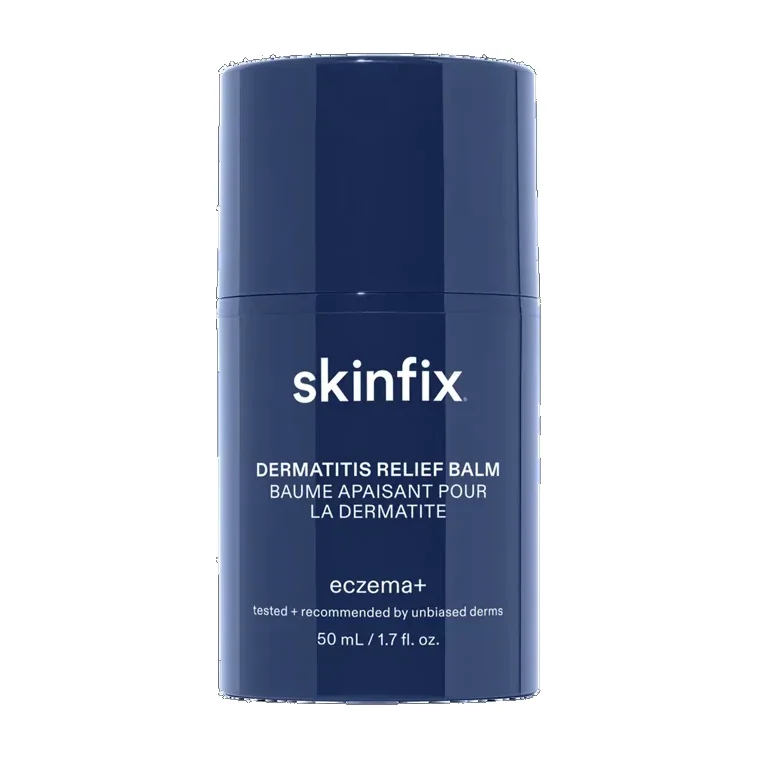
Oat is the other Nordic staple with clinical weight — and here the data is stronger than most botanicals ever manage. Colloidal oatmeal's anti-inflammatory action traces to avenanthramides, phenolic compounds that inhibit NF-kB signaling and the release of pro-inflammatory cytokines, which is why oat reliably reduces itch and redness in dry, reactive skin. An oat-based balm like SkinFix Dermatitis Face Balm leans on exactly that mechanism, pairing colloidal oatmeal with ceramides — soothe and rebuild in one step, which is the whole minimalist thesis in a jar.
Where minimalism helps — and where it's just the aesthetic
Minimalism is a strategy, not a virtue, and it pays off in specific conditions. When the barrier is compromised — winter, eczema-prone skin, post-procedure, over-exfoliated — fewer products means fewer chances to irritate, and each step can be chosen to rebuild rather than strip. In a harsh, dry climate, a rich occlusive layer does more real work than a shelf of actives the skin is too fragile to use. This is minimalism doing its job.
It stops being useful the moment 'less' becomes an excuse for 'unproven.' A stripped-back routine still needs its actives somewhere — a barrier cream does not deliver vitamin C's antioxidant protection or a retinoid's collagen signal, and pretending simplicity replaces them is how minimalism turns into under-treatment. A genuinely simple, well-chosen routine — a gentle cleanser, one barrier-supporting moisturizer like Cocokind Electrolyte Water Cream, and sunscreen — beats a chaotic ten-step lineup. But 'I use one nice cream' is not a routine if the one cream ignores what your skin actually needs. If you are unsure how few steps you can get away with for your skin and climate, the routine-finder is built to draw that line.
The sustainability ethos deserves the same clear eye. Refillable packaging and shorter ingredient lists are real goods, and the Nordic emphasis on them is admirable. But 'clean' and 'free-from' claims are marketing, not evidence — a fear-based ingredient list is not the same as a barrier-smart one. The best of Scandinavian skincare is a discipline: figure out what your barrier truly needs in your climate, buy that, and stop. The weakest version is the same three humectants in a beautifully spare bottle, sold on restraint alone.
References
- Effect of low humidity on the barrier functions of keratinocytes in a reconstructed human epidermal model — International Journal of Cosmetic Science, 2025
- Mechanism of action and clinical benefits of colloidal oatmeal for dermatologic practice — Journal of Drugs in Dermatology, 2010
- Comprehensive Characterization of Secondary Metabolites in Fruits and Leaves of Cloudberry (Rubus chamaemorus L.) — Metabolites, 2023
Every cited link is verified to resolve to the paper named. Where a source could not be independently confirmed, it is listed without a link rather than pointing you somewhere wrong.
Frequently asked
Is Scandinavian skincare actually different, or just minimalist branding?
There is real substance underneath the aesthetic. Nordic formulating is barrier-first — lipids, humectants, and soothing agents aimed at retaining moisture in cold, dry air — rather than layering exfoliating actives. The minimalism is a rational response to a climate that strips the barrier, though 'clean' and sustainability claims still carry ordinary marketing that deserves scrutiny.
Does cloudberry oil do anything for skin or is it just a pretty ingredient?
Cloudberry seed oil has a genuine emollient-antioxidant profile: it is rich in linoleic and alpha-linolenic acids, the fatty acids skin uses to build its barrier, plus vitamin E and carotenoids. It supports the barrier as an oil, but it is not a full moisturizer, and a trace 'cloudberry extract' low on an ingredient list does far less than the label suggests.
Why does my skin get so dry in winter even when I moisturize?
Cold, low-humidity air widens the vapor gradient across your skin and accelerates transepidermal water loss, and indoor heating makes it worse. Research shows even brief low-humidity exposure lowers key barrier proteins. A humectant alone can pull water out in very dry air, so you need lipids and occlusives to seal moisture in, not just water-binding ingredients.
Can a truly minimalist routine replace a full skincare regimen?
For a compromised or winter-stressed barrier, fewer well-chosen products often outperform a crowded routine. But minimalism becomes under-treatment if it drops actives you actually need — a barrier cream does not provide antioxidant or collagen benefits, and it never replaces sunscreen. Simple is good; simple as an excuse to skip what your skin needs is not.
What ingredients matter most for cold, dry climates?
Prioritize barrier lipids like ceramides and squalane to replace what cold weather depletes, humectants like glycerin and hyaluronic acid sealed under an occlusive, and soothing agents like colloidal oat for reactive skin. Ectoin is a useful addition because it helps cells retain water under osmotic stress, which is exactly the challenge harsh-climate skin faces.
Each shelf lists every product in the catalogue built on the ingredient, graded live against your profile — the shelf stays current when a single pick would not.
Products named in this piece
Independently reviewed, with a verdict per concern — the real products behind this piece.



Listen next
All episodesPrint it out
The Print RoomFree posters and handouts on the same ground, ready to print or share.

