'Longevity' Is Both a Real Field and a Legally Convenient Word
The vocabulary swap is doing two jobs at once — pointing at genuine senescence research, and letting the same formulas make claims that are much harder to disprove.
Read the preview
Is longevity skincare real science or just a convenient word? Both. Senescence research is genuine — but the most-cited skin trial enrolled thirty-six people, lost more than half, and used a prescription immunosuppressant, not a serum. Meanwhile, supports skin longevity asserts nothing measurable, which is exactly why it's safe to print. So what actually works long-term? The Dermington Gazette takes the long view.
Two things are happening under one word
Walk a beauty hall and the vocabulary has visibly turned over. Anti-ageing has become dated — faintly rude, even, in a way brands are keen to distance themselves from — and longevity has taken its place, borrowed wholesale from a genuine and well-funded area of biology. Product names have followed: the catalogue now contains a bareMinerals SKINLONGEVITY Vital Power Infusion Serum and a whole Numbuzin No. 9 NAD+ Peptide Lifting Serum range built around a molecule from the metabolic-ageing literature.
Two separate things are being carried by that word, and they deserve separate verdicts. One is a real scientific reframe: ageing understood as a set of describable cellular processes rather than an aesthetic outcome, with cellular senescence prominent among them. The other is a claims strategy. Both can be true at once, and mostly are.
The science the word is borrowing from
Senescence is the state in which a cell stops dividing but refuses to die, and starts secreting inflammatory signals — the senescence-associated secretory phenotype — that degrade the tissue around it. It appears on every serious list of the mechanisms driving ageing, and the appeal of targeting it is obvious: clear the senescent cells and the tissue behaves younger without anything being rebuilt.
That idea has real support in animals. Senolytic drugs improved physical function and extended lifespan in old mice, work published in Nature Medicine. In humans the evidence is much earlier: a preliminary open-label report in EBioMedicine showed that dasatinib plus quercetin reduced senescent cell burden in people with diabetic kidney disease — an important proof of principle, and a long way from a cosmetic.
Skin has one frequently cited human trial, and it repays reading rather than citing. Published in GeroScience, it applied topical rapamycin — an approved prescription drug targeting mTOR — to the skin of participants over forty. Thirty-six were enrolled; nineteen discontinued or were lost to follow-up. Among those who finished, p16INK4A protein fell significantly and collagen VII rose, with improvement in histological markers and clinical appearance in multiple participants.
That is a genuinely interesting result and an explicitly exploratory one, with a completion rate that would make anyone cautious. It is also the strongest human skin-senescence data available — and it involves a prescription immunosuppressant, not anything you can buy in a jar.
Why vaguer language is safer language
The regulatory background explains most of the rest. Under the Federal Food, Drug, and Cosmetic Act, drugs are defined partly by intended use — articles intended for the diagnosis, cure, mitigation, treatment or prevention of disease, and articles intended to affect the structure or any function of the body. Cosmetics are articles intended to cleanse, beautify or alter appearance without affecting structure or function. The FDA is explicit that a claim alone can move a product across that line, listing regenerating cells and changing melanin production among examples that establish drug status.
Read the two vocabularies against that boundary. 'Reverses wrinkles', 'rebuilds collagen', 'clears senescent cells' are all structure-or-function assertions, and each is an invitation to be regulated as a drug — or at minimum to be asked for the evidence. 'Supports skin longevity', 'promotes cellular vitality', 'helps skin age well' assert nothing that could be measured, and therefore nothing that could be contradicted.
That is the quiet advantage of the rebrand. Anti-ageing made a promise a trial could fail. Longevity makes an association. It is not fraud and mostly not even dishonest — it is simply a claim built so that no result could ever embarrass it, which is the opposite of how the underlying science works.
What actually changed in the bottle
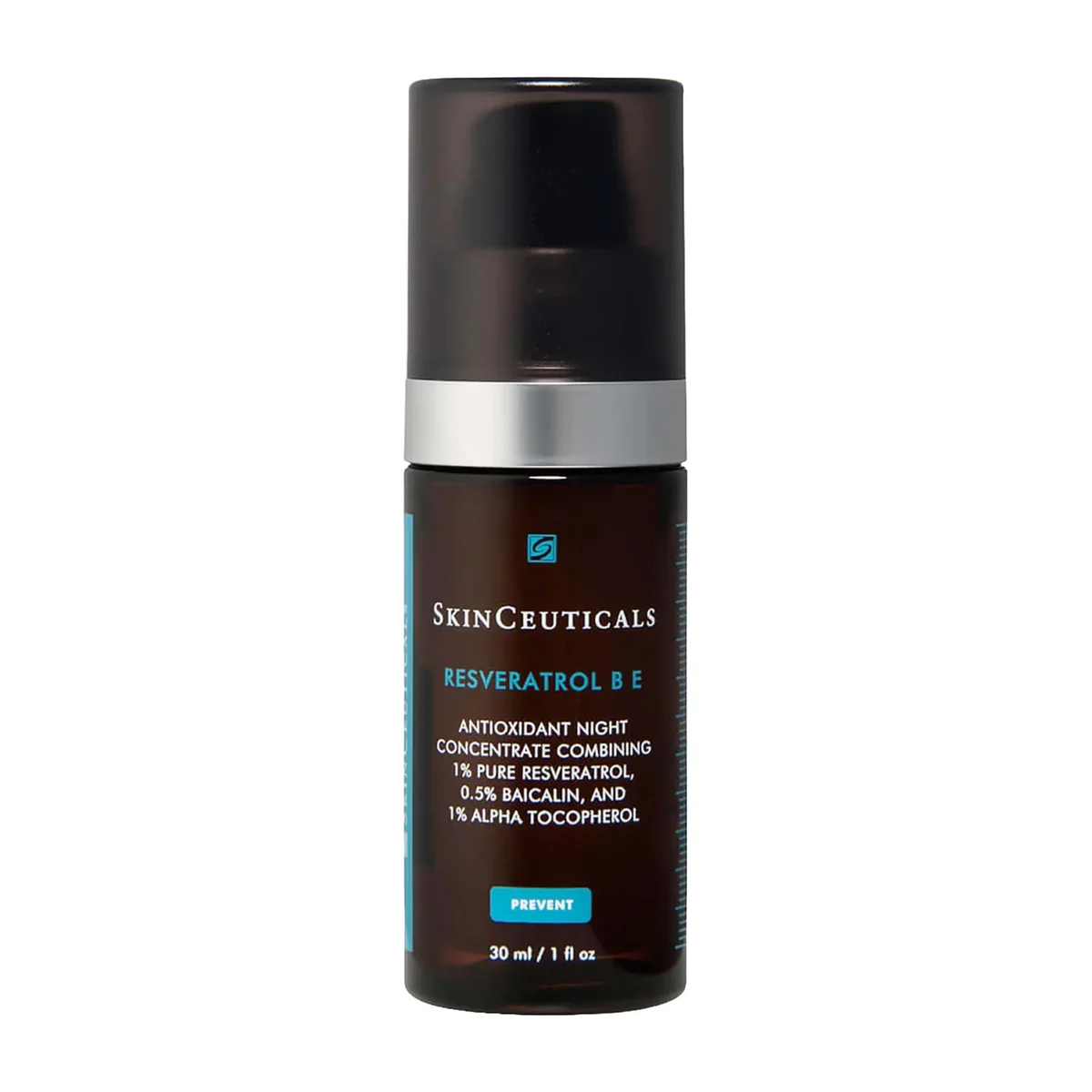
Some formulas did move. Resveratrol has a plausible position here — it comes out of the same sirtuin-and-metabolism literature the longevity framing draws on — and products such as The Ordinary Resveratrol + Ferulic Acid and SkinCeuticals Resveratrol B E are reasonable antioxidant formulas whichever era's vocabulary you apply. NAD+ ranges are the more interesting case: the biology of NAD+ decline is real and well studied systemically, while the question of whether topical application delivers anything useful to skin cells is largely unanswered, which is a very different evidential position from the one the packaging implies.
And some products changed only the label. A moisturiser reissued under a longevity name with the same emulsifiers, the same humectants and the same acceptable-but-unremarkable actives is a rebrand, and there is a straightforward way to check: read the ingredient list against the previous version. The Ingredient Decoder will tell you what is in front of you, and if the actives are the ones that were on the shelf in the anti-ageing era, the new noun did the work.
The advice this leaves is deliberately boring, because the evidence is. What has randomised support for keeping skin in good condition over decades has not changed with the vocabulary: daily photoprotection with something like La Roche-Posay Anthelios Melt-in-Milk SPF 60, and a retinoid used consistently for years — The Ordinary Retinol in Squalane is a perfectly serious starting point. Our long-run routine is built on those two, the beginner version is the gentler entry, and the sunscreen ranking is where the highest-value decision actually gets made. Running the Routine Finder afterwards is worth doing for one reason: the failure mode in this category has never been insufficient ambition. It has been too many steps, abandoned.
References
- Topical rapamycin reduces markers of senescence and aging in human skin: an exploratory, prospective, randomized trial — GeroScience, 2019
- Senolytics improve physical function and increase lifespan in old age — Nature Medicine, 2018
- Senolytics decrease senescent cells in humans: Preliminary report from a clinical trial of Dasatinib plus Quercetin in individuals with diabetic kidney disease — EBioMedicine, 2019
- Hallmarks of aging: An expanding universe — Cell, 2023
- Is It a Cosmetic, a Drug, or Both? (Or Is It Soap?) — US Food and Drug Administration, 2024
Every cited link is verified to resolve to the paper named. Where a source could not be independently confirmed, it is listed without a link rather than pointing you somewhere wrong.
Frequently asked
Is skin longevity a real scientific concept or just marketing?
Both, in different places. Cellular senescence and its inflammatory secretory phenotype are genuine, actively researched mechanisms of ageing. Whether any cosmetic product meaningfully affects them is a separate question, and for most products sold under the longevity banner it has not been tested.
Has anything been shown to reduce senescence in human skin?
One exploratory trial reported reduced p16INK4A and increased collagen VII after topical rapamycin in participants over forty. It enrolled 36 people and lost 19 to discontinuation or follow-up, and rapamycin is a prescription immunosuppressant rather than a cosmetic ingredient. Interesting, early, and not something on a shelf.
Why did brands stop saying anti-ageing?
Partly cultural — the phrase reads as pathologising a normal process — and partly regulatory. US law treats articles intended to affect the structure or function of the body as drugs, so a claim to reverse or rebuild invites a standard of evidence that a vaguer supportive claim never has to meet.
Is NAD+ in skincare worth paying for?
The systemic biology of NAD+ decline is well documented. What is not established is whether topical application delivers a useful amount to skin cells or changes anything measurable there. Treat it as an interesting hypothesis being sold at the price of a proven ingredient.
So what should I actually be using?
The same two things that had the best evidence before the vocabulary changed: sunscreen every day, and a retinoid used consistently over years. Everything else is optional refinement, and the most common reason routines fail is that they contain too many steps to sustain.
Each shelf lists every product in the catalogue built on the ingredient, graded live against your profile — the shelf stays current when a single pick would not.
Products named in this piece
Independently reviewed, with a verdict per concern — the real products behind this piece.




- Routine Complete Anti-Aging Skincare Routine Built on the two interventions the vocabulary shift did not change.
- Routine Beginner Anti-Aging Routine The gentler entry point for anyone starting a retinoid.
- Ranked list Best Sunscreens for Anti-Aging Where the highest-value long-term decision is actually made.
- Ranked list Best Retinol for Anti-Aging For the second of the two evidence-backed steps.
Listen next
All episodesPrint it out
The Print RoomFree posters and handouts on the same ground, ready to print or share.

