What a PASI Score Actually Measures — and Why Your Trial Number Isn't Your Life
The scale every psoriasis drug is sold on was invented in 1978 as an efficacy endpoint for a 27-patient retinoid trial. It was never designed to describe how you are, and it shows.
Read the preview
What was the score every psoriasis drug is sold on originally built for? A 1978 trial of twenty-seven patients — not daily life. It weights legs at forty percent and the head at ten, loses sensitivity below a tenth of the body, and leaves out itch entirely. Palms, soles and scalp barely register. So what can a low number miss? The Dermington Gazette runs the numbers.
An endpoint, not a diagnosis
In 1978, two Swedish researchers published a trial of an experimental oral retinoid in 27 people with severe psoriasis. They needed a way to express whether the drug had done anything, so they built one: a composite index combining how much of the body was affected with how bad the plaques looked. The paper is remembered for the index rather than the drug.
That origin explains almost everything people find frustrating about PASI. It was engineered to detect change in severe, extensive disease across a small group over a few weeks. It was not engineered to describe an individual's condition, to compare two different people, or to capture what having psoriasis is like. Nearly fifty years later it is used for all three, because it became the currency of drug approval and nothing has displaced it.
So when a treatment is advertised as achieving PASI 90, the claim is precise and narrow: nine in ten of the index's points were eliminated, relative to that person's own starting point. It is a statement about a delta in a composite score. It is not a statement about how your skin feels, and it was never pretending to be.
The arithmetic, and where the weights fall
PASI divides the body into four regions and weights them by their share of surface area: head and neck 10%, upper limbs 20%, trunk 30%, lower limbs 40%.
Within each region, three signs are graded from 0 to 4 — erythema (redness), induration (thickness), desquamation (scale) — and summed. That sum is multiplied by an area score from 0 to 6, representing how much of the region is involved, then by the region's weight. Add the four products and you get a number between 0 and 72.
Two features of that construction matter more than the arithmetic.
First, the three signs are weighted equally. A plaque that is fiercely red but flat scores the same as one that is thick and silvery but pale. Clinically these are different situations, and the index cannot distinguish them.
Second, the regions are weighted by surface area, not by consequence. Legs carry four times the weight of the head. Anyone who has had psoriasis on their hands, their scalp margin, or their genitals knows that the ranking of misery does not follow the ranking of square centimetres — and PASI does not know it at all.
The practical upshot is that the same score describes very different experiences. If you want to run the calculation on yourself, the PASI calculator walks the regions and applies the weighting; the psoriasis pathway sets out where the resulting number sits in the treatment ladder.
The blind spot everybody has and nobody scores
The most consequential omission is itch, and the size of the omission is not marginal.
Studies of pruritus in psoriasis put its prevalence very high — one classic assessment of patients with extensive disease found generalised itch in the large majority, occurring daily in most of those. Later reviews describe it as among the most burdensome features of the condition, tied to impaired quality of life, sleep disruption and psychological distress. When patients themselves are asked what makes their psoriasis feel severe, itch ranks at or near the top.
PASI contains no itch term. Not a small one — none.
This is not an oversight so much as a design consequence. PASI is an observer-rated index: a clinician looks at skin and grades what is visible. Itch is not visible. Including it would have meant building a fundamentally different instrument, one that asks the patient rather than examines them.
The result is a documented mismatch. Work published in 2021 examined whether the severity thresholds everyone uses actually convey patient impact, and found that they do not reliably do so. You can clear the bar the drug was approved on and still be having a bad year, and neither the number nor the person is wrong — they are simply describing different things.
Where PASI stops working
The index also has a technical failure mode worth knowing, because it affects most people who have psoriasis.
PASI loses sensitivity below roughly 10% body surface area. The area sub-score is coarse at the low end, so small changes in limited disease barely move the total. That is a serious limitation given that most psoriasis is limited — the population for whom the index is least informative is the population most of it lives in.
The distribution is skewed for the same reason. Scores above 40 are rare; most patients cluster in a narrow band well below the theoretical maximum, which means the scale's full range is largely decorative and small differences at the low end are hard to interpret.
This is why the AAD and National Psoriasis Foundation guidance on severity measures gives real weight to alternatives, and why many clinics reach for PGA×BSA instead: a 0–4 judgement of how the plaques look multiplied by the percentage of body involved. It is faster, it tracks PASI closely enough for practical purposes, and — the part that matters here — it is something a patient can run on themselves. The PGA×BSA tool and the body surface area painter together take about two minutes and produce a number you can bring to an appointment.
None of this makes PASI bad. It makes it an instrument with a job, being asked to do several others.
What sits outside the number
Treating between appointments is where the index's silence gets loudest, because the things it does not measure are the things you manage daily.
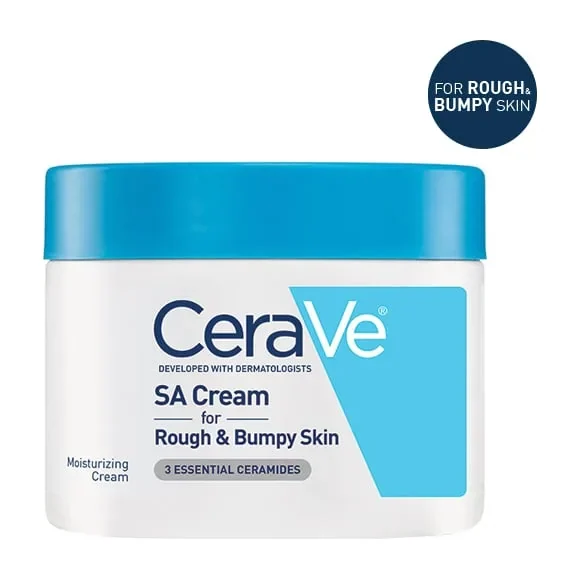
Descaling is the clearest example. Thick scale physically blocks whatever you apply on top of it, so a keratolytic step is often what makes the actual treatment work — a salicylic-based body product like CeraVe's SA Smoothing Cream, or urea at a meaningful percentage in something like Eucerin's Complete Repair 5% Urea lotion. That step can lower your desquamation sub-score, which is nice, and it can also make a prescription work better, which matters considerably more.
Ordinary emollients do not appear in the index at all and still change the day. Eucerin's Advanced Repair or The Ordinary's NMF + Inulin body lotion will not shift a PASI meaningfully; they reduce the tightness and cracking that make plaques hurt.
For scalp involvement — which carries only the head region's 10% weight while being one of the most socially exposed sites — a tar preparation such as DHS Tar Shampoo remains a legitimate, unglamorous option with a long track record.
None of these are treatments in the sense the pathway means. They are the supportive layer, and their contribution is systematically under-represented by the only number anyone records.
Using the number without being defined by it
PASI is worth engaging with rather than dismissing, because it is the language in which access is granted. Thresholds for systemic therapy and biologics are frequently written in it, and knowing roughly where you sit tells you which conversations are available.
But bring the second half yourself. Track itch on a 0–10 scale, because nobody else is recording it and it is the symptom most likely to be driving your assessment of your own disease. Note sleep disruption. Note which sites are involved, specifically — hands, scalp, nails and genitals should be named out loud, since their weight in the index badly understates their weight in a life.
The sentence that reframes an appointment is simple: my score is X, and here is what it isn't capturing. A clinician who is only handed a number can only respond to a number. A clinician handed a number plus a fortnight of itch scores and a note that the plaques are on your palms has considerably more to work with — and every guideline in current use supports treating on impact, not only on area.
The honest summary is that PASI is a good instrument being asked to carry more than it was built for. It measures visible disease in a way that lets drugs be compared, which is genuinely valuable. What it cannot do is tell you how you are, and it has never claimed otherwise. That claim was added later, by everyone else.
References
- Severe psoriasis--oral therapy with a new retinoid — Dermatologica, 1978
- Joint AAD-NPF Guidelines of care for the management and treatment of psoriasis with topical therapy and alternative medicine modalities for psoriasis severity measures — Journal of the American Academy of Dermatology, 2021
- Psoriasis severity: commonly used clinical thresholds may not adequately convey patient impact — Journal of the European Academy of Dermatology and Venereology, 2021
- The prevalence and clinical characteristics of pruritus among patients with extensive psoriasis — British Journal of Dermatology, 2000
- Psoriasis-associated itch: etiology, assessment, impact, and management — Journal of Dermatological Treatment, 2020
- Itch in psoriasis: epidemiology, clinical aspects and treatment options — Clinical, Cosmetic and Investigational Dermatology, 2009
Every cited link is verified to resolve to the paper named. Where a source could not be independently confirmed, it is listed without a link rather than pointing you somewhere wrong.
Frequently asked
What does PASI 90 actually mean?
That 90% of the person's PASI points were eliminated compared with their own baseline. It is a relative measure of change, not an absolute state — someone starting at 30 who reaches PASI 90 still has a score of 3, and where that residual disease sits on the body matters enormously to how it feels.
Why doesn't PASI include itch?
Because it is an observer-rated index: a clinician grades what can be seen, and itch cannot be. Including it would require a fundamentally different instrument that asks the patient rather than examining them. The omission is significant given that itch affects the large majority of people with extensive psoriasis.
Is PASI useful if I only have a small area affected?
Less so. The index loses sensitivity below roughly 10% body surface area, because its area sub-score is coarse at the low end and small changes barely register. For limited disease, PGA×BSA is generally the more informative measure and is far easier to repeat at home.
Can I calculate my own PASI?
You can, though it takes practice — grading redness, thickness and scale consistently is the hard part, and self-assessment tends to drift. PGA×BSA is the more realistic self-tracking option. Either way, a repeated score from the same person is more useful as a trend than as a single value.
My score is low but my psoriasis is ruining my life. Is that possible?
Entirely, and it is well documented. Palms, soles, scalp, nails and genitals carry very little PASI weight and disproportionate impact, and research on severity thresholds has found they do not reliably convey what patients actually experience. Say which sites are involved and bring itch and sleep data — guidelines support treating on impact, not area alone.
Each shelf lists every product in the catalogue built on the ingredient, graded live against your profile — the shelf stays current when a single pick would not.
Products named in this piece
Independently reviewed, with a verdict per concern — the real products behind this piece.