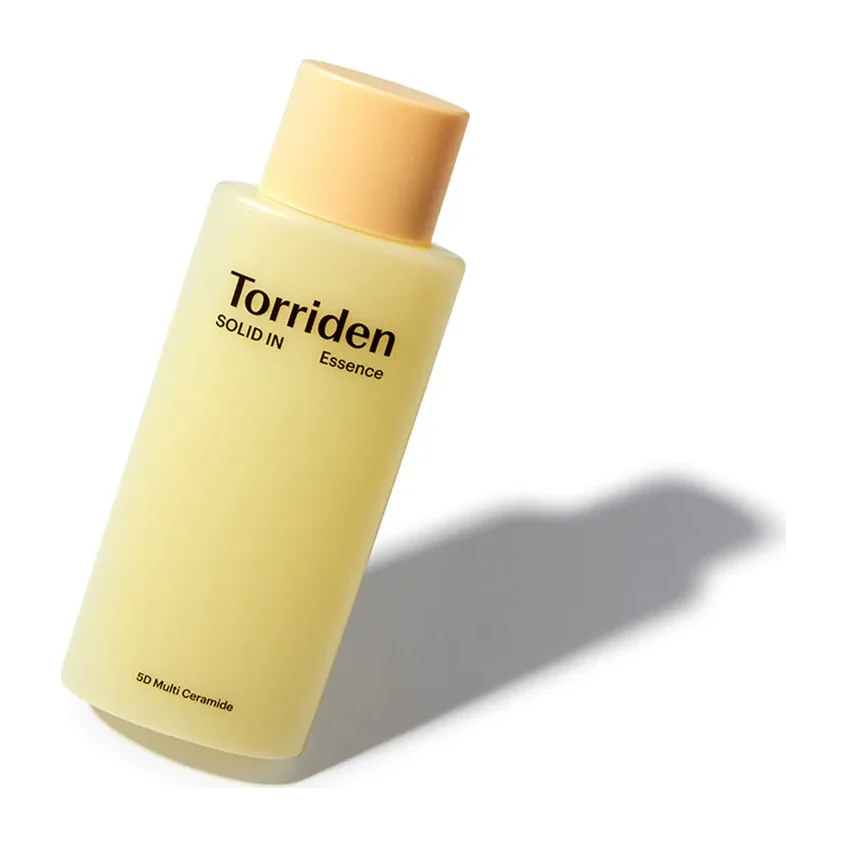
There's a nice bit of chemistry hiding in this essence that most users never notice. Niacinamide, in published skin research, is one of the few ingredients that actually tells keratinocytes to ramp up their own ceramide production — your skin making more of its own barrier lipids from the inside. This essence doses niacinamide at a gentle, non-flushing level right alongside a topical delivery of ceramide NP, cholesterol, and three free fatty acids. You're getting lipids on the outside and a signal to make more lipids on the inside, in the same bottle, at the same time. It's the kind of quietly smart pairing you'd expect from a brand born inside a pharmaceutical division, and it's the reason this essence is worth its step in the routine.
Aestura launched the Atobarrier line in 2005 out of Amorepacific's pharma arm, specifically for Korean dermatology and pharmacy channels. The 365 reformulation in 2020 added this hydrating essence as a companion to the flagship cream — a lower-weight format for users who wanted to pre-load hydration and lipids before their moisturizer, or who found the cream too rich to use as their only layer.
The texture is what makes it immediately likeable. It pours like water, sinks in within seconds, and leaves behind a soft, slightly tacky film that the next step grabs onto cleanly. There's no stickiness in the hyaluronic-serum sense, no heavy slip, no finish you have to wait out. Three to four drops cover the whole face; on very dry days, two or three layers stack without pilling or flaking. Press it in with the palms rather than rubbing — friction is the one thing reactive skin does not need from a step designed to calm it.
The ingredient list reads like a summary of everything you want from a barrier essence. The core is the MLE lipid complex — ceramide NP, cholesterol, phytosphingosine, and the free fatty acid set of stearic, oleic, linoleic and palmitic acids — plus panthenol, sodium hyaluronate, and hydroxyethyl urea for humectant support. Hydrogenated lecithin gets the lipids to disperse in what is otherwise almost entirely water, which is the quiet formulation problem this essence had to solve. Niacinamide sits midway down the list at a dose that won't trigger flushing but will do meaningful work on ceramide biosynthesis over time. Madecassoside and whole Centella extract handle soothing, with bisabolol and allantoin backing them up. Trehalose and betaine are there for osmotic hydration and deeper moisture binding, and the pH lands at 5.5. The preservation system is 1,2-hexanediol and ethylhexylglycerin — fragrance-free, paraben-free, and gentle enough that Korean pharmacists hand this to eczema patients mid-flare.
Which is the point worth making about the format itself. The word 'essence' has been so thoroughly diluted by marketing that many people file it under 'toner with better packaging' and skip it to save a step. That would be a mistake here. A toner is water, humectants, and perhaps a mild acid. This carries a structured lipid complex — the same ceramide-cholesterol-fatty-acid architecture as the flagship cream, just suspended in something thin enough to layer. Functionally it sits closer to a treatment serum than to anything in a toner bottle, and skipping it means skipping the cheapest way to get lipids into the barrier before the moisturizer arrives to seal them there.
In practice, the essence shines as the connective tissue of a sensitive-skin routine. It slots after your toner, before your serums, and it turns a dry routine into a calm one. Users consistently report that it's the layer that stops their skin from feeling tight by mid-afternoon, that it buffers retinoid nights without undoing the retinoid's effect, and that it makes actives like vitamin C or exfoliating acids noticeably better tolerated. The irritation-soothing effect is real and fast: madecassoside at this level, in a barrier-friendly base, quiets reactive skin within days. Over three or four weeks, the reactivity itself starts to fall away, which is what barrier repair actually looks like when it's working — not a transformation, just an absence of complaint.
There are a few places where honesty pays. The bottle cap has a reputation for leaking if over-tightened — not a formulation issue, but a packaging one, and worth knowing before you travel with it. The formula contains oleic, linoleic, stearic, and palmitic acids as part of the free fatty acid complex, which means it's not a safe pick for Malassezia-prone users, and the oleic acid gives comedogenic-prone skin something to think about. The packaging is a clear plastic bottle with a flip cap and no aspirations whatsoever. And while the essence is genuinely well-priced at Korean retail, the international markup narrows the value gap against the many excellent K-beauty barrier essences competing at the same price. At Korean pricing, it's a no-brainer. At thirty-two dollars for 150ml — three or four months of twice-daily use, with a jumbo size available — it's still good, just less of a steal.
For users trying to rebuild a compromised barrier, recover from over-exfoliation, or find a lightweight hydrating layer that will not fight with the rest of their routine, this essence is as safe a pick as K-beauty makes. It's not glamorous. It's not photogenic. It just works, consistently, the way products built for dermatology clinics tend to.