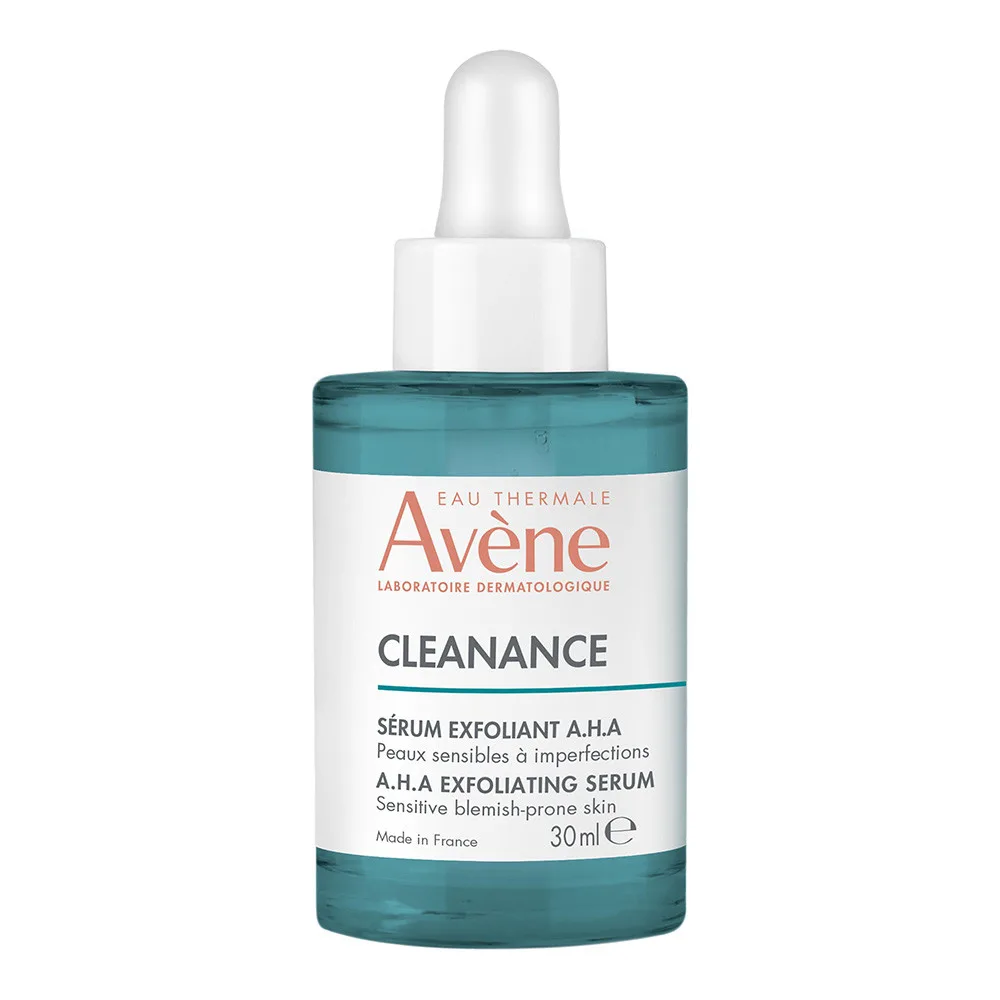
Avène Cleanance Comedomed Peeling 40ml pump bottle on white background
Promising for Acne & breakouts
What makes this different

Combines 6% glycolic acid, retinal, and the brand-patented Comedoclastin in a single leave-on cream — three different mechanisms for comedonal acne in one product. Most acne exfoliants pick one active and rely on its standalone performance. This formula attacks comedogenesis from cellular turnover (retinal), surface exfoliation (glycolic), and sebum regulation (Comedoclastin) simultaneously, addressing the multi-factor biology of comedonal acne rather than a single contributor.

Avène

Avène Cleanance Comedomed Peeling Review

Three-Mechanism Acne Peel Exfoliants cream pharmacy brand Paraben free Cruelty free

An ambitious three-mechanism acne peel that consolidates glycolic acid, retinal, and the brand's patented Comedoclastin into a single nightly product. Strong formulation for comedonal acne management, with the active stack producing real results in the 4-8 week range. The combined irritation potential and the pregnancy-incompatible retinal content narrow the audience, but for the right users this is among the smartest one-step acne treatments on a pharmacy shelf.

Price $31.00 40ml
On the market 2024 Made in France
Best for oilycombination
Buy at Amazon ♥
Verdicts

How well it fits each concern

On market since 2024, with approximately 380 reviews accumulated across European pharmacy retailers and a developing US presence. The score draws on the longer Comedomed sub-franchise track record, published Comedoclastin clinical research, established retinaldehyde efficacy data, and the formulation analysis of the active stack — not yet on the depth of multi-year user feedback that the older Cleanance line has accumulated.

One verdict per concern. Open a row for the reasoning; the receipt has every source.

The scaleRecommendedGoodSupportingEarly evidenceNot for thisAvoidhow it works

Promisingfor Acne & breakoutsGlycolic Acid has trial evidence for blackheads, but not yet enough of it to support a recommendation — promising; the other actives here are not yet assessed for it.Receipt4 sources on the row · 6% declared, studied range 5–10% · row checked Jul 17, 2026 · rule R9p, which decided 7,914 verdicts · open the receipt

The case for it

  1. Glycolic Acid 6% has trial evidence for this concern, but not yet enough of it to support a recommendation.
  2. It is present at a declared strength inside the studied range, or sits high in the ingredient list.
  3. The formula carries no trigger this concern is sensitive to, with the cautions noted.

Moderate evidenceStandard tolerabilityNo reviews read yet

Cautions: fungal-acne triggers.

What would change this: More trial evidence for the active on this concern, such as a second consistent trial or a guideline naming it, would move this from a promising bet to a recommendation.

Same rule for everyone. “Promising” is the verdict on 7,914 of 36,954 concern verdicts across the catalog; rule R9p decided 7,914 of them. As of November 10, 2026, engine 6.6.0.

Brand or formulator? Disclose a concentration or correct a fact →

The full receipt: rule, row, sources, dates →All acne & breakouts products →How acne & breakouts is treated →

Good choicefor Texture & dullnessGlycerin is a reference standard by mechanism for rough texture; this cream carries it high in the ingredient list.Receipt3 sources on the row · rule R5, which decided 9,871 verdicts · open the receipt

The case for it

  1. Glycerin is a reference standard by mechanism for this concern — an established physical action, not a trial result.
  2. It is present at a declared strength inside the studied range, or sits high in the ingredient list.
  3. The formula carries no trigger this concern is sensitive to, with the cautions noted.

Moderate evidenceStandard tolerabilityNo reviews read yet

Same rule for everyone. “Good choice” is the verdict on 10,251 of 36,954 concern verdicts across the catalog; rule R5 decided 9,871 of them. Unchanged since September 5, 2026, engine 6.6.0.

Brand or formulator? Disclose a concentration or correct a fact →

The full receipt: rule, row, sources, dates →All texture & dullness products →How texture & dullness is treated →

Promisingfor Dark spots & uneven toneGlycolic Acid has trial evidence for hyperpigmentation, but not yet enough of it to support a recommendation — promising; the other actives here are not yet assessed for it.Receipt2 sources on the row · 6% declared, studied range 5–10% · row checked Jul 17, 2026 · rule R9p, which decided 7,914 verdicts · open the receipt

The case for it

  1. Glycolic Acid 6% has trial evidence for this concern, but not yet enough of it to support a recommendation.
  2. It is present at a declared strength inside the studied range, or sits high in the ingredient list.
  3. The formula carries no trigger this concern is sensitive to, with the cautions noted.

Moderate evidenceStandard tolerabilityNo reviews read yet

Cautions: a photosensitising active — use sun protection.

What would change this: More trial evidence for the active on this concern, such as a second consistent trial or a guideline naming it, would move this from a promising bet to a recommendation.

Same rule for everyone. “Promising” is the verdict on 7,914 of 36,954 concern verdicts across the catalog; rule R9p decided 7,914 of them. Unchanged since September 5, 2026, engine 6.6.0.

Brand or formulator? Disclose a concentration or correct a fact →

The full receipt: rule, row, sources, dates →All dark spots & uneven tone products →How dark spots & uneven tone is treated →

Also listed for Pores & oiliness — the actives here (Retinal (Retinaldehyde) are in our research queue for that concern; there is no verdict until their evidence rows are written. That is a gap in our table, not a mark against the product.

Where our review and the verdict differ. The review below was written on the formulation and the published trials; the verdicts above apply the stricter standing test in our methodology — an active earns a recommendation only with guideline or regulatory standing for the concern. Where the two disagree, the verdict is Dermington’s position.

A verdict is Dermington’s assessment of how well a product’s ingredients fit a concern — never a claim about what the product treats. Evidence dots and collected reviews sit beside it and are never blended in. Rules 0.10.0 · evidence table ev-2026.11c-r265 · engine 6.6.0 · how we decide · this product’s receipt

Reader poll · Town SquareQuestion 1 of up to 3

Have you used Cleanance Comedomed Peeling?

One tap counts. A couple of optional follow-ups come next.

No account neededOne answer each, change it any timeCounted only in anonymous totalsHow the Square counts →
Assessment

Pros & cons

What it does well 7

  • Three mechanisms in one cream — glycolic exfoliation, retinal cellular turnover, Comedoclastin sebum regulation
  • Patented Comedoclastin milk thistle extract backed by multi-year clinical data on comedone reduction
  • Retinal at meaningful concentration approaching lower-strength prescription retinoid efficacy
  • Truly fragrance-free — rare for the French pharmacy acne category
  • Pump packaging protects the oxidation-sensitive retinal active
  • Consolidates a typical three-product nightly routine into a single application
  • Avène thermal water base provides soothing context for the active load

Where it falls short 5

  • Cannot be used during pregnancy due to retinal content
  • Significant irritation potential in the first 2-3 weeks of use
  • Locks users out of layering additional actives (vitamin C, benzoyl peroxide, prescription retinoids) on the same night
  • Combined glycolic-retinal effect too aggressive for dry or genuinely sensitive skin
  • Polysorbate 60 inclusion is a fungal-acne consideration for the malassezia-sensitive demographic
Review

The full review

Comedonal acne has a routine problem. The biology is multi-factor: excess sebum production, abnormal keratinization that blocks pores, and the bacterial and inflammatory cascade that follows. Each factor responds to a different active. Retinoids address the keratinization. AHAs handle the surface exfoliation that clears existing comedones. BHA or salicylic acid penetrates oily pores to break up blockages. Sebum-regulating ingredients reduce the underlying overproduction. The textbook dermatology protocol for comedonal acne therefore typically prescribes two or three separate products layered across a nightly routine, with the implementation friction this creates — different application timings, balance challenges, the constant question of which goes first, when to skip one for another. Patient compliance falls off rapidly past two actives.

Avène Cleanance Comedomed Peeling launched in 2024 as a deliberate attempt at solving that consolidation problem. The formula combines three different mechanisms in a single leave-on cream: 6% glycolic acid for surface exfoliation, retinal (retinaldehyde) for cellular turnover, and the brand's patented Comedoclastin — a milk thistle (Silybum marianum) fruit extract — for sebum regulation. Each active addresses a different contributor to comedogenesis. The pairing is deliberate, not coincidental.

The Comedoclastin platform is the formulation's most distinctive element. Pierre Fabre patented this milk thistle extract after multi-year research on its effect on the comedogenesis pathway, with clinical data showing measurable reduction in existing comedones and new comedone formation over 12-week treatment periods. The mechanism involves direct action on the sebaceous follicle environment rather than on sebum production itself or on surface keratinization. It's the active that gives the Comedomed sub-franchise its name and the reason Avène customers loyal to the brand often default to this line for their acne care.

The glycolic acid at 6% is the AHA workhorse here. Properly buffered, this concentration delivers measurable exfoliation without crossing into intense peel territory — strong enough to drive surface renewal and address hyperpigmentation alongside comedone clearance, gentle enough for regular use rather than weekly intensive treatment. The pH-adjusted formulation is what makes the 6% concentration usable nightly rather than weekly.

The retinal is the active that earns this formula its 'most ambitious' status. Retinaldehyde is one conversion step away from retinoic acid — the most active vitamin A form — which makes it substantially more potent than retinol at equivalent concentrations. Studies have demonstrated comparable efficacy to lower-strength prescription tretinoin in some applications, with better tolerability profiles. Its inclusion in a leave-on peeling cream alongside glycolic acid is the formulation choice that produces real results in the 4-8 week window for comedonal acne — but also the choice that creates the most significant compatibility constraints.

The texture is well-engineered for the active load. A lightweight milky cream that absorbs in about ninety seconds and sets to a clean finish, taking moisturizer easily on top. Fragrance is genuinely absent — no perfume top notes, only the faint clean scent of the actives themselves. The 40 mL pump bottle is functional and light-protective, important for a formula containing retinal (which is oxidation-sensitive). The product looks and behaves like a serious pharmacy treatment rather than a marketing-focused acne cream.

The real caveats are significant and structural. This product cannot be used during pregnancy due to the retinal content — the conservative dermatological consensus on vitamin A derivatives applies, even though retinaldehyde has minimal systemic absorption. It cannot be layered with prescription retinoids without significant irritation risk. It can't be combined with vitamin C, benzoyl peroxide, or additional AHA/BHA products on the same night. The active stack is comprehensive enough that this product effectively becomes the active step of a routine, with other actives requiring alternating-night scheduling. For users who want flexibility to layer multiple actives, the simpler Comedomed Concentrate is the right pick from the same franchise.

Irritation potential is also real. The combined glycolic-retinal effect produces a meaningful adjustment period in the first two to three weeks of use, with mild flaking, possible warming sensation on application, and occasional photosensitivity. Most users adapt by week three with consistent twice-weekly use, but the initial period is real. Building gradually — starting at 2-3 nights per week and increasing as tolerated — is essential. Skipping that ramp-up is the single most common reason users abandon the product.

For the right demographic, this is a remarkable product. Normal-to-oily skin with comedonal acne, who can commit to a 12-week treatment timeline, who don't need flexibility to layer additional actives, and who can navigate the initial adjustment period. Within that demographic, the consolidation of three mechanisms into one nightly application is a meaningful convenience improvement over the layered alternative — and the formulation's combination of established Comedoclastin clinical support with the glycolic-retinal pairing delivers results that the layered routine equivalent would also produce, just with more friction.

For the wrong demographic, the product disappoints. Pregnant users can't use it. Dry or sensitive skin will find the combined active load too aggressive. Users currently on prescription retinoid therapy don't need it and shouldn't add it. Users wanting to maintain a complex active routine will find this product locks them into a simpler structure than they want. Cystic or severe inflammatory acne needs systemic treatment that no topical product including this one can deliver.

Where this lands: the answer to 'I have comedonal acne and I'm tired of layering three products every night.' The formulation is genuinely thoughtful, the active stack is well-validated, and the practical convenience of a one-product solution is real. The $31 price for 40 mL is reasonable for what's effectively three separate active products consolidated — that math works. For Avène customers loyal to the Comedomed platform, this is the obvious upgrade from the original Concentrate. For new users entering acne treatment, this is a reasonable starting point with a meaningful active stack.

The science

The formulation case for this peel rests on three established mechanisms operating simultaneously. Glycolic acid at 6% is one of the most extensively researched alpha hydroxy acid applications in dermatology, with documented effects on stratum corneum exfoliation, dermal-epidermal junction renewal, and hyperpigmentation through cell turnover. Studies including work in the Journal of the American Academy of Dermatology have characterized the concentration-response relationship — at 6% with proper pH buffering, glycolic delivers measurable exfoliation across most skin types without crossing into the intense peel range that requires monitoring.

Retinaldehyde occupies a unique position in the vitamin A family. As the direct precursor to retinoic acid in the skin's metabolic pathway, retinal is one enzymatic conversion away from the most active form. Studies including work in the British Journal of Dermatology have demonstrated comparable efficacy to lower-strength tretinoin (0.025-0.05%) in some applications with substantially better tolerability profiles. The active addresses cellular turnover, keratinization patterns, and the broader anti-aging effects of retinoid therapy.

Comedoclastin — the patented Silybum marianum (milk thistle) fruit extract — has the most brand-specific evidence base. Pierre Fabre's clinical research on the ingredient has been published in dermatology coverage showing measurable reduction in existing comedones and new comedone formation over 12-week treatment periods at the 7% concentration used in the franchise's flagship products. The mechanism involves direct effects on the sebaceous follicle environment rather than on sebum production or surface keratinization.

The combination of these three actives addresses comedogenic acne biology from three different angles simultaneously — surface exfoliation (glycolic), cellular turnover (retinal), and follicle environment regulation (Comedoclastin). The pH-buffered formulation with proper supporting cast (glycerin for hydration, tocopherol for retinal stabilization, thermal water for soothing context) is what makes the multi-active stack tolerable rather than excessive.

The specific formulation chemistry of pairing retinal with glycolic acid has accumulated supporting evidence over the past decade. Studies have shown that properly buffered combinations can deliver results comparable to layered separate-product routines with substantially better patient compliance and equivalent or better tolerability profiles.

References 3 ShowHide
  1. Retinoids in the treatment of skin aging: an overview of clinical efficacy and safety. — Clinical Interventions in Aging (2006)
  2. Dual Effects of Alpha-Hydroxy Acids on the Skin. — Journal of the American Academy of Dermatology (1996)
  3. Retinaldehyde: A new way of using vitamin A in dermatology — British Journal of Dermatology (1998)

The clinical view

Within European dermatological practice, the Avène Comedomed franchise has long held a position as the patient-friendly recommendation for comedonal acne — particularly patients who can't tolerate prescription retinoids or who want a non-prescription bridge before escalating to tretinoin therapy. The 2024 Peeling launch has been generally well-received in clinical coverage as the franchise's most comprehensive single product, consolidating active mechanisms that typically require layering. Clinicians often recommend this product for normal-to-oily comedonal acne in patients not currently on prescription retinoid therapy, with a 2-3 night per week starting frequency building to nightly as tolerated. The pregnancy contraindication and the active stack's incompatibility with prescription retinoids are the primary positioning constraints, leading dermatologists to redirect those patient populations to alternatives like azelaic acid or the simpler Comedomed Concentrate.

Formula

Key ingredients

  1. Glycolic Acid 6% 6%

    Sits fourth on the INCI at the brand-claimed 6% concentration — the AHA workhorse handling the keratolytic and surface-renewal work. At 6% with a properly buffered pH this is in the territory where glycolic delivers measurable exfoliation without crossing into intense peel territory. Pairs with retinal on the cellular turnover side and Comedoclastin on the sebum-regulation side for a layered approach to comedonal acne.

    Established mechanism for Rough Texture · established mechanism
  2. Retinal (Retinaldehyde)

    Retinal is one conversion step away from retinoic acid — the most active form of vitamin A — which makes it substantially more potent than retinol while still requiring only one enzymatic conversion in skin. In a peeling cream paired with 6% glycolic acid, the retinal adds cellular turnover and anti-inflammatory activity that addresses the underlying biology of comedonal acne rather than just surface exfoliation. Avène's positioning of retinal in this product is the formulation team's most ambitious choice.

    Not yet assessed
  3. Silybum Marianum (Milk Thistle) Fruit Extract — Comedoclastin 7%

    Avène's patented sebum-regulator at the claimed 7% in the franchise's flagship products — a milk thistle extract that targets the comedogenesis pathway specifically. Multi-year clinical data supports its action on existing comedones and new comedone formation, which is what gives the Comedomed franchise its name. The pairing with glycolic and retinal creates a three-mechanism approach to comedonal acne unusual at this price tier.

    Not yet assessed
  4. Glycerin

    Sits seventh on the INCI — moderate position for an exfoliating product but higher than most leave-on peels. Provides the humectant support that buffers the acid-and-retinoid combination's drying potential, contributing to the comfort profile that makes the product usable on acne-prone skin that often lacks barrier resilience.

    Established mechanism for Rough Texture · established mechanism
  5. Tocopherol (Vitamin E)

    Lipid-phase antioxidant that complements the retinal — retinaldehyde is sensitive to oxidation, and tocopherol stabilizes it through the formula's shelf life and during application. Also addresses the oxidative-stress component of comedonal acne, where sebum oxidation drives the inflammatory cascade.

    Not yet assessed
  6. Avène Thermal Spring Water

    First ingredient providing the brand's signature soothing base. In a formula combining glycolic at 6%, retinal, and a botanical extract on acne-prone skin, the thermal water context is what allows this product to work on sensitive acne-prone biology without triggering the flare reactions stronger peeling products commonly cause.

    Not yet assessed
Full ingredient list 23 ingredients ShowHide

Avène Thermal Spring Water (Avène Aqua), Caprylic/Capric Triglyceride, Isododecane, Glycolic Acid, Isopropyl Alcohol, PEG-6, Glycerin, Hydroxyethyl Acrylate/Sodium Acryloyldimethyl Taurate Copolymer, Water (Aqua), Sodium Hydroxide, Glyceryl Stearate, PEG-100 Stearate, Polymethyl Methacrylate, Arachidyl Alcohol, Arachidyl Glucoside, Behenyl Alcohol, Helianthus Annuus (Sunflower) Seed Oil, Polysorbate 60, Red 33 (CI 17200), Retinal, Silybum Marianum Fruit Extract, Sorbitan Isostearate, Tocopherol.

Safety & formulation facts

  • Not pregnancy safe
  • Fragrance free
  • Not alcohol free
  • Not oil free
  • Silicone free
  • Paraben free
  • Sulfate free
  • Cruelty free
  • Not fungal-acne safe
Pore-clogging (comedogenic) Polysorbate 60
Potential irritants Glycolic AcidRetinalIsopropyl Alcohol
Compatibility

Skin types & routine

Routine step treatment
Time of day Night
Best season All year
Finish satin, non-greasy, lightweight

Layering

Use at night after cleansing. Start with 2-3 nights per week and assess tolerance before increasing frequency. Do not layer with retinoids, vitamin C, or other AHA/BHA products on the same night — the retinal and glycolic in this cream already cover that work. Follow with a hydrating moisturizer to support the barrier; the next morning, apply broad-spectrum sunscreen.

When to expect results

Initial smoothing and clarity is visible within the first week. Comedonal reduction develops over 4-8 weeks of consistent use as the glycolic-retinal-Comedoclastin trio addresses the comedogenesis pathway. Full anti-blemish results require the standard retinoid timeline of 12 weeks plus.

Pairs well with niacinamidehyaluronic-acidceramides
Don't combine with retinoltretinoinvitamin-cazelaic-acidbenzoyl-peroxide

A routine built around it

Morning

  1. Gel cleanser
  2. Niacinamide serum
  3. Moisturizer
  4. Sunscreen

Night

  1. Cleanser
  2. THIS PRODUCT (2-3x weekly)
  3. Hyaluronic acid serum
  4. Moisturizer
Guidance

How to use it, and who it's for

How to use

Apply a pea-sized amount to clean dry skin at night, 2-3 nights per week for the first month. Spread evenly across face avoiding eye area, lips, and any open or active blemishes. Allow about 90 seconds for absorption before layering moisturizer on top. Build to 3-5 nights per week as tolerated over weeks 5-12. Never combine with prescription retinoids, vitamin C, benzoyl peroxide, or additional AHA/BHA products on the same night. Apply broad-spectrum sunscreen daily the morning after use — the active stack increases photosensitivity for up to a week after each application. Discontinue temporarily if persistent stinging, visible peeling, or barrier disruption develops.

Is it worth the price?

$31 for 40 mL is reasonable for what amounts to a consolidated three-product treatment. Pricing comparison: a comparable separate-product routine of a glycolic serum ($25-40), an over-the-counter retinal cream ($35-60), and a Comedoclastin product like the original Comedomed Concentrate ($30) would total $90-130. The single-product format saves both money and routine complexity. The 40 mL size lasts approximately three months at 2-3 nights per week use, putting the per-application cost at around $0.40 — reasonable for what's effectively three active products per application. For users committed to the Comedomed platform and the comedonal acne treatment timeline, the math works clearly in favor of this product. For users wanting to maintain active flexibility through separate products, the value calculation shifts toward the original Concentrate plus separate AHA and retinal products.

Who should buy it

Normal-to-oily skin with comedonal acne who can commit to a 12-week treatment timeline. Particularly strong for users tired of layering multiple acne actives each night who want a consolidated single-product approach. Avène customers loyal to the Comedomed platform should consider this the obvious next step from the original Concentrate. Users wanting retinaldehyde-strength effects without prescription tretinoin are well-served. Anyone seeking a comprehensive non-prescription acne approach with established active backing.

Who should skip it

Pregnant or breastfeeding users must skip due to retinal content — switch to azelaic acid or benzoyl peroxide alternatives. Users on prescription retinoid therapy don't need this and shouldn't layer it. Dry or genuinely sensitive skin will find the combined active load too aggressive — the gentler Cleanance AHA Exfoliating Serum from the same brand is a better starting point. Users wanting flexibility to layer multiple actives nightly should choose the simpler Comedomed Concentrate. Cystic or severe inflammatory acne needs dermatologist-supervised systemic treatment.

Ready to try it?Avène Cleanance Comedomed Peeling · $31.00 · 40ml
Details

The product, in detail

Texture
Lightweight cream with a slightly milky consistency that absorbs in about ninety seconds. Sets to a clean finish without residue, taking moisturizer easily on top.
Scent
Truly fragrance-free — no perfume top notes, just a faint clean scent from the actives themselves that dissipates immediately.
Packaging
40 mL pump bottle in classic Avène pharmacy styling with red accents reflecting the Cleanance line. Functional, light-protective, and the pump mechanism delivers controlled doses.
How long it lasts
Approximately three months at 2-3 nights per week use, or six weeks at nightly use once tolerance is established.
Once opened
Use within 6 months · track your toss-by date →
Size
40ml
Made in
France
Launched
2024

What the first two weeks feel like

First application may produce a mild warming sensation from the glycolic acid that fades within minutes — not stinging, but a noticeable awareness of the active. Some users report mild peeling or flakiness in the first two weeks as cellular turnover accelerates; this typically resolves by week three. Plays well with moisturizer layered immediately after to support the barrier.

The story behind it

Why it exists

The Avène Cleanance Comedomed franchise launched in the late 2010s built around the brand's patented Comedoclastin milk thistle extract, with the original Comedomed Concentrate Anti-Blemish becoming a sleeper hit in European dermatology recommendations. The Peeling launched in 2024 as the franchise's most ambitious formulation — combining the established Comedoclastin platform with 6% glycolic acid and the newer retinal addition. The result is a product designed to consolidate what typically requires two or three separate active products into a single nightly application.

About Avène Legacy Brand (20+ years)

Avène was established in 1990 under Pierre Fabre Dermo-Cosmetique with clinical-grade sensitive-skin research positioning; the Cleanance Comedomed sub-franchise is the brand's most actively researched acne franchise, with the patented Comedoclastin sebum-regulator backed by multi-year clinical data.

Brand founded 1990 · This product since 2024

Tap a card to turn it

What people hear, and what holds up

FAQ

Questions people ask

How is Cleanance Comedomed Peeling different from the original Comedomed Concentrate?

The Concentrate is a Comedoclastin-focused spot/area treatment without significant exfoliating activity, designed for layering into other routines. The Peeling adds 6% glycolic acid and retinal to the Comedoclastin platform, making it a single comprehensive nightly acne treatment rather than an add-on. For users wanting a multi-mechanism single product, Peeling is the choice; for users layering Comedoclastin onto an existing retinoid-and-AHA routine, the Concentrate is more flexible.

Can you use Cleanance Comedomed Peeling with tretinoin or other prescription retinoids?

Not on the same night — the retinal in this cream stacks with prescription retinoids and risks excessive irritation. If you're on prescription retinoid therapy, this product is generally redundant or inappropriate. Discuss with your dermatologist whether to substitute it for one of your existing actives rather than layer it on top.

Is Cleanance Comedomed Peeling safe during pregnancy?

No. The retinal content places this product in the category of vitamin-A derivatives typically avoided during pregnancy. While topical retinaldehyde has limited systemic absorption, the conservative pregnancy approach is to avoid all vitamin A derivatives. Switch to azelaic acid or a benzoyl peroxide product for pregnancy acne management, and consult your dermatologist.

How often should you use Cleanance Comedomed Peeling?

Start with 2-3 nights per week to assess tolerance. Build to 3-5 nights per week as tolerated, with 1-2 rest nights to allow barrier recovery. Daily use is appropriate only for established users with resilient skin who have used the product consistently for 6+ weeks without irritation.

Will Cleanance Comedomed Peeling help with hormonal acne?

It addresses some contributing factors — the Comedoclastin and retinal both have documented effects on comedonal biology that underlies many hormonal breakouts — but isn't a treatment for the hormonal driver itself. For full hormonal acne management, this product as a topical foundation alongside oral spironolactone, combined oral contraceptives, or other hormonal therapy under dermatologist supervision is the typical approach.

What's the difference between retinal and retinol?

Retinal is one enzymatic conversion away from retinoic acid (the most active form of vitamin A); retinol is two conversions away. This makes retinal substantially more potent than retinol at equivalent concentrations and more comparable in effect to lower-strength prescription retinoids. It's also generally better tolerated than tretinoin while delivering closer-to-prescription results.

Should you use moisturizer over Cleanance Comedomed Peeling?

Yes, always. The glycolic-and-retinal combination can mildly dehydrate skin and stress the barrier, particularly in the first weeks of use. A hydrating moisturizer layered immediately after the cream sets supports the barrier and reduces the irritation potential. Avène's own Cleanance Hydra Soothing Cream is the engineered pairing, but any non-occlusive hydrating moisturizer works.

Reviews

What shoppers tend to say

Recurring themes our editors read across retailer reviews — summaries in our words, not quotations, and not a substitute for a patch test.

Common praise

  • Many reviewers note effective comedone reduction within the first month
  • Several flag the absence of fragrance as a key positive
  • Visible smoothing within the first week of use

Common complaints

  • Some users find the combined retinal-and-glycolic effect too irritating in the first weeks
  • The 40 mL pump can be inconsistent
  • Price relative to single-active alternatives is a common note
Notable endorsementsFeatured in 2024-2025 European pharmacy editor selections as the Comedomed franchise's most ambitious launchFrequently positioned in dermatology coverage as a one-step alternative to layered retinoid plus AHA protocols
Next stepCheck it against what you already useClashes, spacing and the right order, with everything on your shelf.