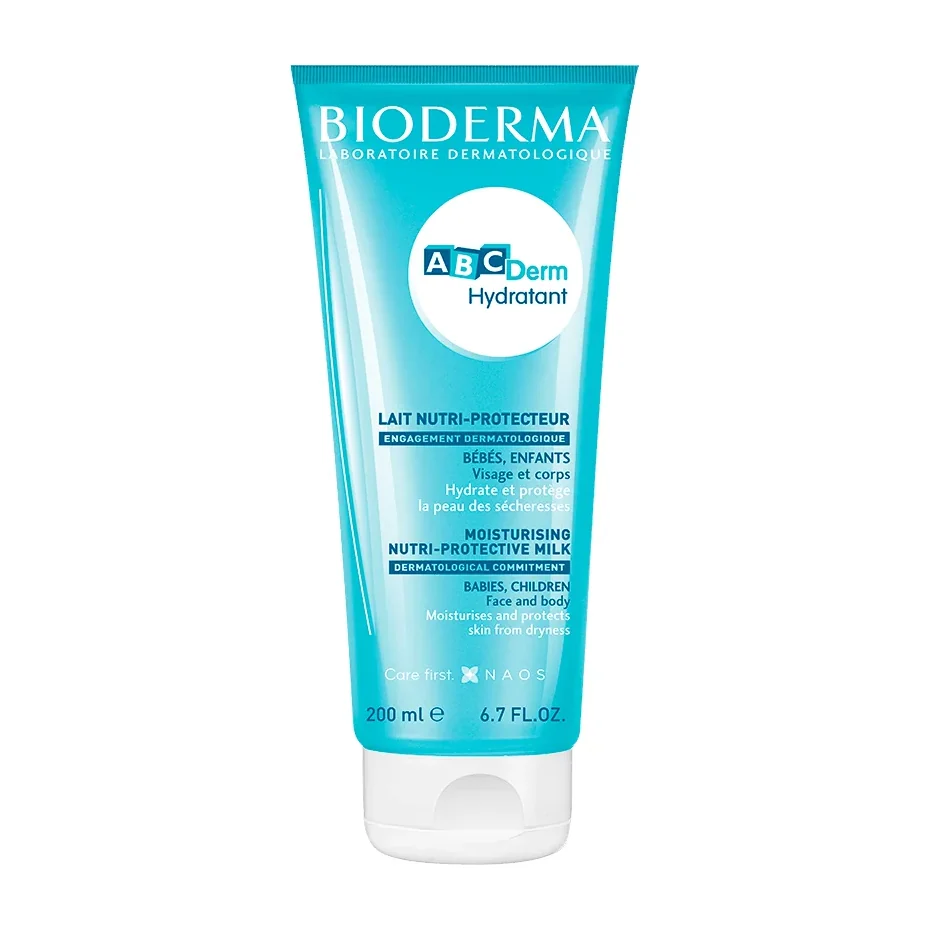
Bioderma ABCDerm Cold-Cream Face and Body 200 ml white tube with blue label
Good choice for Dry or dehydrated skin
What makes this different

It is a true cold cream — oil, beeswax and water emulsified into a protective, breathable film — rebuilt for infants with an inert mineral-oil base, glycerin and mild sugar-ester emulsifiers rather than the borax and harsh surfactants of the old recipe, at a pharmacy price. Its classic virtues come with two classic caveats: a scent, and a nut-derived oil.

Bioderma

Bioderma ABCDerm Cold-Cream Face and Body Review

Galen's Recipe, Nursery Edition Body Care cream pharmacy brand Paraben free

Galen's oil-and-beeswax recipe rebuilt for infants — mineral oil, glycerin, beeswax and almond oil in a mild sugar-ester emulsion — that protects wind-chapped cheeks and rough winter hands for under ten cents a millilitre. It is a classic done properly; its two caveats are equally classic, a fragrance on a leave-on baby cream and a nut-derived oil, and they are enough to send eczema-prone and nut-allergy families elsewhere.

Price $18.99 200 ml (6.76 fl oz) · more sizes
On the market 2005 Made in France
Best for dry
Buy at Amazon ♥
Verdicts

How well it fits each concern

The formula is fully published and its cold-cream chemistry is among the best understood in skincare, and two decades of French pharmacy use give it a long informal record — but the only efficacy data is Bioderma's own 22-child, 14-day use test, US retailer reviews are few and scattered, and no independent study exists. The questions that matter most for a particular baby — whether the fragrance and the almond oil are acceptable — depend on that child's skin and family history rather than on anything the available data can settle.

One verdict per concern. Open a row for the reasoning; the receipt has every source.

The scaleRecommendedGoodSupportingEarly evidenceNot for thisAvoidhow it works

Good choicefor Dry or dehydrated skinGlycerin is a reference standard by mechanism for dryness; this cream carries it high in the ingredient list.Receipt2 sources on the row · concentration not declared; studied range 2–20% · row checked Jul 17, 2026 · rule R5, which decided 9,871 verdicts · open the receipt

The case for it

  1. Glycerin is a reference standard by mechanism for this concern — an established physical action, not a trial result.
  2. It is present at a declared strength inside the studied range, or sits high in the ingredient list.
  3. The formula carries no trigger this concern is sensitive to, with the cautions noted.

Limited evidenceStandard tolerabilityNo reviews read yet

Cautions: fragrance.

Same rule for everyone. “Good choice” is the verdict on 10,251 of 36,954 concern verdicts across the catalog; rule R5 decided 9,871 of them. Unchanged since September 25, 2026, engine 6.6.0.

Brand or formulator? Disclose a concentration or correct a fact →

The full receipt: rule, row, sources, dates →All dry or dehydrated skin products →

Avoidfor Compromised Skin BarrierThis formula carries fragrance, which is known to aggravate compromised skin barrier, so it is not a fit however good its actives are.Receiptread from the ingredient list: fragrance · rule R1, which decided 1,062 verdicts · open the receipt

The case for it

  1. Glycerin is a reference standard by mechanism for this concern — an established physical action, not a trial result.
  2. It is present at a declared strength inside the studied range, or sits high in the ingredient list.
  3. The formula carries an ingredient known to aggravate this concern, which decides the verdict before any efficacy question.

Moderate evidenceCarries a triggerNo reviews read yet

What would change this: Removing the trigger named above would let the actives be judged on their own.

Same rule for everyone. “Avoid” is the verdict on 1,527 of 36,954 concern verdicts across the catalog; rule R1 decided 1,062 of them. Unchanged since September 25, 2026, engine 6.6.0.

Brand or formulator? Disclose a concentration or correct a fact →

The full receipt: rule, row, sources, dates →All compromised skin barrier products →

Good choicefor Texture & dullnessGlycerin is a reference standard by mechanism for rough texture; this cream carries it high in the ingredient list.Receipt3 sources on the row · rule R5, which decided 9,871 verdicts · open the receipt

The case for it

  1. Glycerin is a reference standard by mechanism for this concern — an established physical action, not a trial result.
  2. It is present at a declared strength inside the studied range, or sits high in the ingredient list.
  3. The formula carries no trigger this concern is sensitive to, with the cautions noted.

Moderate evidenceStandard tolerabilityNo reviews read yet

Same rule for everyone. “Good choice” is the verdict on 10,251 of 36,954 concern verdicts across the catalog; rule R5 decided 9,871 of them. Unchanged since October 17, 2026, engine 6.6.0.

Brand or formulator? Disclose a concentration or correct a fact →

The full receipt: rule, row, sources, dates →All texture & dullness products →How texture & dullness is treated →

As a body productNot judged: what a body product is for — real substance, not just slip, realistic to use daily — cannot yet be measured from the ingredient list (only fragrance load can).

A verdict is Dermington’s assessment of how well a product’s ingredients fit a concern — never a claim about what the product treats. Evidence dots and collected reviews sit beside it and are never blended in. Rules 0.10.0 · evidence table ev-2026.11c-r265 · engine 6.6.0 · how we decide · this product’s receipt

Reader poll · Town SquareQuestion 1 of up to 3

Have you used ABCDerm Cold-Cream Face and Body?

One tap counts. A couple of optional follow-ups come next.

No account neededOne answer each, change it any timeCounted only in anonymous totalsHow the Square counts →
Assessment

Pros & cons

What it does well 7

  • True cold-cream structure — mineral oil, beeswax and water — that shields cheeks from wind and dry air
  • Glycerin at third position moisturises under the protective film
  • Sugar-ester emulsifiers keep it mild and surprisingly non-greasy
  • Preserved without parabens, formaldehyde releasers or isothiazolinones
  • Right weight for a face: richer than a lotion, lighter than a balm
  • Under ten cents a millilitre in the 200 ml tube, lasting three to four months
  • Two decades of French maternity-ward and pharmacy use

Where it falls short 6

  • Fragrance on a leave-on infant cream, against paediatric guidance
  • Sweet almond oil is a tree-nut food oil — a concern for eczema and nut-allergy families
  • Beeswax carries a small propolis-linked sensitisation rate on infant skin
  • Too rich for normal skin as an everyday all-over cream
  • Brand-run 22-child test is the only efficacy data
  • US reviews are few and scattered
Review

The full review

The oldest formula in skincare is a cold cream. Galen, the Greek physician working in second-century Rome, is credited with the recipe: olive oil, beeswax and water, beaten together into an emulsion whose evaporating water felt cool on the skin, hence the name. French pharmacies never stopped making it, particularly for infants and for winter, and the tube in Bioderma's ABCDerm range is a direct descendant — which makes the ingredient list an unusually interesting document, because it is a record of what an eighteen-hundred-year-old idea looks like once a modern dermatological laboratory has been through it. Some of it has been modernised beautifully. Two things, arguably, should have gone.

The structure is intact. Water, then mineral oil in place of Galen's olive, then glycerin, then beeswax at fifth position: an oil-and-wax phase emulsified into water, leaving on the skin a breathable, slightly protective film that a lotion cannot manage and a balm overshoots. Mineral oil is the sensible swap — inert, non-sensitising, among the least comedogenic occlusives known, and untroubled by the rancidity that plagues plant oils in a tube that may sit open for a year — and the beeswax is what gives the cream its body and its ability to sit on a baby's cheeks in a January wind without being wiped off by a sleeve. Sweet almond oil at seventh is the concession to tradition, the nursery oil French grandmothers would recognise, adding oleic acid and a softer slip.

The modernisation is in the emulsifiers and the preservation, and it is well done. Old cold creams used borax to saponify the wax; this one uses sucrose stearate and sucrose tetrastearate triacetate, sugar-based emulsifiers so mild they are used in ophthalmic products, which hold the oil and wax in suspension without the ethoxylated surfactants that make some barrier creams sting on broken skin. They are also why the cream spreads to a satin film rather than a grease, and why 'non-greasy' on the tube is a fair description of something with mineral oil at position two. The preservative system — pentylene glycol, hexanediol, caprylyl glycol — avoids parabens, formaldehyde releasers and isothiazolinones, all of which are on paediatric avoid-lists. Tocopherol keeps the almond oil from oxidising. It is, in short, a careful reconstruction.

In use it does what a cold cream has always done. On a baby's cheeks chapped by wind or a heated bedroom, the cream warms on the fingertips, spreads without dragging, and by the next morning the redness has settled; applied before going out, it works as a shield. On rough winter hands, shins and the backs of knees it is the right weight — richer than the range's milk, which is the everyday lotion for normal skin, and best used where that milk is not enough. Bioderma's use test on 22 children over 14 days reports supple, soft, comfortable skin in all of them, which is a small, brand-run study but consistent with what parents see. A 200 ml tube at about $19 lasts three to four months of daily use on dry areas, which is exceptional value for a pharmacy cream; the 45 ml size is the changing-bag tube and costs several times as much per millilitre.

Now the two ingredients the modern eye would remove. The first is fragrance, last on the list, supplying the range's powdery nursery scent. On a rinse-off wash that is a minor point; on a leave-on cream applied to an infant's face and body, possibly twice a day through a winter, it is the ingredient every paediatric guideline — the American Academy of Pediatrics, the European eczema consensus — would strike, because fragrance mix is the leading cosmetic contact allergen at every age and a scent does nothing for the skin. The second is the almond oil, and this one is subtler. Sweet almond is a tree-nut food oil, and the evidence that applying food-derived oils to an impaired infant barrier can promote sensitisation through the skin — well established for peanut oil, suspected by extension for other nut oils — has led a growing number of paediatric allergists to advise nut-free skincare for babies with eczema or a family history of nut allergy. For a healthy infant with no such history the risk is small and the tradition is long; for the at-risk baby, a nut-free cream is the cautious choice, and Bioderma's own Atoderm range offers one.

So the recommendation follows the same line as the rest of the ABCDerm range. For a healthy baby or child with dry, normal-otherwise skin, especially in winter, this is a genuinely good and remarkably cheap protective cream — an ancient formula rebuilt with care, in a texture that works on a face. For a baby with eczema, a family history of atopy or nut allergy, or a parent who simply wants an unscented routine, the fragrance and the almond oil are two avoidable variables in a product that would be close to ideal without them, and an unscented, nut-free emollient is the better everyday choice. Galen, who had neither a fragrance house nor an allergist to answer to, would probably have approved of the cream and been puzzled by the perfume.

The science

Cold cream is a water-in-oil-leaning emulsion of a liquid oil and a wax, and its protective effect is mechanical: the wax-thickened oil phase leaves a semi-occlusive film that reduces transepidermal water loss and buffers the skin against wind, low humidity and friction, which is why the format has persisted in infant and winter skincare. Mineral oil is an inert, non-comedogenic occlusive with a long safety record on infant skin and, unlike plant oils, does not oxidise or contribute fatty acids that could disturb the barrier; beeswax provides structure and a breathable film. Glycerin supplies humectancy beneath the film, and the combination of humectant and occlusive is the evidence-based core of emollient therapy for dry skin at any age. Sucrose stearate and sucrose tetrastearate triacetate are non-ionic sugar-ester emulsifiers with very low irritation potential, replacing the borax saponification of historical cold creams and the ethoxylated surfactants of many mid-century versions.

Sweet almond oil is a well-tolerated emollient rich in oleic acid; the scientific caution around it in infants is not irritation but sensitisation. Cohort and interventional data have shown that topical application of peanut-oil-containing preparations to infants with eczema is associated with later peanut allergy, supporting the hypothesis that cutaneous exposure to food proteins through an impaired barrier promotes sensitisation, and paediatric allergy guidance has extended a precautionary preference for nut-free skincare to other tree-nut oils in at-risk infants, though direct evidence for refined almond oil is limited. Beeswax carries a small sensitisation rate linked to propolis contamination. Fragrance mix remains the leading cosmetic contact allergen in paediatric patch-test series, and leave-on application is the most sensitising route; the American Academy of Pediatrics and European atopic-dermatitis guidance recommend fragrance-free emollients for infants as a precautionary default. Bioderma's efficacy figures derive from a brand-run 22-subject, 14-day paediatric use test; no independent clinical study of the cream has been published.

The clinical view

Paediatric dermatologists have a long-standing regard for cold-cream-type emollients as winter protection for infants — the semi-occlusive wax-and-oil film is exactly what wind-chapped cheeks and dry hands need, and the mineral-oil base is regarded as among the safest possible choices for a baby's face. On formulation alone this cream would be recommended without hesitation for a healthy dry-skinned child. The two ingredients that prompt a caveat are the ones the range's tradition kept: fragrance, which the standard guidance for infant emollients excludes and which would move an eczema-prone or atopic-history baby to an unscented alternative, and sweet almond oil, which paediatric allergists increasingly suggest avoiding in babies with eczema or a family history of nut allergy on the precautionary principle that food oils on a damaged barrier may promote sensitisation. For other families the cream is regarded as a sensible, inexpensive winter emollient, best applied to dry skin after cleansing and before outdoor exposure, and used alongside — never instead of — any prescribed treatment for an active flare.

Formula

Key ingredients

  1. Cera Alba (Beeswax) with mineral oil — the cold-cream structure

    The pair that makes this a cold cream in the old sense — an oil-and-wax phase emulsified with water, the structure Galen described eighteen centuries ago. Mineral oil, second on the list, is the inert occlusive that slows water loss from a baby's cheeks in wind and central heating; beeswax, fifth, gives the cream its body and a breathable, slightly protective film that a plain lotion cannot match.

    Not yet assessed
  2. Glycerin

    Third on the list, the humectant that draws water into dry infant skin so the wax-and-oil film has something to hold — the pairing behind the immediate softening after the bath and the reason the cream moisturises rather than merely coats.

    Established mechanism for Dryness · established mechanism
  3. Prunus Amygdalus Dulcis (Sweet Almond) Oil

    A traditional French nursery oil, seventh on the list, rich in oleic acid and a good emollient for flaky infant skin. It carries a modern footnote: it is a food-derived oil, and evidence that applying such oils to a broken infant barrier may promote food sensitisation — established for peanut, suspected for others — is a reason for families with nut allergies to prefer a nut-free cream.

    Not yet assessed
  4. Sucrose Stearate and Sucrose Tetrastearate Triacetate (sugar-ester emulsifiers)

    Very mild sugar-based emulsifiers that hold the oil, wax and water together without the harsher ethoxylated surfactants older cold creams used, and that leave the cream less greasy than its ingredient list suggests. They are why it can be called non-greasy with a straight face despite mineral oil at position two.

    Not yet assessed
  5. Fragrance (Parfum)

    Last on the list, giving the cream the range's powdery nursery scent. On a leave-on cream applied to a dry-skinned infant's face and body, it is the ingredient every paediatric guideline would strike, and the one that keeps an otherwise classic barrier cream from being the default choice for eczema-prone babies.

    Not yet assessed
Full ingredient list 19 ingredients ShowHide

Aqua/Water/Eau, Paraffinum Liquidum/Mineral Oil/Huile Minerale, Glycerin, Dicaprylyl Carbonate, Cera Alba/Beeswax/Cire d'Abeille, Behenyl Alcohol, Prunus Amygdalus Dulcis (Sweet Almond) Oil, Sucrose Stearate, Sucrose Tetrastearate Triacetate, Pentylene Glycol, Acrylates/C10-30 Alkyl Acrylate Crosspolymer, 1,2-Hexanediol, Caprylyl Glycol, Sodium Citrate, Xanthan Gum, Sodium Hydroxide, Tocopherol, Fragrance (Parfum)

Safety & formulation facts

  • Generally OK in pregnancy
  • Not fragrance free
  • Alcohol free
  • Not oil free
  • Silicone free
  • Paraben free
  • Sulfate free
  • Not fungal-acne safe
Pore-clogging (comedogenic) Prunus Amygdalus Dulcis (Sweet Almond) Oil
Potential irritants Fragrance (Parfum)
Common allergens Fragrance (Parfum)Sweet Almond Oil (tree nut derived)Beeswax
Compatibility

Skin types & routine

Routine step moisturizer
Time of day Morning & night
Best season fall & winter
Finish satin, non-greasy

Layering

A dry-skin cream for cheeks, chin, hands and any rough patches, and for the whole body in winter — applied to fully dry skin after cleansing, and before going out into cold or wind as a protective layer. On normal skin the range's lighter milk does the everyday work and this takes over on the dry bits. During an eczema flare it goes alongside a prescribed treatment, or gives way to an unscented emollient until the skin settles.

When to expect results

Wind-chapped cheeks and rough hands are visibly calmer within a day or two, and comfortable through the day after each application. Flaky dry patches soften over the first week; the cream maintains rather than repairs beyond that, and Bioderma's 14-day use test reports what parents see — supple, soft, comfortable skin once the film is doing its work.

Pairs well with glycerinpetrolatumceramideszinc-oxide

A routine built around it

Morning

  1. ABCDerm H2O on a pad
  2. THIS PRODUCT on cheeks, chin and hands before going out
  3. Barrier cream in nappy area

Night

  1. Bath with soap-free wash
  2. Pat dry
  3. THIS PRODUCT on dry areas or all over in winter
Guidance

How to use it, and who it's for

How to use

After cleansing, and only on completely dry skin, warm a small amount of cream between the fingertips and smooth it over the cheeks, chin and around the nose — avoiding the eyes — and over hands, shins and any rough or flaky patches, massaging gently until it settles into a soft film. Apply it before going outdoors in cold or windy weather as a protective layer, and again after the bath on dry areas. For a baby whose skin is normal elsewhere, use the range's lighter milk for the rest of the body and reserve the cold cream for the dry bits; in deep winter it can go all over. If the baby has eczema, a family history of atopy or nut allergy, patch test on a small area of the arm for a few days first and prefer an unscented, nut-free emollient during any flare. Keep the tube capped and away from radiators; the open tube is good for twelve months.

Is it worth the price?

At $18.99 for 200 ml the cream costs under ten cents a millilitre, which makes it one of the least expensive dermatological-brand barrier creams available for infants and cheaper than most adult cold creams of similar quality. A tube lasts three to four months of daily use on cheeks, hands and dry patches, or six weeks used all over in winter, so the seasonal cost is trivial; the 45 ml tube at $13.99 is a convenience size and poor value by comparison. Bioderma's two decades of paediatric production back the consistency, and the formula is not simplified to reach the price — it is simply an old, inexpensive structure made well. The value caveat is fit: for an eczema-prone or nut-allergy-history baby, an unscented, nut-free emollient at a similar price is the better purchase.

Who should buy it

Parents of healthy babies and children with dry skin — chapped cheeks in winter, rough hands, flaky shins — who want a classic protective cold cream from a pharmacy brand at a pharmacy price, and who are comfortable with a light nursery scent and a traditional almond-oil formula. It also suits adults with dry, non-reactive winter skin looking for an inexpensive protective cream.

Who should skip it

Infants with eczema, an atopic family history or a family history of nut allergy are better served by an unscented, nut-free emollient, and any baby in a flare needs a prescribed treatment alongside one. Vegan households will want a beeswax-free alternative, and oily or normal skin will find it too rich as an all-over daily cream.

Ready to try it?Bioderma ABCDerm Cold-Cream Face and Body · $18.99 · 200 ml (6.76 fl oz)
Details

The product, in detail

Texture
A dense, white, faintly waxy cream that softens as it warms and spreads to a cushioned, satin film — richer than the range's milk, lighter than a balm, with no greasy trail on clothes once absorbed.
Scent
The soft, powdery ABCDerm nursery scent, present on application and lingering lightly on the skin.
Packaging
A 200 ml white tube with a flip cap in ABCDerm blue and white, plus a 45 ml tube for the changing bag; the larger tube is the value size and stands upright on a changing table.
How long it lasts
Three to four months of daily use on cheeks, hands and dry patches from the 200 ml tube, or six weeks if used all over in winter.
Once opened
Use within 12 months · track your toss-by date →
Size
200 ml (6.76 fl oz) · other sizes available
Made in
France
Launched
2005

What the first two weeks feel like

The first application on a baby's wind-chapped cheeks is reassuring: the cream warms and spreads without dragging, leaves a soft protective film rather than a shine, and the redness looks calmer by the next morning. On rough winter hands and shins it feels like the right weight straight away. The scent is the first thing parents notice, and the almond oil on the label is the second.

The story behind it

Why it exists

Cold cream is one of the oldest formulas in skincare — an oil-and-beeswax emulsion attributed to the physician Galen in the second century, named for the cooling feel of its water evaporating. French pharmacy brands never stopped making it for infants and winter skin, and Bioderma's ABCDerm version, dating from the range's 2000s launch, keeps the structure while swapping in modern emulsifiers and a paraben-free preservative system. It is the dry-skin cream on French maternity-ward lists, alongside the range's cleansing water and milk.

About Bioderma Legacy Brand (20+ years)

Bioderma, the French dermatological laboratory founded in 1977, has made the ABCDerm paediatric range since the early 2000s, and its Cold-Cream is the dry-skin cream on French pharmacy and maternity-ward lists. The cream is supported by a small brand-run paediatric use test — 22 children over 14 days — and two decades of mass use; there is no independent trial, and it shares the range's tradition of a light fragrance.

Brand founded 1977 · This product since 2005

Tap a card to turn it

What people hear, and what holds up

FAQ

Questions people ask

Does Bioderma ABCDerm Cold-Cream contain nut oil?

Yes — sweet almond oil is the seventh ingredient. It is a traditional French nursery emollient, but almond is a tree nut, and paediatric allergists increasingly advise nut-free skincare for babies with eczema or a family history of nut allergy, on evidence that food oils applied to a damaged infant barrier may promote sensitisation. Families in that position should choose a nut-free cream.

Is the ABCDerm Cold-Cream fragrance-free?

No. Fragrance (parfum) closes the ingredient list and gives the cream the range's soft powdery scent. It is light, but on a leave-on cream for an infant's face most paediatric guidance prefers unscented products, especially for eczema-prone babies.

What is a cold cream, and why is it good for a baby's skin in winter?

A cold cream is an emulsion of oil and beeswax with water — a formula dating to the physician Galen — that leaves a breathable protective film on the skin. That film slows water loss and shields cheeks and hands from wind and dry indoor air, which is why French pharmacies have sold cold creams for infants through every winter for generations.

Can ABCDerm Cold-Cream be used on a baby's face?

Yes, it is made for face and body — cheeks, chin and around the nose are where it is most useful, applied to dry skin after cleansing and before going outdoors in cold weather. Keep it clear of the eyes and use the lighter ABCDerm milk on normal skin, saving the cold cream for dry patches.

Is the Bioderma Cold-Cream suitable for baby eczema?

Between flares, on dry patches, its glycerin, mineral oil and beeswax film is a reasonable protective cream. During a flare, the fragrance and the almond oil are both reasons to use an unscented, nut-free emollient alongside any prescribed treatment instead, and to bring the cold cream back once the skin has settled.

Which size of ABCDerm Cold-Cream is better value?

The 200 ml tube at about $19 costs under ten cents a millilitre and lasts three to four months of daily use on dry areas; the 45 ml tube at about $14 is more than three times the per-millilitre price and is best kept for the changing bag.

Reviews

What shoppers tend to say

Recurring themes our editors read across retailer reviews — summaries in our words, not quotations, and not a substitute for a patch test.

Common praise

  • Calms wind-chapped cheeks within a day
  • Richer than a lotion but not greasy on the face
  • Cheap for a pharmacy cream and lasts for months

Common complaints

  • Scented, which some parents did not want on a baby
  • Contains almond oil, a concern for nut-allergy families
Notable endorsementsBioderma paediatric use test: 100% supple, soft and comfortable skin in 22 children over 14 days
Next stepCheck it against what you already useClashes, spacing and the right order, with everything on your shelf.