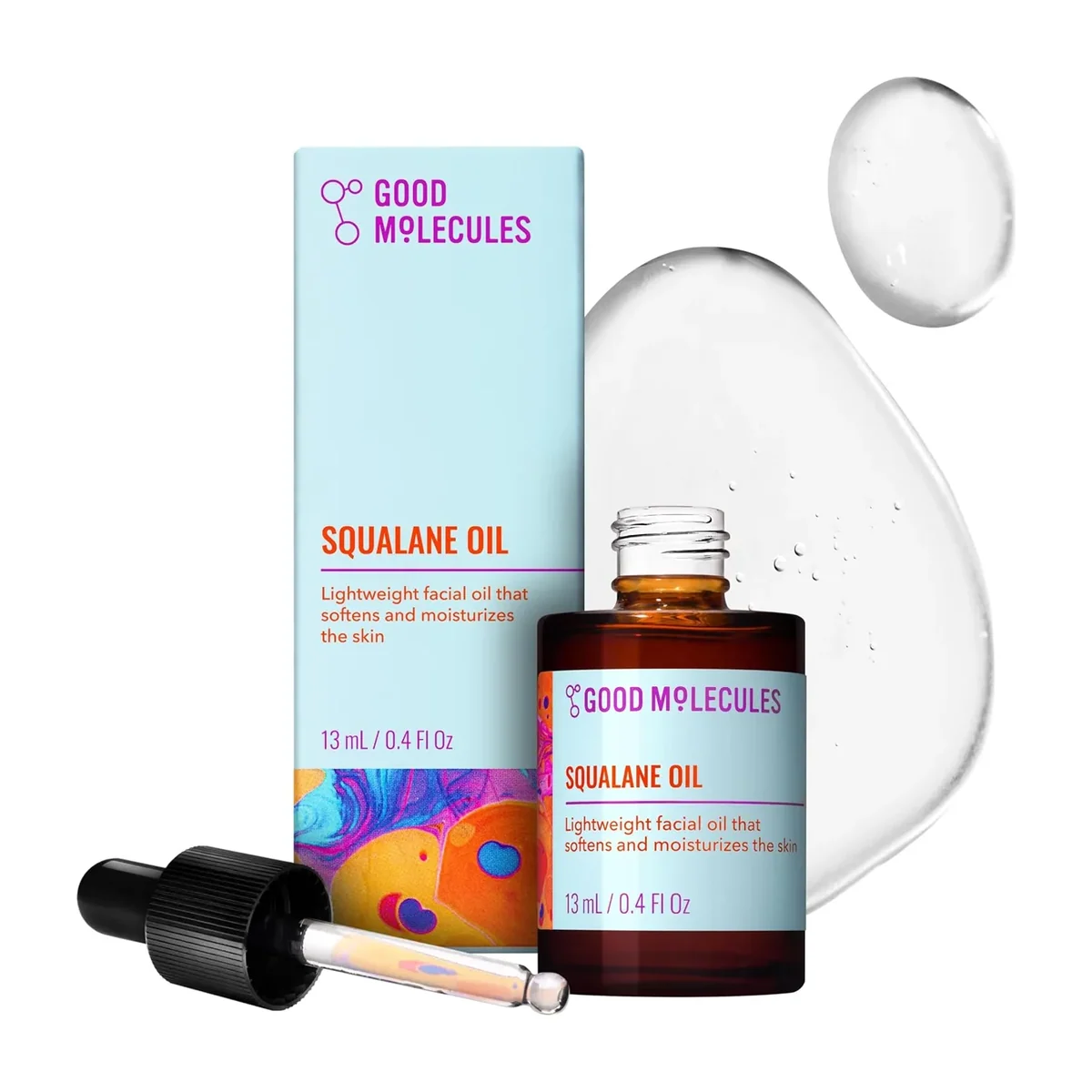
Some products earn four decades on the shelf through relentless reinvention. HABA Squalane Beauty Oil has earned its longevity through the exact opposite discipline, by being precisely what it has always been since 1983: squalane, at 99.9 percent purity, and nothing else. Reading the ingredient list takes about a second, because the ingredient list is one word. The oil launched alongside the company itself as founder Yoshihiko Kobayashi's flagship product and has been produced continuously ever since, with only the sourcing changing over time, from the traditional deep-sea shark-liver origin to a sustainable plant-derived sugarcane source of molecularly identical structure. Studying this product is really a study in what forty years of commitment to a single ingredient looks like.
That 99.9 percent purity figure is the central technical achievement and the reason the price sits where it does. Most commercially available squalane runs somewhere between 85 and 95 percent purity, and the remaining few percent are residual impurities from refinement that can quietly compromise skin tolerance, shelf stability and comedogenic behavior. HABA's multi-stage refinement pushes past that into a substantially cleaner formulation chemistry, and while the ingredient itself is widely available from many suppliers, the purity standard is the brand's founding promise and its genuine point of distinction. It is the difference between buying squalane and buying the definitive Japanese expression of it.
The chemistry underneath is among the most thoroughly studied in cosmetics. Squalane is a saturated hydrocarbon that closely mimics the skin's own surface lipids; the body produces squalene, the unsaturated precursor, and squalane is its hydrogenated, stable cosmetic form. The documented effects are emollience, support for barrier function, a reduction in transepidermal water loss and a mild antioxidant contribution. It is non-comedogenic at skincare concentrations, compatible with every skin type including oily and acne-prone, and well tolerated by sensitive and barrier-compromised complexions. It buffers the irritation that retinoids and acids can provoke, supports recovery after dermatological procedures, and pairs seamlessly with essentially any other product in a routine. Notably for a facial oil, it is safe for those prone to Malassezia-driven fungal acne, which rules out most other oils and makes this a rare option for that group. That single fact alone earns it a place in a lot of routines, because the people most starved for a good occlusive oil, those with fungal-acne reactivity, are precisely the ones forced to avoid the plant oils that feed the yeast. Squalane sidesteps that problem entirely, which is why it shows up so often in dermatologist-leaning recommendations for difficult, reactive skin.
Using it is about as simple as skincare gets. One or two drops onto the fingertips, pressed into the face as the final step or layered into a moisturizer, and the lightweight, silky texture absorbs within seconds and leaves skin softly conditioned with no greasy residue. There is no learning curve, no irritation potential, no fragrance, no allergen concern, since a single-ingredient formulation eliminates the usual suspects entirely. The results follow the steady trajectory of a daily emollient: improved baseline barrier comfort and hydration retention across the first week or two, and a meaningful reduction in chronic dryness and a genuine gain in barrier resilience by the four-to-eight-week mark. What this oil will pointedly not do is brighten, treat or reverse anything, because squalane has no active mechanism beyond emollience and barrier support. It is foundational rather than corrective, and it is honest about that.
Value is the one real consideration, and it deserves a clear-eyed look. At thirty-five dollars for 30ml, this sits meaningfully above generic squalane oils that deliver similar functional benefit at a fraction of the cost, and there is no pretending the molecule itself is rare. The premium buys the 99.9 percent purity standard, the additive-free Japanese formulation philosophy, and the accumulated credibility of a brand that has staked its identity on this single product for over forty years. For someone who specifically values that purity standard and heritage, the premium is reasonable. For someone whose priority is cost-per-milliliter on functional squalane, cheaper alternatives reach comparable outcomes, and that trade-off is worth naming plainly rather than papering over. The small bottle sizes at this tier and the limited US availability, which typically means a Japanese import, are practical wrinkles on top of the price.
The recommendation sorts itself out cleanly. For J-beauty enthusiasts building a complete HABA routine, for anyone who places real value on the purity standard and the brand's long credibility, for post-procedure recovery, for retinoid-tolerance support, or for those with severe sensitivities hunting the cleanest possible facial oil, this is the appropriate and reassuring choice, backed by a 4.7 rating across an enormous review base. It offers no aggressive treatment effect and never claims to, but it delivers reliably gentle, universally compatible emollient support grounded in well-established science and four decades of doing one thing without compromise. In a market that prizes novelty, there is something quietly persuasive about a product whose entire pitch is consistency. The flip side, of course, is that consistency is exactly what makes it skippable for the budget-minded, since a nine-dollar bottle of well-made plant squalane will hydrate and buffer just as capably; what it will not carry is the purity standard, the forty-year provenance, or the reassurance that comes with both, and only you can decide what that reassurance is worth.