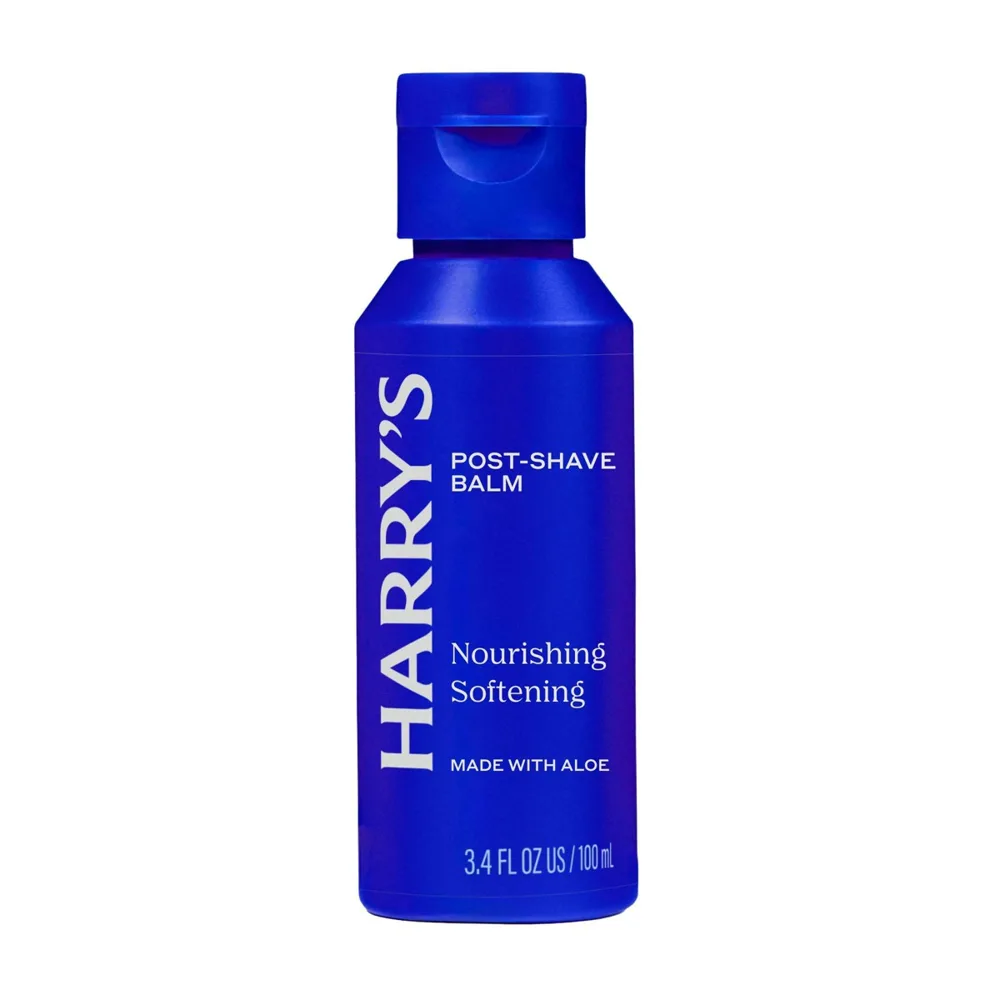
There was a time when aftershave meant one thing: alcohol splashed on raw skin, producing a sting that men had been conditioned to interpret as cleanliness. That ritual persisted for decades despite being objectively counterproductive — alcohol dehydrates freshly shaved skin, strips its already-compromised lipid barrier, and delays the healing of micro-nicks. Harry's Post Shave Balm represents the full rejection of that tradition. There is no alcohol here. No sting. Instead, there is a quietly sophisticated formula built around the premise that skin you have just dragged a blade across deserves soothing, not punishment.
The formula's standout ingredient is phytosphingosine, a naturally occurring lipid found in the upper layers of human skin. Phytosphingosine serves as a precursor for ceramide synthesis — it helps skin rebuild the protective barrier that a razor blade partially removes with each pass. It also has documented antimicrobial and anti-inflammatory properties, meaning it addresses two of the three main post-shave concerns (irritation and infection risk) through a single ingredient. This isn't a typical inclusion in a mass-market aftershave. Most drugstore post-shave products rely on alcohol, witch hazel, or basic moisturizers. Phytosphingosine belongs in the ingredient lists of premium skincare brands, and finding it here at eight dollars is the kind of formulation over-delivery that Harry's occasionally achieves.
Bisabolol, the primary active compound in chamomile extract, provides the most immediate soothing. It is one of the best-documented botanical anti-inflammatories, with research supporting its ability to reduce redness, calm irritation, and promote wound healing. In a post-shave context, bisabolol starts working within minutes, visibly reducing the flush and sting that follow a close shave. It is joined by a deep bench of calming botanicals: aloe leaf juice powder, whose polysaccharides lay a cooling film over abraded skin; licorice root extract, an anti-inflammatory with a brightening side benefit; cucumber fruit extract; ginger root, which may support local circulation; holy basil leaf; and milk thistle fruit extract, whose silymarin content brings antioxidant support to skin that has just had its outermost layer scraped off.
The moisturizing base is well-constructed for its purpose. Propanediol provides lightweight hydration without greasiness. Dimethicone creates a breathable silicone film that protects healing skin without sealing in heat. Glycerin acts as a humectant. Jojoba esters mimic the skin's natural sebum. Marula oil (sclerocarya birrea seed oil) adds antioxidant-rich emollient moisture that absorbs quickly and contributes anti-inflammatory benefits of its own. Panthenol rounds out the conditioning package with its proven skin-healing properties, and tocopheryl acetate guards the whole oil phase against oxidation.
The sensory experience is designed for men who want to feel something without being assaulted. Menthoxypropanediol provides a gentle, controlled cooling sensation — less aggressive than the menthol used in the brand's face washes. It is cooling without being icy, refreshing without stinging. The fragrance is subtle — warm lavender and amber notes that read as clean and masculine without shouting. Within minutes of application, the scent fades to near-nothing.
The texture is a lightweight, white lotion-balm that absorbs in under a minute. There is no greasy film, no shine, no residue that would make a man self-conscious about having applied a product. The matte finish means it sits comfortably under a collared shirt without transferring to fabric. For men who worry about looking like they are wearing product, this is invisible within sixty seconds. The tube is unpretentious and travel-legal, though it does the thing all lotion tubes eventually do — the last quarter requires a determined squeeze and a certain amount of rolling.
Technique matters more than people expect. Rinse with cool water, pat rather than rub, and apply the balm while the face is still faintly damp, pressing it into the shaved areas instead of scrubbing it around — a nicked jawline does not need friction on top of everything else. In the morning, sunscreen goes over the top, because freshly shaved skin is measurably more photosensitive than skin that has kept its outer layer intact.
Performance after shaving is excellent. Applied to freshly shaved skin, it noticeably reduces redness within five to ten minutes. The cooling sensation provides immediate perceived relief while the anti-inflammatory botanicals go to work on the actual inflammation. Over hours, the skin stays comfortable and hydrated without becoming oily. On second-day growth, when stubble meets collar, the barrier-conditioning effect of the phytosphingosine and panthenol helps reduce the irritation that can come from fabric friction against new growth. Used after every shave, the baseline improves too — men who arrive at this balm from a history of chronic razor burn tend to report that the redness gets less severe over the first few weeks rather than simply being managed each morning.
The product doubles competently as a lightweight daily moisturizer on non-shave days. The moisturizing ingredients are perfectly suitable for everyday use, and the soothing botanicals benefit skin regardless of whether it has been shaved. For men seeking the absolute simplest possible routine, this plus a face wash covers the basics. What it will not do is carry very dry skin through a hard winter — it is a lotion-weight balm, and January will find its limits.
The fragrance is the one substantive criticism. On freshly shaved skin — which is, by definition, micro-abraded and barrier-compromised — synthetic fragrance compounds (including limonene and linalool) represent a documented sensitization risk, and the benzyl alcohol in the preservative system is another name that turns up on patch-test panels. For the majority of users, this will cause no issues. But for men with sensitive skin, contact dermatitis, or a history of razor burn, the fragrance adds an unnecessary irritation variable to an otherwise excellently soothing formula. A fragrance-free version would make this product nearly unimpeachable. Genuine pseudofolliculitis barbae — the ingrown-hair bumps that disproportionately affect coarse, curly beard hair — is a medical problem, and no balm, however well-built, is the treatment for it.
At eight dollars for 3.4 ounces, the value is strong. The formulation punches well above its price point. Phytosphingosine, bisabolol, and marula oil are ingredients you would expect to find in products costing three to five times as much. Harry's mass-market distribution keeps the price accessible, roughly twelve hundred reviews land it at 4.5 stars, and the product lasts a reasonable two to three months for men who shave every other day.