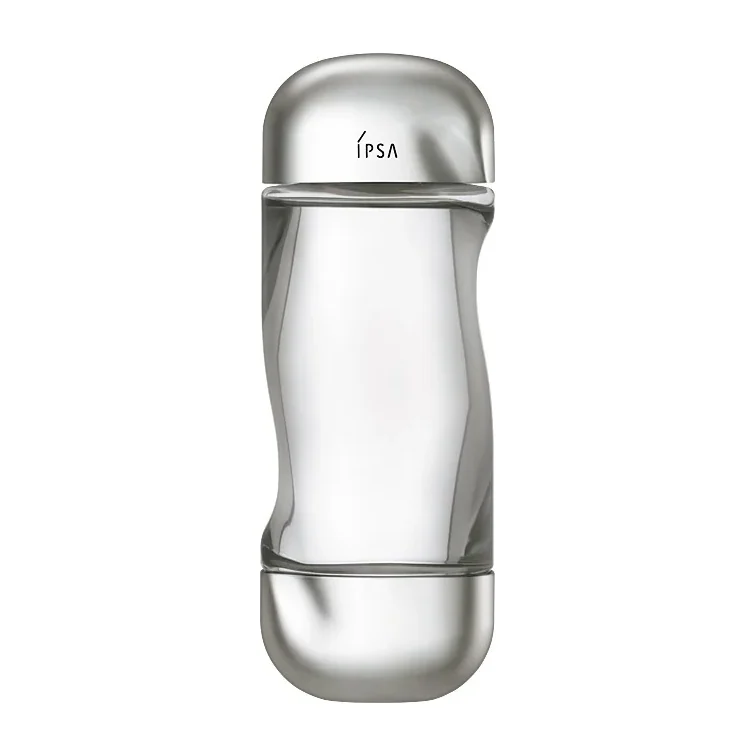
There's a category of Japanese skincare that confounds Western shoppers on first contact: the 'lotion,' which is not a lotion in the thick, creamy sense at all, but a watery liquid you splash or press onto the skin right after cleansing. IPSA's The Time R Aqua — recently renamed from the long-beloved The Time Reset Aqua — is one of the most celebrated examples, and understanding what it is unlocks why it has inspired such devotion. This isn't a moisturizer and it isn't quite a toner; it's a hydration step, the watery foundation a J-beauty routine is built on. And IPSA's version has a twist that separates it from the pack: it's a registered 'medicated' quasi-drug, which means it's doing more than just wetting the skin.
The texture is the first thing that converts people. It is genuinely watery — pour it onto a cotton pad or into your palm and it feels almost like a treated, silky water, vanishing into the skin in seconds with zero tackiness, film, or residue. The pleasure of it is real and a little hard to convey until you've felt it: the skin drinks it up and is left plump, soft, and balanced rather than wet or sticky. This weightlessness is also functional. IPSA's whole pitch, built on its 'Aqua Presenter' hydration technology, is that the lotion floods the skin with moisture and primes it to absorb whatever you apply next, which is why so many devotees describe it as the step that makes their entire routine work better.
But the part that elevates this above a merely pleasant hydrating water is the medicated angle. In Japan, 'medicated' (quasi-drug) products contain government-recognized active ingredients at functional levels, and here those actives are listed right at the top: tranexamic acid and dipotassium glycyrrhizinate. Tranexamic acid is a genuinely well-evidenced ingredient for calming redness and evening tone, particularly the kind of post-blemish marks and unevenness that plague adult skin. Dipotassium glycyrrhizinate is a licorice-derived anti-inflammatory that helps soothe and prevent the inflammation behind adult breakouts. Together, they let IPSA position a hydration step as also a gentle clarifying-and-calming treatment — which is a clever, useful piece of multitasking, especially for the large group of people whose skin is simultaneously dehydrated and breakout-prone.
That combination points to who this product is really for, and it's a slightly counterintuitive answer: oily, combination, and adult-acne-prone skin may benefit even more than dry skin. The formula is completely oil-free and alcohol-free, the hydration helps address the dehydration some suspect of driving oily skin to overproduce sebum, and the medicated actives are aimed squarely at adult breakouts. If you have the frustrating combination of shine, occasional spots, and tightness, this lotion is built for you. It also rounds out the formula with a stabilized vitamin C-E phosphate for antioxidant support and tone, plus soothing peony and rosehip extracts — small but thoughtful additions.
In use, the immediate effects are a softer surface, a plump but not greasy feel, and a notably less shiny, more balanced look. The clarifying and tone-evening benefits from the tranexamic acid and glycyrrhizinate are the slow-burn part, building over several weeks of consistent twice-daily use. IPSA recommends the cotton-pad layering method — pressing the lotion in repeatedly until the skin feels saturated — and while you can absolutely apply it by hand, the layering approach does deliver a more thorough hydration and is part of the ritual fans swear by.
Now for the honest reckoning, which is mostly about price and expectations. At around forty-five dollars for 200ml, this is a premium product, and it's important to be clear-eyed about what you're buying: a genuinely excellent, well-formulated hydration step with two real functional actives — but a hydration step nonetheless, not a wrinkle cure or a dramatic transformer. The cult status is earned by the texture, the priming effect, and the gentle multitasking, all of which are real. But if you're on a budget, there are competent oil-free hydrating lotions for a fraction of the price, and tranexamic acid is available in cheaper dedicated serums. What you're paying the premium for is the specific, hard-to-replicate experience and the Shiseido-group formulation polish, not for actives you can't get elsewhere. That's a legitimate thing to value — plenty of people happily pay for how a product feels and how reliably it performs — but it's worth naming so you go in with the right frame.
The other honest caveat is that hydration alone won't satisfy very dry skin or harsh winter conditions. This is a watery first step; dry skin needs to follow it with a proper emulsion or cream to seal in the moisture it delivers. Used as the foundation it's meant to be rather than as a standalone moisturizer, that's not a flaw, just a usage note.
The bottom line: The Time R Aqua deserves a good deal of its cult reputation. The texture is a genuine pleasure, the oil-free hydration is excellent for the hard-to-please oily-but-dehydrated crowd, the medicated actives add real calming and tone benefits, and it makes a brilliant primer for the rest of a routine. The only thing standing between it and an unqualified rave is the price, which asks you to value the experience and the polish rather than any irreplaceable ingredient. If your skin fits its profile and the budget works for you, it's one of the nicest hydration steps in skincare. If you just need to get water into your skin affordably, you have cheaper options — they just won't feel quite like this.