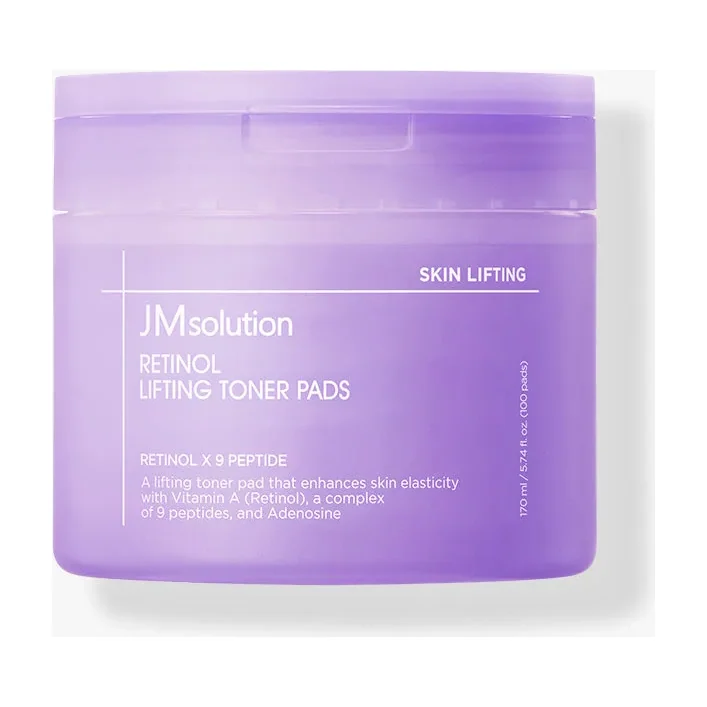
Many people pick up a jar labelled 'Retinol' because they want to ease into retinoids without the peeling and redness. It is a reasonable instinct, and for this particular jar the answer is clear: these pads will not do that. JMsolution's official Korean ingredient table declares the retinol at 0.5 parts per million. That is 0.00005 percent. The gentlest retinol serums marketed to beginners typically start around 0.1 percent, or 1,000 ppm, which is two thousand times more. At the level in these pads, retinol neither conditions skin to retinoids nor produces retinoid effects on fine lines or texture.
So what is in the jar? The upper half of the list is a comfortable hydrating base: water, glycerin, dipropylene glycol, glycereth-26 and butylene glycol, with phenyl trimethicone and triethylhexanoin for a silky, cushiony feel. Adenosine, in thirteenth place, is the most meaningful active and the ingredient that allows the product to claim wrinkle improvement under Korean regulations. It has modest but real evidence for softening fine lines when used consistently. Allantoin, panthenol and arginine add soothing and hydration.
The second half of the list holds the ingredients that give the jar its anti-aging vocabulary: the retinol, stabilised with polysorbate 20, ethoxydiglycol and poloxamer; an antioxidant trio of resveratrol, ferulic acid and tocopherol; and nine peptides, including copper tripeptide-1, palmitoyl pentapeptide-4 and acetyl hexapeptide-8, occupying the final positions. The peptide figure is accurate, but these ingredients are present at very small amounts, well below the concentrations used in most studies.
One ingredient deserves a clarification because it can confuse careful label readers. 'BHA' appears near the end of the list, which many will assume means beta hydroxy acid, the exfoliant salicylic acid. It does not. In this list, BHA is butylated hydroxyanisole, an antioxidant used alongside BHT to protect oils and the retinol from oxidation. The pads contain no exfoliating acids at all.
This has a practical upside. Because the retinol dose is negligible and there are no acids, the pads are extremely gentle. There is no tingling, no dryness and no purging, and they can be used morning and night by almost any skin type. They also pair comfortably with an actual retinoid serum at night or vitamin C in the morning. Used that way, as a hydrating first step in an anti-aging routine rather than the anti-aging routine itself, they make sense.
The main caution is fragrance, which sits in the upper half of the list alongside adenosine. It gives the pads a soft scent that may bother sensitive or rosacea-prone skin. The formula is otherwise free of drying alcohol and oils, although it contains silicones and polysorbate 20, which makes it a less ideal choice for fungal-acne-prone skin.
Pregnancy is worth a note. Retinoids are routinely avoided in pregnancy as a precaution. The retinol in these pads is so low that any exposure is minimal, but anyone pregnant or trying to conceive should check with a clinician rather than rely on the tiny dose.
It is fair to ask why a brand would put retinol in a product at this level. The answer is mostly regulatory and commercial. In Korea, a functional wrinkle-improvement claim rests on specific registered actives such as adenosine or retinol at defined amounts; this jar's claim relies on adenosine. Adding a trace of retinol lets the brand put a highly searched word on the lid without the stability headaches, irritation complaints and pregnancy warnings that a real dose would bring. The same pattern shows up across much of the K-beauty pad market, and JMsolution at least prints the figure, which many brands do not.
For readers who do want a genuine retinoid, the difference is easy to check. Look for a stated percentage, typically between 0.1 and 1 percent for retinol, or 0.05 to 0.1 percent for retinal. Expect some dryness in the first weeks, use it at night and wear sunscreen daily. If a product causes none of those effects and names no percentage, the retinol is probably decorative.
In use, the pads are soft, well soaked and leave a smooth satin finish. One pad covers the whole face and neck, and resting a split pad on the forehead or around the smile lines for a few minutes gives a small extra hydration boost. The jar holds 100 pads, about seven weeks at twice-daily use.
The price is the same eighteen dollars JMsolution's US store charges for the rest of the range, although the listing has often been sold out. That is reasonable for a hydrating toner pad with adenosine, but poor value if you are buying specifically for retinol.
The pads have only been on the US store since July 2025, and independent reviews in English are limited. The brand's elasticity claims come from its own testing, which has not been published.
There is nothing wrong with a gentle hydrating pad with an anti-aging theme. The problem is only the name. Buy this for comfortable hydration with a little adenosine; buy a proper retinoid, whether retinol, retinal or a prescription tretinoin, if you want what the word on the jar usually means.