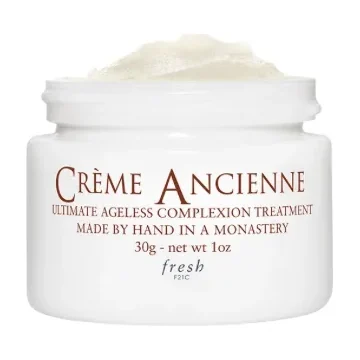
Zinc oxide is on the label, and the brand makes no sunscreen claim, and those two facts together are the whole review in miniature. A day cream that carried enough zinc oxide to shield skin would say so, loudly, with a tested SPF number, because that number sells jars; a day cream that lists the filter and stays silent is telling anyone who reads labels that the dose is a conditioning pigment's worth, not a sunscreen's, and that the word protective on the front means something else. What it means here is what it meant in the salon decades ago: a wax barrier against a New York January, against wind, dry heating and the walk between the subway and the door. Judged as that, the cream is decent; judged by what a buyer in 2026 hears in the name, it needs a sunscreen over it every morning, and the copy's careful list of cold-weather benefits is the brand quietly agreeing.
The barrier itself is well made and lighter than its formula suggests. Beeswax and microcrystalline wax with mineral oil and soybean oil lay a semi-occlusive film that slows water loss; fatty alcohols, dimethicone and a light gelling copolymer keep that film from feeling like a balm, so it goes on a little waxy, settles in a minute or two and leaves a satin, lightly filmed finish that sits under makeup without shine. Under the film, panthenol, glycerin and propylene glycol hydrate, which is why wind-chapped, tight skin settles within two or three days rather than simply being sealed, and tocopherol keeps the soybean oil and evening primrose extract from turning in the jar while adding the modest antioxidant contribution the copy calls antioxidant-rich. The forty reviews on the brand's site, at a 4.7, are the reviews of people who bought it for a cold climate and found it did what it said; the complaints are the scent, the absence of SPF, and that it is too much in warm weather, all of which are accurate.
What cannot be said is anything about doses, because the brand publishes this product's ingredients alphabetically. Water leads and then beeswax to zinc oxide run in dictionary order, which US labelling permits in some cases and which means no rank can be read: whether soybean oil or mineral oil dominates the lipid phase, how much panthenol is present, whether the evening primrose and olive leaf extracts are meaningful or decorative, are all unknowable from the jar, and the assessment here rests on how wax, oil and panthenol emulsions behave in general rather than on this one in particular. That is a limitation the brand could remove tomorrow by publishing the list in descending order, as it does for most of its other products, and it is worth saying that the alphabetical choice does the cream no favours.
The tail is the familiar salon set and, on a winter barrier cream, it costs more than usual. Fragrance is declared with benzyl benzoate; diazolidinyl urea is a formaldehyde-releasing preservative and an established contact allergen; the two parabens are the safest items on the list and the most worried about; and beeswax and soybean oil are minor allergen notes. The skin that most needs a cold-weather barrier cream, the eczema-prone, the rosacea-prone, the winter-cracked sensitive face, is exactly the skin these ingredients are worst for, and modern barrier creams built for that skin leave every one of them out at the same price. Resilient dry and normal skin will not notice; that is who this jar is for.
A word on how it wears through a day, since that is the test a day cream is set. On a cold morning it goes on with a faint drag from the wax, settles to a satin film by the time the coffee is poured, and holds: at mid-afternoon in dry office air the cheeks are still comfortable and there is no tightness at the corners of the mouth, which is more than a light gel-cream manages in the same conditions. Under sunscreen it neither pills nor slides, and foundation sits on it evenly. Take the same jar into a warm May and the film that was welcome in January is a layer too many by lunchtime, which is not a flaw so much as a season.
On value, eighteen dollars for an ounce is eighteen dollars an ounce and a pea-sized morning dose lasts about two months, so the monthly cost is nine dollars, which is inexpensive for a face cream and about what the ingredients justify. Nothing in the jar is costly, nothing is sophisticated, and the price is fair for a competent wax-and-oil day cream from a brand with a long history; a fragrance-free barrier cream with a real SPF at the same price would simply be more useful.
The recommendation, then, is narrow and seasonal. Dry or normal, non-reactive skin that wants a light-feeling barrier cream for cold, windy months, and will wear sunscreen over it, gets a comfortable, sensible product at a low price. Oily skin, sensitive skin and anyone who read the name and hoped for sun protection should look elsewhere; and everyone should read the zinc oxide on the label as the small lesson it is, that what a product does not claim is often the most informative thing on it.