Every topical brightening active fights the same uphill battle, and it has a name: the stratum corneum. That dead-cell outer layer of the epidermis is the skin's gatekeeper, and it is very good at its job — which is wonderful for keeping pathogens out and water in, and frustrating when you are trying to deposit niacinamide, tranexamic acid, or arbutin somewhere they can actually modulate melanin. Most brightening serums have documented mechanisms on paper, but their real-world efficacy hinges on how much of the applied concentration survives the journey across that barrier. Dissolving microneedle technology, borrowed from pharmaceutical drug delivery and adopted by cosmetic brands over the past decade, sidesteps the whole problem by creating temporary micro-channels through the stratum corneum and dropping the actives directly into the upper skin layers. That is a genuinely different proposition from a leave-on serum, and it is the entire reason these dots exist.
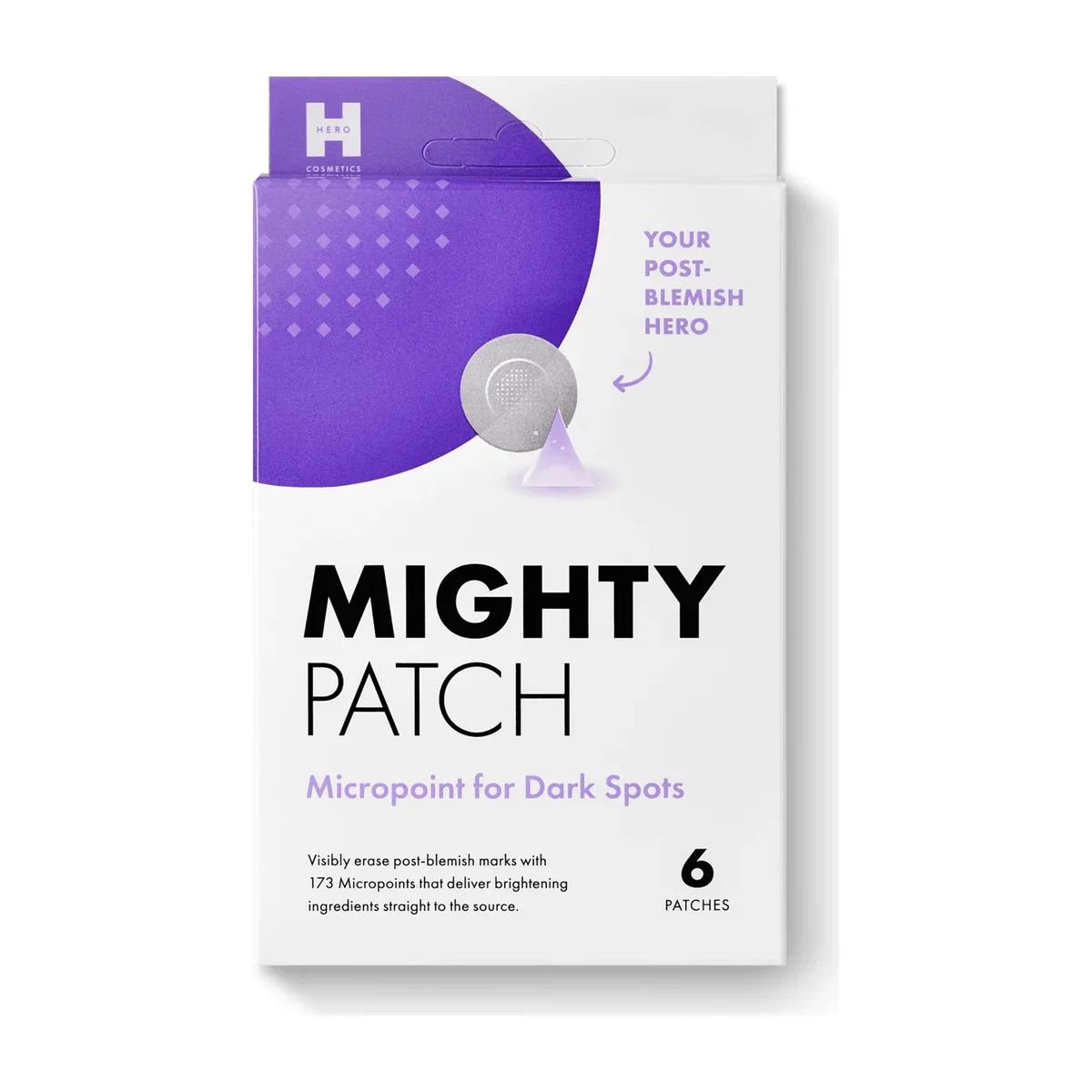
Peace Out's Dark Spots Microneedling Dots are one of the more polished consumer expressions of the idea. Each hydrocolloid dot carries a dense array of dissolving microneedles loaded with the brightening payload. You press one onto a spot, the needles puncture the stratum corneum and dissolve over the following half hour or so, releasing their cargo into the upper layers, and the hydrocolloid base then holds occlusive contact over the treated area for hours. It is spot-precision delivery in a format that traditional serums simply cannot replicate.
The active stack inside those needles is legitimately sophisticated, and most of it rests on well-established evidence rather than hope. Niacinamide leads, with extensive research behind its melanin-modulating, brightening, and barrier-supportive effects. Tranexamic acid is the key supporting player — an amino-acid derivative with solid research for hyperpigmentation management, particularly the post-inflammatory marks left behind by acne and the stubborn pigmentation of melasma. Arbutin, a glycosylated hydroquinone derivative, inhibits tyrosinase, the enzyme that kicks off melanin production. Ferulic acid and phytic acid round things out with antioxidant and metal-chelating activity that stabilizes and supports the brightening effort. Layering transcriptional, enzymatic, and antioxidant mechanisms together like this mirrors how dermatology actually thinks about pigmentation now — no single pathway, but several attacked at once. Licorice extract adds glabridin-based brightening, while soothing botanicals temper the whole thing. The hydrocolloid matrix itself — built on the same gentle, wound-healing-inspired chemistry that made the brand's name in acne patches — adds hydration and overnight retention.
In practice the dots are easy to live with. They apply quickly, stay put through the night, and peel away cleanly in the morning; the microneedle sensation is mild pressure, not pain, which is exactly right for cosmetic use. Fragrance-free, vegan, cruelty-free, and broadly suitable across skin types including sensitive, they cast a wide net for compatibility. The honest timeline is cumulative — spot fading over roughly four to eight weeks with consistent twice-weekly use — so this rewards patience rather than delivering overnight drama.
The brand's history is part of why this product reads as credible rather than gimmicky. Peace Out launched in 2017 by building its reputation on dissolving-microneedle hydrocolloid acne patches, and the Dark Spots dots, added in 2020, extend that same proven delivery platform to post-acne hyperpigmentation rather than inventing a technology from scratch. That continuity matters: the company has spent years refining how its needles dissolve and how its hydrocolloid base behaves on skin, and that accumulated know-how shows up in how reliably these stick, dissolve, and release. With several thousand reviews behind the line and an established track record, the data confidence here is high, which is part of why the scoring lands favorably. It is also worth noting these are best understood as a targeted tool within a broader plan — paired with diligent sunscreen, since unprotected UV exposure will re-darken the very spots you are treating and quietly undo weeks of progress.
The trade-offs sit mostly around cost and scope. Twenty-eight dollars for twelve single-use dots works out to a premium per dot, and for anyone treating several spots across a multi-week protocol the math adds up fast — these reward a focused, few-spots approach far more than a face full of pigmentation. The effects are real but gradual, so anyone hoping for a quick fix should reset expectations, and the format shines on smaller post-acne dark spots while doing comparatively little against broad pigmented territory like extensive melasma. They also can't share a routine with retinoids or exfoliants, so you alternate nights, and a twelve-count box won't carry you far if your protocol involves many spots.
The recommendation comes down to scope. For someone targeting individual post-acne hyperpigmentation spots and willing to pay for a precision delivery format that genuinely improves how much active reaches the right depth, these earn a confident endorsement — the microneedle technology is the real, useful innovation here, not marketing dressing, and an established brand with a track record in dissolving-needle patches lends it credibility. For anyone facing widespread pigmentation across large areas, a traditional leave-on brightening serum covers more ground far more economically. Bought for the precise job they are built for, these dots do it well.