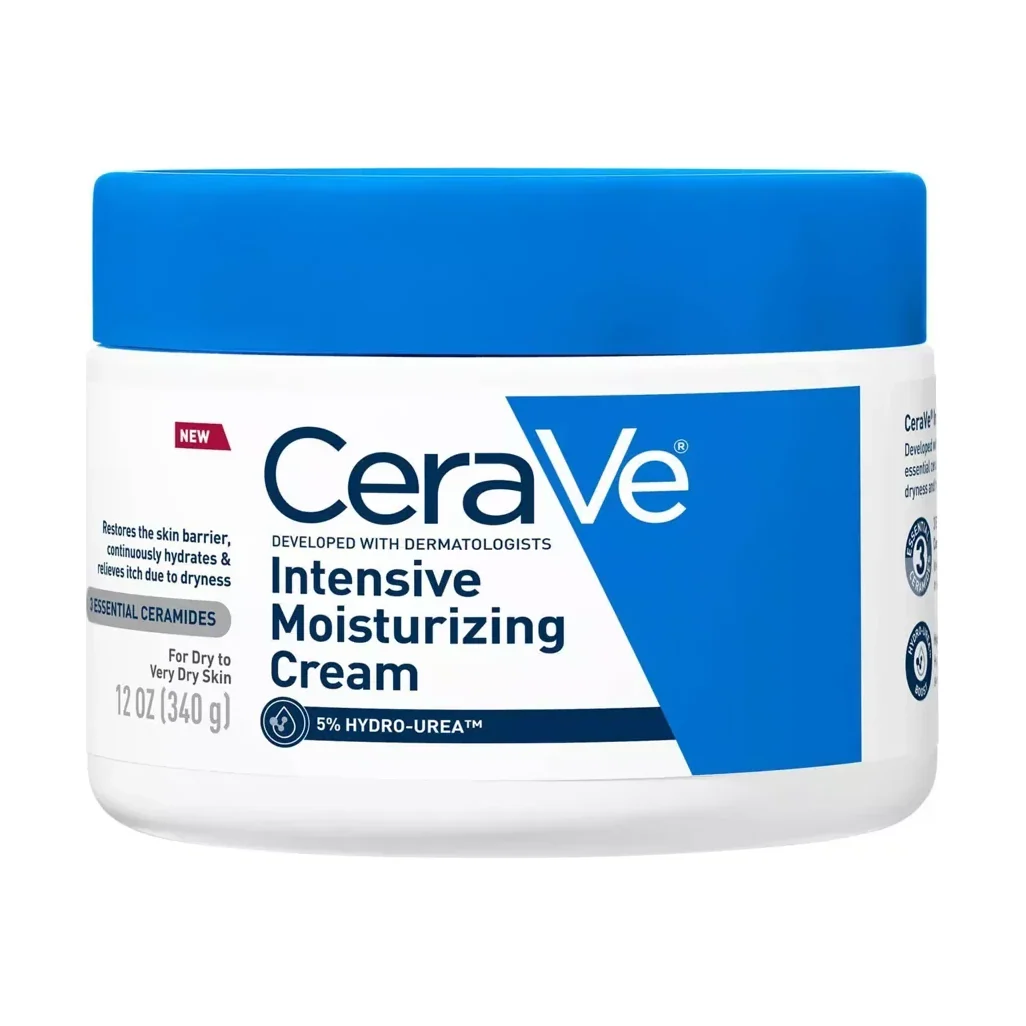
If you've spent any time in the Boots skincare aisle in the last few years, you've seen Revolution Skincare methodically expanding its lineup into every category where the ingredient-forward budget brands have been successful, and pricing each product slightly below the market leader. The Ceramides Moisture Cream is their answer to the ceramide-and-hyaluronic-acid tub that has become the default dry-skin recommendation in dermatology offices worldwide. Revolution's version isn't identical — the category leader uses a three-ceramide complex with a patented time-release encapsulation technology, while Revolution uses a five-ceramide complex in a more conventional emulsion — but the underlying philosophy is the same, and the results on skin are more similar than the price difference suggests.
The formulation is what makes this cream interesting. Revolution built it around a genuine five-ceramide blend: ceramide NP, NS, AP, EOP, and EOS, which are the five most physiologically relevant ceramide species in the skin's own intercellular lipid matrix. Alongside those, the formula includes cholesterol, behenic acid, phytosphingosine, and sphingosine components that together replicate the lipid profile the stratum corneum uses for barrier repair. That's a technically sophisticated approach — the classic research on barrier repair from the 1990s established that ceramides work best when delivered alongside cholesterol and free fatty acids in approximately physiological ratios, and this formulation is clearly built with that principle in mind. It matters more than it sounds: ceramides delivered at the wrong ratio, without their lipid partners, can actually slow barrier recovery rather than speed it, which is precisely why so many cheap 'ceramide creams' underperform their labels. Add sodium hyaluronate as a humectant, shea butter and dimethicone for occlusive support, glycerin as an additional humectant, and lecithin and tocopherol to keep the lipid phase stable, and you have a complete barrier-repair moisturizer that would not look out of place on a dermatology office shelf.
It is also worth retiring the objection that ceramides cannot penetrate deeply enough to matter. They are not supposed to. The barrier is not in the dermis — it is the stratum corneum, the outermost few dozen microns of dead-but-organized cells held together by exactly the lipid mortar this cream is made of. A ceramide that stays at the surface has arrived at its destination.
On application, the cream comes out of the jar as a rich, slightly dense white emulsion that spreads easily and absorbs to a satin finish. The first impression on dry skin is immediate relief — tightness softens within minutes, rough texture smooths out, and the overall feel of the skin is plush without being greasy. Over the first week, consistent twice-daily use builds a visibly more resilient surface; the redness that dry skin sometimes shows in the afternoons fades, and the barrier feels tangibly more robust under makeup and sunscreen, with the full resilience taking a month or so to consolidate. For users who have been running aggressive active routines — nightly retinol, twice-weekly acid exfoliation, vitamin C serums — this cream is the kind of forgiving buffer that makes the whole routine more sustainable. It repairs the low-grade barrier stress that aggressive actives generate without interfering with their function in any way, which is the single most underrated role a moisturizer can play.
The drawbacks worth mentioning are minor. The cream contains paraffin, a light mineral wax used for emollient texture and occlusive support; some users avoid it on principle, though there's no meaningful dermatological concern with its use in skincare. The packaging is a plastic jar rather than an airless pump, which means you're dipping fingers into the product each time unless you use a spatula — a small hygiene consideration rather than a stability one, since ceramides are far more chemically placid than a retinol or a vitamin C and do not oxidize the moment air touches them. The shea butter content makes this slightly too rich for very oily skin in summer conditions, and Revolution does sell a lighter lotion version of the same philosophy for anyone who wants it. Fungal-acne-prone skin should approach with the usual caution. None of these are dealbreakers, and all of them are reasonable tradeoffs for a moisturizer at this price point.
The value math is genuinely excellent. At roughly $12 for 177ml — about seven cents per millilitre — this undercuts the market-leading ceramide cream on price per ounce while offering a more complete lipid complex, and it costs a fraction of what the premium triple-lipid creams charge for essentially the same formulation philosophy. A jar lasts four to five months with twice-daily facial use, longer if applied only at night, which works out to a couple of dollars a month. For a ceramide moisturizer that's genuinely well-formulated rather than a token-ingredient budget version, this is one of the easier buy recommendations in the entire category. It's a product that rewards you for being a smart shopper rather than penalizing you for caring about your wallet, and the fifteen hundred-odd reviewers sitting at 4.4 stars are mostly people who arrived expecting less.
The people who should buy this are obvious: anyone with dry, normal, or sensitive skin who wants a ceramide moisturizer and doesn't want to pay premium brand markups. It's also a great pairing for anyone running actives — retinol users in particular benefit from having a comfortable, fragrance-free ceramide buffer to apply on top of their treatment serum. And it's one of the better fragrance-free budget options for users with eczema-prone or rosacea-prone skin who need a moisturizer that won't trigger their reactivity. For very oily skin in hot weather, or for users who specifically want a particular brand's encapsulation technology, look at alternatives — but for the vast majority of shoppers in this category, this cream is an easy win.