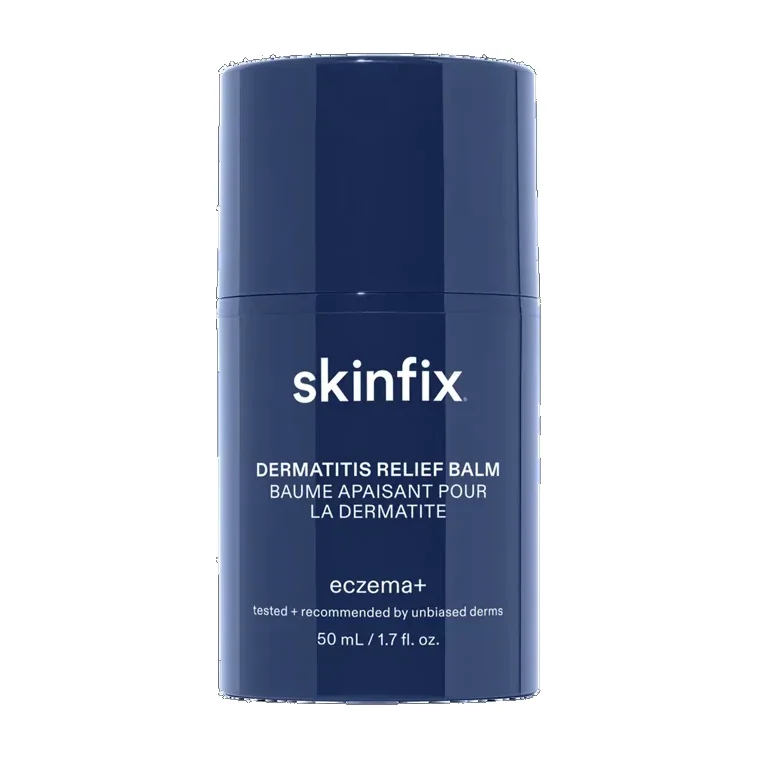
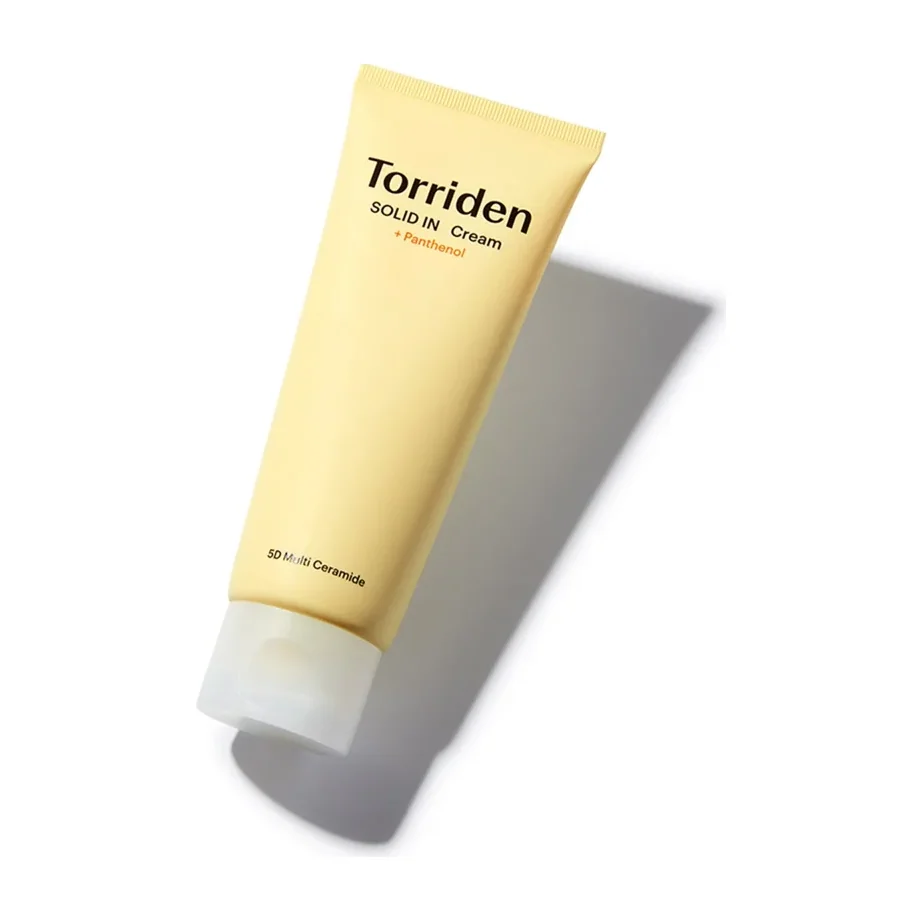
Facial eczema patients spend a lot of time in the skincare aisle picking up tubes, reading the back labels, and putting them back down. The thin moisturizers that are gentle enough not to sting don't do anything about the itch. The body eczema creams that actually soothe a flare are thick, white, and impossible to wear on the face without looking like you've been frosted. Prescription topicals help, but most dermatologists will tell you they work better when paired with a supportive moisturizer that can sit over the top and keep external triggers out. Finding that supportive moisturizer is the problem this balm was designed to solve, and it solves it better than most of its competitors.
The ingredient story here is genuinely thoughtful. Colloidal oatmeal at 1% sits in the formula at the concentration that earns a National Eczema Association seal, which is not a marketing sticker — it means the product meets the association's standards for ingredient safety and clinical suitability for eczema-affected skin. Colloidal oatmeal itself is one of the most well-validated topical ingredients in dermatology, with decades of evidence supporting its anti-itch and skin-protectant activity. The word 'colloidal' is doing real work in that sentence, too: the particle size and suspension are what produce the effect, which is why grinding porridge oats into a bath achieves considerably less than the internet promises.
That alone would make this a defensible pick, but the formula doesn't stop there. Ceramide NP and cholesterol are both present to rebuild the compromised lipid matrix that underlies most facial eczema. This pairing matters more than a single-ceramide product would suggest — the intercellular mortar between skin cells is made of several lipid classes, and supplying only one of them repairs the wall slowly if at all. Niacinamide is in the mid-list, supporting both ceramide biosynthesis and the inflammatory component of flaring skin. Shea butter and squalane form the occlusive skeleton. Allantoin, panthenol, and bisabolol round out the soothing cast, with sodium hyaluronate and glycerin handling the humectant side. It's a formula that has been thought through layer by layer, and every inclusion has a specific reason to be there.
What makes it work specifically on the face is the texture. Most body eczema balms are thick, opaque, and slow to absorb — fine for a calf or an elbow, impossible above the jaw. This balm is structurally rich, but it has been tuned with caprylic/capric triglyceride and glycerin high in the list to soften it enough that it spreads on facial skin without dragging, softens within a minute, and sits under sunscreen and light makeup without rolling. The pH sits at 5.5. It's still a balm, not a gel, so users with genuinely oily skin are going to find it too much. But for the large majority of dermatitis-affected faces — skin that is dry, compromised, flaring, and desperate for cushion — the texture is exactly right, and the received wisdom that an eczema balm cannot be worn above the neck simply doesn't survive contact with this tube.
On actively flaring skin, the itch relief is fast, which matters more than almost anything else to people in the middle of a flare. Anyone who has lain awake at two in the morning trying not to scratch their own face understands that speed is not a luxury feature. Redness reduction over the first few days is visible. Scaly patches soften within a week of consistent use, and with daily application over four to eight weeks, flare frequency tends to decline. None of this is magic — it's the expected behavior of a well-formulated eczema product used consistently — but it's worth noting that the formula actually delivers on the things the label promises, which is not universally true in this category.
One point about how to use it, since it's the one people get wrong. This is a supportive moisturizer, not a treatment for the inflammation itself. Prescription topicals go on first and are allowed to absorb; the balm goes over the top, where it holds them in and keeps the world out. And it works best used in the calm weeks as well as the bad ones — barrier maintenance is a habit rather than a rescue, and the flare you don't have is the one you prevented in November.
There are small honest limitations. Seventy-five milliliters is not a large tube, and if you use this balm as a full face moisturizer twice a day you'll finish it in two to three months at a cost of about thirteen dollars a month. That's a fair price for what you're getting, but it's not cheap. The shea butter content is a mild concern for the acne-prone, and it isn't fungal-acne safe. And users with combination skin may find the texture slightly too rich for the T-zone, even though it absorbs acceptably well elsewhere on the face. Anyone with a diagnosed oat allergy should obviously stay away.
Within its intended use case, though, this is one of the most thoughtfully formulated facial eczema products on the market. It earns its NEA seal on merit, not marketing, and it's the kind of product that dermatologists tend to recommend by name to patients whose faces are flaring and who need something they can actually apply under sunscreen.