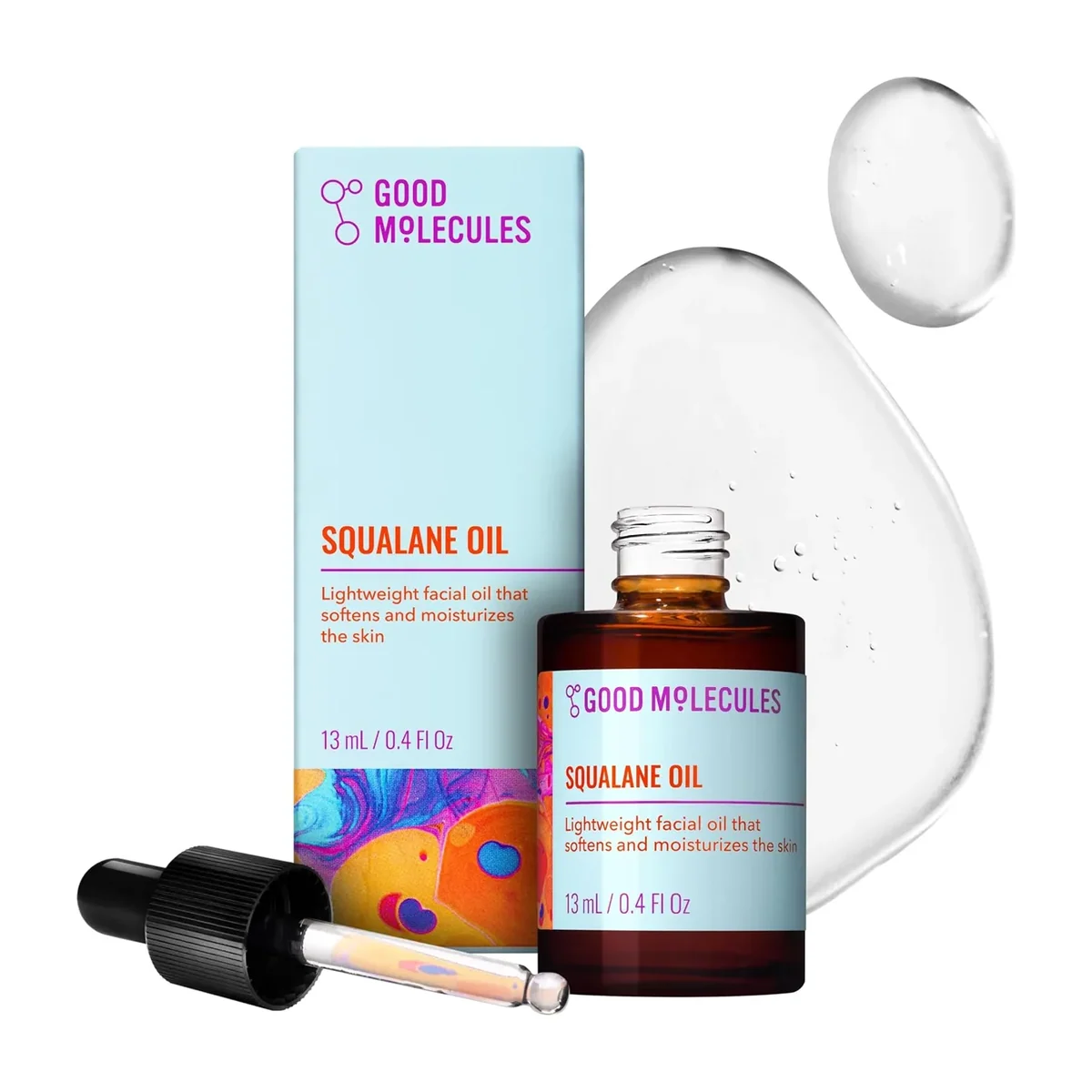
The Ordinary 100% Plant-Derived Squalane in amber glass dropper bottle
Good choice for Dry or dehydrated skin
What makes this different

This is 100% sugarcane-derived squalane — not olive-derived, which matters for fungal acne safety since olive squalane can contain trace fatty acid impurities. The ECOCERT-approved, USDA Certified Bio-based sourcing ensures purity, and at $10.40, it undercuts most comparable squalane oils by 60-70%.

The Ordinary

The Ordinary 100% Plant-Derived Squalane Review

Universal Skin Staple Face Oils oil clinical Paraben free Fungal-acne safe Cruelty free Vegan

A near-universal face oil that works for virtually every skin type — including fungal-acne-prone — thanks to its skin-identical composition and zero irritants. It won't transform your skin alone, but as a lightweight sealant over active treatments, it's the $10 workhorse that makes everything else in your routine perform better.

Price $10.40 30 mL / 1 fl oz
On the market 2016 Made in Canada
Buy at Amazon ♥
Verdicts

How well it fits each concern

One verdict per concern. Open a row for the reasoning; the receipt has every source.

The scaleRecommendedGoodSupportingEarly evidenceNot for thisAvoidhow it works

Good choicefor Dry or dehydrated skinSqualane is a reference standard by mechanism for dryness; this oil carries it at 100%.Receipt2 sources on the row · 100% declared, studied range 1–100% · row checked Jul 17, 2026 · rule R5, which decided 9,871 verdicts · open the receipt

The case for it

  1. Squalane is a reference standard by mechanism for this concern — an established physical action, not a trial result.
  2. It is present at a declared strength inside the studied range, or sits high in the ingredient list.
  3. The formula carries none of the triggers this concern is sensitive to.

Limited evidenceGentleNo reviews read yet

Same rule for everyone. “Good choice” is the verdict on 10,251 of 36,954 concern verdicts across the catalog; rule R5 decided 9,871 of them. Unchanged since September 5, 2026, engine 6.6.0.

Brand or formulator? Disclose a concentration or correct a fact →

The full receipt: rule, row, sources, dates →All dry or dehydrated skin products →

Supporting rolefor Compromised Skin BarrierNothing here targets compromised skin barrier directly; lipid replenishment is the usual care alongside it, and this oil provides that.ReceiptSqualane: no evidence row for this concern yet · rule R8, which decided 2,115 verdicts · open the receipt

The case for it

  1. Squalane has no evidence row yet for this concern — it is in the research queue.
  2. The formula carries none of the triggers this concern is sensitive to.

Not from a trial rowGentleNo reviews read yet

What would change this: A researched evidence row for the lead active would replace this with a verdict.

Same rule for everyone. “Supporting role” is the verdict on 6,915 of 36,954 concern verdicts across the catalog; rule R8 decided 2,115 of them. Unchanged since September 5, 2026, engine 6.6.0.

Brand or formulator? Disclose a concentration or correct a fact →

The full receipt: rule, row, sources, dates →All compromised skin barrier products →

Good choicefor SensitivityNo fragrance, drying alcohol, declarable allergens or sensitising preservatives in this oil — the profile sensitive skin looks for.Receiptread from the ingredient list: no fragrance, drying alcohol, declarable allergens or sensitising preservatives · rule F2, which decided 2,073 verdicts · open the receipt

The case for it

  1. Squalane is not an active we list for this concern — it is in the formula for another job.
  2. It is plausibly present at a working level, though the concentration is not declared.
  3. The formula carries none of the triggers this concern is sensitive to.

Not from a trial rowGentleNo reviews read yet

Same rule for everyone. “Good choice” is the verdict on 2,073 of 36,954 concern verdicts across the catalog; rule F2 decided 2,073 of them. Unchanged since September 5, 2026, engine 6.6.0.

Brand or formulator? Disclose a concentration or correct a fact →

The full receipt: rule, row, sources, dates →All sensitivity products →

Unprovenfor Texture & dullnessSqualane has early or mechanistic evidence for dullness — a reasonable bet, not a recommendation; the other actives here are at the same early stage.Receipt1 source on the row · 100% declared · rule R9, which decided 778 verdicts · open the receipt

The case for it

  1. Squalane has early or mechanistic evidence for this concern, not trial-backed standing.
  2. It is present at a declared strength inside the studied range, or sits high in the ingredient list.
  3. The formula carries none of the triggers this concern is sensitive to.

Limited evidenceGentleNo reviews read yet

What would change this: Trial evidence for the active on this concern would move this up a step.

Same rule for everyone. “Unproven” is the verdict on 966 of 36,954 concern verdicts across the catalog; rule R9 decided 778 of them. As of November 10, 2026, engine 6.6.0.

Brand or formulator? Disclose a concentration or correct a fact →

The full receipt: rule, row, sources, dates →All texture & dullness products →How texture & dullness is treated →

Not tested for thisfor Post-ProcedureSqualane has not been tested for post procedure: we looked and found no trial of it for this, so there is nothing yet to judge it on; nothing else here addresses it.Receipt100% declared · rule R10, which decided 259 verdicts · open the receipt

The case for it

  1. Squalane has no trial on record for this concern: we looked and found none.
  2. It is present at a declared strength inside the studied range, or sits high in the ingredient list.
  3. The formula carries none of the triggers this concern is sensitive to.

Not from a trial rowGentleNo reviews read yet

Same rule for everyone. “Not tested for this” is the verdict on 259 of 36,954 concern verdicts across the catalog; rule R10 decided 259 of them. As of November 10, 2026, engine 6.6.0.

Brand or formulator? Disclose a concentration or correct a fact →

The full receipt: rule, row, sources, dates →All post-procedure products →

Supporting rolefor Fungal AcneNothing here targets fungal acne directly; trigger-free emollience is the usual care alongside it, and this oil provides that.Receiptno active in the formula is one we list for this concern · rule R8, which decided 2,115 verdicts · open the receipt

The case for it

  1. Squalane is not an active we list for this concern — it is in the formula for another job.
  2. It is plausibly present at a working level, though the concentration is not declared.
  3. The formula carries none of the triggers this concern is sensitive to.

Not from a trial rowGentleNo reviews read yet

Same rule for everyone. “Supporting role” is the verdict on 6,915 of 36,954 concern verdicts across the catalog; rule R8 decided 2,115 of them. Unchanged since September 5, 2026, engine 6.6.0.

Brand or formulator? Disclose a concentration or correct a fact →

The full receipt: rule, row, sources, dates →All fungal acne products →How fungal acne is treated →

As a oilNot judged: what a oil is for — fatty-acid profile, seals moisture, resists going rancid — cannot yet be measured from the ingredient list (only pore and malassezia risk can).

A verdict is Dermington’s assessment of how well a product’s ingredients fit a concern — never a claim about what the product treats. Evidence dots and collected reviews sit beside it and are never blended in. Rules 0.10.0 · evidence table ev-2026.11c-r265 · engine 6.6.0 · how we decide · this product’s receipt

Reader poll · Town SquareQuestion 1 of up to 3

Have you used 100% Plant-Derived Squalane?

One tap counts. A couple of optional follow-ups come next.

No account neededOne answer each, change it any timeCounted only in anonymous totalsHow the Square counts →
Assessment

Pros & cons

What it does well 8

  • Skin-identical lipid that mimics natural sebum composition for maximum compatibility
  • Fungal acne safe — sugarcane-derived with no trace fatty acid impurities
  • Completely odorless with zero irritants, allergens, or sensitizers
  • Lightweight absorption without the heavy, greasy feel of traditional face oils
  • Excellent buffering agent over retinoids and other irritating active treatments
  • Versatile multi-use product for face, hair, lips, cuticles, and body
  • ECOCERT approved and USDA Certified Bio-based for quality assurance
  • Outstanding value at $10.40 compared to $25-40 competitors

Where it falls short 5

  • Not hydrating on its own — must be layered over humectant serums to be effective
  • Can leave visible sheen or oily appearance if too much is applied
  • Some users report pilling when layered under certain foundations or sunscreens
  • Short 6-month PAO compared to most skincare products
  • Single-ingredient simplicity means no targeted active benefits beyond barrier support
Review

The full review

There's a quiet elegance to a product that contains exactly one ingredient. No stabilizers, no emulsifiers, no fragrance, no preservatives — just squalane derived from sugarcane, bottled in Toronto, and sold for a price that borders on charitable. The Ordinary's 100% Plant-Derived Squalane is the kind of product that makes skincare feel refreshingly straightforward.

The science behind squalane starts with your own body. Squalene — the unsaturated precursor — is one of the most abundant lipids in human sebum, constituting roughly 12% of the oily mixture that keeps your skin supple, protected, and functioning as a proper barrier. The problem is that squalene production peaks in your teens and twenties, then declines steadily. By your thirties, the drop is noticeable. By your forties, it's significant. Topical squalane is essentially replenishment therapy — putting back what biology is taking away.

The plant-derived part matters more than you might think. Traditional squalane was sourced from shark liver oil, which is both ethically problematic and increasingly regulated. This product uses squalane derived from sugarcane fermentation, which produces a cleaner, higher-purity molecule. But the sourcing distinction goes beyond ethics: sugarcane-derived squalane contains fewer trace fatty acid impurities than olive-derived alternatives, which makes it safe for those prone to fungal acne — a distinction that olive-sourced squalane products can't always claim.

On the skin, this oil feels almost like nothing. Where the argan oil in The Ordinary's lineup has weight and presence, squalane is ghostly in its lightness. A few drops spread across the face and absorb within a minute or two, leaving behind a subtle healthy sheen rather than an oily film. There's no scent whatsoever — not even the faint botanical notes you'd find in most plant oils. It's skincare stripped to its most functional essence.

The mechanism of action is elegantly simple. Squalane functions primarily as an emollient and lightweight occlusive. It fills the gaps between corneocytes in the stratum corneum, smoothing the skin's surface and reducing the microscopic cracks through which moisture escapes. A clinical study on a squalane-containing serum documented statistically significant TEWL reductions of 2.61, 3.39, and 3.76 g/h/m² at 7, 14, and 28 days respectively — meaning the barrier gets progressively stronger with consistent use.

More recent research has revealed that squalane isn't merely passive. A 2025 study published in Molecules found that squalane counteracted UVA-induced inhibition of collagen biosynthesis in human dermal fibroblasts and demonstrated anti-inflammatory activity by reducing NF-kB and COX-2 expression. This suggests squalane isn't just locking moisture in — it's actively supporting the skin's repair mechanisms when under environmental assault.

The versatility of this product is one of its strongest selling points. It works beautifully as a final step over hydrating serums, locking in the water that hyaluronic acid draws to the skin's surface. It buffers the dryness and irritation that retinoids can cause without interfering with their activity. It can be mixed into foundation for a more luminous application. It works on dry cuticles, cracked lips, and frizzy hair ends. The fact that it's odorless and non-reactive makes it compatible with essentially every other product in your routine.

But — and this is an important but — squalane is not a moisturizer in the way most people understand the word. It doesn't add water to the skin. It prevents water from leaving. If you apply squalane to dry, dehydrated skin without any hydrating product underneath, you'll seal in the dryness and wonder what all the fuss was about. The key to getting this product right is layering: humectant first (hyaluronic acid, glycerin-based serum), then squalane to trap it. Get this order right and the results are genuinely impressive. Get it wrong and you'll dismiss it as overrated.

The packaging is standard Ordinary — functional, minimal, and decidedly unglamorous. The amber glass protects the oil from light, though squalane is considerably more photo-stable than its unsaturated precursor squalene. The dropper dispenses a reasonable amount per squeeze, though it can be slightly messy on the bottle neck after repeated use.

At $10.40 for 30 mL, the pricing follows The Ordinary's disruptive philosophy. Comparable plant-derived squalane oils from premium brands cost $25-40 for the same volume and the same single ingredient. The ECOCERT approval and USDA Bio-based certification provide third-party quality verification that most competitors at this price point don't offer.

The six-month PAO is worth noting — shorter than many skincare products, though squalane's hydrogenated structure makes it inherently more stable than unsaturated oils. Wiping the dropper neck clean after each use helps prevent the slight gumminess that some users report over time.

This isn't a product that announces itself. It doesn't tingle, glow, foam, or transform on contact. It doesn't photograph well for social media. It is, in the most literal sense, the oil your skin already makes, delivered from a sugarcane plant instead of your own sebaceous glands. For the many people whose skin has started producing less of it than it needs, that quiet biological relevance is exactly the point.

The science

Squalane's biological relevance is well established. Human sebum contains approximately 12% squalene, its unsaturated precursor, making exogenous squalane one of the most skin-compatible lipids available in topical skincare. The hydrogenation that converts squalene to squalane eliminates the double bonds that make squalene susceptible to oxidation, producing a shelf-stable molecule with identical emollient properties.

A comprehensive review by Huang et al., published in Molecules (2009), documented squalene and squalane's roles as efficient singlet oxygen quenchers and lipid peroxidation inhibitors. The review noted that squalene constitutes a significant portion of the skin surface lipid film and plays a critical role in protecting deeper skin layers from UV-induced oxidative damage.

More recent research has expanded understanding of squalane's active properties. A 2025 study published in Molecules by investigators studying human dermal fibroblasts found that squalane at concentrations as low as 0.005-0.015% counteracted UVA-induced inhibition of collagen biosynthesis. The same study demonstrated that squalane stimulated fibroblast migration — relevant to wound healing — and showed anti-inflammatory activity by counteracting UVA-induced NF-kB and COX-2 expression. These findings suggest squalane is not merely a passive occlusive but actively participates in skin repair pathways.

Clinical data on barrier function supports the TEWL-reducing properties. A paper published in CosmoDerma (2023) documented statistically significant TEWL reductions at 7, 14, and 28 days of daily squalane serum use, with progressive improvement over time — indicating cumulative barrier strengthening rather than a purely surface-level effect. The Cosmetic Ingredient Review (CIR) expert panel has reviewed squalane's safety profile and concluded it is safe for use in cosmetic products at current concentrations.

References 2 ShowHide
  1. Biological and pharmacological activities of squalene and related compounds: potential uses in cosmetic dermatology. — Molecules (2009)
  2. Squalane as a Promising Agent Protecting UV-Induced Inhibition of Collagen Biosynthesis and Wound Healing in Human Dermal Fibroblast. — Molecules (2025)

The clinical view

Dermatologists frequently recommend squalane as one of the safest and most universally tolerated facial oils available. Dermatology professionals often emphasize that its skin-identical structure — mimicking the squalene naturally present in human sebum — gives it an exceptionally low risk of irritation or allergic reaction. It is commonly suggested for patients with compromised barriers, post-procedure skin, or those experiencing irritation from retinoids and other active treatments. Dermatologists also highlight that sugarcane-derived squalane, as used in this product, is the preferred source for patients prone to Malassezia folliculitis (fungal acne), as it avoids the trace fatty acid impurities that can be present in olive-derived alternatives.

Formula

Key ingredients

  1. Squalane (Plant-Derived) 100%

    The sole ingredient in this formula, this sugarcane-derived squalane mimics the squalene that constitutes approximately 12% of human sebum. As a fully hydrogenated form, it's oxidatively stable and won't turn rancid like its precursor squalene, while retaining the same skin-identical emolliency and lightweight barrier-reinforcing properties.

    Established mechanism for Dryness · established mechanism
  2. Squalane (Barrier Support) 100%

    Functions as a lightweight occlusive that reduces transepidermal water loss without the heavy, greasy feel of petrolatum or mineral oil. Because this is 100% squalane with no emulsifiers or diluents, the barrier-reinforcing effect is maximized — clinical studies have documented TEWL reductions within the first week of daily use.

    Established mechanism for Dryness · established mechanism
  3. Squalane (Antioxidant) 100%

    Retains oxygen-scavenging properties from its squalene precursor, helping protect skin lipids from UV-induced peroxidation. A 2025 study in Molecules found that squalane counteracted UVA-induced inhibition of collagen biosynthesis in human dermal fibroblasts and showed anti-inflammatory activity by reducing NF-kB and COX-2 expression.

    Established mechanism for Dryness · established mechanism
Full ingredient list 1 ingredients ShowHide

Squalane

Safety & formulation facts

  • Generally OK in pregnancy
  • Fragrance free
  • Alcohol free
  • Not oil free
  • Silicone free
  • Paraben free
  • Sulfate free
  • Cruelty free
  • Vegan
  • Fungal-acne safe
Compatibility

Skin types & routine

Routine step treatment
Time of day Morning & night
Best season All year
Finish dewy, non-greasy, lightweight, glowy

Layering

Apply 2-3 drops as the last step of your routine to seal in hydration. Works best when applied over water-based serums like hyaluronic acid. Can also be mixed into moisturizer or foundation for added slip and glow.

When to expect results

Immediate softening and visible sheen on first application. Improved skin texture and reduced flakiness within 1-2 weeks. Sustained barrier improvement and reduced sensitivity after 4-8 weeks of consistent use.

Pairs well with Hyaluronic acid serumsRetinol or retinoid treatmentsNiacinamidePeptide serumsCeramide-based moisturizers

A routine built around it

Morning

  1. Gentle cleanser
  2. Hyaluronic acid serum
  3. Moisturizer
  4. THIS PRODUCT (2-3 drops, optional)
  5. Sunscreen

Night

  1. Cleanser
  2. Treatment serum (retinol, vitamin C, etc.)
  3. Moisturizer
  4. THIS PRODUCT (2-3 drops)
Guidance

How to use it, and who it's for

How to use

Apply 2-3 drops to clean skin as the final step of your skincare routine. For best results, layer over a hydrating serum (hyaluronic acid or glycerin-based) to seal in moisture — squalane is an occlusive, not a humectant, so it locks in hydration rather than providing it. Can be used morning and evening. In the AM, allow a minute to absorb before applying sunscreen. Can also be mixed into moisturizer or foundation, or applied directly to dry cuticles, lips, and hair ends. Wipe the dropper neck clean after each use to prevent gumminess.

Is it worth the price?

At $10.40 for 30 mL of ECOCERT-approved, USDA Certified Bio-based squalane, this is among the most affordable pure squalane oils on the market from a reputable brand. Comparable products from premium skincare lines cost $25-40 for the same volume and identical ingredient. Only one size is available, so there's no bulk discount option, but the base price is already low enough that this feels like a non-issue. The Ordinary's established brand credibility and third-party certifications provide reassurance that the low price reflects efficient business practices rather than compromised ingredient quality.

Who should buy it

Anyone looking for a lightweight, universally compatible facial oil to seal in hydration and buffer active treatments. Particularly valuable for those with fungal-acne-prone skin who can't use most plant oils, post-procedure skin needing gentle barrier support, and retinoid users experiencing dryness and irritation.

Who should skip it

Those who want a standalone moisturizer — squalane won't hydrate dry skin without a humectant underneath. Users who prefer completely matte finishes may find even small amounts too dewy. If you're looking for active anti-aging or brightening benefits, a multi-active serum will serve you better than this single-ingredient oil.

Ready to try it?The Ordinary 100% Plant-Derived Squalane · $10.40 · 30 mL / 1 fl oz
Details

The product, in detail

Texture
Clear, lightweight oil with a thin, almost water-like viscosity compared to traditional face oils. Absorbs quickly without leaving a sticky or heavy residue, though a subtle sheen remains on the surface.
Scent
Completely odorless — no natural or synthetic scent whatsoever.
Packaging
30 mL dark amber glass dropper bottle with screw-on pipette. The standard The Ordinary minimalist design with white label and black text.
How long it lasts
2-3 months with daily facial use (2-3 drops per application)
Once opened
Use within 6 months · track your toss-by date →
Size
30 mL / 1 fl oz
Made in
Canada
Launched
2016
Certifications
ECOCERT approved · USDA Certified Bio-based Product · Cruelty-free (Leaping Bunny) · Vegan (PETA)

What the first two weeks feel like

Immediate softening and a visible healthy sheen on first application. No adjustment period, purging, or tingling — squalane is skin-identical and well tolerated from the very first drop. Some users may need to adjust the amount used to avoid excess shininess.

The story behind it

Why it exists

Squalane was one of the earliest products in The Ordinary's lineup, reflecting the brand's philosophy that effective skincare doesn't need complex formulations or luxury pricing. Human skin naturally produces squalene (the unsaturated precursor), but production declines significantly after age 30 — this product replenishes that loss with a stable, plant-derived alternative sourced from sugarcane fermentation.

About The Ordinary Established Brand (5–20 years)

The Ordinary launched in 2016 under DECIEM and rapidly became one of the most recognized clinical skincare brands globally. Its ingredient-first, transparency-driven approach is backed by formulation science, though the brand does not conduct proprietary clinical trials on most products.

Brand founded 2016 · This product since 2016

Tap a card to turn it

What people hear, and what holds up

FAQ

Questions people ask

Is The Ordinary Squalane good for oily skin?

Yes, in small amounts. Squalane is lightweight and non-comedogenic with a comedogenicity rating of 1. Its molecular structure mimics human sebum, so oily skin types can use 1-2 drops as a final PM step without the heavy feel of traditional face oils. Reduce the amount or skip it entirely if your skin feels sufficiently moisturized.

Is The Ordinary Squalane safe for fungal acne?

Yes. This squalane is derived from sugarcane, not olive oil, which is important because olive-derived squalane can contain trace fatty acid impurities that feed Malassezia yeast. Sugarcane-derived squalane contains zero fatty acids, polysorbates, or esters that could exacerbate fungal acne.

Can I use The Ordinary Squalane with retinol?

Absolutely — this is one of the best pairings for squalane. Applied after retinol or retinoid treatments, it acts as a lightweight occlusive that buffers irritation and dryness without diluting or interfering with the retinoid's activity. It's a staple recommendation from dermatologists for retinoid users.

Should I apply squalane before or after moisturizer?

After. Squalane is an emollient and lightweight occlusive — it seals in moisture rather than providing it. Apply your hydrating serum and moisturizer first, then use 2-3 drops of squalane as the final step to lock everything in. Applying it to bare, dry skin without hydration underneath won't deliver the results you're looking for.

What's the difference between squalane and squalene?

Squalene (with an 'e') is the unsaturated form naturally produced by human skin, but it oxidizes rapidly and goes rancid when exposed to air. Squalane (with an 'a') is the hydrogenated, shelf-stable version that provides identical emollient benefits without the oxidation risk. This product contains squalane for maximum stability and a 6-month PAO.

Can I use The Ordinary Squalane on my hair?

Yes. A few drops smoothed onto dry hair ends helps tame frizz and add shine without weighing hair down. Because this squalane is completely odorless and lightweight, it won't leave the greasy, heavy residue that thicker oils like argan or coconut oil can. Start with 1-2 drops and add more if needed.

Is The Ordinary Squalane safe during pregnancy?

Yes. Squalane is a naturally occurring component of human sebum and contains no retinoids, chemical sunscreen filters, or any other pregnancy-flagged ingredients. It's widely considered one of the safest skincare ingredients for use during pregnancy and breastfeeding.

Reviews

What shoppers tend to say

Recurring themes our editors read across retailer reviews — summaries in our words, not quotations, and not a substitute for a patch test.

Common praise

  • Lightweight, non-greasy absorption that doesn't feel heavy on skin
  • Excellent value for a pure, ECOCERT-approved squalane
  • Versatile multi-use product for face, hair, lips, and cuticles
  • Soothes irritated and sensitive skin without causing reactions
  • Non-comedogenic and safe for fungal-acne-prone skin
  • Simple single-ingredient formula with zero irritants

Common complaints

  • Not hydrating enough on its own for very dry skin — needs layering
  • Can feel oily or shiny if too much is applied
  • Some users find it difficult to layer under makeup without pilling
  • Small bottle runs out quickly with multi-area use
  • Dropper applicator can be messy
Next stepCheck it against what you already useClashes, spacing and the right order, with everything on your shelf.