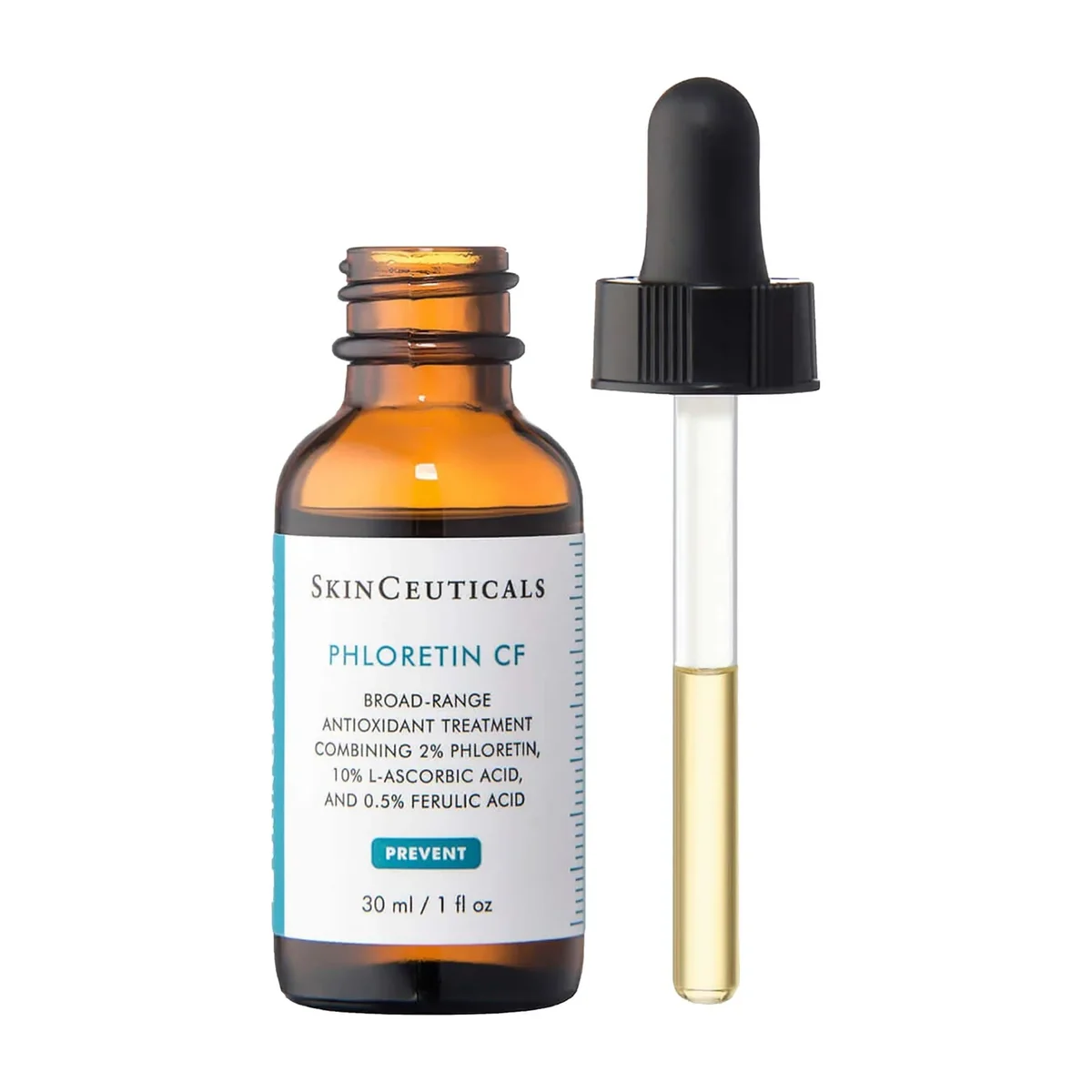
Timeless Skin Care 20% Vitamin C + E Ferulic Acid Serum amber glass dropper bottle, an affordable L-ascorbic acid antioxidant serum
Promising for Hyperpigmentation
What makes this different

This is the affordable benchmark for the classic L-ascorbic-acid, vitamin-E and ferulic-acid antioxidant trio — the same studied combination behind serums costing several times more, with all three actives at transparent, named percentages (20%/1%/1%). You're paying for the formula, not the prestige markup.

Timeless Skin Care

Timeless Skin Care 20% Vitamin C + E Ferulic Acid Serum Review

Budget Antioxidant Benchmark Serums serum indie Paraben free Fungal-acne safe Cruelty free Vegan

Timeless built its reputation on this serum, and deservedly so: a faithful 20% L-ascorbic acid, 1% vitamin E and 1% ferulic acid antioxidant trio — the most-studied combination in the category — at a fraction of the prestige price. It brightens, evens tone and defends against daily oxidative stress, with transparent percentages and no fragrance. The catches are the ones inherent to pure vitamin C: it oxidizes fast and can sting sensitive skin.

Price $26.00 1 fl oz / 30ml · more sizes
On the market 2012 Made in United States
Buy at Amazon ♥
Verdicts

How well it fits each concern

One verdict per concern. Open a row for the reasoning; the receipt has every source.

The scaleRecommendedGoodSupportingEarly evidenceNot for thisAvoidhow it works

Promisingfor HyperpigmentationVitamin C has trial-level evidence for hyperpigmentation but no guideline or regulatory standing yet — promising, short of a recommendation; nothing else here addresses it.Receipt8 sources on the row · 20% declared · rule R9p, same reading on 7,991 products · open the receipt

The case for it

  1. L-Ascorbic Acid has at least one trial behind it for this concern but no guideline or regulatory standing yet.
  2. It is present at an effective concentration, declared or high in the ingredient list.
  3. The formula carries none of the triggers this concern is sensitive to.

Moderate evidenceGentle250+ reviews read for this product (not concern-specific)

What would change this: Guideline or regulatory standing for the active on this concern would move this from a promising bet to a recommendation.

Same rule for everyone. “Promising” is the verdict on 7,991 of 45,446 concern verdicts across the catalog; rule R9p decided 7,991 of them. Unchanged since September 5, 2026, engine 6.0.0.

Brand or formulator? Disclose a concentration or correct a fact →

The full receipt: rule, row, sources, dates →All hyperpigmentation products →How hyperpigmentation is treated →

Promisingfor DullnessVitamin C has trial-level evidence for dullness but no guideline or regulatory standing yet — promising, short of a recommendation; the other actives here are at the same early stage.Receipt3 sources on the row · 20% declared · rule R9p, same reading on 7,991 products · open the receipt

The case for it

  1. L-Ascorbic Acid has at least one trial behind it for this concern but no guideline or regulatory standing yet.
  2. It is present at an effective concentration, declared or high in the ingredient list.
  3. The formula carries none of the triggers this concern is sensitive to.

Moderate evidenceGentle250+ reviews read for this product (not concern-specific)

What would change this: Guideline or regulatory standing for the active on this concern would move this from a promising bet to a recommendation.

Same rule for everyone. “Promising” is the verdict on 7,991 of 45,446 concern verdicts across the catalog; rule R9p decided 7,991 of them. Unchanged since October 17, 2026, engine 6.0.0.

Brand or formulator? Disclose a concentration or correct a fact →

The full receipt: rule, row, sources, dates →All dullness products →How dullness is treated →

Promisingfor AgingVitamin C has trial-level evidence for aging but no guideline or regulatory standing yet — promising, short of a recommendation; the other actives here are at the same early stage.Receipt7 sources on the row · 20% declared · rule R9p, same reading on 7,991 products · open the receipt

The case for it

  1. L-Ascorbic Acid has at least one trial behind it for this concern but no guideline or regulatory standing yet.
  2. It is present at an effective concentration, declared or high in the ingredient list.
  3. The formula carries none of the triggers this concern is sensitive to.

Moderate evidenceGentle250+ reviews read for this product (not concern-specific)

What would change this: Guideline or regulatory standing for the active on this concern would move this from a promising bet to a recommendation.

Same rule for everyone. “Promising” is the verdict on 7,991 of 45,446 concern verdicts across the catalog; rule R9p decided 7,991 of them. Unchanged since September 5, 2026, engine 6.0.0.

Brand or formulator? Disclose a concentration or correct a fact →

The full receipt: rule, row, sources, dates →All aging products →How aging is treated →

Promisingfor Sun DamageVitamin C has trial-level evidence for sun damage but no guideline or regulatory standing yet — promising, short of a recommendation; the other actives here are at the same early stage.Receipt5 sources on the row · 20% declared · row checked Jul 17, 2026 · rule R9p, same reading on 7,991 products · open the receipt

The case for it

  1. L-Ascorbic Acid has at least one trial behind it for this concern but no guideline or regulatory standing yet.
  2. It is present at an effective concentration, declared or high in the ingredient list.
  3. The formula carries none of the triggers this concern is sensitive to.

Moderate evidenceGentle250+ reviews read for this product (not concern-specific)

What would change this: Guideline or regulatory standing for the active on this concern would move this from a promising bet to a recommendation.

Same rule for everyone. “Promising” is the verdict on 7,991 of 45,446 concern verdicts across the catalog; rule R9p decided 7,991 of them. Unchanged since September 5, 2026, engine 6.0.0.

Brand or formulator? Disclose a concentration or correct a fact →

The full receipt: rule, row, sources, dates →All sun damage products →

Promisingfor Dark SpotsVitamin C has trial-level evidence for dark spots but no guideline or regulatory standing yet — promising, short of a recommendation; nothing else here addresses it.Receipt7 sources on the row · 20% declared · rule R9p, same reading on 7,991 products · open the receipt

The case for it

  1. L-Ascorbic Acid has at least one trial behind it for this concern but no guideline or regulatory standing yet.
  2. It is present at an effective concentration, declared or high in the ingredient list.
  3. The formula carries none of the triggers this concern is sensitive to.

Moderate evidenceGentle250+ reviews read for this product (not concern-specific)

What would change this: Guideline or regulatory standing for the active on this concern would move this from a promising bet to a recommendation.

Same rule for everyone. “Promising” is the verdict on 7,991 of 45,446 concern verdicts across the catalog; rule R9p decided 7,991 of them. Unchanged since September 5, 2026, engine 6.0.0.

Brand or formulator? Disclose a concentration or correct a fact →

The full receipt: rule, row, sources, dates →All dark spots products →How dark spots is treated →

A verdict is Dermington’s assessment of how well a product’s ingredients fit a concern — never a claim about what the product treats. Evidence dots and collected reviews sit beside it and are never blended in. Rules 0.6.0 · evidence table ev-2026.10-r259 · engine 6.0.0 · how we decide · this product’s receipt

Reader poll · Town SquareQuestion 1 of up to 3

Have you used 20% Vitamin C + E Ferulic Acid Serum?

One tap counts. A couple of optional follow-ups come next.

No account neededOne answer each, change it any timeCounted only in anonymous totalsHow the Square counts →
Assessment

Pros & cons

What it does well 7

  • Genuine 20% L-ascorbic, 1% E, 1% ferulic trio
  • Replicates the most-studied antioxidant formula
  • Outstanding value versus prestige equivalents
  • Transparent, named active percentages
  • Visibly brightens and fades dark spots over time
  • Lightweight, water-like, fast-absorbing
  • Fragrance-free, vegan and cruelty-free

Where it falls short 5

  • Pure vitamin C oxidizes and turns orange quickly
  • Short shelf life once opened
  • 20% acidity can sting sensitive skin
  • Contains benzyl alcohol, a minor sensitizer
  • Needs cool, dark storage to preserve potency
Review

The full review

Every category has a reference point, and in affordable vitamin C, this is it. Timeless Skin Care made its name on this one serum — a deliberate, no-frills replica of the patented antioxidant concept that pairs pure vitamin C with vitamin E and ferulic acid — and it became the recommendation passed around skincare forums for anyone who wanted the studied formula without the prestige price tag. More than a decade and tens of thousands of reviews later, it's still the budget benchmark, and understanding why means understanding both what it gets right and the trade-offs baked into the chemistry.

The formula is refreshingly legible. Sitting third on a short ingredient list is L-ascorbic acid at 20% — the pure, gold-standard form of vitamin C, the one with the deepest research behind it and, not coincidentally, the most demanding stability requirements. It's suspended in a low-pH water base built specifically to keep it bioavailable, and it does the headline work: antioxidant defense, support for collagen synthesis, and the gradual fading of dark spots and uneven tone. What elevates it past a plain vitamin C serum is the supporting cast. Ferulic acid at 1% is the clever inclusion — itself an antioxidant, but its real job is roughly doubling the photoprotective stability of the vitamin C and E pairing. Alpha tocopherol (vitamin E) at 1% completes the trio, regenerating oxidized vitamin C and extending protection into the skin's lipids, in the classic 15-to-1 ratio the foundational research is built on. A little sodium hyaluronate and panthenol round things off to take the edge off a high-strength acid serum. This is, genuinely, the studied combination — not a marketing approximation of it.

The rest of the list is just as deliberate, and short enough to read in one breath. Ethoxydiglycol, sitting second, is the solvent doing quiet heavy lifting — keeping a full 20% of L-ascorbic acid dissolved in a water base is no small ask — while propylene glycol assists solubility and helps the actives move into skin. Polysorbate 80 keeps the oil-soluble tocopherol evenly dispersed through what is otherwise an oil-free, silicone-free formula, and preservation falls to a lean pairing of benzyl alcohol and dehydroacetic acid rather than parabens. Eleven ingredients total, no fragrance, nothing comedogenic, and the formula even clears the fungal-acne-safe bar. Whatever you think of the brand's minimalist packaging, the INCI list is the argument: every entry is either an active, a stabilizer for an active, or a preservative.

In use, it's a thin, water-like serum that absorbs almost instantly and layers beautifully under the rest of a morning routine. Most people feel at most a brief light tingle from the acidity, and on normal, combination and oily skin it's comfortable daily. The payoff is the slow, reliable kind: a hint of brightness within a couple of weeks, then meaningful improvement in tone, dark spots and overall radiance over two to three months of consistent use — provided, and this matters, you're wearing sunscreen, which the antioxidant trio actively enhances.

Placement in a routine is straightforward but worth spelling out. It goes on clean, dry skin first thing in the morning; give it a minute to sink in, then follow with moisturizer and SPF. Keep niacinamide and other strong acids out of that same step, and skip pairing it with benzoyl peroxide entirely — the two undermine each other. Nights can stay reserved for whatever treatment your skin is working through. The amber glass dropper bottle helps shield the light-sensitive active, though the dropper mechanism still admits some air with each use, which is part of why a bottle is best finished rather than savored. Used every morning, a bottle lasts roughly one to two months — conveniently close to the window in which the formula stays potent anyway.

The drawbacks are inseparable from the choice of pure L-ascorbic acid, and it would be dishonest to soft-pedal them. This form of vitamin C is the most effective and the least stable, so the serum oxidizes — clear to pale yellow when fresh, deepening toward orange-brown as the active degrades into weaker, occasionally mildly irritating byproducts. A slight tint is fine; a strong orange means it's spent. A persistent bit of forum folk wisdom holds that an orange bottle has merely 'gone off' cosmetically but still works — it doesn't. The color change is the degradation, and a deeply discolored serum has lost much of its active while gaining byproducts your skin doesn't need. Realistically you're using a bottle within a few months of opening, and cool, dark storage (the fridge is popular) genuinely helps. The 20% strength at low pH can also sting or irritate reactive skin, and the benzyl alcohol preservative is a minor sensitizer — sensitive types are better served by the brand's gentler 10% version. None of this is a flaw in execution; it's the cost of using the most potent form of the vitamin, and Timeless is upfront about it.

The review record backs the reputation. Across roughly twelve thousand reviews averaging 4.4 stars, users consistently praise the same three things — the price relative to what the formula delivers, visible brightening, and how weightlessly it disappears under other products — while the recurring complaint is exactly the one chemistry predicts: bottles that shift color faster than people expect. That's an unusually coherent feedback pattern, and it tells you the product performs as designed, quirks included.

Where it lands is simple. For normal, combination or oily skin that wants the real, evidence-backed antioxidant trio and doesn't want to pay prestige prices for it, this is close to a default recommendation — the value is frankly exceptional, and the transparency around named percentages is exactly what you want. You're accepting a short shelf life and a serum that needs a little care in storage, but you're getting the genuine science, not a diluted impression of it. After more than a decade, it remains the budget yardstick for a reason.

The science

This serum is essentially a faithful reproduction of the antioxidant concept established by the landmark Duke University research on topical L-ascorbic acid, and the science is unusually well settled. Pure L-ascorbic acid is the only form of vitamin C the skin uses directly without conversion, and it must be formulated at a low pH (below about 3.5) and at concentrations up to 20% to penetrate effectively — both conditions this formula meets. The pivotal finding, published by Lin and colleagues in the Journal of the American Academy of Dermatology in 2005, was that adding 1% vitamin E and 0.5% ferulic acid to 15% L-ascorbic acid doubled the photoprotection of the antioxidant combination and stabilized the vitamin C; Timeless uses an even higher 1% ferulic acid. The mechanistic synergy is real: vitamin C and vitamin E work in tandem across the aqueous and lipid compartments, vitamin E regenerates oxidized vitamin C, and ferulic acid stabilizes both while adding its own radical-scavenging. Vitamin C's role in collagen synthesis (as a cofactor for prolyl and lysyl hydroxylase) and in inhibiting tyrosinase-driven melanin production underpins its anti-aging and brightening claims. The unavoidable scientific caveat is stability: the same pure L-ascorbic acid that makes the formula effective oxidizes readily into dehydroascorbic acid and beyond, so real-world potency declines over weeks regardless of formulation cleverness — which is why amber glass, low pH and prompt use all matter.

References 2 ShowHide
  1. UV photoprotection by combination topical antioxidants vitamin C and vitamin E. — Journal of the American Academy of Dermatology (2003)
  2. Ferulic Acid Stabilizes a Solution of Vitamins C and E and Doubles its Photoprotection of Skin — Journal of Investigative Dermatology (2005)

The clinical view

Dermatologists widely regard the L-ascorbic acid, vitamin E and ferulic acid combination as one of the best-evidenced antioxidant strategies in skincare, valued for daytime protection against UV- and pollution-driven free radical damage and for gradually improving tone and dark spots. A formulation like this — 20% pure vitamin C at low pH with the stabilizing E-and-ferulic partners — aligns closely with what clinicians recommend, and the affordability is often welcomed since it improves the odds that patients actually use vitamin C consistently. The standard guidance applies: it's a morning product to be worn under sunscreen, not a replacement for it; pure ascorbic acid can irritate sensitive or rosacea-prone skin, so a lower concentration or careful introduction is advised there; and because the active oxidizes, dermatologists emphasize replacing it once it darkens. For most patients seeking an antioxidant serum, an affordable, transparent CE-ferulic formula like this is considered a sensible, evidence-aligned choice.

Formula

Key ingredients

  1. L-Ascorbic Acid (Vitamin C 20%) 20%

    The pure, gold-standard form of vitamin C at a high 20% — sitting third on the list in a low-pH water base built specifically to keep it stable and bioavailable, where it drives the antioxidant defense, collagen support and tone-evening this serum is bought for.

    Plausible mechanism for Dullness
  2. Ferulic Acid (1%) 1%

    The stabilizing partner that makes this more than a plain vitamin C — ferulic acid is itself an antioxidant but its key job here is roughly doubling the photoprotective stability of the ascorbic-acid-and-tocopherol pairing, the synergy that defines the famous CE-ferulic formula this replicates.

    Limited for Aging
  3. Alpha Tocopherol (Vitamin E 1%) 1%

    The lipophilic antioxidant that completes the trio — it regenerates oxidized vitamin C and extends the network's free-radical protection into the skin's lipid layers, working in the classic 15:1 vitamin C to E ratio research is built around.

    Limited for Aging
  4. Sodium Hyaluronate + Panthenol

    A small humectant-and-soothing addition that offsets the potential dryness and sting of a 20% acid serum, helping the watery formula feel comfortable and hydrating rather than tight on application.

    Plausible mechanism for Dullness
Full ingredient list 11 ingredients · pH 3.5 ShowHide

Water, Ethoxydiglycol, L-Ascorbic Acid 20.0%, Propylene Glycol, Alpha Tocopherol 1.0%, Polysorbate 80, Panthenol, Ferulic Acid 1.0%, Sodium Hyaluronate, Benzyl Alcohol, Dehydroacetic Acid

Safety & formulation facts

  • Pregnancy safe
  • Fragrance free
  • Not alcohol free
  • Oil free
  • Silicone free
  • Paraben free
  • Sulfate free
  • Cruelty free
  • Vegan
  • Fungal-acne safe
Potential irritants L-Ascorbic AcidBenzyl Alcohol
Common allergens Benzyl Alcohol
Compatibility

Skin types & routine

Routine step serum
Time of day Morning
Best season All year
Finish lightweight, fast-absorbing, non-greasy

Layering

Apply in the morning on clean, dry skin before moisturizer and always under SPF — vitamin C boosts the protection of sunscreen. Wait a minute for it to absorb; avoid layering directly with niacinamide or strong acids in the same step.

When to expect results

Skin may look slightly brighter within 1-2 weeks; meaningful fading of dark spots and improved tone and texture build over 8-12 weeks of consistent daily morning use.

Pairs well with sunscreenmoisturizer
Don't combine with benzoyl-peroxide

A routine built around it

Morning

  1. Cleanser
  2. Timeless Skin Care 20% Vitamin C + E Ferulic Acid Serumthis product
  3. Moisturizer
  4. SPF

Night

  1. Cleanser
  2. Treatment
  3. Moisturizer
Guidance

How to use it, and who it's for

How to use

Use it in the morning. After cleansing, apply a few drops to dry skin and spread evenly over the face and neck, avoiding the immediate eye area; let it absorb for about a minute. Follow with your moisturizer and, crucially, a broad-spectrum sunscreen — the antioxidant trio enhances your sun protection but is not a substitute for SPF. If you're new to vitamin C or have reactive skin, start two or three mornings a week and build up as tolerated. Avoid layering it in the same step as benzoyl peroxide, which can oxidize it, and don't pile it directly with strong exfoliating acids. Store the bottle somewhere cool and dark, keep the cap closed tightly, and replace it once the liquid turns deep orange.

Is it worth the price?

On value, this is one of the strongest propositions in skincare. At around $26 for 30ml, it delivers the genuine 20% L-ascorbic acid, 1% vitamin E and 1% ferulic acid trio that prestige brands charge several times more for, with the actives at transparent, named percentages rather than hidden in proprietary blends. Larger sizes are available and improve the per-ml cost further. The one caveat that tempers the math is shelf life: because pure vitamin C oxidizes, you can't stockpile it, and you'll realistically replace a bottle every couple of months — so the running cost is higher than the sticker implies, though still a fraction of the prestige alternatives. For anyone who wants the studied antioxidant formula and will use it consistently, the value is hard to beat; only those who'd let a bottle sit half-used should think twice, since oxidation will waste it regardless of price.

Who should buy it

This is for normal, combination or oily skin that wants a genuine, evidence-backed antioxidant serum for brightening, dark spots and daytime protection without paying prestige prices. It's ideal for value-minded users who appreciate transparent active percentages and will use the serum consistently before it oxidizes.

Who should skip it

Sensitive, reactive or rosacea-prone skin may find 20% pure vitamin C at low pH too stinging and should consider the gentler 10% version or a vitamin C derivative instead. Anyone who uses serums only occasionally should also skip it, since the pure ascorbic acid will oxidize and go to waste before an infrequent user finishes the bottle.

Ready to try it?Timeless Skin Care 20% Vitamin C + E Ferulic Acid Serum · $26.00 · 1 fl oz / 30ml
Details

The product, in detail

Texture
A thin, water-like serum that spreads easily and sinks in fast
Scent
Fragrance-free, with the faint sharp note characteristic of L-ascorbic acid
Packaging
Amber glass dropper bottle — the tint helps shield the light-sensitive vitamin C, though the dropper still admits some air
How long it lasts
About 1-2 months of daily morning use; best used within 3 months of opening before oxidation reduces potency
Once opened
Use within 3 months · track your toss-by date →
Size
1 fl oz / 30ml · other sizes available
Made in
United States
Launched
2012
Certifications
vegan · cruelty-free

What the first two weeks feel like

On first use the watery serum absorbs quickly and may give a brief light tingle from the 20% acid, which settles fast. Fresh product is clear to pale yellow; over weeks it gradually deepens in color as the vitamin C oxidizes, which is normal and the cue to replace it.

The story behind it

Why it exists

Timeless Skin Care made its name on this serum, offering a faithful, no-nonsense version of the patented CE-ferulic antioxidant concept at a budget price. It became a go-to recommendation in online skincare communities for people who wanted the studied formula without the prestige cost.

About Timeless Skin Care Established Brand (5–20 years)

Timeless Skin Care, a US brand established around 2012, built a cult following by offering streamlined, no-frills versions of expensive cosmeceutical formulas — most famously an affordable take on the L-ascorbic-acid/vitamin-E/ferulic-acid antioxidant trio. It has a long e-commerce track record and a large, vocal user base, though it markets on formulation transparency rather than published clinical trials of its own products.

Brand founded 2012 · This product since 2012

Tap a card to turn it

What people hear, and what holds up

FAQ

Questions people ask

Is the Timeless 20% Vitamin C serum a dupe for prestige CE-ferulic serums?

Essentially yes — it pairs 20% L-ascorbic acid with 1% vitamin E and 1% ferulic acid, the same studied antioxidant combination behind serums costing several times more. It uses the same active concept at transparent percentages, so you get the formula without the prestige markup, accepting the same inherent instability of pure vitamin C.

Why does my Timeless vitamin C serum turn orange?

L-ascorbic acid is the most effective but least stable form of vitamin C, and it oxidizes on exposure to air, light and time, deepening from clear to orange-brown. A slight tint is fine, but a strong orange color means the active has largely degraded and it's time to replace it.

When should I use the Timeless vitamin C serum, morning or night?

Morning is ideal. The antioxidant trio boosts your skin's daytime defense against UV and pollution and enhances the protection of your sunscreen, so apply it on clean skin before moisturizer and SPF. It's water-light and layers easily under the rest of your routine.

Can sensitive skin use the Timeless 20% Vitamin C serum?

It can be tricky. The high 20% concentration of pure L-ascorbic acid at a low pH can sting or irritate reactive skin. Sensitive users may prefer to patch test, start a few times a week, or choose the brand's gentler 10% version instead.

How should I store the Timeless vitamin C serum to make it last?

Keep it somewhere cool, dark and dry — many people store it in the refrigerator — and keep the cap tightly closed to limit air exposure. Even so, plan to use it within about three months of opening, since pure vitamin C inevitably oxidizes over time.

Does the Timeless serum help with dark spots and hyperpigmentation?

Yes, with consistency. Vitamin C inhibits excess melanin production and, alongside its antioxidant action, gradually fades dark spots and evens skin tone over roughly 8-12 weeks of daily morning use, especially when paired with diligent sunscreen.

Reviews

What shoppers tend to say

Recurring themes our editors read across retailer reviews — summaries in our words, not quotations, and not a substitute for a patch test.

Common praise

  • Affordable CE-ferulic antioxidant formula
  • Visibly brightens and evens tone
  • Lightweight, fast-absorbing
  • Transparent active percentages
  • Fragrance-free

Common complaints

  • Oxidizes and turns orange fairly quickly
  • Short shelf life once opened
  • Can sting or tingle on sensitive skin
  • Pure vitamin C is inherently unstable
Notable endorsementsLong-standing budget dupe for prestige CE-ferulic serumsFrequently recommended in skincare communitiesTransparent named-percentage actives
Next stepCheck it against what you already useClashes, spacing and the right order, with everything on your shelf.