The story behind Sungboon Editor Read the full story

Most viral skincare arrives wrapped in a charismatic founder story; this one shows up with almost none, which is itself a kind of strategy. The label keeps its origins deliberately quiet, foregrounding formulas instead of a personality, and even reputable retailers and trade write-ups struggle to pin down a precise launch date or a named creator. What it does broadcast loudly is a worldview, encoded in the name: "sungboon" reads in Korean as raw ingredient or raw component, and the brand treats that as a design constraint rather than a tagline.

In practice that means short formulas built around one deliberate hero, then a tight family of products extending the same idea instead of a sprawling catalog. The breakout jelly mask, with its wobbly hydrogel body and a headline figure of low-molecular-weight collagen plus a multi-peptide blend, set the template: a pleasant, plumping overnight occlusive aimed squarely at the glass-skin aesthetic of plump, dewy, blurred-pore skin.

From there the lineup branched by signature actives rather than by skin concern alone. A Green Tomato line built around a patented tomato-derived extract targets visible pores and texture, threaded through an ampoule and a blurring sun cream. Barrier-focused creams lean on panthenol, centella, and lactobacillus ferment for soothing and repair, while a Silk Peptide range, a Kojic Acid cleanser line, a PDRN series, and a marine-astaxanthin lineup each spin off a single buzzy ingredient into a small cluster of products.

The approach is recognizably of its moment, ingredient-forward minimalism dressed for short-form video, where a single arresting number or texture does the selling. Topical collagen molecules are generally too large to rebuild the skin's own scaffolding, so the real deliverable across these formulas is well-engineered humectant hydration and a satisfying sensorial feel, judged best on how a product actually performs than on the figure printed on the box.

Sources:[1][2][3]

Founded
2022
Origin
South Korea
Heritage
Emerging
Type
K-beauty
Verdicts
2 Strong choice · 0 Good choice of 5 assessed
5 products reviewed

All Sungboon Editor Products

Full protection sun damage
No.1
Sungboon Editor Green Tomato Pore Blurring Sun Cream SPF 50+ 50g tube packaging Pore-Blurring Pick
Sungboon Editor sunscreen

Green Tomato Pore Blurring Sun Cream SPF 50+

A genuinely competent pore-focused sunscreen hiding behind a chaotic label. Strip away the trace collagen, copper peptide, glutathione, and amino-acid alphabet, and what's left is a strong next-generation filter system, a meaningful niacinamide dose, and a fragrance-free, soft-matte base that suits oily skin well. Good for what it actually is — just don't buy it for the fairy-dust extras.

Key Tinosorb · Botanical Extracts

oilycombination Fragrance Free
4.3 (350)
$22.00 $12.47/oz
Full protection sun damage
No.2
Sungboon Editor Hydro Booster Moisture Sunscreen SPF 30 tube Skincare-Loaded SPF 30
Sungboon Editor sunscreen

Hydro Booster Moisture Sunscreen SPF 30

A beautifully skincare-loaded sunscreen — high niacinamide, a full six-ceramide complex, ten hyaluronic acids — in a genuinely hydrating, fragrance-free base. Two honest reservations hold it back: it is SPF 30 in a category where SPF 50 is the sensible facial default, and it is priced like a premium SPF 50.

Key Avobenzone · Niacinamide

drynormal Fragrance Free
4.4 (200)
$40.00 $23.67/fl oz
Supporting role dehydration
No.3
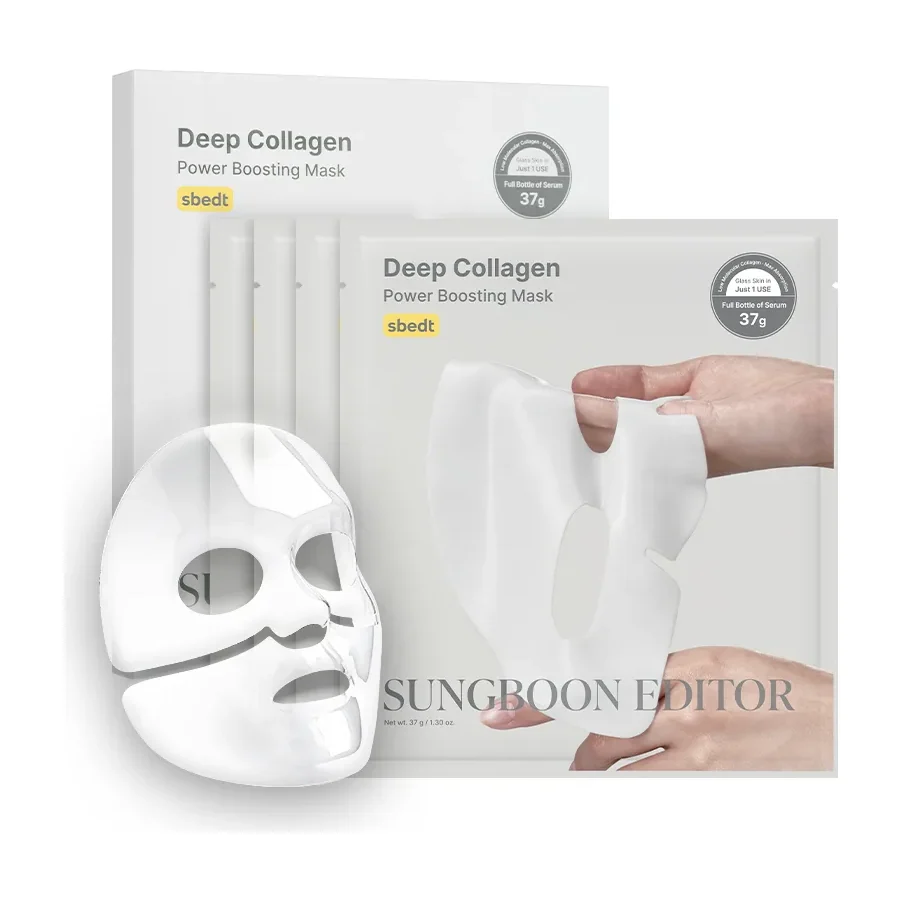
Sungboon Editor Deep Collagen Mask 4-piece box of thick hydrogel sheet masks Premium-Tier Collagen Sheet Mask
Sungboon Editor mask

Deep Collagen Mask

A genuinely premium sheet mask that solves the category's typical 'thin sheet, watery essence, modest actives' formula by engineering a 37g hydrogel-style sheet loaded with 2.16% collagen, nine peptides, four ceramides plus cholesterol and phytosphingosine, treatment-dose niacinamide, and a comprehensive hyaluronic chassis. The peppermint content limits sensitive skin use, the per-mask cost is firmly premium, and the dramatic visible plumping is largely temporary — but within those limits, this is one of the better-built sheet masks on shelves.

Key Hydrolyzed Collagen · Peptides

normalcombination Fragrance Free
4.4 (1.1k)
$30.00 $22.99/oz
Promising large pores
No.4
Sungboon Editor Green Tomato Pore Lifting Ampoule 30 mL frosted glass bottle with dropper Multi-Active Pore Ampoule
Sungboon Editor serum

Green Tomato Pore Lifting Ampoule

A loaded multi-active pore treatment ampoule with treatment-dose niacinamide, gluconolactone PHA, tomato extract antioxidant cover, and a Korean-medicine soothing botanical complex. The alcohol content and substantial fragrance load narrow the audience to non-sensitive oily-to-combination skin; the small 30 mL size at $35 makes value firmly premium. For the audience it fits, cumulative pore work is real.

Key Botanical Extracts · Niacinamide

oilycombination
4.3 (380)
$35.00 $34.65/fl oz
Avoid compromised skin barrier
No.5
Sungboon Editor Lacto Biotics Skin Barrier Repair Cream 30 mL white jar Prebiotic Barrier-Repair Cream
Sungboon Editor moisturizer

Lacto Biotics Skin Barrier Repair Cream

A thoughtfully built barrier-repair cream that uses lactobacillus ferment prebiotic-postbiotic chemistry as the unifying mechanism, with treatment-dose niacinamide, ceramide NP and a Korean-medicine soothing botanical layer as supporting cast. The bergamot oil tail limits suitability for fragrance-reactive skin, and the small 30 mL size at $32 makes the value tighter than the brand's other products. Within the audience it targets, the formulation work is real.

Key Probiotics & Prebiotics · Niacinamide

drynormal
4.4 (420)
$32.00 $31.68/fl oz

More about Sungboon Editor

Sungboon Editor is a South Korean skincare brand that broke out internationally in the mid-2020s on the strength of a single viral product, its Deep Collagen Overnight Mask.

Reputable sources do not consistently confirm its founding year or founder, and its formulas lean on ingredient claims and social proof rather than published independent clinical validation.