Azulene
Products with Azulene
 Three-Minute Cooling Clay
 Zero Pore Blackhead Mud Mask
A well-engineered three-minute clay mask that does the two things a clay mask can do, absorb surface oil and make blackheads look smaller for a day, and adds a genuine cooling agent and enough hyaluronate that it does not leave skin tight. Its AHA, BHA and PHA are label traces, its three citrus oils sit high for a product sold as fragrance-free, and pores refill within days; as weekly T-zone maintenance for oily skin it is pleasant and fairly priced, and it should not be mistaken for a treatment.
Key Clays · Salicylic Acid
 Korean Take on the Drying Lotion
 A-Clear Aid Soothing Pink Eraser
A Korean take on the century-old pink drying lotion: alcohol and calamine flatten a surface whitehead overnight, a high-placed centella complex and azulene keep the aftermath calmer than the American originals, and a trace of salicylic acid decorates the label. It does the one thing drying lotions do and nothing else, stings, can mark deeper skin, and comes with brand copy that misidentifies its own key ingredient.
Key Calamine · Alcohol Denat.
 Rich Winter Cream, Fragranced
 FF Blue Calming Cream
A genuinely rich, comforting cream for dry skin, with safflower oil second on the list and a solid emollient and dimethicone base. The trouble is its name: the calming guaiazulene sits below the fragrance, and the tail carries four declared allergens plus lemon and bergamot peel oils. Resilient dry skin will love the comfort; sensitive skin — the audience the name invites — should look elsewhere.
Key Safflower Oil · Emollient Esters
 Deep-Clean Foam for Oily Skin
 Azulene Acne Foam Cleanser
A lavish, deep-cleaning saponified foam that oily skin will enjoy and that the label dresses as a soothing acne treatment it is not: the salicylic acid sits in an alkaline soap base, the tea tree is aromatic, and the azulene is declared at 0.3 parts per billion. Fine at $15 as a once-a-day degreaser for resilient oily skin; wrong for the sensitive, breakout-prone faces it is marketed to.
Key Salicylic Acid · Fatty Acids
 Blue Line Lip Seal
 Blue EGF Barrier Lip Balm
A well-made, fragrance-free, flavour-free gloss-balm that does what a lip balm should and adds two things most do not: polyisobutene and a lanolin-like ester over a declared ten percent shea seal the lip, urea softens the dead edges of a chapped one, and panthenol, ceramide NP and squalane support the thin lipid layer underneath, with a guaiazulene salt for the Blue calm. The EGF is a trace at the very end of the list and the badge on the tube, chamomile oil is the one allergen note, there is no SPF, and a month-old balm has no record; at ten dollars it is a good lip balm with a story attached.
Key Shea Butter · Film Formers & Texture Polymers
 Capsule-Pop Hydrating Mist
 Oligo Hyaluronic Acid Capsule Jelly Mist
A charming, genuinely gentle hydrating mist: fragrance-free, alcohol-free, with a declared 1,000 ppm of hyaluronic acid, adenosine and little blue capsules that pop on contact. It refreshes and plumps well. The eleven-peptide list is mostly decorative, and $31 is a lot for 120ml of mist, but for sensitive, dehydrated skin it is a pleasure to use.
Key Hyaluronic Acid · Glycerin
 Mega-Tub Hydration Gel
 Real Hydrating Cream
A generously formulated humectant gel-cream in a half-kilo tub: glycerin, five hyaluronic acid forms, polyglutamic acid, betaine and nine amino acids leave skin bouncy and dewy without weight. It is a practical face-and-body cream for normal, combination and oily skin. Added fragrance and a little alcohol rule it out for sensitive skin, and very dry skin will want something richer.
Key Hyaluronic Acid · Glycerin
 Blue Line Barrier Cream
 Blue EGF Intensive Pro Cream
A genuinely well-built barrier cream sold on the wrong ingredient: three percent dexpanthenol declared and dosed as the active, a seventeen-amino-acid natural moisturising factor with sodium PCA and trehalose, a real ceramide-cholesterol-phytosphingosine-linoleic lipid set, guaiazulene at 300 ppm for the Blue calm, and a light water-in-silicone texture that sensitive and acne-prone skin can both wear under sunscreen, fragrance-free and alcohol-free for twenty-five dollars. The EGF at Korea's 10 ppm ceiling is the badge on the tube and adds nothing separable from the panthenol; a month-old product has no track record yet, and on the label it deserves one.
Key Panthenol · Growth Factors
 Blue Line Massage Stick
 Blue Peptide Gua Sha Multi Balm
A cleverly built water-essence stick with a moulded gua sha head: seventy-five percent water held in a solid by octyldodecanol, waxes and a clay, so it glides wet and cool rather than waxy, with a declared one percent caffeine to make the massage's de-puffing last a morning and panthenol, bisabolol and guaiazulene for the Blue calm, fragrance-free and alcohol-free. The three peptides and EGF that name it sit at low, undisclosed positions in a rinse-free stick, the head is plastic rather than stone, soluble collagen at the tail makes it non-vegan, and twenty-one dollars for 15 grams is a novelty price; a pleasant ritual with a good caffeine number and a story on the label.
Key Caffeine · Emollient Esters
 Hydrating Ampoule Mask
 Medi Hydro Vial Concentrated Ampoule Mask
A genuinely loaded hydrating ampoule sheet mask: five-plus hyaluronic acid forms with a humectant complex, marine collagen and soothing azulene, generously soaked for a strong, immediate plumped and dewy boost. Good value at ten sheets — the main caveats are the added fragrance and the usual sheet-mask truth that the glow is short-term, not cumulative.
Key Hyaluronic Acid · Collagen
 Chamomile Soothing Gel-Cream
 Relief Chamomile Cream
A genuinely calming, fragrance-free, vegan gel-cream that front-loads chamomile at a very high concentration and amplifies it with azulene and a full cica complex. It soothes reactive skin seriously while staying lightweight, suiting oilier sensitive skin that rich calming creams overwhelm, with only the (rare) chamomile-ragweed cross-reaction to note.
Key Chamomile Extract · Azulene
 Chamomile Calming Prep Toner
 Relief Chamomile Gel Toner
A genuinely soothing, fragrance-free chamomile gel toner that carries the line's very high chamomile load and azulene into a hydrating prep step, backed by a full cica complex and a multivitamin blend. It calms and plumps reactive skin from the first layer at strong value, with the chamomile allergen note and a trace retinoid the only flags.
Key Chamomile Extract · Azulene
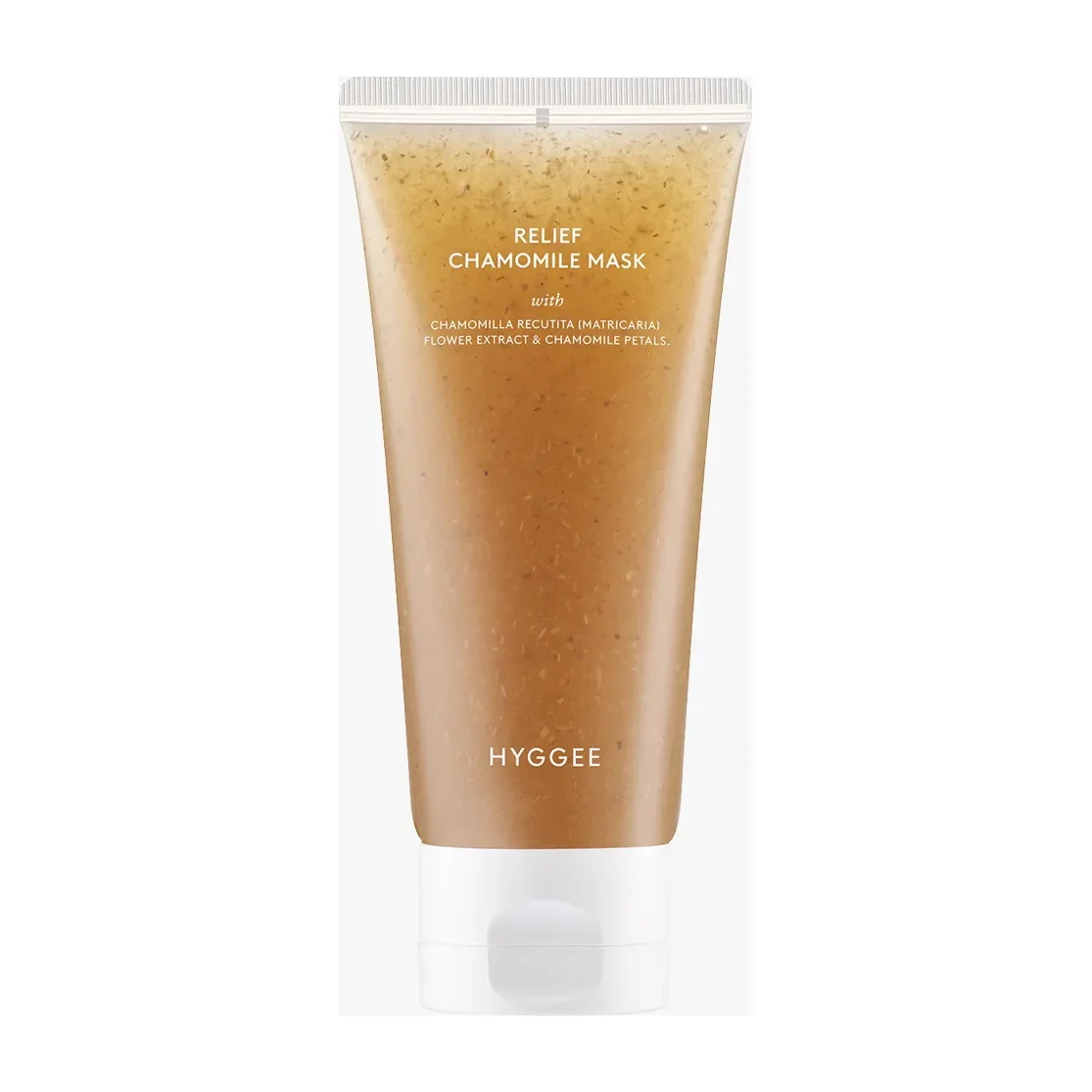 On-Demand Calming Mask
 Relief Chamomile Mask
A genuinely soothing, fragrance-free, vegan wash-off mask that delivers the chamomile line's concentrated calming, very high chamomile with real petals, azulene, and a cica complex, as an on-demand treatment for flared, stressed skin. Hydrating rather than drying, fairly priced, and gentle enough for sensitive skin, with only the rare chamomile-ragweed cross-reaction to flag.
Key Chamomile Extract · Azulene
 The Satisfying One
 Caviar PDRN Capsule Cream
A fragrance-free violet gel-cream that is more honest than most PDRN products — the salmon DNA is declared at 1,000 ppm and actually sits mid-list — and more fun than most moisturizers, thanks to 7,000 oil capsules that burst under your fingers into a dewy, cushioned finish. The firming claims borrow from the clinic; the hydration and the feel are real and worth the sale price.
Key Caviar Extract · PDRN
 Blue Line Cooling Reset
 Blue EGF Calming Mist
A well-built bi-phase cooling mist that does what a calming spray should and most do not: a thin triglyceride-and-rosehip oil layer carrying a declared 300 ppm of guaiazulene shakes into a sugar-alcohol humectant water with allantoin, ectoin, madecassoside, bisabolol and zinc PCA, so hot, oily-dehydrated or freshly stressed skin is cooled, hydrated and settled without shine, sting or scent, for fifteen dollars. The EGF and FGF at five parts per million are the Blue line's badge on a format where they cannot work, and the honest reading is that the mist is excellent without them.
Key Azulene · Growth Factors
 Blackhead Oil, With a Real Acid
 Zero Pore Blackhead Deep Cleansing Oil
A capable first-step cleansing oil that does what the format does well, dissolving sunscreen and makeup and emulsifying to a clean rinse, and adds one thing most do not, a lipohydroxy acid that gives the blackhead claim a mechanism. It is fragranced high in the list, built on comedogenic-rated plant oils that demand a second cleanse, and stings some eyes despite the label; for oily, congestion-prone, resilient skin that double cleanses it is a good buy at twenty-one dollars, and for sensitive skin an unnecessary risk.
Key Soybean · Emulsifiers
 Azulene Gel Cleanser
 Azulene Soothing pH Cleanser
A gentle, low-pH amino-acid gel cleanser with genuine azulene-and-centella soothing in a pretty blue formula, at a friendly price. The catch is a heavy blend of fragrant, partly photosensitizing essential oils — bergamot, lavender, rosemary, geranium — that scent the 'soothing' cleanser at the cost of irritation potential, making it a poor fit for the sensitive skin it courts.
Key Azulene · Cleansing Surfactants
 Oil-Free Comfort for Acne Routines
 Azulene Anti Blemish Lotion
A light, oil-free, silicone-slip lotion that hydrates oily and acne-treated skin with glycerin and panthenol, cools without menthol, and feels like nothing five minutes later, which is what this skin usually wants. The azulene is a one-part-per-billion label story and the essential oils are the only real caution; at $20 for 200 mL it is a generous and sensible finishing step rather than a treatment.
Key Glycerin · Dimethicone
 Summer Oily-Skin Cooler
 Green Tea Panthenol Gel Cream
A smart, cooling gel for oily and combination skin that hydrates without adding shine, with a real green tea dose and a declared 0.5 percent panthenol doing the work behind the gimmicky blue capsules. Very new, so the brand's tidy efficacy percentages are the only data; the formula earns most of the $30 anyway, dry skin excepted.
Key Green Tea Extract · Panthenol
 Trend-Chasing Comfort Mask
 Rejuvenating Caviar PDRN Real Deep Mask
The most luxurious-feeling Biodance mask and the one whose headline ingredients matter least. Caviar water and PDRN are the fashion; shea, squalane and niacinamide under eight hours of occlusion are the function, and for dry, mature skin that function is genuinely lovely. Buy it for comfort, not for regeneration, and not at all if you are oily.
Key Caviar Extract · PDRN
 Cooling Post-Cleanse Rescue
 Azulene Anti Blemish Toner
The best product in TONYMOLY's Azulene line and the one whose formula actually delivers the calm it promises, though not through the azulene, which is declared at 5 parts per billion. Humectants, erythritol cooling and allantoin make a genuinely pleasant, alcohol-free post-cleanse toner for oily, breakout-prone skin; two essential oils are the only reason to hesitate.
Key Glycerin · Allantoin
 Great Core, Bergamot Problem
 3H Daily Relief Cream
A soothing cream that does almost everything right for angry, reactive skin — a blue guaiazulene-and-cica calm-down cast, niacinamide, oat, panthenol — and then, inexplicably, folds in bergamot and geranium oils, two of the exact essential oils reactive skin is told to avoid. The core is genuinely lovely and the price is fair. The fragrance choice is a self-inflicted wound on a product literally named 'Relief.'
Key Azulene · Centella Asiatica
 Azulene Cica Barrier Cream
 Azulene Soothing Cream
A genuinely loaded soothing-barrier cream and the standout of Sur.Medic's Azulene line: guaiazulene at a stated 300ppm with a complete centella cica quartet, ceramide NP, adenosine and calamine in a nourishing base. It calms and strengthens reactive, dry, compromised skin with real substance — far more so than the brand's fragrant cleanser — with only the tea tree, apple mint and lavender extracts and rich oils as caveats.
Key Azulene · Centella Asiatica
The full azulene guide
Azulene is the deep-blue pigment behind the striking color of chamomile and yarrow oils.
In skincare it usually appears as guaiazulene, a stable version made in the lab or from guaiac wood, or as a water-soluble form called sodium guaiazulene sulfonate. Beyond its cobalt hue, it has a long reputation as a soothing ingredient, which is why some brands name whole lines of calming cleansers, creams and toners after it.
How it's regulated in the US
FDA does not classify ingredients — it classifies products, by what they are sold to do. The same molecule can be a drug active in one product and a cosmetic ingredient in the next, and only the claim on the label decides which. What follows is a statement about that legal standing, not about whether it works — the evidence question is answered separately above.
Cosmetic Azulene is a cosmetic ingredient in the US: no OTC monograph covers it and it is not an active in any FDA-approved drug, so a product built around it is a cosmetic rather than a drug.
Azulene is studied mostly for its calming side: lab and animal studies explore how guaiazulene dampens inflammatory signals and protects skin fats from oxidation. Human studies are few and small, using low-strength creams and gels on irritated skin and dermatitis. Large controlled studies of everyday skincare are missing, and some products seem to include it partly for its color, at levels that may be low. Whether plant-derived versions carry along related allergens from the daisy family is a practical open question.
How it works
Azulene compounds are bicyclic sesquiterpenes whose conjugated ring structure gives them both their blue color and antioxidant behavior. Guaiazulene's best-documented action is scavenging free radicals and interrupting lipid peroxidation, the chain reaction in which reactive oxygen species damage the fatty membranes of skin cells. By quenching those radicals, it helps limit the oxidative cascade that drives redness and barrier stress. It also appears to modulate inflammatory mediators, with research describing reduced pro-inflammatory signaling and histamine-related responses, which lines up with its long folk use for calming irritated, reactive skin. The related compound chamazulene has shown an ability to mitigate UVB-induced inflammation in photoaged-skin models. In cosmetic formulas, the water-soluble sulfonate salt disperses easily into toners and gels, while oil-soluble guaiazulene suits creams and facial oils. Important caveat: the soothing effect is concentration-dependent, and many products add azulene at very low levels, sometimes a few hundred parts per million, where its dramatic blue tint contributes as much to the marketing as its measurable activity does to your skin.
Key benefits
- Calms the look of redness on sensitized skin
- Comforts skin that feels irritated or reactive
- Helps protect skin's own oils from oxidation
- Pairs well with hydrating, barrier-friendly ingredients
- Brings a striking natural blue to soothing formulas
Concentration & usage
Effective topical levels are modest. Published clinical work used guaiazulene at roughly 0.02 to 0.05 percent, and leave-on products often disclose figures around 300 ppm (0.03 percent). At those levels there is a plausible soothing benefit. When azulene sits near the bottom of an INCI list with no stated concentration, treat it as a contributor to the formula's blue identity rather than the main therapeutic driver.
Who it's for & who should be cautious
Who it's for
A sensible pick for people with sensitive, reactive, redness-prone, or easily irritated skin who want a gentle calming ingredient. It suits post-procedure or compromised-barrier skin and layers well into minimalist, soothing routines.
Who should be cautious
There is little reason to avoid it, but anyone with a known chamomile, ragweed, or Asteraceae-family allergy should patch test, since botanically derived azulene can carry related sensitizers. Those who dislike products that temporarily tint skin or washcloths blue may prefer clear soothing alternatives. It is not an active that treats acne, pigmentation, or wrinkles, so do not buy it expecting those results.
Pairs with & conflicts
Pairs well with: Panthenol (Pro-Vitamin B5), Centella Asiatica (Cica), Allantoin, Niacinamide (Vitamin B3), Ceramides
Myths & facts
Myth: The blue color is what soothes your skin.
Reality: The color and the soothing action come from the same molecule, but the calming effect is from antioxidant and anti-inflammatory chemistry, not the pigment. A blue tint at trace levels does not guarantee a meaningful dose.
Myth: Azulene is interchangeable with whole chamomile extract.
Reality: Azulene is one isolated compound from chamomile. Chamomile extract also contains bisabolol, apigenin, and flavonoids with their own effects, so the two are related but not the same ingredient.
Frequently asked questions
Will azulene skincare stain my skin or towels blue?
High-pigment formulas can leave a faint, temporary blue tint, but it rinses or wipes away and does not dye the skin. Most leave-on products use low enough levels that any color disappears as the product absorbs.
Is guaiazulene the same as the azulene in chamomile?
They are closely related blue azulene compounds. Chamomile naturally yields chamazulene, while guaiazulene is a more stable version derived from guaiac wood or made synthetically. Both share the same soothing, antioxidant character used in skincare.
Does azulene actually reduce redness?
Lab studies and small clinical trials support a real anti-inflammatory effect at effective concentrations. It can help calm reactive, flushed skin, though it works best as a supporting soother rather than a treatment for conditions like rosacea on its own.
Can I use azulene products every day?
Yes. It is gentle and well tolerated for daily morning and evening use in cleansers, toners, and creams. Because it is non-irritating, it generally fits into routines alongside stronger actives without adding stress.
Is azulene safe during pregnancy?
There are no specific warnings against topical azulene in pregnancy, and it is considered a gentle soothing ingredient. As with any product during pregnancy, confirm the full formula with your healthcare provider, especially if other actives are present.