Biotin (Vitamin B7)
Products with Biotin (Vitamin B7)
 Anti-Flake Scalp Shampoo
 Amino Biotin Protein Cream Shampoo
A mild, conditioning sulfate-free shampoo whose real strength is a Korean functional active set of zinc pyrithione, salicylic acid, niacinamide and panthenol that genuinely helps flaky, irritated scalps. The biotin and amino acids on the label add smoothness, not growth, and the heavy fragrance is a drawback for sensitive scalps. Good for dandruff-prone hair, not a hair-loss cure.
Key Zinc Pyrithione · Salicylic Acid
 Post-Acne Marks Fixer
 Dark Spot Correcting Serum
A sensible niacinamide-based dark spot serum purpose-built to complete Differin's OTC acne system. It handles post-acne marks competently with clinically-dosed niacinamide and a stable vitamin C derivative, though the presence of alcohol and fragrance feels like an unnecessary compromise in a product targeting already-irritated skin.
Key Niacinamide · Vitamin C
 The Ten-Dollar Bottle That Broke TikTok
 Rosemary Mint Scalp & Hair Strengthening Oil
Extraordinary ingredient density for under ten dollars, with rosemary genuinely high in the formula and a leave-on format that beats most of its pricier rivals. It also carries nine essential oils, menthol, and a vasodilator, which is why the irritation reports among its 122,000 reviews are consistent enough to take seriously. Superb value, real caution warranted.
Key Rosemary · Soybean
 Affordable Jelly Cleanser
 Purify & Brighten Jelly Cleanser
An affordable jelly cleanser with mild amphoteric surfactant chemistry and visual sensory appeal. The 'brightening' positioning is largely marketing-driven — rinse-off cleansers can't meaningfully address pigmentation — but as a gentle daily cleansing step for combination or oily skin, it delivers what its price promises.
Key Cocamidopropyl Betaine · Glycerin
 Herb-Garden Scalp Tonic
 Rosemary Root Enhancer
One of the few rosemary scalp products where rosemary is genuinely near the top of the ingredient list rather than decorating the bottom. It is also built on denatured alcohol with a stacked essential-oil roster, which makes it superb on an oily scalp and a bad idea on a dry or reactive one. Buy it for degreased, lifted roots — not for regrowth.
Key Rosemary · Alcohol Denat.
 Gym-Bag Astringent
 Back & Body Clarifying Spray
A fragrance-free alcohol-and-camphor astringent in a back-reaching spray bottle, with zinc PCA and niacinamide to justify the word clarifying. It dries a sweaty, oily back on contact and may quiet mild congestion over weeks; it contains no acne active, stings on anything inflamed, and over-dries anyone who is not genuinely oily. A gym-bag freshener sold as a bacne treatment.
Key Zinc · Niacinamide
 The Scalp-Care Category Starter
 Scalp Revival Charcoal + Tea Tree Scalp Treatment
The bottle that convinced prestige retail scalp care was a category, and still a genuinely pleasant leave-on for a dry, tight, itchy scalp. Just read the label correctly: there is no medicated active here, so it soothes flaking rather than treating it. Worth it for comfort, overpriced if you expect it to solve dandruff.
Key Tea Tree Oil · Witch Hazel
 Wash-Day Buildup Eraser
 Rosemary Mint Clarifying Sugar Scalp Scrub
A ten-dollar pre-shampoo scrub that does exactly one thing well: it gets sugar and a little surfactant to the scalp through a nozzle that actually reaches, and lifts a week of oil and product residue on the way out. The rosemary and biotin on the label are scent and marketing. Buy it for the buildup, not the growth claims.
Key Humectants · Rosemary
 Cooling Conditioner for Itchy Scalps
 Low pH Scalp Treatment
A fragrance-free conditioner that is allowed on the scalp, with a menthol dose that makes an itchy head feel dramatically better for an hour and a mild conditioning base that leaves hair soft without weight. The herbal roster is decoration and the tea tree is not a dandruff treatment, but as a daily wash-day companion for a tight, irritable scalp, it earns its modest price.
Key Menthol · Panthenol
 Scalp-Marketed Conditioner
 HAIR & SCALP HYDRATING Microbiome Treatment
A good silicone-free conditioner wearing a scalp-treatment costume: the cationic base leaves hair soft and rinses clean, the rosemary gives a pleasant tingle, and the caffeine, ferments, biotin and aged vinegar that justify the microbiome name are rinsed away a minute after they arrive. Safety panels are real, the two-week survey is not evidence, and $21 for 180 ml is fair for the conditioning alone. Buy it as a conditioner; treat the scalp claims as label copy.
Key Caffeine · Rosemary
 Drugstore Slip, Vitamin Story
 Biotin Hair Mask
A big, cheap, perfectly decent conditioning mask that makes dry or coarse hair softer and easier to comb, sold on a biotin promise that dead hair cannot cash. The coconut oil is the real reason to buy it; the fragrance, the pink dye and the weight are the reasons fine-haired people put it back.
Key Coconut Oil · Biotin
 Budget Detangler
 Biotin Leave In-Conditioner
A better-built leave-in than its price or its label suggests — three cationic conditioners, panthenol, light oils and a ceramide trio — that detangles, de-frizzes and adds shine for about $13. The biotin is twenty-first on the list, after the perfume, and the 'thicken' on the Amazon title is a feel, not a fact. Buy it as a detangler and you will be pleased.
Key Panthenol · Coconut Oil
 Scalp-First Volume Wash
 Beer Yeast Shampoo
A mild, sulfate-free scalp shampoo that cleans an oily scalp properly, calms it with a heartleaf ferment, and carries the full set of ingredients Korea requires for a hair-loss-relief label, at a fair price for half a litre. The label is a regulatory category, not a promise of regrowth, and the menthol and fragrance will not suit every scalp. As a daily wash for oily, flat or itchy hair it is very good; as a hair-loss treatment it is a shampoo.
Key Cleansing Surfactants · Probiotics & Prebiotics
 High-Hold Sculpting Glue
 Sculpting Hair Glue for Men
A properly engineered high-hold glue — three fixative polymers plasticised with petrolatum and sorbitol into a clear, flake-free, all-day set — that is the most effective and the least natural thing Brickell sells. Buy it for spikes and sculpted shapes on unreactive skin; ignore the biotin, keep the petrolatum and five essential oils off your forehead, and do not pay for the word natural.
Key Petrolatum · Sorbitol
 The Undone Manicure
 AHA Nail Sheer
As a sheer wash it is lovely — thin, self-levelling, 10-free, with conditioning lipids and silica in the film. As a treatment it has a chemistry problem: the three alpha hydroxy acids in the name are dissolved in a lacquer that dries to a solid film in under a minute, and acids cannot work without water.
Key Malic Acid · Film Formers & Texture Polymers
 Gentle Lash Conditioner
 Power Eyelash Ampoule
A gentle, honest lash conditioner rather than a growth drug: caffeine and panthenol in third and fourth place, niacinamide for the lid margin, no prostaglandins, fragrance, alcohol or oil, and an ophthalmology irritation test. It makes lashes softer and less prone to snapping, and for some people modestly fuller after a couple of months; anyone expecting prescription-serum lengthening should read the label first.
Key Caffeine · Panthenol
 Prostaglandin Brow Serum, Biotin First
 Eyebrow Boosting Serum
A brow serum that fills in sparse and over-tweezed brows in two to three months because its fourth ingredient is a prostaglandin analogue, sold under a biotin-led vitamin name that puts the active behind the decoration. The class has randomised prescription evidence for brows and the product has a brand-held study; the fill is real, the skin darkening and irritation for a minority are real, the results leave when the serum does, and one hundred and fifty dollars for five millilitres is the dearest way to buy the molecule.
Key Biotin · Hyaluronic Acid
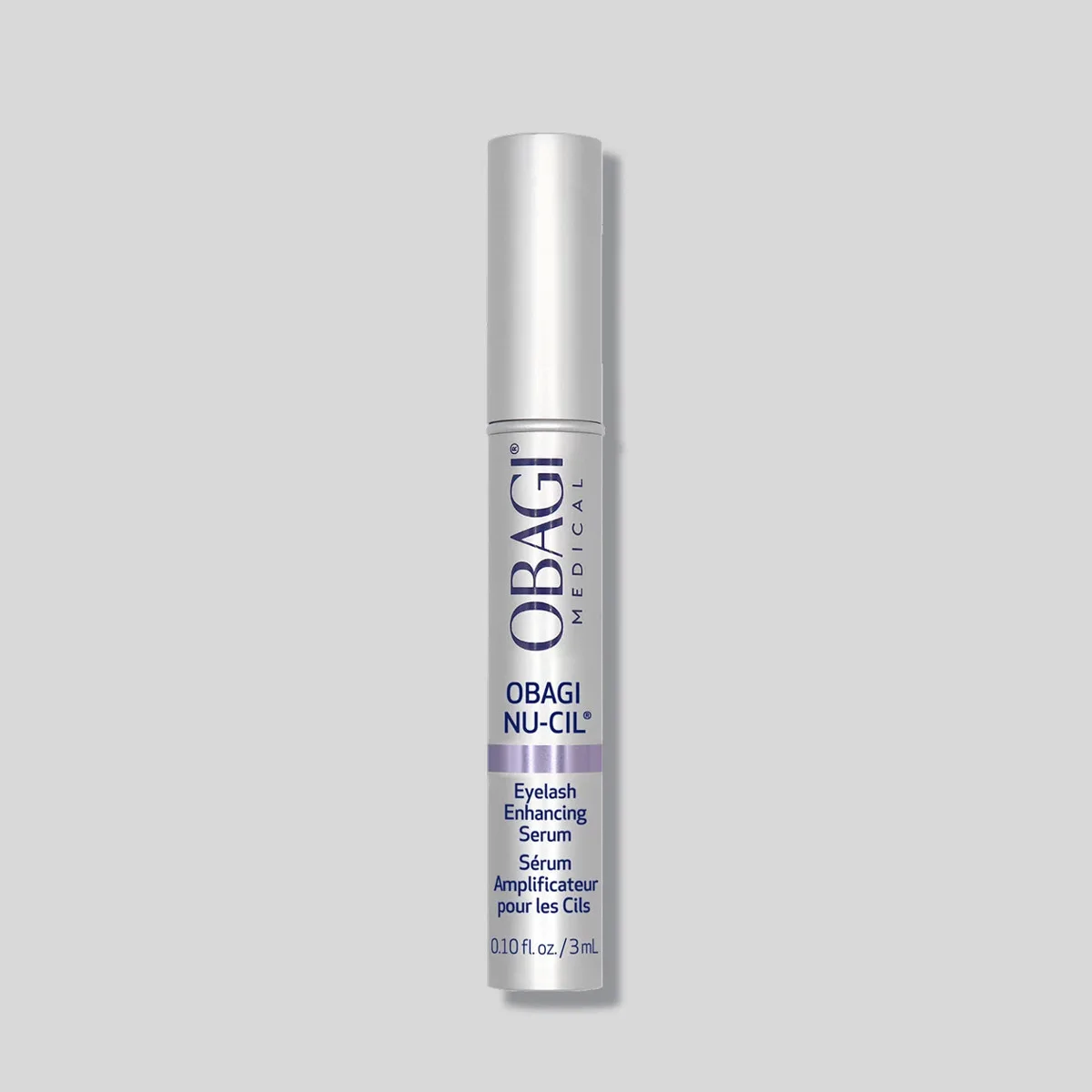 Prostaglandin Lash Serum, Quietly
 Eyelash Enhancing Serum
A prostaglandin lash serum that works the way prostaglandin lash serums work: real length and density by two to four months, real lid darkening and irritation for a minority, and results that leave when the serum does. Dehydrolatanoprost, second on the list, is a latanoprost derivative, and Obagi's decision to call it a proprietary lipid compound inside a vitamin complex is the review's main complaint; the serum itself is effective, the price is the class's going rate, and the label is coy.
Key Biotin · Panthenol
The full biotin (vitamin b7) guide
Biotin, or vitamin B7, is a vitamin the body uses to build fats and proteins, including the keratin in hair and nails.
Real deficiency is rare, and when it happens, hair thins and nails turn brittle, and topping biotin back up helps quickly. That's where its popular reputation came from. Most people already get plenty from eggs, nuts and legumes, so extra rarely adds anything. High-dose supplements can also throw off some blood tests, which is worth knowing before you stock up.
How it's regulated in the US
FDA does not classify ingredients — it classifies products, by what they are sold to do. The same molecule can be a drug active in one product and a cosmetic ingredient in the next, and only the claim on the label decides which. What follows is a statement about that legal standing, not about whether it works — the evidence question is answered separately above.
Cosmetic Biotin (Vitamin B7) is a cosmetic ingredient in the US: no OTC monograph covers it and it is not an active in any FDA-approved drug, so a product built around it is a cosmetic rather than a drug.
Biotin's link to hair comes mostly from reports of people with a real shortage, often children with inherited enzyme problems or adults after bowel surgery or long-term tube feeding. In those cases, the picture is clear. Studies in otherwise healthy people with thinning hair are few, and reviews of combination supplements can't tell biotin's part from everything else in the pill. Topical biotin in shampoos and serums hasn't been tested on skin or scalp in any meaningful way. A separate, well-documented thread looks at how high doses interfere with lab tests.
How it works
Biotin is a genuine essential cofactor, and its biochemistry is not in question. It attaches to five carboxylase enzymes in human cells and lets them move carbon dioxide around — the reactions that build fatty acids, break down certain amino acids, and feed glucose production. Hair and nails are keratin structures assembled from amino acids and lipids, so a cell that cannot run those carboxylases will produce defective keratin. That is why real biotin deficiency shows up visibly: thinning hair, brittle nails, a scaly rash around the eyes, nose and mouth. The logical error sits in the next step. A nutrient that causes a problem when absent does not fix that problem when already sufficient — the enzymes are saturated, and additional biotin is filtered into urine rather than stockpiled for extra keratin. Adequate intake is around 30 micrograms daily, supplied comfortably by eggs, nuts, legumes, liver and a healthy gut microbiome. Common supplements deliver 5 to 10 milligrams, hundreds of times that. Applied topically, biotin faces a different problem entirely: no published clinical work shows it penetrating to the follicular bulb in useful amounts or changing anything about hair once there. Its presence on a shampoo label is a marketing signal, not a mechanism — the product's conditioning agents are doing the work you feel.
Key benefits
- Supports healthy hair and nails when levels are genuinely low
- A vitamin the body uses to build keratin
- Helps people with inherited biotin-processing disorders
- Water-soluble, so the excess is flushed away
- Inexpensive where a real shortage is diagnosed
Concentration & usage
The number that matters is dietary: roughly 30 micrograms a day, which an ordinary diet supplies. Supplements typically contain 5,000 to 10,000 micrograms — 5 to 10 milligrams — and therapeutic protocols for genuine metabolic disorders go to 100 to 300 milligrams under medical supervision. There is no evidence that any dose above sufficiency grows hair in a person who is not deficient, so a higher number on a bottle buys interference with your blood tests rather than thicker hair. In topical products, biotin appears at fractions of a percent with no known effective concentration, because no concentration has been shown to be effective. If you suspect deficiency, the useful step is a serum biotin level, not a bigger tablet.
Who it's for & who should be cautious
Who it's for
Anyone with a confirmed deficiency, an inherited biotinidase or holocarboxylase defect, significant malabsorption, a history of bowel resection, or prolonged parenteral nutrition has a real indication — and in those situations biotin works well and quickly. Long-term valproic acid or isotretinoin use is a recognised risk factor worth testing for. Outside those groups, the honest advice is to spend the money on treatments with evidence behind them for whatever hair or nail problem you actually have.
Who should be cautious
The strongest reason to skip high-dose biotin is not that it fails but that it can mislead in an unexpected way. The FDA issued a safety communication in 2017, updated in 2019, because biotin distorts immunoassays that rely on biotin-streptavidin binding — troponin, thyroid hormones, parathyroid hormone and others — producing plausible-looking wrong numbers with no flag to the laboratory. One patient death has been reported in which falsely low troponin contributed to a missed heart attack. Two things are true at once here: the analytical interference is undisputed, and a real-world evaluation in acute cardiac care found clinically consequential interference to be rare. The sensible response is neither alarm nor dismissal — pause supplements for several days before blood work and say that you take them. Pregnancy and breastfeeding raise requirements modestly, which argues for a prenatal vitamin rather than a megadose.
Pairs with & conflicts
Pairs well with: Panthenol (Pro-Vitamin B5), Amino Acids, Niacinamide (Vitamin B3), Zinc, Caffeine
Myths & facts
Myth: Biotin makes hair grow thicker and faster.
Reality: In people with adequate biotin — which is nearly everyone eating normally — it does not. The single placebo-controlled trial in healthy women with diffuse hair loss found no difference in hair growth, and a 2024 review concluded that marketing biotin for hair loss in healthy individuals is unsubstantiated. The success stories in the literature involve children and adults with a documented underlying deficiency or metabolic defect.
Myth: It is water-soluble, so extra biotin is harmless — you just excrete what you don't need.
Reality: There is no known toxicity, which is not the same as inert. Circulating biotin at supplement doses saturates the streptavidin used in many immunoassays, skewing troponin, thyroid and parathyroid results without any warning to the laboratory — the specific reason the FDA issued its warning, prompted by independent laboratory scrutiny rather than industry disclosure. Real-world studies suggest clinically significant interference is uncommon, but 'uncommon' is a poor thing to rely on in a chest-pain workup.
Myth: A biotin shampoo or serum strengthens hair from the outside.
Reality: No clinical evidence supports topical biotin reaching the follicle in meaningful amounts or altering hair once there. Whatever improvement people notice from these products comes from the conditioning agents, silicones and proteins in the same formula, all of which improve how hair looks and behaves without doing anything at the root. The biotin on the front of the bottle is doing marketing work.
Frequently asked questions
Should I take biotin for hair loss?
Not unless deficiency has been confirmed or you have a clear risk factor such as malabsorption, bowel surgery, or long-term valproic acid. For pattern hair loss the treatments with real evidence are minoxidil, finasteride and related options; for telogen effluvium the answer is finding and fixing the trigger. Biotin is a cheap tablet that reliably substitutes for that harder conversation.
How long before I should stop biotin ahead of a blood test?
Guidance commonly suggests pausing for several days, with longer for very high doses, and the practical rule is to tell whoever orders the test that you take it. This matters most in an emergency, where a falsely low troponin can point away from a heart attack. Worth keeping in proportion: the interference is well documented analytically, while real-world audits in acute cardiac care find it rarely changes a diagnosis.
Does biotin help brittle nails?
This is the one non-deficiency use with any supporting data — small uncontrolled studies from the 1990s reported thicker nail plates in people with brittle nails, and the dermatology literature still treats it as a reasonable trial. The evidence is weak by modern standards, but the case for nails is genuinely better than the case for hair.
What actually causes biotin deficiency?
Inherited biotinidase or holocarboxylase enzyme defects, malabsorption syndromes, bowel resection, long-term parenteral nutrition, certain anticonvulsants, and — unusually — heavy consumption of raw egg whites, which contain a protein that binds biotin and blocks absorption. Ordinary eating habits do not produce it; the vitamin is widespread in food and gut bacteria make more.
Are the biotin gummies with 10,000 mcg better than a lower dose?
They are more likely to interfere with your lab results, and no more likely to affect your hair. The adequate intake is 30 micrograms; a 10,000 microgram gummy delivers over three hundred times that, and the excess is filtered out. The large number on the label is there because large numbers sell supplements, not because a threshold was identified.
- Hands & NailsThe Hardener Works. That Is Exactly How It Ruins Your Nails.Formaldehyde cross-links nail keratin into something genuinely harder — and then brittler, and then shattering — which is why the product that fixed the problem sells best to the people it created.
- Hands & NailsNail Strengtheners Sell Hardness. Your Nails Are Failing From Dryness.Cross-linking a brittle nail plate makes it harder — and a harder brittle nail snaps rather than bends, which is the exact opposite of what the bottle promised.
- Hands & NailsBrittle Nails: What Actually Works, and What's Just Hope in a BottleThe nail aisle promises transformation. But a nail is dead keratin with a handful of real inputs — here's the short list that earns its shelf space.