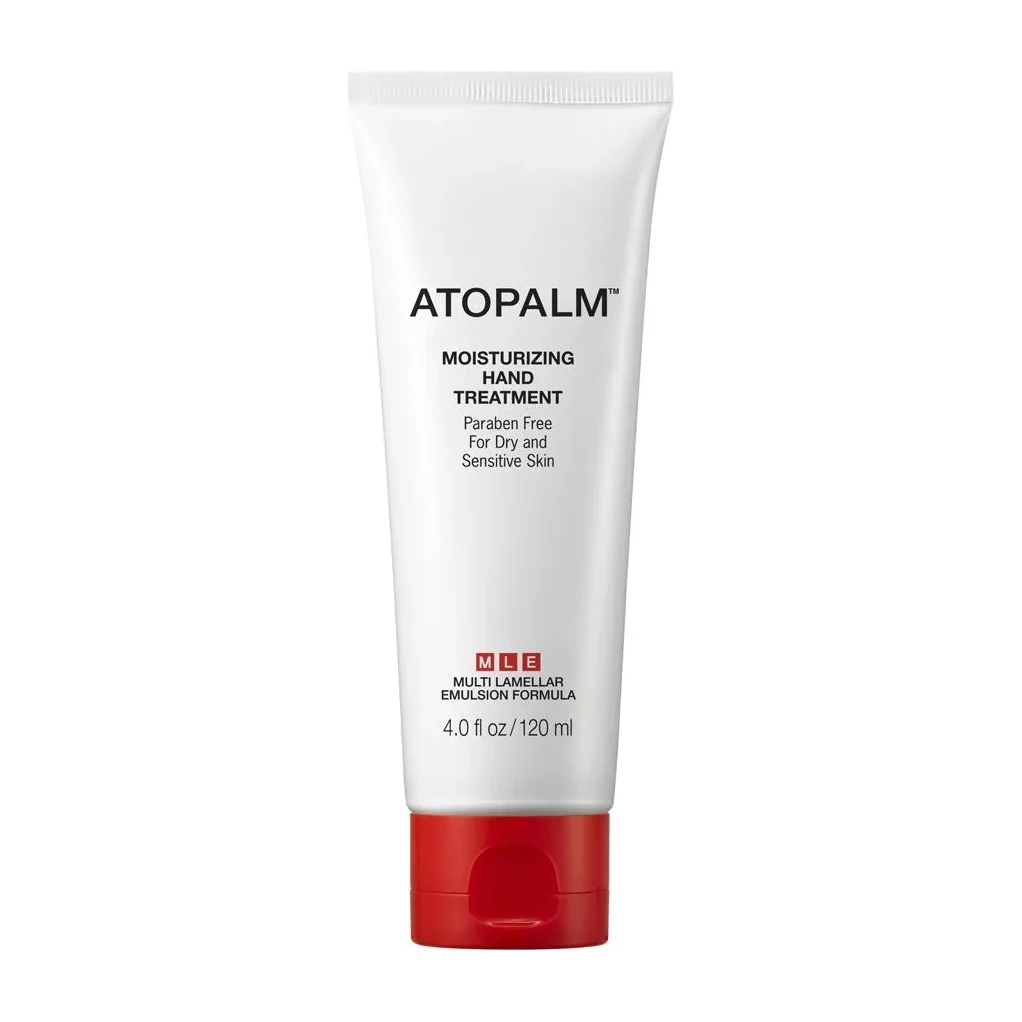
Hands take more abuse than almost any skin on the body — constant washing, sanitizer, friction, cold — and most hand creams answer that with pure occlusion: a layer of oil that traps water and feels nice for an hour. This one takes a different, more useful approach, and that's the reason to consider it over a generic tube.
The difference is barrier repair. Chronically dry, cracked hands usually have a genuinely depleted barrier: the lipid 'mortar' between skin cells has been stripped by repeated washing and weather. Atopalm built its whole identity on replenishing exactly that, and this hand cream carries the brand's signature MLE pseudo-ceramide, designed to mimic and top up the skin's own lamellar lipids so the hands can hold their own moisture again — not just sit slick under a film. For hands that crack every winter, that's a meaningful upgrade over a basic greasy cream.
It's not all technology, either. The emollient side is rich and well-chosen — meadowfoam, olive and camellia seed oils with octyldodecanol and esters for a nourishing, protective slip that softens rough patches — and there's genuine soothing and conditioning support: olivoyl hydrolyzed wheat protein and panthenol to comfort and bind water, plus a botanical complex of centella, licorice, chamomile, scutellaria and rosemary for calming, antioxidant benefit. That's a thoughtfully layered formula for damaged skin, not just oil in a tube.
The texture lands the balance well: rich enough to genuinely treat dry hands, but absorbable enough to use during the day after handwashing, with a thicker layer at night for the worst cracking. It's the kind of hand cream that actually improves the skin over days to weeks of regular reapplication, rather than just masking dryness between washes.
The trade-offs are minor and familiar for Atopalm. It's fragranced — a recurring, slightly puzzling choice for a barrier brand, and worth a patch test for the most reactive or eczema-prone hands. And it contains olivoyl hydrolyzed wheat protein, which is an allergen for the wheat-sensitive. Neither troubles most people, but both are worth knowing. It's vegan, and while it isn't fungal-acne safe (irrelevant for hands), that's a non-issue here.
That makes it broadly recommendable. Dry, normal and sensitive-leaning skin — and genuinely cracked, over-washed or eczema-prone hands — will get real, repairing benefit; there's little reason for most people to avoid it beyond the fragrance and wheat caveats.
In use, it's a rich but absorbable cream that sinks into a soft, nourished, non-greasy finish, leaves tight hands comfortable, and carries a light scent. The 60ml tube lasts a couple of months of regular use, and it shines in cold, dry weather.
How you use a hand cream matters as much as which one you buy, and a barrier-repair formula rewards a little routine. The single highest-impact habit is reapplying after every hand wash — that's when the barrier is most stripped and most able to take up the lipids and humectants — and a more generous layer at night, when skin repairs, ideally with cotton gloves over the top for genuinely cracked hands. Because this one is engineered around MLE pseudo-ceramide rather than pure occlusion, that consistency pays off cumulatively: instead of just feeling soft until the next wash, the hands gradually become less reactive to washing and weather as the barrier rebuilds over days to weeks. It absorbs quickly enough not to leave you fumbling with phone screens, which makes the after-wash habit realistic. The two caveats are worth restating plainly so you can decide around them: it's fragranced, which is a slightly puzzling choice in a barrier-repair product and a reason for the most reactive or eczema-flaring hands to patch test, and it contains olivoyl hydrolyzed wheat protein, which matters if you have a wheat allergy. Neither affects most people, but both are the kind of detail that's easy to miss on a hand cream you grab without reading. For the winter-cracked, the frequent-washers, the gardeners and the healthcare workers whose hands take daily abuse, a ceramide-and-barrier hand treatment used diligently is a genuine upgrade over the basic greasy tube most people reach for — and that, more than any single botanical, is the reason to choose it.
For anyone whose hands genuinely suffer through winter or frequent washing, that barrier-first approach — used consistently — is the difference between masking dryness and actually fixing it.
The bottom line: a barrier-repair hand cream that genuinely earns the 'treatment' in its name — MLE pseudo-ceramide plus rich emollients and soothing botanicals for hands that are damaged, not just momentarily dry. Buy it if your hands crack, peel or feel chronically tight from washing and weather, you want repair rather than a quick slick, and a light fragrance is fine. Skip it (or patch test) if you're fragrance-reactive or wheat-allergic, or if you specifically want a fragrance-free hand cream. For genuinely damaged hands, it's one of the more thoughtful options around.