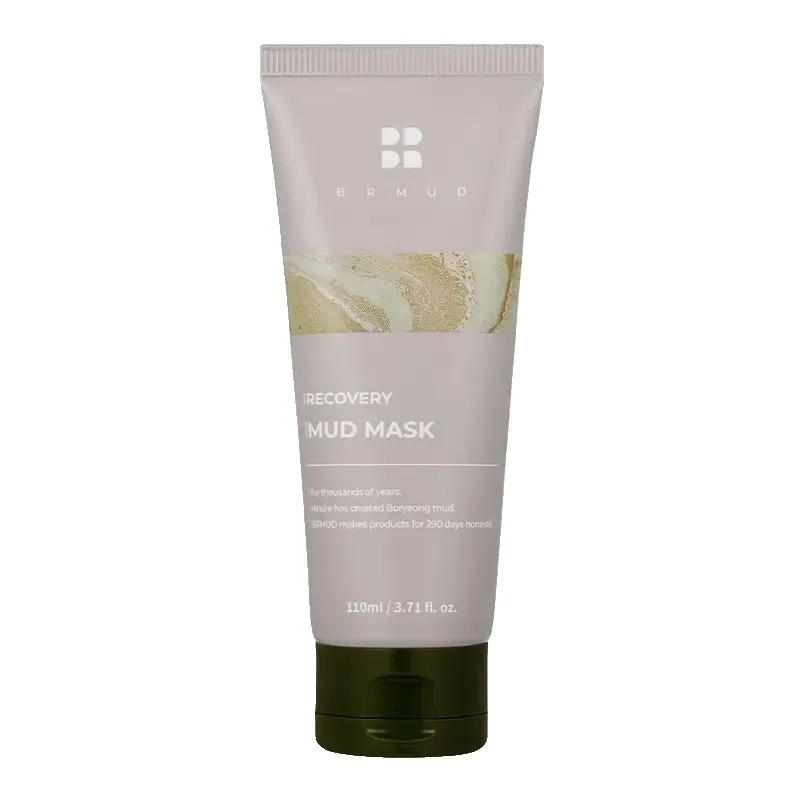
Everyone who's used a traditional clay mask knows the trade-off: you get that satisfying deep-cleaned, sebum-stripped feeling, but at the cost of skin that's left tight, dry, and sometimes flaky and irritated afterward. The whole category has historically asked you to accept dryness as the price of clean pores. BRMUD's Recovery Mud Mask is, more than anything, an attempt to break that trade-off — to deliver the strong clarifying punch of a high-clay mask without the punishing aftermath. The 'recovery' in the name isn't just branding; it's the entire design thesis, and the formula genuinely reflects it. For oily and combination skin that's been burned by harsh clay masks, that makes this worth a close look.
The cleansing side is no joke. This is a serious mud mask: 30% Boryeong sea silt — a mineral-rich Korean marine sediment — backed by 4% bentonite and 4% kaolin, two of the most effective sebum-absorbing clays, plus magnesium aluminum silicate. That's a high adsorbent load, and it does what it should: applied for fifteen to twenty minutes, it pulls excess oil and the gunk from congested pores, leaving skin visibly clearer, smoother, and matte. For sebum control and clogged-pore-prone skin, the deep-clean performance is legitimately strong, and a touch of tea tree oil adds a mild antibacterial, blemish-calming note that suits breakout-prone skin.
What sets it apart is everything BRMUD added to soften that deep clean. Most clay masks stop at clay; this one folds in ceramide NP, beta-glucan, hyaluronic acid, centella asiatica, and allantoin — a genuine barrier-and-soothing cast. The ceramide and humectants offset the moisture loss the clays cause, while centella and allantoin calm the low-grade irritation that strong adsorbents can provoke. The practical result is real: skin rinses clean and soft rather than squeaky and raw, and the mask doesn't crack into that uncomfortable, moisture-pulling dry film as aggressively as a pure clay mask. It's a smarter, more modern take on the format, and a fragrance-free one — the earthy-herbal scent comes only from the mud and tea tree, with no added perfume, which is a real plus for a treatment mask.
The caveats are honest but narrow. The tea tree leaf oil, while beneficial for oily and acne-prone skin, is a recognized sensitizer for some, and there's a small amount of alcohol in the formula. Neither is alarming in a rinse-off product used a couple of times a week, but together they mean sensitive, reactive, or rosacea-prone skin should patch test and approach cautiously — this is barrier-conscious for a clay mask, but it isn't a mask for already-compromised skin. And despite the ceramide buffering, it's still a high-clay mask: very dry skin should keep it to once a week, rinse before it fully dries, and not expect a hydrating treatment. The format is fundamentally a sebum-controlling deep clean, just a gentler-than-usual one.
A point on technique that matters with any clay mask and especially this one: don't leave it on until it cracks. The instinct to wait until the mask is bone-dry and tight is exactly wrong — that's the stage where it starts pulling water out of your skin. Rinse it while it's still slightly tacky, around the fifteen-to-twenty-minute mark, and you get the oil-clearing benefit while letting the soothing actives do their job. Used that way, even the drying risk shrinks.
On the brand: BRMUD is young, launched only recently, and built entirely around this Boryeong mud concept. The mask is sold through Walmart, Amazon, and K-beauty retailers with a growing base of positive reviews, which is reassuring, but you're buying from a brand without a long track record. As with the bar soap, the formula is straightforward enough — a well-constructed clay mask, not a complex actives serum — that this isn't a major risk, but it's worth knowing.
On value, it's good. At around $19 for 110 ml, a tube lasts roughly two to three months at weekly use, which is reasonable for a treatment mask, and the formulation punches above many pricier clay masks specifically because of the barrier additions. You're getting genuine deep-cleaning performance plus thoughtful buffering at a mid-affordable price. It's not the absolute cheapest clay mask, but it's a strong value for what it does.
Who should buy it? Oily and combination skin — especially breakout- and congestion-prone — that wants a strong weekly deep clean without the dry, tight aftermath of traditional clay masks. For that person it's one of the more thoughtfully formulated options around. The people who should be cautious are sensitive, reactive, and rosacea-prone skin, because of the tea tree and alcohol, and very dry skin, which should use it sparingly. As a barrier-friendly clarifying mask for oilier skin, though, it's a genuinely smart, effective, fairly priced pick. It's also worth pairing it sensibly with the rest of your routine: because it's already barrier-conscious, you don't need to follow it with anything heavy-duty, just a simple hydrating toner and your usual moisturizer to lock the comfort in. Over-treating after a clay mask is a common way people undo its benefits.