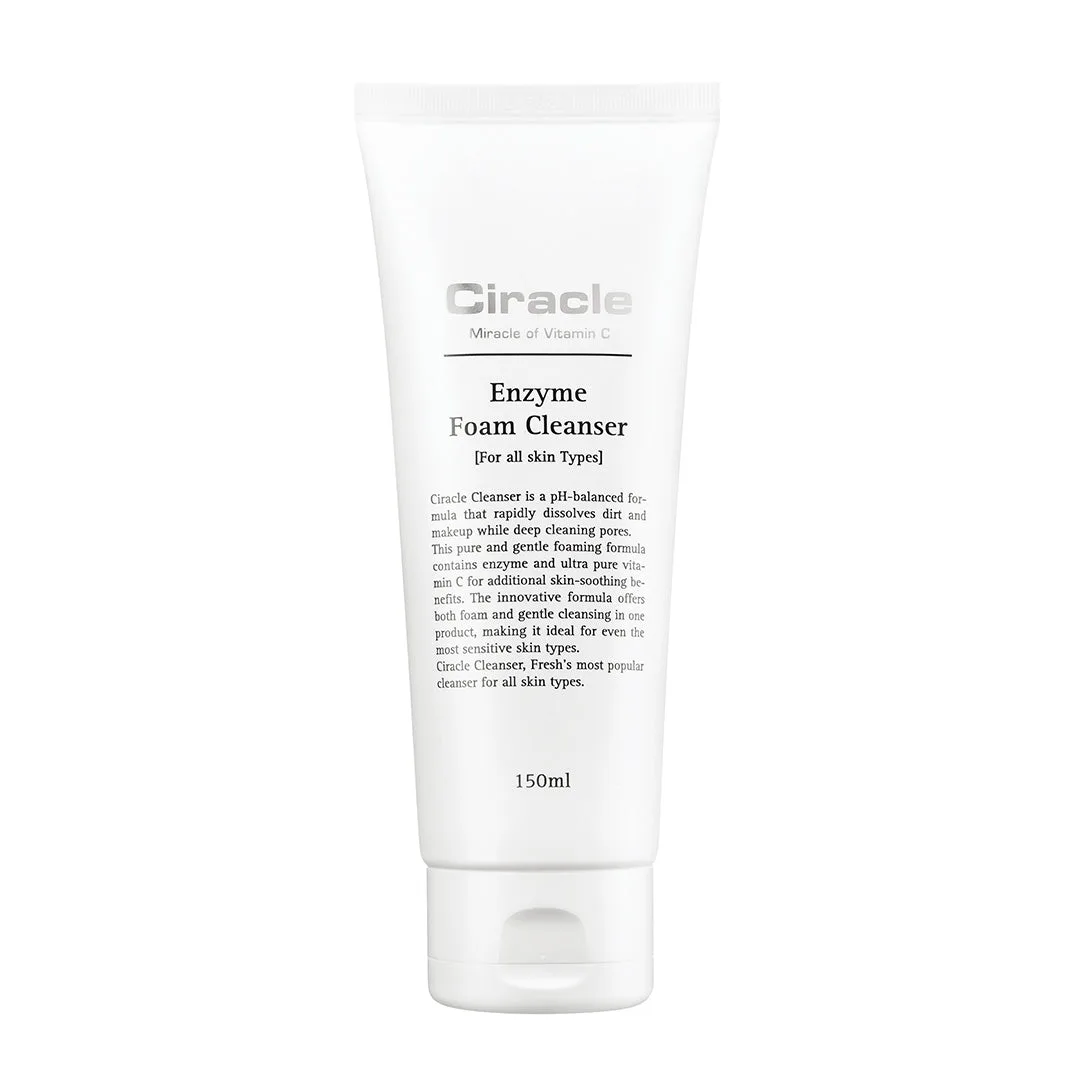
Most people read an ingredient list from the top down, but the Ciracle Enzyme Foam Cleanser is more revealing read from the bottom up. The final ingredient is bromelain, the protein-digesting enzyme from pineapple. Three spots above it is papain, its counterpart from papaya. Those two are the reason the product is called an enzyme cleanser, and they sit after preservatives, salt, a thickener and a humectant sugar. Keep reading upward and you arrive at what actually makes this cleanser work: palmitic, myristic, stearic and lauric acids, sitting next to potassium hydroxide. That combination means soap.
That is not an accusation, just chemistry. Many classic Korean cleansing foams are built exactly this way. When fatty acids meet potassium hydroxide in the formula, they form potassium soaps, which produce a famously thick, bouncy, creamy lather and are excellent at lifting oil, sebum and light sunscreen. The trade-off is pH. Soap-based cleansers are alkaline, typically well above the skin's naturally acidic surface pH, and alkaline washing is associated with more barrier disruption, more tightness and, for some people, more irritation than low-pH syndet cleansers. The formula's second ingredient, glycerin, is a generous buffer against dryness, and cocamidopropyl betaine softens the lather further, but they cannot change the fundamental character of the base.
The tube itself calls the formula pH-balanced and suitable for even the most sensitive skin types, and this is where the label and the ingredient list part ways. 'pH-balanced' has no regulated definition, and it can mean simply that the pH is controlled within a target range. A cleanser whose lather comes from potassium soaps, though, cannot sit at the skin's own acidic pH and still foam this way; soap needs an alkaline environment to exist. The honest reading is that the foam is balanced for a soap, not balanced to skin.
For oily skin, that character is often exactly what's wanted. The foam removes grease thoroughly and leaves a clean, matte finish that lasts into the afternoon for many people. A pea-sized amount whipped with a little water produces a surprising quantity of lather, which means the 150ml tube goes a long way. If your skin is resilient, shiny by lunchtime and never feels tight after washing, this is a very inexpensive way to get that thoroughly clean feel.
The enzyme angle deserves an honest assessment. Papain and bromelain are both proteases that can loosen the protein bonds between dead surface cells, and in dedicated enzyme powders or masks they provide a gentle exfoliating effect. Here, however, they are at trace levels and in contact with skin for well under a minute before rinsing. It is reasonable to expect a very slight smoothing effect at most. The product is best thought of as a good soap-based foam with a small enzymatic flourish, not an exfoliating cleanser.
There are a few details worth noting for specific shoppers. Fragrance is listed mid-formula, giving a clean, soapy scent during use; it fades after rinsing but is still a consideration for fragrance-sensitive skin. Beeswax appears in the formula, so unlike much of Ciracle's current range this product is not vegan. Isopropyl alcohol appears near the end, most likely as a carrier for another ingredient rather than as a meaningful part of the cleanse. Myristic and lauric acids have historically been flagged in comedogenicity lists; in a rinse-off soap they are far less of a concern than in a leave-on product, but that history is worth knowing for the most breakout-prone users.
Who, then, should avoid it? Dry skin, sensitive skin, eczema-prone skin and anyone with rosacea or a recently over-exfoliated barrier are the groups most likely to feel the downsides of an alkaline soap foam. For them, the tightness after washing is not a sign of cleanliness but of a barrier losing lipids and water. Even normal skin may find it too stripping in winter or when paired with retinoids, benzoyl peroxide or acid toners. Those users would be better served by a low-pH, fragrance-free syndet cleanser, even at a slightly higher price.
There are ways to make this foam work for a broader audience if you already own it. Use it once daily rather than twice, keep contact time short, rinse with lukewarm rather than hot water, and follow immediately with a hydrating toner and moisturizer. Using it as a second cleanse after an oil cleanser at night can also make sense, because the oil does much of the heavy lifting and the foam is simply clearing residue.
In terms of experience, the texture is pleasant, the tube is practical and the lather is genuinely satisfying. It has none of the thin, runny quality of some gel cleansers. The fragrance is more noticeable than you might expect from a cleanser marketed on gentleness, but it is not overpowering.
Feedback for this particular product exists but is not voluminous. What there is tends to praise the lather, the clean feel and the price, and to note tightness on drier skin and the scent, all consistent with what a soap-based formula would predict.
At around twelve dollars for 150ml, the value is excellent in pure cost-per-wash terms, often three months of use. The question is not whether it is cheap, but whether its chemistry suits your skin. For oily, resilient skin that wants a deep-clean foam, it is a solid budget pick. For everyone else, the enzyme branding should not be mistaken for gentleness, and a milder cleanser will be kinder in the long run.