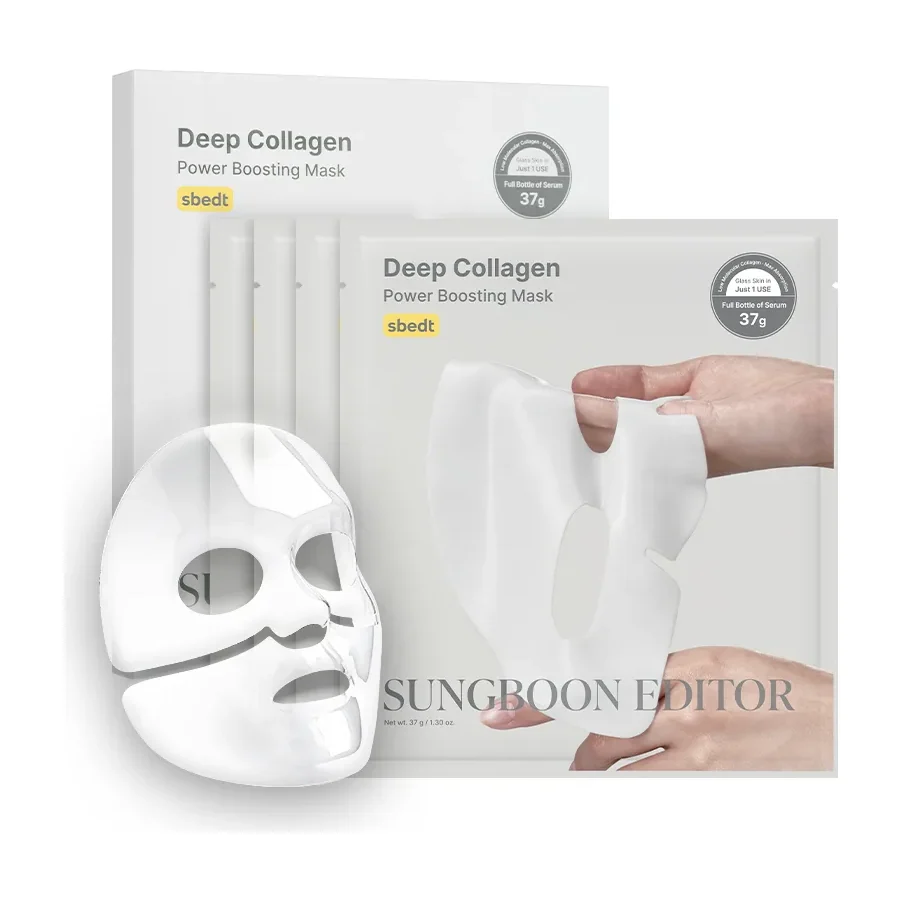
There is a moment, roughly twenty minutes into wearing this mask, when the hydrogel begins to shift from opaque to transparent. It happens gradually — the gel that arrived on your face as a cool, slightly milky sheet slowly clarifies as its payload of snail mucin, ceramides, and hyaluronic acid migrates into your skin. When you finally peel it off and look in the mirror, your face has the specific quality that the Korean skincare world calls glass skin: luminous, smooth, impossibly hydrated, as if your pores have temporarily decided to cooperate and your skin has been replaced with something more expensive.
This is the COSRX Advanced Snail Mucin Glass Glow Hydrogel Mask, and it is the most ingredient-dense product in the brand's snail mucin line — a lineup that already includes the single most famous essence in K-beauty history. Where the 96 Mucin Power Essence relies on concentration (96% snail secretion filtrate) and the gel cleanser relies on surfactant engineering, this mask takes a different approach entirely: it throws everything at your face. Five ceramides. Five forms of hyaluronic acid. Twenty-five percent snail mucin. Niacinamide. Adenosine. Gluconolactone. Panthenol. Hydrolyzed collagen. Cholesterol and phytosphingosine for complete barrier architecture. If this ingredient list showed up on a serum, it would be an eighty-dollar product. COSRX put it in a sheet mask for five dollars per use.
The five-ceramide complex deserves particular attention because it is not a token inclusion. Ceramides NP, NS, AP, AS, and EOP — presented alongside cholesterol and phytosphingosine — constitute the three essential lipid classes of the stratum corneum's intercellular matrix. This is the same lipid architecture that CeraVe built a billion-dollar brand around. Finding it in a sheet mask, delivered through sustained hydrogel contact over twenty to thirty minutes (or overnight, if you are ambitious), means the mask is doing genuine barrier repair work, not just cosmetic hydration.
The five-form hyaluronic acid system is similarly thoughtful. Sodium hyaluronate provides broad surface hydration. Sodium hyaluronate crosspolymer creates a long-lasting moisture reservoir. Hydrolyzed hyaluronic acid and hydrolyzed sodium hyaluronate, with their lower molecular weights, penetrate deeper into the epidermis. And pure hyaluronic acid fills in the remaining spectrum. The result is hydration at every accessible depth of the skin, creating the volumized, plump effect that makes the glass-glow finish look so dramatic.
Gluconolactone — a polyhydroxy acid — is the ingredient that elevates this from hydration mask to glow mask. PHAs provide gentle surface exfoliation through a mechanism that is inherently less irritating than glycolic or lactic acid, thanks to their larger molecular size. In the context of a mask worn for extended periods, this gentle exfoliation smooths the skin surface just enough to create the light-reflecting uniformity that glass skin requires. It is a subtle touch that shows formulation sophistication.
The hydrogel format itself matters. Unlike cotton sheet masks that can slide around, dry out, and deliver their essence unevenly, hydrogel masks maintain consistent contact with the skin and deliver ingredients more uniformly. This particular mask uses a two-piece design (upper and lower face sections) that conforms to facial contours better than a single-piece sheet. Users consistently report that it stays in place well enough for overnight wear — a significant advantage for those who want to maximize contact time.
The snail mucin at 25% is a meaningful concentration. This is not the 96% of the leave-on essence, but it is twenty-five times the concentration in the brand's gel cleanser. In the sustained-contact hydrogel format, 25% snail secretion filtrate has ample time to deliver its complex matrix of glycosaminoglycans, natural allantoin, and copper peptides. Research on snail mucin, while still building, has demonstrated benefits for hydration, wound healing support, and anti-inflammatory action — all relevant for a mask designed to leave skin looking radiant and feeling soothed.
The product is genuinely new — launched in December 2024 — which means the review volume is still modest and long-term user data is limited. Early reviews are overwhelmingly positive, with users praising the immediate glow effect, lasting hydration, and superior adhesion. The few complaints center on a faint neutral smell upon opening the packet and the per-use cost, which at five to nearly seven dollars is high for a sheet mask but competitive for a premium hydrogel.
At fifteen dollars for three masks, the value equation depends on your frame of reference. Compared to a two-dollar cotton sheet mask, it is expensive. Compared to a clinical facial or even a prestige serum with this ingredient profile, it is a fraction of the cost. The ingredient list genuinely justifies the price — finding five ceramides, five HA forms, and six additional proven actives in a single product at any price point is unusual.
It's not a product for daily use. It is a weekly or twice-weekly treatment that delivers immediate visible results for events, dates, or simply the satisfaction of looking in the mirror and seeing your skin at its most luminous. But the barrier-repair ingredients — ceramides, cholesterol, phytosphingosine — also deliver cumulative benefits with regular use, making this more than just a temporary glow fix. COSRX has packed genuine skincare substance into the glass-skin aesthetic, and the result is one of the most impressive sheet masks currently on the market.