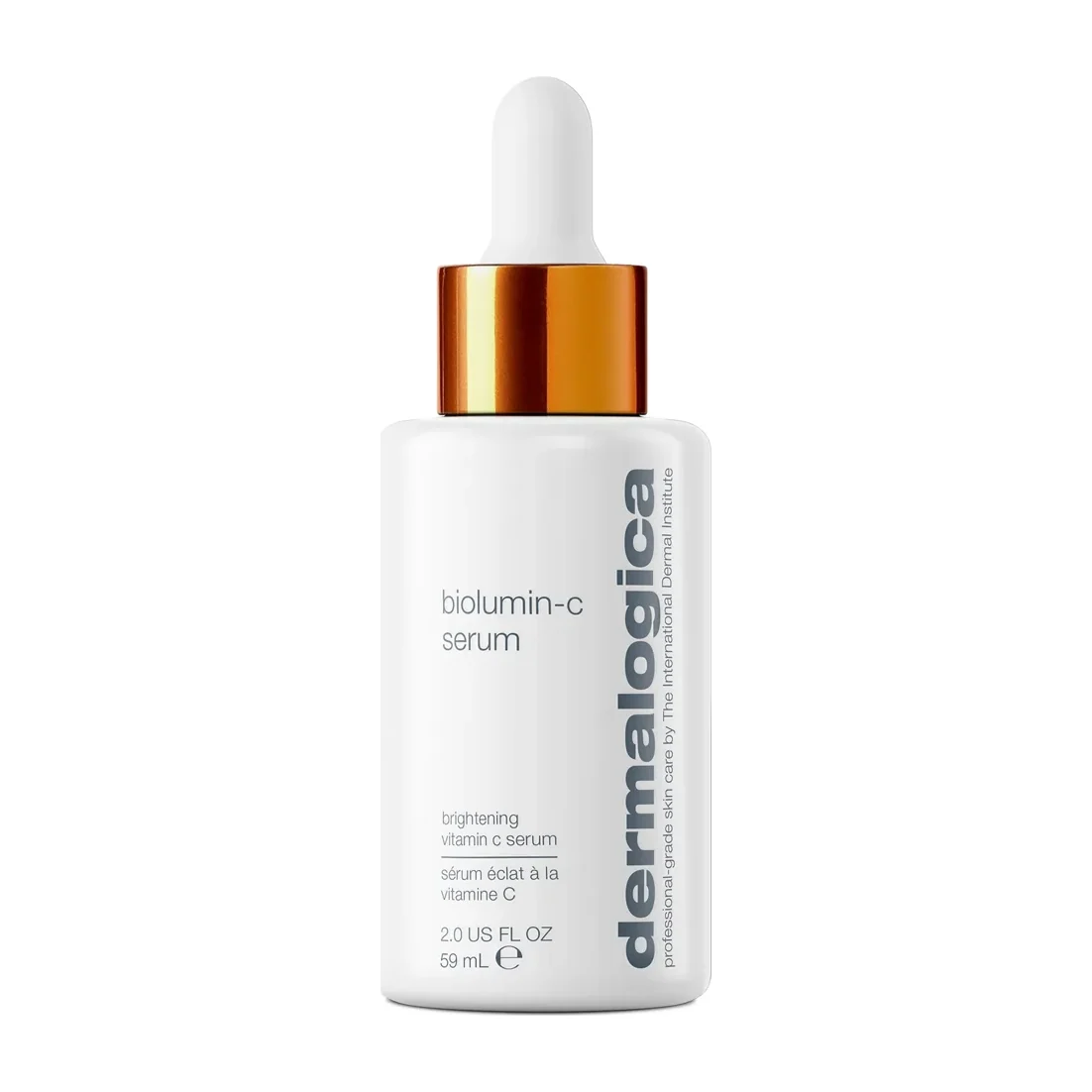
There's a quiet deception in the name BioLumin-C. The 'C' directs your attention to vitamin C, and the marketing follows suit — stable vitamin C, bioavailable vitamin C, more vitamin C than the competition. But look at the INCI list, where ingredients are ordered by concentration, and you'll find lactic acid sitting in fifth position while both vitamin C derivatives are buried further down. This is, by formulation hierarchy, more of a lactic acid serum than a vitamin C serum. And that's actually a compliment.
Lactic acid is arguably the most underrated AHA in skincare. It exfoliates like glycolic acid but with a larger molecular size that slows penetration, reducing irritation while still accelerating cell turnover. It also has humectant properties — it draws moisture into skin while it exfoliates, which is why it rarely leaves the tight, sandpapered feeling that a glycolic serum can. In this formula, the lactic acid does the heavy lifting of surface renewal: dissolving dead cells, improving texture, enhancing radiance. The vitamin C derivatives then work on freshly revealed skin, where their antioxidant and melanin-inhibiting properties can actually reach something.
That synergy is what makes the serum more effective than either ingredient's concentration would suggest. It's not that 4.7% stabilized vitamin C is doing extraordinary things — it's that the lactic acid is preparing the canvas, and the vitamin C is painting on a smoother surface.
The stability story is the brand's primary selling point, and it's legitimate. Pure L-ascorbic acid serums are notorious for oxidizing within weeks of opening — you break the seal, expose the formula to air, and a molecular countdown begins. Within two or three months, an expensive serum is literally turning brown in the bottle. The two stabilized derivatives here (ascorbyl methylsilanol pectinate and aminopropyl ascorbyl phosphate) don't do that. A 24-month period-after-opening means you can use this at a leisurely pace without watching the clock. For everyone who has thrown away a half-used vitamin C serum in disgust, that solves a real and expensive problem.
The trade-off is potency, and it deserves stating plainly rather than being buried in marketing. Stabilized derivatives are not biochemically equivalent to pure L-ascorbic acid. They must be converted to active ascorbic acid after penetrating the skin, and that conversion is not fully efficient — so 4.7% of derivative is meaningfully less than 4.7% of the real thing. Many well-regarded serums run 10 to 20 percent pure L-ascorbic acid. That doesn't make this approach wrong; it makes it a different bet. You are choosing reliability over intensity, and compliance over peak potency — which, given that the best serum is the one you actually finish, is not a foolish trade.
Palmitoyl tripeptide-5 supplies the anti-aging dimension. The peptide mimics thrombospondin-1, activating TGF-beta signaling and prompting fibroblasts toward collagen synthesis. Sitting in the mid-INCI of a leave-on serum, it has a genuine shot at doing something — considerably more than the same peptide would in a product designed to be rinsed off thirty seconds later. Around it, the supporting cast is quietly good: chia seed extract and sodium PCA for humectancy, sodium hyaluronate for plumping, sophora japonica flavonoids and vitamin E extending the antioxidant bench, and dipotassium glycyrrhizate — licorice-derived — calming the inflammation that the acid inevitably provokes.
The texture is genuinely pleasant. It's a silky gel-serum that doesn't feel heavy, absorbs within a minute or two, and leaves a luminous base that works beautifully under moisturizer and makeup. The brief tackiness during absorption is real but short-lived, and the finish is a dewy glow that earns the 'Lumin' in the name. This is one of those serums that makes skin look better before any of the long-term ingredients have had time to work. The glass dropper bottle, double-coated against light, is the right vessel for it.
The grapefruit peel oil remains the formula's most puzzling inclusion. The brand doesn't use artificial fragrance — true — but grapefruit peel oil brings furanocoumarins and limonene, both documented sensitizers. In a morning serum that already contains lactic acid, which increases photosensitivity, adding a potentially phototoxic essential oil is a decision driven by sensory experience rather than formulation science. It smells nice. It shouldn't be there. And carrageenan further down the list is a fair flag for anyone prone to congestion, as is the sunflower oil for anyone managing fungal acne.
Sunscreen is therefore not a suggestion here, it's a condition of use. Daily SPF 30 or higher, every morning, without negotiation — an exfoliating acid plus a citrus oil plus unprotected sun is how you end up with more pigmentation than you started with. Keep it away from other acids in the same routine, and separate it from retinol by time of day. Mild warmth in the first week is normal; persistent stinging means buffer it with moisturizer or use it every other day.
The price conversation is unavoidable. At $99 for one ounce, this competes against pure vitamin C formulas with far higher concentrations at half the price or less, and one full dropper per application means a one-ounce bottle may only carry you four to six weeks. The defense is the stability, the genuinely multi-action formula, the professional heritage, and the elegance of the whole experience. The larger size improves the per-ounce math substantially, and a travel size exists if you want to test the waters before committing.
Across more than four thousand reviews averaging 4.6 stars over nearly eight years on market, this serum has built its following on consistent, gentle results rather than dramatic transformations. Expect glow immediately, smoother texture and brightness within two to three weeks, and tone evening over six to eight. It's a serum for people who want their skin to look reliably luminous over time — not for people chasing maximum vitamin C potency. That's a valid choice, well argued. Whether ninety-nine dollars is the right price for it is the only question left, and it's one your budget answers, not your skin.