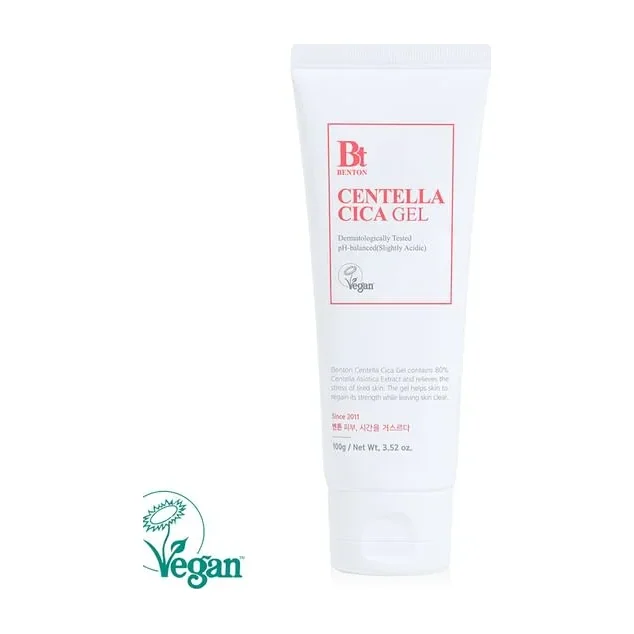
For most of the last decade, if a Korean moisturizer wanted to whisper 'this will calm your skin down,' it reached for centella — cica, tiger grass, the green-tube aesthetic the whole category borrowed. Then heartleaf showed up. Houttuynia cordata had been sitting in Korean herbal tradition the entire time, and a wave of brands began repositioning it as the cica alternative for reactive skin. Neogen's Real Heartleaf Soothing Cream is one of the products that made the case most convincingly, and it did it by refusing to treat the new hero ingredient as a marketing garnish.
The headline number is the whole story: 75% houttuynia cordata. That figure means the extract is not riding near the bottom of the list as a claims ingredient — it has replaced most of the water that forms the base of nearly every cream. Every other active here is suspended in a foundation of anti-inflammatory heartleaf. That changes the character of the product. Where a typical soothing cream calms with one ingredient and hydrates with the rest, this one starts from a soothing base and then layers more soothing on top, which is either redundant or exactly the point depending on how reactive your skin is. For genuinely flush-prone, easily irritated skin, the redundancy is the point.
And it really does layer. Niacinamide sits sixth, high enough to be a working dose rather than a label note, quietly handling barrier support and tone-evening while the heartleaf calms. Centella asiatica turns up further down — a second classic soother stacked on the first — and guaiazulene, the azulene blue, adds a third anti-inflammatory angle mid-list. That is three distinct anti-redness actives in one jar. The hydration is handled with similar thoroughness: eight different molecular weights of hyaluronic acid cascade through the back half of the formula, from large surface-film types down to hydrolyzed fragments meant to reach deeper, plus glycerin and panthenol up top. It is a lot of hydration engineering for something that feels this light.
The texture is where the 'gel-cream' label earns itself. It is cooling on contact — a small relief in itself on stressed skin — spreads thin, and sinks in fast to a soft, non-greasy finish. There is a faint fresh-green herbal smell from the heartleaf and the fruit extracts, but no added fragrance, which matters enormously for the sensitive crowd this is aimed at. On reactive skin it tends to deliver an immediate hit of comfort with no tingle and no adjustment period; you put it on and skin simply feels calmer. Over a week or two visible redness settles, and the niacinamide's barrier and tone benefits accrue across the usual four-to-eight-week window.
The limitations are real but modest. This is a light gel-cream, and for all its hyaluronic acid, very dry skin — especially in winter — may find it under-delivers on its own and want a richer occlusive layered over the top at night. The 80g tub, while generous and easy to scoop, is the less hygienic and less travel-friendly choice next to a tube, and repeated finger-dipping is not ideal for a product aimed at compromised skin. And the macadamia and olive oils, pleasant as they are, mean this is not a clean pick for anyone specifically fighting fungal acne. None of these undo the core strengths; they just define who it is and is not for.
Value is straightforward and good. Twenty-eight dollars for 80g of a fragrance-free, genuinely well-built soothing cream is a fair price, and because a little of this light gel goes a long way, a tub stretches to three or four months of twice-daily use. You are paying for a formula that is doing real work — a concentrated active base, a meaningful niacinamide level, a thoughtfully layered hydration system — rather than for packaging or a trend tax, even though it happens to sit at the center of a trend. For sensitive, combination or normal skin that wants a reliable daily calm-and-hydrate step, it is an easy recommendation and a deserved bestseller. Only the very dry and the fungal-acne-prone have real reason to look elsewhere.
There is also a quiet versatility here that the bestseller status reflects. Because it is light, fragrance-free and built around soothing rather than treating, it plays well with almost anything else in a routine — you can layer it over an active serum to buffer irritation, use it as a daytime moisturizer under sunscreen, or lean on it as a simple calming step during a flare when you want to strip your routine back to essentials. That adaptability is part of why it has become a repeat-purchase for so many people: it is not a single-use specialist but a dependable workhorse that earns a permanent spot. Few products manage to be both broadly useful and genuinely good at their core job, and this one's balance of the two is the real reason it keeps selling.