Neutrogena Pore Refining Toner bottle on white background
Promising for Excess Oiliness
What makes this different

It's one of the few sub-eight-dollar toners that pairs a meaningfully dosed glycolic acid with salicylic acid in the same bottle, going after surface dullness and deep pore congestion at once. The trade-off is an old-school, no-nonsense formula that leans on alcohol and witch hazel for that classic mattifying, pore-tightening bite.

Neutrogena

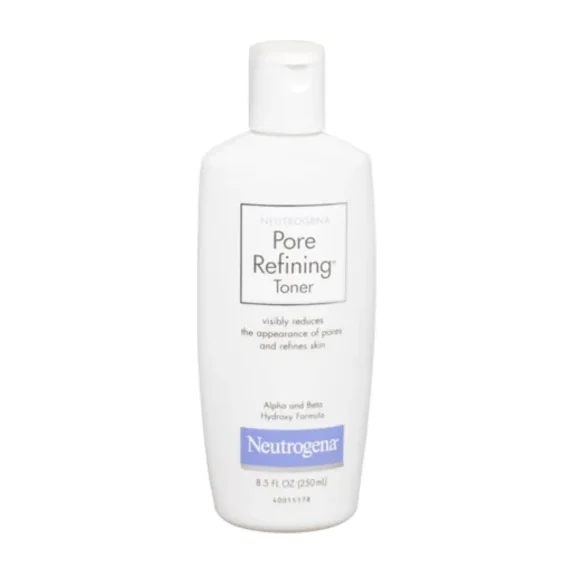
Neutrogena Pore Refining Toner Review

Oily-Skin Workhorse Toners liquid dermatologist recommended Paraben free Not cruelty free

An unapologetically old-school dual-acid toner that delivers real results for oily, blackhead-prone skin at a drugstore price. Glycolic and salicylic acids genuinely clear congestion and smooth texture, but a formula loaded with alcohol, witch hazel, fragrance, and menthol-eucalyptus makes it harsh and easy to overdo. Effective if you're resilient and disciplined; a barrier hazard if you're not.

Price $7.99 8.5 fl oz
Shopper rating 4.3 ★★★★★ 3,100 reviews
Best for oily
Buy at Amazon ♥
Verdicts

How well it fits each concern

One verdict per concern. Open a row for the reasoning; the receipt has every source.

The scaleRecommendedGoodSupportingEarly evidenceNot for thisAvoidhow it works

Promisingfor Excess OilinessSalicylic Acid has trial-level evidence for excess oiliness but no guideline or regulatory standing yet — promising, short of a recommendation; the other actives here are not yet assessed for it.Receipt6 sources on the row · rule R9p, same reading on 4,872 products · open the receipt

The case for it

  1. Salicylic Acid has at least one trial behind it for this concern but no guideline or regulatory standing yet.
  2. It is plausibly present at a working level, though the concentration is not declared.
  3. The formula carries no trigger this concern is sensitive to, with the cautions noted.

Moderate evidenceStandard tolerabilityNo reviews read yet

What would change this: A declared concentration would move this to a firmer reading of the dose.

Same rule for everyone. “Promising” is the verdict on 4,872 of 45,446 concern verdicts across the catalog; rule R9p decided 4,872 of them. Unchanged since September 5, 2026, engine 5.2.0.

Brand or formulator? Disclose a concentration or correct a fact →

The full receipt: rule, row, sources, dates →All excess oiliness products →

Not for thisfor Large PoresThe actives here have been researched for large pores and the evidence does not support the claim.Receipt3 sources on the row · concentration not declared; studied range 5–10% · rule R10, same reading on 489 products · open the receipt

The case for it

  1. Glycolic Acid has been researched for this concern and the evidence does not support it.
  2. It is plausibly present at a working level, though the concentration is not declared.
  3. The formula carries no trigger this concern is sensitive to, with the cautions noted.

Not from a trial rowStandard tolerabilityNo reviews read yet

What would change this: A declared concentration would move this to a firmer reading of the dose.

Same rule for everyone. “Not for this” is the verdict on 489 of 45,446 concern verdicts across the catalog; rule R10 decided 489 of them. Unchanged since September 5, 2026, engine 5.2.0.

Brand or formulator? Disclose a concentration or correct a fact →

The full receipt: rule, row, sources, dates →All large pores products →

Strong choicefor BlackheadsSalicylic Acid is an approved or monograph active for blackheads; this liquid carries it, though the concentration is not declared.Receipt21 CFR § 333.350 - Labeling of acne drug products. (opened Jul 27, 2026) · concentration not declared; studied range 0.5–2% · row checked Jul 27, 2026 · rule R3, same reading on 570 products · open the receipt

The case for it

  1. Salicylic Acid is an approved or monograph active for this concern.
  2. It is plausibly present at a working level, though the concentration is not declared.
  3. The formula carries no trigger this concern is sensitive to, with the cautions noted.

Moderate evidenceStandard tolerabilityNo reviews read yet

What would change this: A declared concentration would move this to a firmer reading of the dose.

Same rule for everyone. “Strong choice” is the verdict on 1,475 of 45,446 concern verdicts across the catalog; rule R3 decided 570 of them. Unchanged since September 5, 2026, engine 5.2.0.

Brand or formulator? Disclose a concentration or correct a fact →

The full receipt: rule, row, sources, dates →All blackheads products →How blackheads is treated →

Good choicefor Rough TextureGlycolic Acid is a reference standard by mechanism for rough texture; this liquid carries it high in the ingredient list.Receipt2 sources on the row · concentration not declared; studied range 4–10% · row checked Jul 17, 2026 · rule R5, same reading on 9,843 products · open the receipt

The case for it

  1. Glycolic Acid is a reference standard by mechanism for this concern — an established physical action, not a trial result.
  2. It is present at an effective concentration, declared or high in the ingredient list.
  3. The formula carries no trigger this concern is sensitive to, with the cautions noted.

Limited evidenceStandard tolerabilityNo reviews read yet

Same rule for everyone. “Good choice” is the verdict on 10,340 of 45,446 concern verdicts across the catalog; rule R5 decided 9,843 of them. Unchanged since September 5, 2026, engine 5.2.0.

Brand or formulator? Disclose a concentration or correct a fact →

The full receipt: rule, row, sources, dates →All rough texture products →How rough texture is treated →

Good choicefor DullnessGlycolic Acid is a reference standard by mechanism for dullness; this liquid carries it high in the ingredient list.Receipt1 source on the row · concentration not declared; studied range 4–10% · row checked Jul 17, 2026 · rule R5, same reading on 9,843 products · open the receipt

The case for it

  1. Glycolic Acid is a reference standard by mechanism for this concern — an established physical action, not a trial result.
  2. It is present at an effective concentration, declared or high in the ingredient list.
  3. The formula carries no trigger this concern is sensitive to, with the cautions noted.

Limited evidenceStandard tolerabilityNo reviews read yet

Same rule for everyone. “Good choice” is the verdict on 10,340 of 45,446 concern verdicts across the catalog; rule R5 decided 9,843 of them. Unchanged since September 5, 2026, engine 5.2.0.

Brand or formulator? Disclose a concentration or correct a fact →

The full receipt: rule, row, sources, dates →All dullness products →How dullness is treated →

Does the jobDoes what a toner is for: adds something real. Not measured from the label: restores skin pH, plays well with what follows.

A verdict is Dermington’s assessment of how well a product’s ingredients fit a concern — never a claim about what the product treats. Evidence dots and collected reviews sit beside it and are never blended in. Rules 0.5.1 · evidence table ev-2026.10-r231 · engine 5.2.0 · how we decide · this product’s receipt

Reader poll · Town SquareQuestion 1 of up to 3

Have you used Pore Refining Toner?

One tap counts. A couple of optional follow-ups come next.

No account neededOne answer each, change it any timeCounted only in anonymous totalsHow the Square counts →
Assessment

Pros & cons

What it does well 6

  • Effective dual glycolic and salicylic acid exfoliation in one step
  • Glycolic dosed high enough to genuinely smooth texture
  • Salicylic acid clears blackheads and deep pore congestion
  • Visibly mattifies and tightens the look of pores
  • Very inexpensive for a functional dual-acid treatment
  • Oil-free and widely available at every drugstore

Where it falls short 6

  • Denatured alcohol high in the formula is notably drying
  • Witch hazel, eucalyptus, and peppermint add irritation potential
  • Contains fragrance, a risk for reactive skin
  • Easy to over-exfoliate and damage the barrier with daily use
  • Too harsh for sensitive, dry, or rosacea-prone skin
  • Not suitable for use during pregnancy
Review

The full review

Open this bottle and the first thing that hits you isn't the ingredient list — it's the smell. A cold rush of menthol and eucalyptus over a soapy fragrance, bracing in the way old-fashioned aftershave is bracing. That scent is a fair warning label for what's inside, because this toner is a product of a different philosophy of skincare entirely. Back when 'pore refining' was the marketing buzzword of choice, it didn't mean coaxing your skin gently toward clarity with a buffered, low-percentage acid. It meant stripping the oil off your face with conviction — alcohol to degrease, witch hazel to tighten, and a one-two punch of acids to dissolve everything clogging the pore. This formula never got the memo that the category moved on, and that's both its charm and its problem.

Let's give it credit where it's due, because the actives here are no joke. Glycolic acid sits third on the ingredient list, meaning it's present at a genuinely functional concentration, not a fairy-dusted trace. As the smallest of the alpha-hydroxy acids, glycolic penetrates efficiently and dissolves the glue holding dead cells to the surface, which is what delivers that smooth, refined feel after use. Then there's salicylic acid, the oil-soluble beta-hydroxy acid that does something glycolic can't: it dives down into the sebum-filled pore itself, loosening blackheads and congestion from within. The combination is genuinely smart for oily, blackhead-prone skin — you're hitting surface texture and deep pore clogs simultaneously, in one cheap step. People who use this correctly often see real reduction in blackheads and a visibly mattified, smoother complexion within a couple of weeks. There's a reason it's hung around drugstore shelves for so long despite the gentler competition.

But the formula's strengths are inseparable from its liabilities, and you have to look squarely at the second ingredient: alcohol denat. This is denatured alcohol high in the list, which means it's doing real degreasing work and contributing real drying potential. Then witch hazel reinforces that astringency with its tannins, and further down you'll find eucalyptus and peppermint leaf extracts — that's the source of the cooling tingle, but they're also fragrant essential-oil components with sensitizing potential. Add the listed fragrance on top, and you have a toner that is, frankly, a stack of irritants wrapped around two effective acids. The allantoin and aloe are tossed in to soothe, but they're token gestures against that much astringency. For oily, resilient skin that tolerates it, this can be a non-issue. For anyone with sensitive, dry, rosacea-prone, or barrier-compromised skin, it's a recipe for stinging, flaking, and a worse complexion than you started with.

The experience reflects all of this. On the first use you'll feel the cold tingle and a tight, freshly-stripped sensation as it flashes off. That feeling reads as 'it's working' to a lot of people, but tightness is also your skin telling you it's been degreased past comfort. The cardinal mistake with this product is using it every single day, which the bottle's design and price practically invite. Two acids plus alcohol plus witch hazel is a potent weekly treatment, not a daily one. Used nightly, it reliably pushes skin into over-exfoliation: redness, flaking, a compromised barrier, and ironically more oil as the skin overcompensates. The discipline to use it just two or three nights a week — and to always follow with a barrier-supporting moisturizer and daily sunscreen — is the difference between this being effective and being destructive.

There are also the practical caveats that come with any potent acid product. It's not pregnancy-safe, owing to the salicylic acid at treatment levels, so it's an easy skip for anyone expecting. It conflicts with retinoids, vitamin C, benzoyl peroxide, and other exfoliating acids — layer those on the same night and you're stacking irritation on irritation. And because the acids increase photosensitivity, daily sunscreen isn't optional; skipping it undoes the texture benefits and invites sun damage. None of this makes the product bad, but it does make it a product that demands a user who knows what they're doing.

So what's the honest verdict? At under eight dollars for a large bottle, the value is real if — and only if — you're the right person for it. The right person has oily, non-sensitive, blackhead-prone skin, wants effective dual exfoliation on a budget, and has the restraint to use it sparingly. For that person, this is a quietly effective workhorse that punches above its price. For everyone else, the gentler chemistry that the rest of the category adopted exists for good reason, and the alcohol-witch-hazel-fragrance trifecta here is a needless gamble. The acids earn the score; the irritant load drags it back down. It's a relic that still does its job — just make sure the job is one your skin actually needs, and that your skin can take the hit.
The science

The core of this formula rests on two of the best-studied exfoliating acids in dermatology. Glycolic acid, an alpha-hydroxy acid, works by lowering the pH at the skin surface and weakening the corneodesmosome bonds that hold dead corneocytes together, accelerating their shedding; clinical literature on glycolic acid consistently documents improvements in surface smoothness, tone, and the appearance of fine texture with regular use. Salicylic acid, a beta-hydroxy acid, is lipophilic, which lets it partition into the sebaceous, oil-rich environment of the pore where it exerts both keratolytic and anti-inflammatory effects — the reason it remains a first-line ingredient for comedonal acne and blackheads. Pairing an AHA with a BHA is a rational strategy because they act in complementary compartments: glycolic on the surface, salicylic within the follicle. Where the science gets less flattering is the delivery vehicle. Denatured alcohol and witch hazel tannins are effective degreasers and astringents, but high alcohol content is associated in the literature with increased transepidermal water loss and barrier disruption with repeated exposure, and fragrant botanicals like eucalyptus and peppermint are recognized potential contact sensitizers. The actives are evidence-backed and well-dosed; the supporting cast is where this formula shows its age, trading barrier-friendliness for that classic astringent bite.

The clinical view

In clinical practice, glycolic and salicylic acids are mainstay exfoliants, and the dual-acid concept behind this toner is sound for oily, comedone-prone skin. Where dermatologists tend to raise an eyebrow is the vehicle: high denatured-alcohol content plus witch hazel, fragrance, and fragrant botanical extracts is the kind of combination clinicians often warn can over-strip and irritate, particularly when patients use exfoliating toners daily out of enthusiasm. Standard guidance is to limit potent acid toners to a few times a week, always pair them with a moisturizer and daily broad-spectrum sunscreen, and avoid stacking them with retinoids or other acids on the same night. It's also routinely flagged as unsuitable during pregnancy due to the salicylic acid. For resilient oily skin used carefully, it can be effective; for sensitive or barrier-compromised skin, a gentler exfoliant is usually preferred.

Formula

Key ingredients

  1. Glycolic Acid

    The lead alpha-hydroxy acid here, dosed high enough to sit third on the list. It dissolves the bonds between dead surface cells to smooth texture and clear the pore openings, working in tandem with the salicylic acid below it to tackle both surface dullness and oil-clogged pores.

    Established mechanism for Rough Texture · established mechanism
  2. Salicylic Acid

    The oil-soluble beta-hydroxy partner that penetrates into the sebum-filled pore the glycolic acid can't reach, loosening blackheads and congestion from the inside. Its presence is exactly why this is pitched as a pore product rather than a generic resurfacing toner.

    Established mechanism for Rough Texture · established mechanism
  3. Witch Hazel (Hamamelis Virginiana Water)

    Sits high in the formula as an astringent that tightens the look of pores and removes surface oil, reinforcing the toner's mattifying, pore-shrinking pitch — though its tannins also add to the overall drying load alongside the denatured alcohol.

    Not yet assessed
  4. Allantoin

    A soothing agent included to take some of the edge off an otherwise aggressive, acid-and-alcohol formula, helping calm the skin and counter visible irritation from the dual exfoliants.

    Not yet assessed
Full ingredient list 15 ingredients ShowHide

Water, Alcohol Denat, Glycolic Acid, Hamamelis Virginiana (Witch Hazel) Water, Sodium PCA, Salicylic Acid, Sodium Lactate, Aloe Barbadensis Leaf Juice, PEG-40 Hydrogenated Castor Oil, Alcohol, Allantoin, Fragrance, Propylene Glycol, Eucalyptus Globulus Leaf Extract, Mentha Piperita (Peppermint) Leaf Extract

Safety & formulation facts

  • Not pregnancy safe
  • Not fragrance free
  • Not alcohol free
  • Oil free
  • Silicone free
  • Paraben free
  • Sulfate free
  • Not cruelty free
  • Not vegan
  • Not fungal-acne safe
Potential irritants Alcohol DenatFragranceWitch HazelEucalyptus Globulus Leaf ExtractMentha Piperita (Peppermint) Leaf ExtractPEG-40 Hydrogenated Castor Oil
Common allergens Fragrance
Compatibility

Skin types & routine

Routine step treatment
Time of day Night
Best season spring & summer
Finish matte, fast-absorbing, non-greasy

Layering

Use it as your exfoliating step a few nights a week, not daily, and never on the same night as a retinoid or another acid. Always follow with a barrier-supporting moisturizer, and pair with daily sunscreen since the acids increase sun sensitivity.

When to expect results

An immediate tingle and a smoother, matte feel after the first use. Clearer pores and reduced blackheads usually show within 1-2 weeks of a few applications a week, with the most even texture appearing around 4-6 weeks of consistent, careful use.

Pairs well with Oil-free gel moisturizersNiacinamide serumsDaily sunscreen
Don't combine with RetinoidsOther AHA/BHA exfoliantsVitamin C (L-ascorbic acid)Benzoyl peroxide

A routine built around it

Morning

  1. Gentle cleanser
  2. Niacinamide serum
  3. Oil-free moisturizer
  4. Sunscreen SPF 30+

Night

  1. Cleanser
  2. Neutrogena Pore Refining Toner (2-3 nights/week)this product
  3. Soothing moisturizer
Guidance

How to use it, and who it's for

How to use

Start slow: a few nights a week at most, applied to clean, dry skin with a cotton pad, avoiding the eyes, lips, and any broken or irritated areas. Let it dry, then always follow with a soothing, barrier-supporting moisturizer. Never combine it with retinoids, vitamin C, benzoyl peroxide, or other acids on the same night, and don't use it on consecutive days until you know how your skin reacts. Because the acids increase sun sensitivity, daily broad-spectrum sunscreen is non-negotiable. If you notice flaking, stinging, or redness, scale back the frequency or pause entirely.

Is it worth the price?

Under eight dollars for 8.5 ounces makes this one of the cheapest ways to get a genuinely dual-acid exfoliating treatment, and a bottle lasts months when used as it should be — a few nights a week. The value calculus, though, depends entirely on whether your skin can tolerate the formula. For oily, non-sensitive skin, the cost-to-benefit ratio is excellent. For everyone else, the savings are illusory: an irritated, over-exfoliated barrier costs far more to repair than a gentler toner would have cost upfront. This is good value only for the specific person it suits.

Who should buy it

This suits oily, resilient, blackhead-prone skin that wants effective dual-acid exfoliation without spending much. If your skin tolerates actives well, you have the discipline to use it only a few nights a week, and pore congestion is your main concern, it delivers real results for the price.

Who should skip it

Avoid it if your skin is sensitive, dry, rosacea-prone, or has a compromised barrier, because the alcohol, witch hazel, and fragrant botanicals will likely sting and strip. Skip it during pregnancy due to the salicylic acid, and choose a gentler buffered exfoliant if you've ever reacted badly to acids or fragrance.

Ready to try it?Neutrogena Pore Refining Toner · $7.99 · 8.5 fl oz
Details

The product, in detail

Texture
A watery, slightly slick liquid that goes on cold and evaporates quickly, leaving a tight, freshly-stripped feel on the skin.
Scent
Sharp and bracing — a menthol-eucalyptus cool layered over a soapy fragrance, the kind of smell that announces itself the moment the bottle opens.
Packaging
Clear plastic bottle with a flip cap; dispensed onto a cotton pad rather than via pump.
How long it lasts
About 2-3 months when used a few nights a week as directed; much faster if used daily, which isn't recommended.
Once opened
Use within 12 months · track your toss-by date →
Size
8.5 fl oz
Made in
USA

What the first two weeks feel like

Expect a noticeable cooling tingle and a tight, almost squeaky feel on the first few uses — that's the alcohol and acids at work. Build up slowly; using it nightly out of the gate is the fast route to flaking and redness.

The story behind it

Why it exists

This toner dates to an era when 'pore refining' meant a brisk, astringent wipe-down — alcohol, witch hazel, and acids working together to degrease and tighten. It has stuck around as a budget option for people with stubbornly oily, blackhead-prone skin who want results over coddling, even as the rest of the category moved toward gentler chemistry.

About Neutrogena Legacy Brand (20+ years)

Neutrogena, founded in 1930, is a long-established drugstore brand frequently recommended by dermatologists, with a decades-long track record across cleansers, sunscreens, and acne care. Formulation quality varies by product, and several of its older toners predate current gentle-exfoliation thinking.

Brand founded 1930

Myth vs. reality

What people get wrong about it

MythA pore-refining toner can permanently shrink your pores.

RealityPore size is largely genetic and set by sebum output. The glycolic and salicylic acids here clear out congestion so pores look smaller, and the astringents temporarily tighten the surface, but the effect is cosmetic and reverses if you stop using it.

MythIf a little exfoliation helps, using this every day helps more.

RealityThe opposite is true with this formula. The combination of two acids plus alcohol and witch hazel is potent, and daily use commonly leads to over-exfoliation, flaking, and a damaged barrier. A few nights a week is the sweet spot.

FAQ

Questions people ask

How often should you use the Neutrogena Pore Refining Toner?

A few nights a week at most. Because it combines glycolic and salicylic acids with denatured alcohol and witch hazel, daily use commonly leads to over-exfoliation, flaking, and barrier damage. Build up frequency slowly and always moisturize afterward.

Does this Neutrogena toner contain alcohol?

Yes, denatured alcohol sits second on the ingredient list, so it's a meaningful part of the formula. That's the main reason it can feel drying and tingly, and why it's not a good fit for dry or sensitive skin.

Will the Neutrogena Pore Refining Toner help with blackheads?

It can. The oil-soluble salicylic acid penetrates into clogged pores to loosen blackheads, while the glycolic acid smooths the surface. Many oily-skinned users see visibly clearer pores within a couple of weeks of careful use.

Is the Neutrogena Pore Refining Toner safe to use while pregnant?

No. It contains salicylic acid at treatment levels, which is commonly advised against during pregnancy. A gentle, acid-free toner or a pregnancy-safe exfoliant is a better choice while expecting.

Can you use this toner with retinol or vitamin C?

Not on the same night. Layering it with retinoids, vitamin C, benzoyl peroxide, or other acids stacks irritation and risks damaging your barrier. Alternate them on different evenings instead.

Why does the Neutrogena Pore Refining Toner tingle and smell so strong?

The cooling tingle comes from eucalyptus and peppermint leaf extracts, and the sharp scent is those botanicals plus added fragrance. They're sensory cues rather than benefits, and they add to the formula's irritation potential for reactive skin.

Reviews

What shoppers tend to say

Recurring themes our editors read across retailer reviews — summaries in our words, not quotations, and not a substitute for a patch test.

Common praise

  • Visibly clears blackheads and congestion
  • Skin feels smooth and matte after use
  • Effective dual AHA/BHA at a low price
  • Helps control midday oil

Common complaints

  • Drying and tingly because of the alcohol
  • Strong scent from fragrance and eucalyptus
  • Too harsh for sensitive skin
  • Can over-exfoliate if used daily
Notable endorsementsLong-running drugstore option for oily and blackhead-prone skin
Next stepCheck it against what you already useClashes, spacing and the right order, with everything on your shelf.