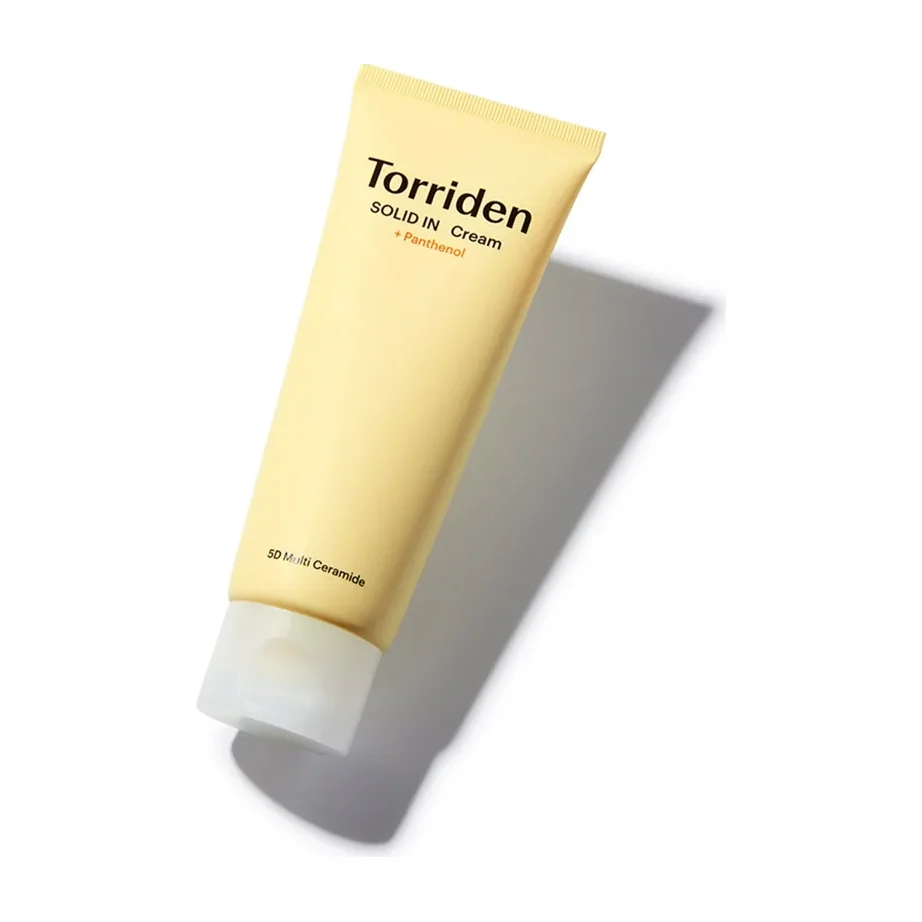
The ceramide cream market has a dirty secret: most products that advertise ceramides use them at trace concentrations, relying on the ingredient's name recognition rather than its actual efficacy. When Numbuzin reformulated their No. 2 cream in 2022 and disclosed a 10,000 ppm ceramide NP concentration, they did something uncomfortably rare in skincare — they showed their math.
That 10,000 ppm figure equals 1% ceramide NP, which might sound modest until you understand that ceramides are not the kind of ingredient that works on a more-is-better scale. What matters far more than raw concentration is the supporting cast. The skin's intercellular lipid matrix operates on a roughly 3:1:1 ratio of ceramides, cholesterol, and free fatty acids. Disrupt that ratio and you get an expensive moisturizer. Replicate it and you get genuine barrier repair. Numbuzin's formula includes cholesterol and phytosphingosine alongside the ceramide NP — the three essential components that dermatological research has identified as critical for mimicking the skin's natural lipid structure. This isn't marketing cleverness. This is the formulation approach used in prescription-adjacent barrier repair products that typically cost significantly more.
The centella complex deserves its own paragraph because Numbuzin didn't take the easy route here either. Most cica products use a generic centella asiatica extract and call it a day. This formula breaks centella down into its four isolated active compounds: madecassoside, asiaticoside, madecassic acid, and asiatic acid. Each has a slightly different mechanism — madecassoside leads on anti-inflammatory action, asiaticoside stimulates collagen synthesis, and the two acids contribute to wound healing and antioxidant defense. Whether the concentrations of each are optimized is impossible to verify without independent testing, but the inclusion of all four at minimum signals a formulator who understands centella's pharmacology beyond the buzzword.
In the jar, the cream looks deceptively rich — thick, opaque, almost balm-like. The texture tells a different story on contact. It melts on skin with the warmth of your hands, transforming from a dense cream into something surprisingly lightweight that absorbs within thirty seconds. There's no sticky residue, no heavy film, no sense of sitting on the surface waiting to transfer onto your pillowcase. Shea butter is the third ingredient and provides the initial richness, but the silicone and emulsifier system ensures everything sinks in rather than sitting on top. It's the kind of texture that makes you understand why Korean formulation chemistry has such a devoted following.
The soothing effect is noticeable from the first application. If your skin is angry — from over-exfoliation, retinoid irritation, wind-burned winter dryness, or just the general assault of modern life on a sensitive skin barrier — this cream feels like a ceasefire. The combination of bisabolol (a chamomile-derived anti-inflammatory), the centella complex, and beta-glucan creates a multi-pathway calming system that addresses redness and reactivity from several angles simultaneously. Users who incorporate this after retinol or chemical exfoliant nights consistently report that it buffers the irritation without neutralizing the treatment's benefits.
Niacinamide appears on the ingredient list but warrants expectation management. At approximately 1%, it falls below the 2-5% concentration range where most studies demonstrate significant brightening or oil-control benefits. In this formula, niacinamide likely serves a supporting role — low concentrations can still upregulate the skin's own ceramide production, which complements the externally supplied ceramide NP nicely. But if you're looking for standalone niacinamide benefits, this isn't your product.
The limitations start with packaging. Jar packaging exposes the product to air and fingers with each use, which isn't ideal for ingredient stability — ceramides and centella actives are reasonably stable, but an airless pump would better preserve everything, especially over the 12-month use period. The 60 mL size is also on the smaller side for a cream you'll want to use twice daily; expect to finish it in two to three months, which affects the value calculation somewhat.
Some of the botanical extracts further down the ingredient list — fig fruit extract, kelp extract, amaranthus seed extract — read more like a K-beauty ingredient flex than functionally necessary additions. They're not harmful, but their concentrations are likely too low to contribute meaningfully to the formula's performance. The cream works because of its ceramide-cholesterol-phytosphingosine backbone and its centella complex, not because of trace amounts of eclipta prostrata leaf.
The presence of alcohol (denatured) near the end of the ingredient list has raised eyebrows in some reviews, but its position suggests a concentration well below 1% — likely serving as a solvent for one of the botanical extracts rather than as a functional drying agent. At this level, it's not a meaningful concern for most skin types.
At roughly $20 for 60 mL, the value proposition is strong. You're getting a barrier repair formula built on sound science — the ceramide-cholesterol-fatty acid trio, a multi-compound centella complex, dual-weight hyaluronic acid, and shea butter — at a price that undercuts many competitors offering less sophisticated formulations. Numbuzin is an emerging brand without decades of clinical track record, but the formulation work on this specific product demonstrates genuine understanding of barrier science rather than just ingredient list padding.