Aftershave Was Designed as an Antiseptic. You Are Using It as a Wound Dressing.
The splash made sense when the blade had been on someone else's face that morning. Applied to a barrier you stripped forty seconds ago, the sting is not the product working — it is skin reporting a breach.
Read the preview
Should aftershave sting? That burn isn't the product working — it's skin reporting a breach. Roughly a fifth of what a razor takes off a man's face is skin cells, not hair. Alcohol then pulls lipids from that freshly scraped barrier. Yet in one trial, alcohol gel dried nurses' hands less than soap. So what's the real variable? Smooth things over with the Dermington Gazette.
The sting is a readout, not a mechanism
Somewhere in the cultural memory of shaving there is an equivalence between discomfort and hygiene, and the aftershave splash is where it lives. The reasoning is intuitive and completely backwards. Pain on application does not indicate that a product is disinfecting anything; it indicates that something is reaching nerve endings which, on undamaged skin, it would never have got near.
Consider what the razor actually did. Shaving is not a hair-removal process that happens to touch skin — it is a surface-removal process that happens to include hair. Analysis of what comes off during a shave found that corneocytes account for roughly 20% of the material removed from the male facial area. You are exfoliating, whether or not you meant to. And modelling work using human skin equivalents and tape stripping to reproduce the insult of a single dry razor pass found exactly what you would expect from the outside in: increased epidermal proliferation, epidermal thickening, elevated cytokine production and impaired barrier function, scaling with the number of layers removed.
And it does not only remove material — it raises reactivity. Work on shaved skin, carried out in the axilla and on forearm test sites, found that pre-shaving a patch-test site significantly increased the irritation caused by whatever was applied afterwards, and that histamine-induced itch and neurogenic flare were both significantly enhanced in regularly shaved skin. A shaved face is not just a thinner face; it is a more reactive one.
Now apply denatured alcohol to that. Ethanol is a lipid solvent, and the intercellular lipid it dissolves is the mortar between the corneocyte bricks — the same material shaving has already partly scraped away. Work on stratum corneum lipid phase behaviour showed ethanol reorganising and extracting those lipids directly, and dose-response data puts the threshold at which ethanol begins measurably raising permeability and water loss at somewhere above 15%. A classic splash is built on alcohol as its solvent, at concentrations far past that.
So the sequence is: mechanically thin the barrier, then chemically dissolve part of what remains, then feel the result and interpret the feeling as evidence of efficacy. It is the most reliably self-defeating step in male grooming, and it is also the easiest one to fix, because it is a single product.
The part where the internet is also wrong
Having said all that, the popular conclusion drawn from it — that alcohol in skincare is inherently damaging and should be avoided on principle — does not survive contact with the clinical literature, and we are not going to pretend otherwise just because it supports the argument.
The best-controlled data on alcohol against human skin comes from hand hygiene, and it goes the other way. In a prospective randomised crossover trial, 32 nurses alternated between an alcohol hand-gel regimen and soap-and-water washing over six weeks. Self-assessed irritation and dryness drifted slightly down on the alcohol gel and rose substantially on soap. Visual assessment by a study nurse showed no significant change on the gel and a significant worsening on soap. Epidermal water content, measured by electrical capacitance, was essentially unchanged on the gel and fell significantly with washing. Subsequent multicentre work and the CDC's hand-hygiene guidance point the same direction: on intact skin, and in a formulation containing emollients, alcohol is gentler than the surfactant alternative.
That is not a footnote. It reframes the entire objection. The problem with aftershave is not that a molecule called alcohol is present. It is the conjunction of three things: high concentration, a formulation containing nothing to offset it, and — decisively — a barrier that was intact five minutes ago and is not intact now. Ethanol on healthy stratum corneum is a manageable insult that the skin repairs. Ethanol on a field you have just exfoliated with a blade is a penetration enhancer applied to an open route.
The practical upshot is more useful than a ban. Alcohol high in the list of a lightweight sunscreen or an acne toner used on undamaged skin is not automatically a problem, and refusing every such product on principle will cost you good formulas. Alcohol high in the list of something you apply within a minute of shaving is a problem, every time. If you want to see where it actually sits in a product you already own, the ingredient decoder will tell you whether you are looking at a solvent or a trace preservative — those are two entirely different facts wearing the same name on a label.
The case the splash was originally making
It is worth being fair to a tradition before dismantling it, because the tradition was rational when it started.
Before the disposable blade, a shave frequently meant a straight razor that had been drawn across other men's faces that week, in a shop where the sterilisation protocol was a jar of something blue. That is a genuine transmission setting, and it still is where practice is poor: reviews of infections acquired in barbershops document Staphylococcus aureus, dermatophyte fungi and ectoparasites recoverable from barbers' equipment, and hepatitis B virus has been detected on used razor blades by PCR. Impetigo and shaving folliculitis were not hypothetical hazards. Against that background, a high-alcohol splash applied to a face full of micro-abrasions was a reasonable antiseptic, and the barrier cost was a price worth paying.
That background is gone for almost everyone reading this. You use your own cartridge, on your own face, colonised by your own flora, and the base rate of infection from a home shave is very low. The antiseptic argument has quietly become a ritual whose original justification expired.
Where does it still hold? Narrowly. If you are shaved in a shop, the relevant antisepsis is the blade and the equipment, not your face afterwards — a fresh blade and a properly disinfected clipper guard do more than any splash. If you take a real nick, cleaning that specific spot is reasonable; a dab on a cut is not the same intervention as a palmful across the whole jaw. And if you are shaving in circumstances where your kit is shared or your hands are not clean, the alcohol earns its place. Outside those cases, you are treating a risk you no longer face with a product that reliably damages you.
What the skin in front of you actually needs
Post-shave skin has three deficits, and they map onto three ingredient classes. Nothing here is exotic, which is part of the point — the replacement for aftershave is not a more expensive aftershave.
Water, first. The stratum corneum has just lost layers whose job was holding it, so a humectant applied to still-damp skin does more than the same product applied five minutes later to a dry face. Glycerin does this cheaply and well; there is no premium version of glycerin.
Lipid, second. You removed intercellular mortar, and you replace it with something that resembles it. Ceramide-containing creams do that most directly, which is why a plain barrier moisturiser like La Roche-Posay Toleriane Double Repair outperforms most things sold specifically as post-shave products — it also carries niacinamide, which supports barrier lipid synthesis and reduces the redness response rather than merely covering it.
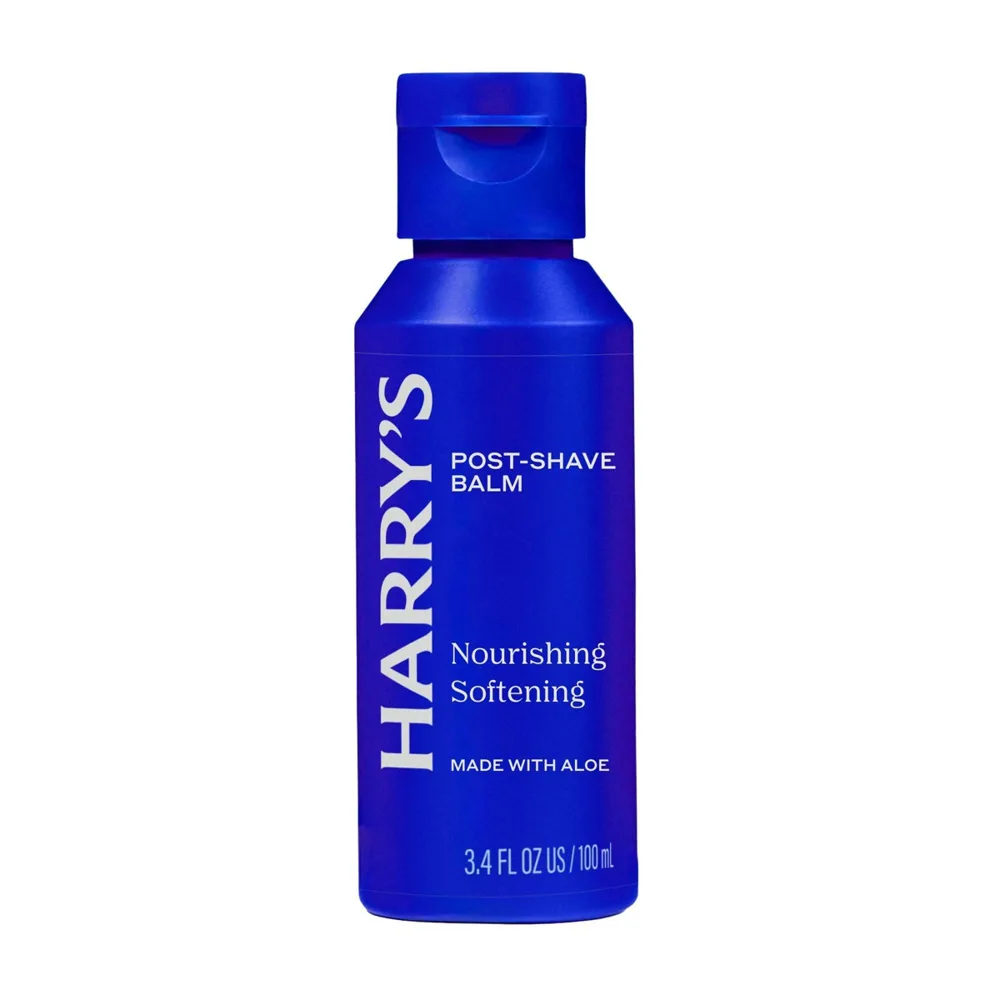
Inflammation, third, and this is the one the tape-strip work quantified: post-application of a moisturiser measurably attenuated the inflammatory changes a razor pass produced. Not soothed subjectively — attenuated. The ingredients with the most evidence behind them here are unglamorous. Panthenol has randomised data showing improved barrier restoration after a surfactant challenge, with reduced transepidermal water loss and longer intercellular lipid lamellae compared with control, and it is the backbone of La Roche-Posay Cicaplast Baume B5+, which is a post-procedure balm that happens to be an excellent aftershave. Allantoin and colloidal oatmeal do similar work with a lighter texture, as in Bulldog Sensitive After Shave Balm. Centella asiatica is the option worth knowing if visible redness is your main complaint — SKIN1004 Hyalu-Cica Moisture Cream is a straightforward vehicle for it. And if you want something built for the job by a shaving brand rather than repurposed, Harry's Post Shave Balm pairs panthenol with bisabolol and phytosphingosine, which is the right shape of formula.
One honest note on the evidence. The panthenol barrier-restoration trial was run by the company that sells the panthenol brand, and the shaving-insult modelling was co-authored with a razor manufacturer. Neither is disqualifying — the methods are described and the endpoints are instrumental rather than opinion — but it is the reason we would describe panthenol as well-supported rather than proven, and it is the kind of disclosure that a grooming article usually leaves out.
Fragrance, and why the timing matters more than the presence
Here is the uncomfortable part for anyone attached to the ritual: the classic aftershave is not primarily an antiseptic or a treatment. It is a fragrance in an alcohol carrier, and the alcohol is there because it is the solvent that dissolves the fragrance and flashes off the skin. Everything else is downstream of that design decision.
We are not going to tell you fragrance is poison; that framing is a marketing position, not an evidence-based one, and most people wear fragranced products without incident for decades. But two facts should change when you apply it. The first is that a compromised barrier admits more of whatever you put on it — ethanol is itself a penetration enhancer, and it is carrying the fragrance across a surface you just abraded. Sensitisation is a dose-and-access phenomenon, and shaving maximises access. The second is the current allergen data. In a review of 2,667 patients patch-tested to a standard series between 2017 and 2021, the single highest reaction rate belonged to hydroperoxides of linalool — an oxidation product formed when a very common fragrance terpene is exposed to air — ranking above nickel, above methylisothiazolinone, above fragrance mix I itself. Linalool is not rare. It is in an enormous share of scented products, and it becomes more allergenic as the bottle ages.
The reasonable conclusion is not abstinence. It is separation. Wear the fragrance you like — on your shirt, on the sides of your neck away from the razor's path, or on skin that has had a few hours to close. Keep the thing you put on the shaved field bland, and keep the scented thing away from it. That single change gives you the ritual and removes the exposure, and it costs you nothing. If you are also running actives — a retinoid, benzoyl peroxide, an acid — the conflict checker is the faster way to see what genuinely collides with what, rather than assuming everything conflicts with everything.
The swap, in the order that matters
Concretely, then. Finish the shave. Rinse with cool water rather than hot — the heat feels restorative and does nothing useful for a barrier. Pat, do not rub, and leave the skin visibly damp. Apply a bland, fragrance-free humectant-plus-lipid product immediately, while it is still damp, and use enough that you can feel it. That is the whole protocol, and it will do more for your face than any change of razor.
If you want to choose that product on its own merits rather than on which brand markets to men, our fragrance-free moisturiser ranking is the relevant shortlist, and most of it is not sold as aftershave — which is precisely why it works. The aftershave category is defined by a delivery format and a scent, not by a function, and once you separate those you can pick for the function.
Two caveats worth naming. If you break out along the jaw and neck, be careful about assuming the alcohol is the cause; the relationship between alcohol in a product and acne is more indirect than it looks, and the question of whether alcohol causes breakouts has a more specific answer than yes or no. And if you have been using a high-alcohol splash daily for years, expect the first two weeks after switching to feel strange rather than immediately better — you have been reading tightness as cleanliness for a long time, and recalibrating that takes longer than the barrier does.
Each shelf lists every product in the catalogue built on the ingredient, graded live against your profile — the shelf stays current when a single pick would not.
- 146 products on the shelf Alcohol Denat. (Denatured Alcohol) A lipid solvent applied to a field you have just exfoliated — the mechanism behind the sting.
- 1,614 products on the shelf Panthenol (Pro-Vitamin B5) Randomised barrier-restoration data after surfactant challenge; the backbone of the best post-shave balms.
- 551 products on the shelf Allantoin Lighter-texture soothing option for men who will not wear a cream.
- 3,339 products on the shelf Niacinamide (Vitamin B3) Supports barrier lipid synthesis and dampens the redness response rather than covering it.
- 1,569 products on the shelf Centella Asiatica (Cica) The option to reach for when visible redness rather than tightness is the complaint.
- 175 products on the shelf Fragrance (Parfum)
- 2,407 products on the shelf Glycerin
- 270 products on the shelf Colloidal Oatmeal
- 335 products on the shelf Bisabolol (Alpha-Bisabolol)
- 69 products on the shelf Phytosphingosine
Products named in this piece
Independently reviewed, with a verdict per concern — the real products behind this piece.



References
- Skin irritation and dryness associated with two hand-hygiene regimens: soap-and-water hand washing versus hand antisepsis with an alcoholic hand gel — Infection Control and Hospital Epidemiology, 2000
- Ethanol effects on the stratum corneum lipid phase behavior — Biochimica et Biophysica Acta, 1992
- Development of a novel in vitro strategy to understand the impact of shaving on skin health: combining tape strip exfoliation and human skin equivalent technology — Frontiers in Medicine, 2023
- A new topical panthenol-containing emollient: Results from two randomized controlled studies assessing its skin moisturization and barrier restoration potential, and the effect on skin microflora — Journal of Dermatological Treatment, 2017
- Trends in Patch Testing With the Mayo Clinic Standard Series, 2017-2021 — Dermatitis, 2023
- Effect of shaving on axillary stratum corneum — International Journal of Cosmetic Science, 2003
- Effect of Physical and Chemical Hair Removal Methods on Skin Barrier Function in vitro: Consequences for a Hydrophilic Model Permeant — Skin Pharmacology and Physiology, 2019
Every cited link is verified to resolve to the paper named. Where a source could not be independently confirmed, it is listed without a link rather than pointing you somewhere wrong.
Frequently asked
If alcohol is fine in hand sanitiser, why is it a problem in aftershave?
Because the skin is in a different state. The hand-hygiene trials that found alcohol gels gentler than soap were run on intact stratum corneum, in formulations containing emollients. Aftershave is applied within a minute of a blade removing corneocytes, into a barrier that is measurably impaired. Same molecule, entirely different access — and no emollients to offset it.
Is there any situation where a traditional alcohol splash still makes sense?
A narrow one. The original justification was antisepsis in an era of reused barbershop blades, where staph, dermatophytes and bloodborne viruses were documented on equipment. If your kit is shared, or you take a genuine nick that needs cleaning, a targeted dab is defensible. A palmful across the whole jaw after a shave with your own fresh cartridge is treating a risk you do not have.
What should I put on immediately after shaving instead?
Something bland and fragrance-free, applied to still-damp skin, that covers three jobs: a humectant to replace lost water, a lipid such as ceramides to replace what the blade removed, and an anti-inflammatory like panthenol, allantoin or centella. In tissue models, post-shave moisturisation measurably reduced the inflammatory response to a razor pass — it is an intervention, not a nicety.
Do I have to give up scented aftershave entirely?
No — change where and when, not whether. Freshly shaved skin admits more of whatever is applied to it, and alcohol carries fragrance across that opened surface. Hydroperoxides of linalool, an oxidation product of a common fragrance terpene, topped one large patch-test series between 2017 and 2021. Wear the scent on your shirt or on skin the razor did not touch, and keep the shaved field plain.
My skin feels tight and clean after aftershave. Isn't that a good sign?
Tightness is the sensation of a stratum corneum that has lost water and lipid, not of a clean one. It is the same feeling a harsh cleanser produces, and for the same reason. Expect the first fortnight after switching to a balm to feel unfamiliar rather than immediately better — you have been reading a damage signal as a cleanliness signal for a long time.