Acmella Oleracea Extract (Spilanthol)
Products with Acmella Oleracea Extract (Spilanthol)
 Best Budget Retinol Starter
 Retinol Cream
The eight-dollar retinol cream that pairs 0.1% retinol with bakuchiol and soothing botanicals for what may be the gentlest, most affordable entry into retinoid skincare on the market. It won't transform your skin overnight, but it might be the product that keeps you using retinol long enough to see real results.
Key Retinol · Bakuchiol
 Practice-Room Neck Cream
 Neck Correct Neck and Décolleté Cream
A gentle, fragrance-free neck cream that makes crepey skin look and feel smoother the moment it sets, thanks to two film-forming polymers ranked above glycerin. The biology underneath, one peptide and a handful of botanicals, is thin and brand-tested only, so $135 buys a very good neck primer with modest long-term ambitions rather than a corrective treatment.
Key Peptides · Film Formers & Texture Polymers
 Tropical Beauty Pick
 Niacinamide & Caffeine Eye Bright Cream
A hydrating eye cream dressed up as a targeted treatment. The mica particles deliver instant visual brightening, but the headline actives — niacinamide and caffeine — appear at concentrations too low to meaningfully address dark circles or puffiness over time. It moisturizes well enough, but at $36, the gap between marketing promise and formulation reality is hard to ignore.
Key Niacinamide · Botanical Extracts
 Caffeine-Forward Eye Gel
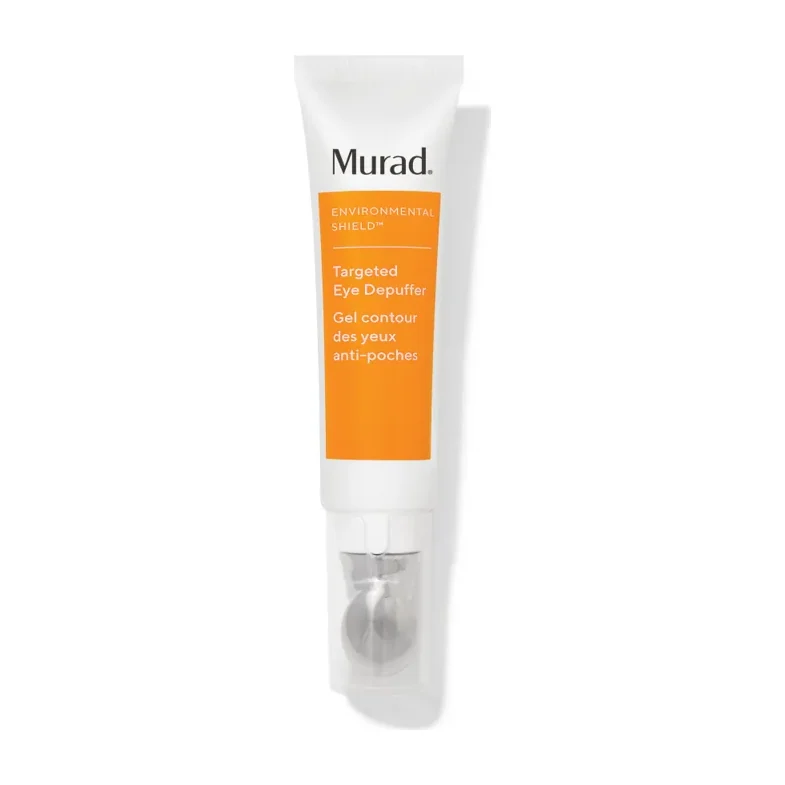
 Targeted Eye Depuffer
One of the more serious caffeine eye gels on the market: caffeine second in the list, a real penetration enhancer to carry it, a lymphatic botanical trio and an Acmella tightener, plus pearl pigments and a cooling metal tip, all in a fragrance-free, oil-free base. It flattens morning bags within the hour and the effect fades by evening, as caffeine does. The over-time tightening is modest, it is not a moisturizer, and $68 for 15 ml is a premium; but for the fluid-puffiness job it was built for, it is well made.
Key Caffeine · Humectants
 Instant Brightening Eye Treatment
 Auto Correct Brightening + De-Puffing Eye Contour Cream
A clever hybrid eye cream that delivers instant optical brightening through light-reflecting particles while deploying caffeine, horse chestnut, and acmella oleracea as longer-term treatment actives. The immediate visible correction is genuinely impressive, but the $65 price tag for a half-ounce with fragrance compounds near the eye area is a hard sell for sensitive skin types.
Key Caffeine · Horse Chestnut
 The Pre-Cyclopeptide Kans
 Luxury Anti-Wrinkle Cream
A comfortable, shea-rich moisturizer from the Kans of a few years ago — before the brand had its own cyclic peptide — carrying a licensed-peptide stack led by copper tripeptide-1 and a grape-seed antioxidant set. Dry and normal skin get a genuinely pleasant cream; the expression-line trio and firming peptides are at accent levels, the line is thinning out of Western stock, and no reliable price could be found, which makes it a nice thing to own rather than a thing to hunt.
Key Copper Peptides · Matrixyl
 Peptide Body Cream Bargain
 Power Peptide Firming Body Cream
A light, fragrance-free body cream that carries face-serum actives — Matrixyl 3000, niacinamide, a vitamin C ether — plus a named Acmella 'lift' blend, in a seven-ounce tube for twenty-two dollars. It smooths crepey arms and chest quickly and pleasantly; the firming is hydration and a brief tightening feel, not a change in how skin hangs. A good body moisturizer with a peptide bonus, honestly priced.
Key Peptides · Acmella Oleracea Extract
 Smoothing Lip Primer
 Sugar Triple-Action Lip Serum Advanced Therapy
A clever lip serum that doubles as a smoothing lipstick primer, combining genuinely useful adenosine and hyaluronic acid with a lightly-evidenced botanical plumping trio. It smooths and preps lips nicely, but the plumping is subtle, the formula is fragranced, and its patchy current availability plus an unverifiable price make it a harder recommendation than the brand's other lip products. Pleasant, not essential.
Key Acmella Oleracea Extract · Adenosine
 Gentle Plumping Peptide Pick
 Squalane + Copper Peptide (GHK-Cu) Rapid Plumping Serum
A gentle, fragrance-free plumping serum that pairs the buzzy copper peptide GHK-Cu with a layered peptide-and-botanical firming complex on Biossance's signature squalane base. The dual hyaluronic-and-polyglutamic humectants deliver genuine instant dewiness, the firming is real but gradual, and at $69 for 50ml it's a premium ask softened by how well it suits even sensitive skin.
Key Copper Peptides · Squalane
 Gentle Firming Hydrator
 Squalane + Firm and Lift Dual Serum
A gentle, fragrance-free two-phase serum that pairs a hydrating water layer with a rich 25% sugarcane squalane oil phase, plus a botanical Hydralift complex marketed as a needle-free firming approach. It delivers genuinely smooth, dewy, slightly firmer-looking skin instantly and suits sensitive skin beautifully, but the lifting claims lean on emerging actives and $69 for 30ml is a steep ask.
Key Squalane · Acmella Oleracea Extract
 Instant-Lift Luxury Icon
 Skin Caviar Liquid Lift
An ingeniously theatrical serum that delivers a genuinely impressive instant lift from its pullulan film-forming technology, backed by Matrixyl 3000 peptides and caviar extract for longer-term benefits — but the 10 price, high alcohol content, and army of fragrance allergens make this a luxury indulgence rather than a skincare necessity.
Key Caviar Extract · Matrixyl
The full acmella oleracea extract (spilanthol) guide
Acmella oleracea, nicknamed the toothache plant or buzz button, is a flowering herb whose buds make your mouth tingle and then go numb.
That effect comes from spilanthol, its main active compound, and it's why the plant has been a folk remedy for toothache across South America and India for centuries, and why some bartenders garnish cocktails with it. Skincare adopted it after a supplier pitched it as a botox-like smoother for expression lines, a comparison worth taking with a generous pinch of salt.
How it's regulated in the US
FDA does not classify ingredients — it classifies products, by what they are sold to do. The same molecule can be a drug active in one product and a cosmetic ingredient in the next, and only the claim on the label decides which. What follows is a statement about that legal standing, not about whether it works — the evidence question is answered separately above.
Cosmetic Acmella Oleracea Extract (Spilanthol) is a cosmetic ingredient in the US: no OTC monograph covers it and it is not an active in any FDA-approved drug, so a product built around it is a cosmetic rather than a drug.
Acmella extract gets studied mostly for spilanthol's effect on nerves: lab and animal work on its numbing, pain-easing action, and on the sensory receptors it switches on. A separate and interesting thread shows it can help other ingredients pass into skin. The anti-wrinkle story comes mainly from a patent and supplier-sponsored work rather than independent studies, and nobody has compared it with injected botox. Whether enough reaches the facial muscles to change expression lines is an open question, and so is what the tingle means beyond the nerves at the surface.
How it works
Spilanthol belongs to a family of fatty alkylamides — long-chain molecules with an amide group that interact with sensory receptors rather than with skin structure. On the tongue that produces the plant's signature buzz: tingling, salivation, then numbness. On skin, the same receptor activity underlies its documented local anaesthetic and analgesic behaviour, with docking studies pointing to partial agonism at TRPV1, the channel that also responds to capsaicin and heat, alongside activity at cannabinoid CB2 receptors involved in inflammatory signalling. The cosmetic claim goes further, proposing that spilanthol reaching subcutaneous facial muscles interferes with acetylcholine release and so damps the repeated contractions that etch expression lines. Botulinum toxin does something mechanistically comparable, which is where the comparison comes from — but it is injected directly into muscle in precise units, while a cream has to cross the stratum corneum, the epidermis and the dermis before reaching anything contractile. Whether meaningful concentrations arrive is the unresolved question, and it is not one that the visible tingling answers. The more defensible property is one rarely advertised: spilanthol is a penetration enhancer, shown to increase transdermal delivery of other molecules. That makes it useful to formulators and worth knowing about, since it also increases delivery of whatever irritating actives happen to share the bottle.
Key benefits
- Gives an instant tingle, then a gentle numbing feel
- Helps other ingredients in the formula sink in
- May briefly soften the look of expression lines
- A popular pick for quick lip-plumping products
- A centuries-old folk remedy for mouth pain
Concentration & usage
Cosmetic formulas typically use standardised extracts at roughly 0.5% to 2%, with the meaningful figure being the spilanthol content of the extract rather than the extract percentage — a number brands rarely publish, which makes cross-product comparison largely impossible. The tingle is not a dose meter: it confirms alkylamides are present and reaching nerve endings, nothing more about muscle effects at depth. Treat any product presenting a percentage as evidence of wrinkle efficacy with skepticism, because no independently tested effective concentration exists for that endpoint. If it sits mid-INCI in a formula whose other actives are well evidenced, it is a reasonable inclusion; if it is the headline of an expensive serum sold on a Botox comparison, the price is buying the comparison.
Who it's for & who should be cautious
Who it's for
It is a fair choice for someone curious about a plant-derived option for fine expression lines who understands they are buying a temporary cosmetic softening rather than a neuromodulator substitute. Products aimed at immediate lip plumping or a perceptible smoothing before an event use it sensibly, since the sensory effect is real and arrives fast. It also has a legitimate supporting role in formulas where improved delivery of other actives is the goal.
Who should be cautious
Anyone hoping to postpone or replace injectable treatment should know the honest comparison: botulinum toxin is dosed in units and injected into a specific muscle, and nothing applied to the skin surface has been shown to reproduce that. Established static wrinkles — the creases visible at rest, caused by collagen loss and photodamage — do not respond to muscle relaxation by any route, so retinoids and sun protection remain the answer there. Skin prone to stinging should approach carefully, since TRPV1 activation is the point rather than a side effect, and the penetration-enhancing property means anything irritating alongside it lands harder. Botanical extracts in the daisy family can provoke contact allergy in people sensitised to ragweed, chrysanthemum or chamomile.
Pairs with & conflicts
Pairs well with: Peptides, Hyaluronic Acid, Argireline (Acetyl Hexapeptide-8), Matrixyl (Palmitoyl Pentapeptide-4), Niacinamide (Vitamin B3)
Use with care alongside: Retinol, Tretinoin (All-Trans Retinoic Acid), Alpha Hydroxy Acids (AHA)
Myths & facts
Myth: It is nature's Botox.
Reality: The phrase traces to a 2007 cosmetic patent, not to a comparative trial — and a patent claim is a commercial assertion, not evidence. Botulinum toxin is injected in measured units directly into a target muscle; a topical extract must cross several skin layers before reaching anything contractile, and whether useful amounts arrive has not been independently shown. No head-to-head study exists, and the cosmetic effect that is reported is transient.
Myth: The tingling proves it is working on your muscles.
Reality: The tingle is alkylamides stimulating sensory nerve endings in the skin's surface — the same effect that makes the flower buds a party trick. It confirms the extract is present and active on nerves you can feel, and says nothing about concentrations reaching facial muscles millimetres deeper. Sensation is the easiest thing for a cosmetic to deliver and the least informative about efficacy.
Myth: Being plant-derived makes it a gentler option than synthetic anti-ageing actives.
Reality: It is a receptor-active compound with anaesthetic properties and a documented ability to increase how much of everything else in a formula gets through your skin. That is a pharmacologically busy ingredient, not an inert botanical. Its family also includes plants that commonly trigger contact allergy in sensitised people. Botanical origin describes where a molecule came from, not how mild it is.
Frequently asked questions
Does Acmella oleracea actually reduce wrinkles?
It may temporarily soften the appearance of dynamic lines — the ones that appear when you move your face — and users often report an immediate smoothing sensation. The effect is short-lived, needs continuous reapplication, and the supporting efficacy work has been largely supplier-sponsored rather than independently replicated. It does nothing for creases visible at rest.
Why does the product tingle or make my skin feel numb?
Spilanthol, the plant's main alkylamide, stimulates sensory nerve endings and behaves as a partial TRPV1 agonist — the same receptor family that responds to chilli heat. That produces the buzz, then a mild numbing. It is the plant's most reliably documented effect and the reason it was a traditional toothache remedy.
Can it replace Botox injections?
No, and the marketing comparison sets an expectation the ingredient cannot meet. Injections place a precise dose inside a specific muscle; a cream sits on the surface with several skin layers in between. If the goal is genuinely reducing muscle-driven lines, this is a cosmetic softener at best, not an alternative treatment.
Is Acmella oleracea safe to use around the eyes and lips?
It appears in eye and lip products routinely, and the numbing and plumping sensation is part of the appeal there. Take care to keep it out of the eye itself, since it is an active irritant to mucous membranes, and introduce it gradually if your skin stings easily. Anyone allergic to ragweed, chrysanthemum or chamomile should patch test, since it belongs to the same botanical family.
Does it make other ingredients work better?
This is its least-advertised and most down-to-earth property — published work shows spilanthol enhancing transdermal penetration of other compounds. That cuts both ways. It can improve delivery of a useful active, and it can equally push an exfoliating acid or retinoid deeper than your skin is prepared for, which is why a routine that was previously comfortable may start to sting.
Sources
- https://pubmed.ncbi.nlm.nih.gov/36331425/
- https://www.sciencedirect.com/science/article/abs/pii/S0378874113002468
- https://patents.google.com/patent/US20080069912A1/en
- https://pubmed.ncbi.nlm.nih.gov/37671677/
- https://www.cosmeticsdesign.com/Article/2021/08/18/Natural-anti-wrinkle-serum-containing-Acmella-oleracea-effective-finds-study/