Sorbitol (D-Glucitol)
Products with Sorbitol (D-Glucitol)
 Sensitive Skin Staple
 Moisturizing Lotion
A deliberately boring moisturizer — and that's the highest compliment in dermatology. Eleven ingredients, zero fragrance, and decades of clinical trust make this the lotion dermatologists reach for when they need to rule out every possible irritant. It won't transform your skin, but it absolutely will not betray it.
Key Petrolatum · Propylene Glycol
 Pharmacy-Counter Legend
 Moisturizing Skin Cream
The original sensitive-skin moisturizer — eleven ingredients, zero fragrance, forty-five years of dermatologist trust. It's thick, it's basic, and it works. This is the cream that proved skincare didn't need to be complicated to be effective, and 30,000 reviews later, nothing about the formula has needed to change.
Key Petrolatum · Sorbitol
 Gentle Anti-Itch Gold Standard
 HC 1% Hydrocortisone Anti-Itch Cream
The same 1% hydrocortisone you can buy anywhere, but in a vehicle that won't make sensitive skin worse. For anyone whose eczema or contact dermatitis has ever been aggravated by the very cream meant to treat it, this is the solution — and it's worth every penny of the premium over generics.
Key Petrolatum · Sorbitol
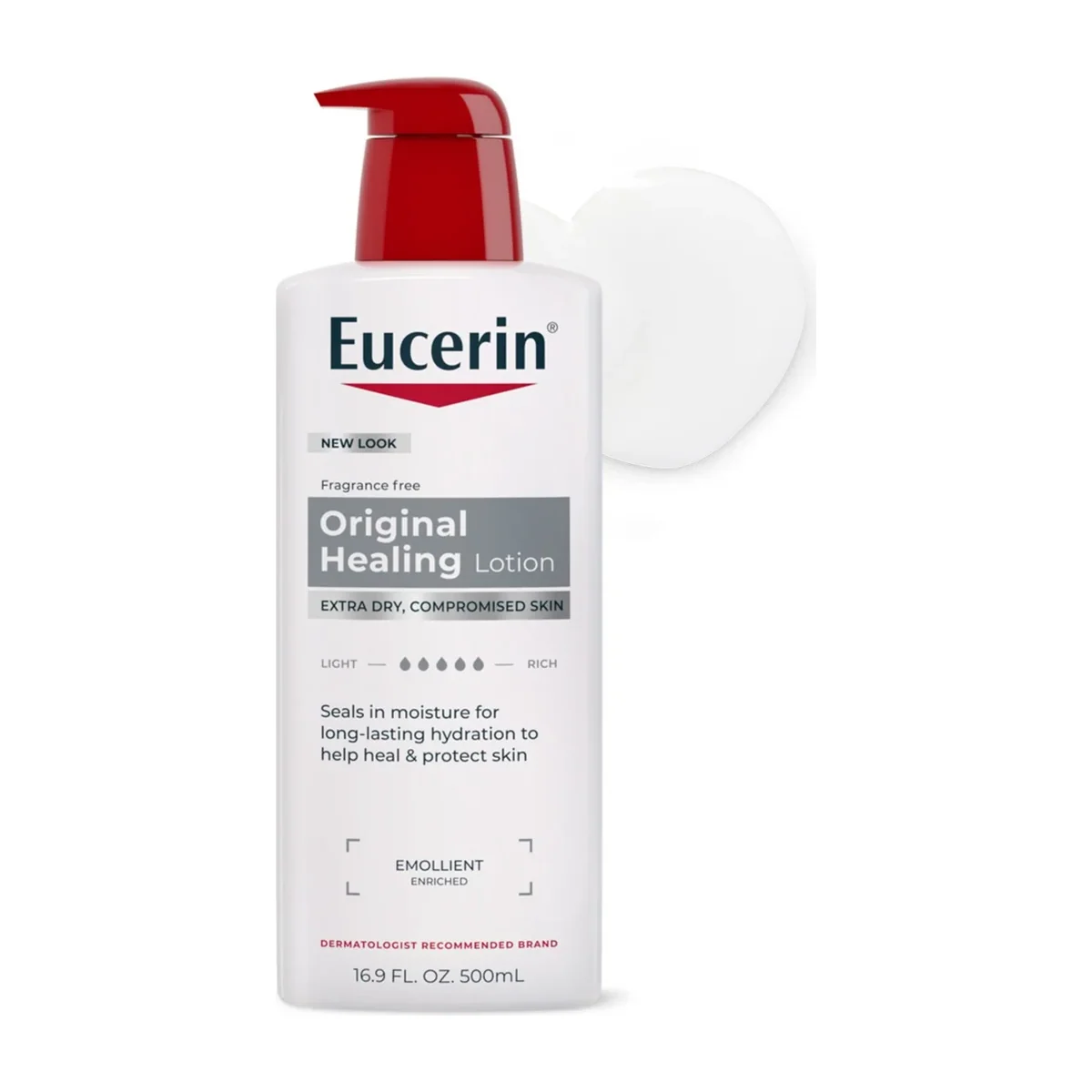 Daily Driver Body Lotion
 Original Healing Lotion
Eucerin's daily-use body lotion counterpart to the Original Healing Cream — same century-old heritage formulation philosophy in a lighter texture appropriate for whole-body application. Mineral oil and lanolin-alcohol-based emollient lotion with sorbitol and propylene glycol humectants. Exceptional drugstore pricing for clinical-grade body lotion; same lanolin allergen consideration as the Cream.
Key Mineral Oil · Sorbitol
 Derm-Trusted Acne Wash
 Antimicrobial Hydrating Acne Wash
The gentlest member of America's most dermatologist-recommended benzoyl peroxide lineup. The 2023 reformulation successfully balances bacterial killing power with genuine skin hydration, making this the BP wash to try if the 10% Foaming Wash left your skin stripped and angry.
Key Benzoyl Peroxide · Glycerin
 Atopic-Safe Family Staple
 Ceramide Ato 6.0 Top to Toe Wash
A rare cleanser that's simultaneously face-safe, body-safe, infant-safe, and atopic-safe, built on a mild betaine surfactant system with actual ceramide NP and cholesterol in the formula. At $14 for 500ml it's one of the best per-ounce values in barrier-friendly cleansing, and the fact that the whole family can share a bottle without irritation is the quiet point of the product.
Key Ceramides · Cocamidopropyl Betaine
 Professional Staple
 Bioglycolic Face Cleanser
The original Jan Marini product and still one of the few glycolic cleansers that earns the name. A non-foaming lotion base carries a genuinely active glycolic dose without stripping drier skin, which is why it remains the priming step in dermatology-office routines three decades after launch. Expensive for a cleanser, but the right one to start a Jan Marini regimen.
Key Glycolic Acid · Sorbitol
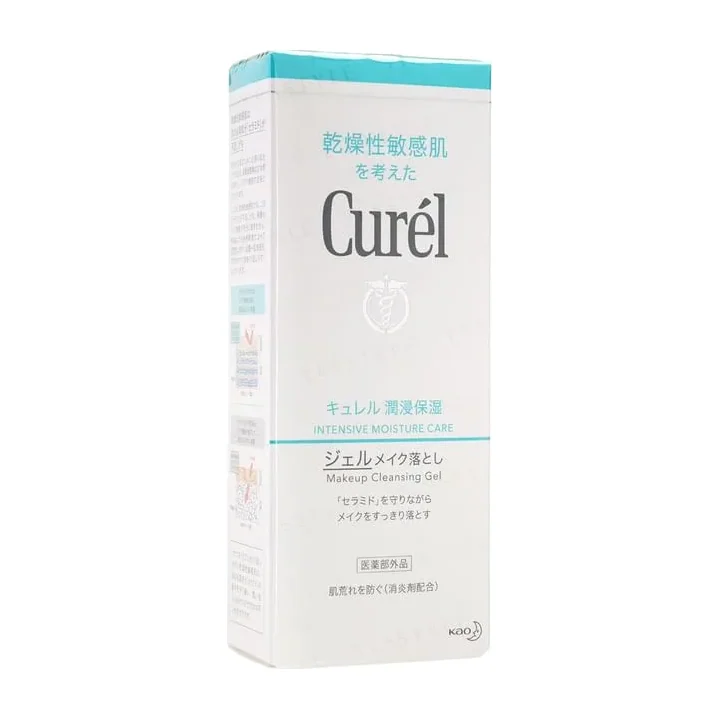 Sensitive-Skin First-Cleanse MVP
 Makeup Cleansing Gel
A genuinely smart sensitive-skin first cleanse that pulls off the awkward double act of removing makeup and not punishing reactive skin for it. The fragrance-free, dual-humectant formula is exactly what the Curel positioning promises, and the price is fair. The compromise is that it won't muscle through heavy waterproof makeup — match it to your actual cosmetic load and it earns a long-term spot.
Key Sorbitol · Caprylic/Capric Triglyceride
 Clinical Gentle Cleanser
 Skin EssentiA Mild Cleansing Lotion
A thoughtfully formulated, non-foaming cream cleanser built around a biomimetic olive-derived emulsifier that conditions the skin barrier while cleansing — exactly the kind of gentle, strategic preparation that makes sense as the first step in a clinical vitamin A skincare system.
Key Jojoba Oil · Emulsifiers
 Light Everyday Gel-Cream
 Hidratante Facial
Sallve's Hidratante Facial is a smart everyday gel-cream: niacinamide high in the formula, beta-glucan and sorbitol for fast hydration, squalane for softness, and a texture that vanishes in humid heat. It suits normal and combination skin very well. The catch is added fragrance with five declared allergens, which makes it a weaker pick for sensitive skin.
Key Niacinamide · Beta-Glucan
 Luxury Lather (At a Price)
 Future Solution LX Extra Rich Cleansing Foam
A genuinely luxurious cleansing experience — a dense, cushiony lather and the elegant Future Solution LX scent — wrapped around what is, underneath, a classic soap-based foam with SLS and fragrance. It cleans well but can leave drier skin tight, and the prestige Enmei-herb botanicals do little in a rinse-off step. At $79, you're paying for the badge and the feel, not cleansing science a $20 foam can't match.
Key Cleansing Surfactants · Glycerin
 Maximum-Strength Clinical Vitamin C
 Professional-C Serum 20%
The most potent and most popular vitamin C serum in Obagi's Professional-C line, with the most complete supporting formula including sodium hyaluronate. Delivers dramatic brightening for oily and normal skin types — but the continued absence of ferulic acid prevents it from being the definitive clinical vitamin C serum.
Key Vitamin C · Hyaluronic Acid
 Cult Pink Body Wash
 Clean On Me Shower Gel
Clean On Me is the shower half of the Soap & Glory ritual — a creamy, generously foaming body wash that carries the brand's adored 'Original Pink' scent at a genuinely cheap price. It's a sensory pleasure and great value for normal-to-oily skin, but a plain SLES base plus methylisothiazolinone and a heavy fragrance-allergen load make it a poor match for sensitive, dry or eczema-prone skin.
Key Cocamidopropyl Betaine · Sorbitol
 Fungal Acne Fighter
 Z-Bar Medicated Cleansing Bar
A medicated cleansing bar that actually respects sensitive skin — pyrithione zinc at the maximum OTC strength in a syndet base that cleanses without stripping. For seborrheic dermatitis sufferers who've been punished by harsh antifungal bars, this is a genuine relief. It controls Malassezia without creating new problems.
Key Sodium Cocoyl Isethionate · Petrolatum
 High-Hold Sculpting Glue
 Sculpting Hair Glue for Men
A properly engineered high-hold glue — three fixative polymers plasticised with petrolatum and sorbitol into a clear, flake-free, all-day set — that is the most effective and the least natural thing Brickell sells. Buy it for spikes and sculpted shapes on unreactive skin; ignore the biotin, keep the petrolatum and five essential oils off your forehead, and do not pay for the word natural.
Key Petrolatum · Sorbitol
The full sorbitol (d-glucitol) guide
Sorbitol is a sugar alcohol that sits in the background of cleansers, moisturizers and body lotions, keeping them hydrating without the gluey feel.
It draws water into the skin's outer layer much the way glycerin does, but with far less of that tacky, sticky finish that sends some people straight to the sink. It's also something the skin already knows: sorbitol is one of the ingredients in the skin's own natural moisturizing mix, the water-holding blend that keeps the surface supple.
How it's regulated in the US
FDA does not classify ingredients — it classifies products, by what they are sold to do. The same molecule can be a drug active in one product and a cosmetic ingredient in the next, and only the claim on the label decides which. What follows is a statement about that legal standing, not about whether it works — the evidence question is answered separately above.
Cosmetic Sorbitol (D-Glucitol) is a cosmetic ingredient in the US: no OTC monograph covers it and it is not an active in any FDA-approved drug, so a product built around it is a cosmetic rather than a drug.
Sorbitol is mostly a subject of safety reviews and the basic physics of how it holds water, rather than tests of it as a skin active. Its pull on moisture is well understood from chemistry, and its place in the skin's natural moisturizing mix comes from studies of the outer skin layer. Cosmetic safety reviewers have looked at it alongside related sugar alcohols and found it fine at the levels formulas use. Studies that test sorbitol on its own against other humectants are hard to find, so comparisons rest on formulators' experience. Supplier talk of it feeding the skin's friendly microbes is still an early idea.
How it works
The chemistry behind sorbitol's hydration is straightforward: six hydroxyl (-OH) groups spaced along its six-carbon backbone each form hydrogen bonds with water. That dense cluster of bonding sites lets one sorbitol molecule coordinate several water molecules at once, drawing them from the surrounding air and from deeper tissue up toward the stratum corneum, where dryness and flaking show up. The mechanism is identical to glycerin's — both are polyols doing the same hydrogen-bonding work — so the real difference is molecular size and how it feels on skin. Glycerin's compact three-carbon structure penetrates more readily and can turn tacky at higher loads. Sorbitol's bulkier six-carbon frame tends to sit and spread at the surface, forming a lighter film that many formulators describe as less sticky, which is why the two are so often paired. Sorbitol also earns its place by stabilizing the formula around it. By lowering water activity it discourages microbial growth at higher concentrations and helps keep sugar crystals from forming and disrupting texture over a product's shelf life. In surfactant-based cleansers, it offsets some of the tightness detergents leave behind, so skin feels conditioned after rinsing. There is early, mostly supplier-led talk of sorbitol acting as a skin-surface prebiotic, but that idea is far less studied than its core humectant role and shouldn't be treated as settled. Its NMF status means skin reads it as familiar, which tracks with its gentle reputation.
Key benefits
- Helps skin hold water without a tacky finish
- Softens the tight, stripped feel after cleansing
- Lightweight hydration that oily skin can live with
- Helps creams spread smoothly and feel silky
- A low-fuss humectant that rarely bothers sensitive skin
Concentration & usage
Typical cosmetic use falls in the 1–10% range. Below 5%, sorbitol mostly works as a texture enhancer and light humectant partner to other ingredients. At 5–10% it contributes meaningful hydration on its own. Above roughly 15–20% it usually requires heat to dissolve fully during manufacturing (around 50–70°C) and starts to show mild antimicrobial behavior by reducing water activity. On an ingredient label it reads simply as SORBITOL; D-glucitol is the same molecule under a different name. Its humectant function is not meaningfully pH-dependent and holds up across the pH range of typical cosmetic formulas.
Who it's for & who should be cautious
Who it's for
If you want hydration without the heaviness or pull of a glycerin-dominant formula, sorbitol is a comfortable fit. It suits oily and combination skin that wants humectant support minus a sticky afterfeel, and it's a quiet helper for anyone whose foaming cleansers leave their face tight or rough. As a native NMF component, it also slots easily into routines for compromised or barrier-impaired skin without adding much risk.
Who should be cautious
There are very few firm reasons to steer clear of topical sorbitol — it's well-tolerated for most people. The main caveat involves derivatives: anyone with a confirmed reaction to sorbitan esters (such as sorbitan sesquioleate or polysorbates) shouldn't assume those problems carry over to plain sorbitol, but a patch test is a sensible precaution given the shared structural roots. The rare individuals with broad sensitivities to sugar alcohols as a group should likewise patch test before using sorbitol-heavy products daily.
Pairs with & conflicts
Pairs well with: Glycerin, Hyaluronic Acid, Sodium PCA, Ceramides, Panthenol (Pro-Vitamin B5), Betaine (Trimethylglycine), Amino Acids, Urea (Carbamide), Humectants
Myths & facts
Myth: Sorbitol is just a cheaper, weaker stand-in for glycerin.
Reality: The two aren't ranked so simply. Both hydrate by the same hydrogen-bonding mechanism, but sorbitol's larger molecule tends to feel less sticky on the skin, which is why formulators frequently use them together rather than swapping one for the other. Treat it as a complement to glycerin, not a downgrade.
Myth: Because it's derived from fruit sugars, sorbitol feeds acne bacteria and worsens breakouts.
Reality: Sorbitol is generally rated 0–1 on comedogenicity and isn't a meaningful food source for the bacteria involved in acne at the levels used in skincare. It turns up routinely in non-comedogenic cleansers and moisturizers aimed at breakout-prone skin; the 'sugar feeds bacteria' worry doesn't translate to topical cosmetic use.
Myth: Sorbitol and sorbitan esters are interchangeable, so if one is safe the other must be too.
Reality: They share a structural ancestry but behave very differently. Sorbitan sesquioleate, an ester made from sorbitol, is a documented contact allergen for some people, especially those with chronic dermatitis. Plain sorbitol itself carries a very low sensitization risk. This is a case where reading the full ingredient list actually matters.
Frequently asked questions
If a label says D-glucitol, is that still sorbitol?
Yes — D-glucitol and D-sorbitol are alternate chemical names for the very same molecule. SORBITOL is the standard INCI term, so that's what you'll usually spot on a product. All three point to the same six-carbon sugar alcohol.
Does sorbitol actually hydrate skin better than glycerin?
Not better so much as different. The two share a mechanism, but sorbitol's bulkier molecule tends to feel lighter and less tacky on the skin. Note that claims about one clearly out-hydrating the other come from formulator experience rather than head-to-head clinical studies, which is why many products simply use both.
Is sorbitol okay to use if my skin breaks out easily?
Generally, yes. Sorbitol is usually rated 0–1 for comedogenicity, and the CIR Expert Panel concluded it's safe at cosmetic use levels. You'll find it in plenty of cleansers and oil-free moisturizers built for breakout-prone skin without it being a flag.
Why would a cleanser contain a humectant like sorbitol?
Surfactants pull water out of the skin as they lift away oil and grime, and sorbitol is there to push back against that. By holding moisture at the stratum corneum while the cleanser works, it's part of why a wash can leave skin feeling conditioned rather than tight and squeaky.
Is sorbitol considered safe to use while pregnant?
Topically, sorbitol is regarded as low-risk during pregnancy. It's GRAS as a food ingredient and has no known dermal teratogenicity concerns. As always, it's worth running any meaningful routine change by your OB or dermatologist during pregnancy, since individual sensitivities vary.
I react to sorbitan esters — does that mean sorbitol will bother me too?
Not necessarily, though a little caution makes sense. Sorbitan esters like sorbitan sesquioleate are made from sorbitol but are chemically distinct, with their own allergen profiles. A confirmed allergy to one of those esters doesn't automatically predict trouble with plain sorbitol — a patch test before regular use is the reasonable move if you have that sensitivity.