Urea (Carbamide)
Products with Urea (Carbamide)
 Derm-Office Acid Pad
 Complexion Renewal Pads
A clinically credible BHA/AHA combination pad with a thoughtful botanical buffer that's been a fixture in dermatology offices for over fifteen years. The salicylic acid plus glycolic acid plus urea combination is genuinely more sophisticated than typical drugstore acid pads, and the result is a product that earns its professional-channel reputation for clearing congested, acne-prone skin. The alcohol base and fragrance load are real limitations, and at $63 for 60 pads it's a steep step up from drugstore alternatives — but for the right user, it works.
Key Salicylic Acid · Glycolic Acid
 Clinical-Grade Oil Crusher
 Oil Control Pads Acne Treatment
A no-nonsense, clinical-strength acne pad that combines triple acids with high alcohol content for aggressive oil control and breakout management. Undeniably effective for robust oily skin, but the irritation profile and seventy-five-dollar price tag make this a product that demands respect, careful introduction, and honest assessment of whether your skin can handle it.
Key Salicylic Acid · Mandelic Acid
 Psoriasis Management MVP
 Psoriasis Moisturizing Cream
CeraVe's Psoriasis Moisturizing Cream brings clinical-grade descaling and barrier repair together in a formula that psoriasis patients will actually want to use every day — combining 2% salicylic acid with urea, niacinamide, and the full ceramide complex in a cream that feels more like a luxury moisturizer than a medicated treatment. For mild-to-moderate psoriasis management, it sets the standard for OTC care.
Key Salicylic Acid · Urea
 Keratosis Pilaris Pick
 Intensive Repair Lotion
One of the rare drugstore body lotions that combines clinical-grade alpha hydroxy acid exfoliation (lactic acid + sodium lactate) with urea 5% and substantial mineral oil occlusion — at $13-15 for nearly 17 oz, the per-ounce value is among the best in derm-recommended skincare. The dermatologist's go-to for keratosis pilaris, very dry body skin, and rough flaky patches that simple moisturizers can't resolve.
Key Lactic Acid · Urea
 Cracked-Skin Daily Repair
 Cracked Skin Repair Lotion
A solid, no-nonsense repair lotion for very dry, cracked skin — a dimethicone skin-protectant active plus mineral oil to seal, and urea and lactate humectants to hydrate and prevent re-cracking. It genuinely works, the 16oz bottle is excellent value, and the formula is effective if basic, with parabens and a dated ingredient set.
Key Dimethicone · Mineral Oil
 The Moisturizer That Started It All
 Dramatically Different Moisturizing Lotion+
The moisturizer that invented the category — and the reformulated '+' version proves that sixty years of refinement can keep a classic relevant. The urea-glycerin-petrolatum trio is clinical-grade hydration in a cosmetically elegant package. Not for oily skin, and the prestige price is increasingly challenged, but for dry skin this remains a genuinely excellent choice.
Key Glycerin · Urea
 1968 Formula, Grey Tube
 For Men Moisturizing Lotion
Clinique's founding 1968 lotion — mineral oil, petrolatum, urea, sesame oil — in a grey squeeze tube, and none the worse for its age: fragrance-free, non-stinging after a shave, and reliably comfortable on dry skin all day. At $42 for 100 ml it is a heritage tax on a very simple formula, and the lanolin alcohol and three dyes are avoidable flaws, but the moisturising itself is beyond argument.
Key Petrolatum · Urea
 NPF-Recognized Psoriasis Fighter
 Psoriasis Relief Cream
The most sophisticated OTC psoriasis cream on the drugstore shelf, combining maximum-strength salicylic acid with a five-ceramide barrier complex and provitamin D. National Psoriasis Foundation recognition and a steroid-free, fragrance-free formula make this a smart first-line treatment for mild to moderate psoriasis at under ten dollars.
Key Salicylic Acid · Ceramides
 Sofa-Night Heel Softener
 I'm Lovely Peach Foot Mask
The better of TONYMOLY's two peach sheet masks, because urea in fifth place gives these booties something the hand version lacks: a real softening action on heel skin that twenty minutes of occlusion amplifies. No peeling, no shedding, just smoother feet for a day or two. The peach is scent, the ingredient declaration is oddly truncated, and singles are pricey, but as a weekly sofa-night treat it works.
Key Urea · Glycerin
 Retinol For Your Body
 Body Emulsion
One of the very few body lotions on the market that takes body retinoid treatment seriously, combining a calibrated retinol percentage with urea, petrolatum, oat, and ferments to handle both the texture and the irritation potential. The result is a body lotion that actually addresses photoaging instead of just moisturizing around it. The price is steep for the category, but the formulation is genuinely without close peers.
Key Retinyl Palmitate · Urea
 Budget Heel Rescue
 Cracked Heel Foot Cream
A properly built keratolytic foot cream — urea and lactic acid above the shea on the list, mineral oil to seal it — sold by the half-pound for about $13. It softens cracked heels in a few nights under socks and outperforms most foot creams costing twice as much. The fragrance and the undisclosed urea percentage are the only reasons to hesitate.
Key Urea · Lactic Acid
 Cracked-Heel Fixer
 Softening Hydrating Foot Cream with Shea Butter
A genuinely effective drugstore foot cream that treats cracked heels and calluses with urea and lactic acid rather than just greasing them over, sealed under petrolatum for overnight softening. It does its narrow job well and cheaply; the main downsides are an added fragrance, parabens, and a single small tube.
Key Urea · Lactic Acid
 Drugstore Heel Softener
 Triple Action Therapeutic Foot Cream
A properly built urea-and-occlusive foot cream at a drugstore price that softens rough, dry heels within a week when worn under socks, wrapped in a peppermint-menthol package that makes tired feet feel treated. The mint does nothing for the dryness, stings on cracked skin, and comes with fragrance, parabens and a formaldehyde-releaser that sensitive skin should avoid. For ordinary rough feet, it is hard to beat for the money.
Key Urea · Petrolatum
 The Scent, Made Practical
 Prodigieux® Beautifying Scented Body Lotion
The Huile Prodigieuse scent in a genuinely good everyday lotion: glycerin and hydroxyethyl urea hydrate, coconut and macadamia oils soften, dimethicone makes it glide and set in under a minute. The six precious oils on the label are there at token doses and the full fragrance load comes along for the ride, so it is a pleasure for normal-to-dry body skin that tolerates scent and a no for sensitive or eczema-prone skin, at a fair $26 for 200 ml.
Key Glycerin · Dimethicone
 Dry Skin Winter Savior
 Moisture Surge Intense 72H Lipid-Replenishing Hydrator
The Moisture Surge for people whose skin needs more than water — a lipid-rich, barrier-repairing cream that takes the franchise's hydration technology and adds the structural lipids that truly dry skin is missing. Effective, well-tolerated, and fragrance-free, though the jar format and prestige pricing leave room for improvement.
Key Cholesterol · Centella Asiatica
 Everyday Day Cream
 Time To Hydrate Essential Day Moisturizer
A dependable, no-drama everyday day cream that keeps normal-to-dry skin soft and comfortable through a smart, skin-identical amino-acid and humectant blend. The hydration fundamentals are genuinely sound; the Dead Sea minerals are more accent than engine here, and the fragrance and mid-range price are the main reasons it is good rather than great.
Key Urea · Dimethicone
 Budget Body Care MVP
 Soothing Oatmeal & Shea Butter Body Lotion
A no-frills body lotion that punches above its weight class thanks to an underrated ingredient list featuring urea and oat extract. It won't win any packaging awards, but for under six dollars, it delivers genuinely soothing, all-day hydration that keeps dry, itchy skin comfortable through the harshest winter months.
Key Colloidal Oatmeal · Shea Butter
 Foundational French Pharmacy Daily Moisturizer
 Essentials Light Ultra-Moisturizing Face Cream
Topicrem's foundational daily moisturizer built around the brand's signature 1% urea + 5% glycerin disclosed combination, with mineral oil occlusion and a substantial 75 mL size at affordable French pharmacy pricing. The 30+ year track record and dermatologist-developed credibility add trust factors. The added parfum and isopropyl isostearate limit fragrance-reactive and acne-prone use; otherwise this is a broadly recommendable foundational daily moisturizer at exceptional per-volume value.
Key Urea · Glycerin
 Budget Body Retinol MVP
 Age Renew Retinol Overnight Body & Face Lotion
A genuinely impressive body lotion that packs facial-grade anti-aging ingredients — retinol, peptides, niacinamide, and ceramides — into a drugstore-priced formula. This is the product that made the internet realize body skin deserves the same care as your face.
Key Retinol · Peptides
 Dry-Skin Daily SPF
 Superactive Moisturizer SPF 50: Hydrating
The Superactive variant that most convincingly earns the word moisturizer: two hyaluronic acids backed by an NMF-style humectant set, in a lean, well-stabilised SPF 50 base that stays sheer and dewy. Dry and normal skin can genuinely drop the morning cream. A fragrance with four declared allergens and a forty-nine-dollar price for 50 mL are the reasons to pause; the formula itself is hard to fault.
Key Avobenzone · Homosalate
 Oily-Skin SPF Primer
 Superactive Moisturizer SPF 50: Mattifying Oil + Pore Control
An oil-control SPF that does the job with engineering rather than alcohol: starch and silicone elastomer up front for an all-day blurred matte, the Superactive line's hydration set underneath so oily skin is not stripped, a gentle LHA for pores and a well-stabilised SPF 50. It is one of the better mattifying sunscreens for oily skin. The bitter-orange fragrance with five declared allergens is a strange choice for a breakout-prone audience, and forty-eight dollars for 50 mL is a lot.
Key Avobenzone · Homosalate
 Mature-Skin Daily SPF
 Superactive Moisturizer SPF 50: Wrinkle-Fighting
The most comfortable Superactive for mature, dry skin: the line's NMF hydration set plus sodium PCA and a soothing trio, on a properly stabilised SPF 50 that stays sheer. As a daily sunscreen for an ageing face it is very good, and the sunscreen is the anti-ageing ingredient. The bio-retinoid it charges thirteen dollars extra for is an unnamed chlorella extract, and the fragrance carries declared allergens.
Key Avobenzone · Homosalate
 Gentle Peptide-Retinol Eye Cream
 Renewing Eye Cream
A well-built, fragrance-free eye cream that leads with the Matrixyl peptides, backs them with a low retinol gentle enough for morning use, and adds de-puffing peptides, optical brighteners and a strong humectant complex. It brightens instantly and softens crepey lines slowly, without stinging or milia. The phytoestrogen botanicals are decoration, the retinol dose is modest, and $89 for 15 ml is a lot; but as a daily eye cream that people can actually tolerate for years, it is one of Murad's more honest products.
Key Matrixyl · Retinol
 Budget Import, Dated Filters
 SunScreen Emulsion 50PA +++
Marubi's outdoor sunscreen emulsion is a cheap, light, older-generation chemical sunscreen that a Western shopper has little reason to import: the filter set includes oxybenzone and a camphor derivative not permitted in US sunscreens, avobenzone with no real stabilizer, four parabens and fragrance. It will block sun for a while. Almost anything on a local pharmacy shelf will do it better and more predictably.
Key Octinoxate · Oxybenzone
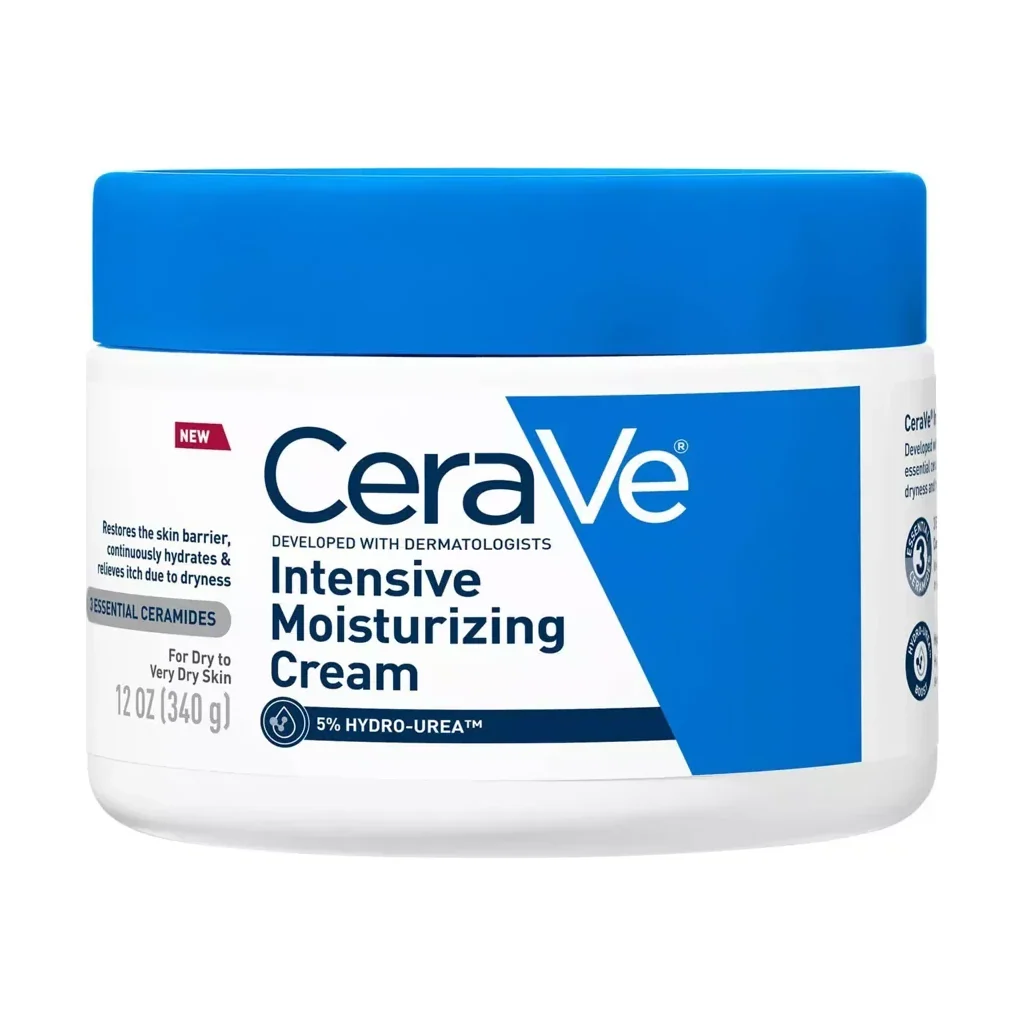 Extreme Dryness Rescue
 Intensive Moisturizing Cream
CeraVe's Intensive Moisturizing Cream brings pharmaceutical-grade hydration technology to the drugstore shelf, combining 5% hydroxyethyl urea with amino acid NMF components, shea butter, and the signature ceramide complex. For skin that the standard Moisturizing Cream cannot fully satisfy, this is the next level up — and still under twenty dollars.
Key Urea · Shea Butter
 Dry Skin Upgrade Pick
 Intensive Moisturizing Lotion
CeraVe's most therapeutically ambitious body lotion delivers meaningful innovation with its 5% Hydro-Urea complex, addressing chronic dryness at the NMF level rather than just slathering moisture on the surface. The rich-but-not-greasy texture and 72-hour MVE delivery system make it a genuine upgrade over the Daily Moisturizing Lotion for dry-to-very-dry skin. Worth the premium if your skin needs more than basic hydration.
Key Urea · Ceramides
 Bi-Phase Barrier Mist
 Barrier Bounce Bi-Phase Mist
Naturium's Barrier Bounce Bi-Phase Mist combines plant oil network (squalane, sunflower, jojoba, milk thistle) with urea, sphingolipids, ceramide NP, and substantial ayurvedic botanical cast in 100ml fragrance-free format. Strong value at 22 dollars for the bi-phase barrier-supportive mist category.
Key Squalane · Urea
 Luxury Hydration
 Hyaluronic Acid Aqua Booster
111Skin's Hyaluronic Acid Aqua Booster is a well-formulated, gentle hydrating serum built around a solid NMF complex, niacinamide, and hyaluronic acid. The issue isn't the formula — it's the $135 price tag for 20ml, which is almost entirely a brand-and-packaging premium on ingredients you can find at a fraction of the cost. A perfectly pleasant product; a poor value proposition.
Key Hyaluronic Acid · Amino Acids
 Heel Softening Soak
 Repairing Foot Mask
An easy, fragrance-free way to soften rough, tired feet without the drama of an acid peel. The urea-and-shea formula tucked inside occlusive booties does real work on dry heels in a single ten-minute soak. It won't dissolve heavy calluses on its own, and single-use pricing makes it a treat rather than a daily fix.
Key Urea · Glycerin
 Winter Hand Rescue
 Repairing Hand Mask
A smart, fuss-free way to deep-condition wrecked winter hands: Aquaphor packs a genuinely functional urea-shea-avocado treatment into occlusive cotton gloves you wear for ten minutes. It works on contact and won't sting sensitive skin. The catch is cost-per-use — single pairs are pricier than scooping ointment from a tub.
Key Glycerin · Urea
 Professional Ampoule HA Serum
 Doctor Babor Power Serum Ampoule Hyaluronic Acid
Babor's Doctor Babor Power Serum Ampoule Hyaluronic Acid delivers 8-HA framework plus Syn-Hycan tripeptide in hygienic single-use glass ampoules. 60 dollars for 14ml total (7 ampoules) is upper-tier HA serum pricing; the format ensures active integrity but limits cost-per-ml value.
Key Hyaluronic Acid · Urea
 Combination Skin MVP
 Daily Hydrating Lotion
A deceptively sophisticated lightweight moisturizer that packs a triple-humectant system and osmotic stress technology into a minimalist 16-ingredient formula. Its only real weakness is the 3 oz size at nearly $15 — the formulation itself punches well above typical drugstore moisturizer quality.
Key Hyaluronic Acid · Urea
 Sensitive-Skin Water Gel
 Deep Hydration Skin Restoring Water Gel
A water gel built the way a sensitive-skin brand should build one: fragrance-free, gently preserved, glycerin and propanediol doing the hydrating, niacinamide and panthenol at real positions, and a sugar-derived complex behind them. It is cooling, weightless and kind to oily and combination skin. The acids on the front are far down the list, and twenty dollars for 1.7 ounces is a prestige price on a drugstore jar.
Key Glycerin · Niacinamide
 Hydration Cult Classic
 Moisture Surge 100H Auto-Replenishing Hydrator
A beautifully engineered gel-cream that delivers genuine multi-hour hydration without weight, greasiness, or fragrance. Its universal skin-type compatibility and layering versatility make it a genuinely useful product — though the prestige pricing asks you to pay a premium for refinement over raw ingredient value.
Key Probiotics & Prebiotics · Hyaluronic Acid
 Blue Line Lip Seal
 Blue EGF Barrier Lip Balm
A well-made, fragrance-free, flavour-free gloss-balm that does what a lip balm should and adds two things most do not: polyisobutene and a lanolin-like ester over a declared ten percent shea seal the lip, urea softens the dead edges of a chapped one, and panthenol, ceramide NP and squalane support the thin lipid layer underneath, with a guaiazulene salt for the Blue calm. The EGF is a trace at the very end of the list and the badge on the tube, chamomile oil is the one allergen note, there is no SPF, and a month-old balm has no record; at ten dollars it is a good lip balm with a story attached.
Key Shea Butter · Film Formers & Texture Polymers
 Budget Barrier-Repair Cream
 Hyaluronic Acid & Squalane Moisturizer
Deconstruct's Hyaluronic Acid & Squalane Moisturizer punches well above its price: a genuine barrier-repair cream with three ceramides plus cholesterol and phytosphingosine, backed by HA, squalane, niacinamide and a full NMF complex. Fragrance-free and broadly suitable, it's an outstanding everyday moisturizer for dry, normal, combination and sensitive skin — the only real caveat being it isn't fungal-acne-safe.
Key Ceramides · Hyaluronic Acid
 K-Beauty Barrier-Repair Bargain
 Dermoisture Barrier.D Intense Cream
A genuinely excellent K-beauty barrier cream that rivals premium derm brands at a fraction of the price. Three ceramide types with cholesterol, niacinamide, dual urea, and an oatmeal-cica soothing layer — the formulation is more sophisticated than the price suggests. One of the best values in the category.
Key Ceramides · Urea
 European Pharmacy Standout
 UreaRepair Plus 5% Urea Day Cream
A sophisticated European facial moisturizer pairing 5% urea with a complete ceramide-phytosphingosine-cholesterol barrier trio and NMF amino acid complex. Effectively a scaled-down face version of the UreaRepair Plus body line, calibrated for daily-use facial skin with chronic dryness or sensitivity.
Key Urea · Ceramides
 Sensitive Skin MVP
 Ultra Repair Face Moisturizer
A genuinely excellent lightweight moisturizer for sensitive and barrier-compromised skin, packing colloidal oatmeal, ceramide NP, squalane, and urea into a formula that disappears on contact. The only real sin is the 1.7-ounce bottle — you'll love it and resent repurchasing it.
Key Colloidal Oatmeal · Ceramides
 Drugstore Ceramide Cream MVP
 Pure Moisture Ultra-Rich Body Cream
A genuinely well-formulated drugstore ceramide body cream with the full lipid architecture (5 ceramide subtypes plus sphingolipids), hydroxyethyl urea for keratolytic activity, and the supporting humectant cast at a price point that undercuts pharmacy alternatives meaningfully. One of the strongest INCI lists in the drugstore body cream category.
Key Ceramides · Hyaluronic Acid
 J-Beauty Hydration Hero
 Skin Plumping Gel Cream
A genuinely effective hydration machine built on Hada Labo's hyaluronic acid expertise, delivering impressive plumping and moisture for its price point. The triple HA complex and hydroxyethyl urea create noticeable skin bounciness, though the inclusion of methylisothiazolinone is a disappointing preservative choice that locks out sensitive skin users who would otherwise benefit most from this formula.
Key Hyaluronic Acid · Urea
 Dry-Pore Rice Lotion
 Keana Nadeshiko Rice Toner N
A thoughtfully built, fragrance-free and alcohol-free hydrating toner that treats visible pores as a dehydration problem rather than an oil problem. Its deep humectant stack, rice-derived lipids and licorice soother leave dry and combination skin plump and smooth, making pores look softer; it does not shrink them, and the rice story is supporting rather than starring.
Key Glycerin · Rice
 Urea Hydration Toner
 Sukoyaka Suhada Urea Moisture Lotion
A genuinely effective, fragrance-free urea-and-ceramide hydrating toner that smooths dry, rough, flaky skin while reinforcing the barrier — a Japanese drugstore staple that punches above its modest price. A small amount of alcohol and fungal-acne incompatibility are the only real caveats on an otherwise broadly gentle, well-built formula.
Key Urea · Ceramides
 Barrier Rescue Hero
 Great Barrier Relief
One of the most thoughtfully formulated barrier repair serums on the market. The tamanu oil, niacinamide, and ceramide combination addresses barrier damage from multiple angles, and the seven years of consistently glowing reviews confirm that the formula delivers on its promise. A genuine rescue product for over-exfoliated, over-retinol'd, or otherwise stressed skin.
Key Tamanu Oil · Niacinamide
 Niacinamide Hydrogel Boost
 First Shot Essence Gel Mask Age Control
A fragrance-free hydrogel mask with niacinamide in fourth place, hydroxyethyl urea, caffeine and adenosine. It delivers an immediate, cooling plumping effect and brighter-looking skin, but its 'Age Control' promise is modest for an occasional mask, and the per-mask price is high.
Key Niacinamide · Urea
 Real-Dose Ceramide Serum
 Ceramedix Capsule Serum
A properly dosed, fragrance-free barrier serum that backs its '2% ceramide' label with a declared 20,441 ppm, pairs it with cholesterol, niacinamide, urea and ectoin, and feels comfortable on even over-exfoliated skin. It is Maxclinic's most convincing formula; the only gaps are a thin review record and no settled US price.
Key Ceramides · Niacinamide
 NEA-Approved Daily Shield
 Total Moisture Daily Facial Cream
Medik8's most universally recommendable product: a fragrance-free, NEA-accepted lightweight moisturizer with ceramide, squalane, hyaluronic acid, NMF components, and a prebiotic peptide. It proves that Medik8 can formulate for everyone — not just those who tolerate essential oils. This should be the template for the rest of the range.
Key Glycerin · Squalane
 Fragrance-Free Glow Hydrogel
 Rose Collagen Dewy Glow Gel Mask Pack
A well-made, fragrance-free hydrogel mask with niacinamide high in the list and a rich humectant-and-emollient essence that leaves skin plump, soft and glossy for the day. The collagen and peptide claims are mostly branding, and at about four dollars a sheet it's a treat rather than a routine staple — but it's one of the gentlest and most pleasant products in the Miguhara range.
Key Niacinamide · Collagen
 Barrier Repair Standout
 Barrier Bounce Serum
One of the more complete barrier-repair serums you can buy at this price. It pairs disclosed 5% squalane and 2% urea with a genuine ceramide-cholesterol-fatty acid trio, the lipid matrix skin actually uses to rebuild itself, in a cushiony, gentle oil-serum. Too rich for oily skin and sold in one size only, but for dry, sensitive, or compromised skin, it's a quietly excellent buy.
Key Squalane · Ceramides
 NMF in a Pump Bottle
 Urea 5% Body Serum
A smart, unglamorous body hydrator: 5 percent urea with glycerin, PCA, hyaluronate and free amino acids — the skin's own moisturising factor, replaced wholesale — in a thin, fragrance-free milk that vanishes in a minute and costs $23 for 14 ounces. It makes ashy shins and rough elbows look better within a week and hydrates deeply over a month. It is not a KP smoother at this dose, the 'firming' is marketing, and very dry skin needs a cream over it; but as the daily base layer for a whole body, it is one of the better-value things in the aisle.
Key Urea · Glycerin
 Hydration Maximalist
 Water Drench Hyaluronic Cloud Serum
A multi-layered hydration serum that goes beyond basic HA with Pentavitin and Lipidure for sustained moisture, but the $65 price tag for 1 oz and the inclusion of parabens make it a tough sell when excellent HA serums exist at a fraction of the cost.
Key Hyaluronic Acid · Probiotics & Prebiotics
 The Family Urea Lotion
 ATO Lotion Blue Label
One of the better-reasoned drugstore-priced body lotions around: glycerin and 5 percent urea up top, a skin-identical fatty-acid base instead of silicones, no fragrance, and a pump bottle under twenty dollars that a whole household can share. It stings on broken skin like every urea product and it lacks the ceramides the brand saves for pricier lines, but for dry, flaky, itchy body skin it does exactly what the evidence says it should.
Key Urea · Glycerin
 Ten Percent Urea Heel Fixer
 Foot Moisture Cream
A real ten percent urea foot cream at a drugstore price, with shea, betaine and jojoba doing the right supporting work and no fragrance; heels soften in days and callus thins over weeks, which is what urea at this dose has always done. The papaya and witch hazel are garnish, it stings on open cracks, and it has to be ordered from Korea, but as a daily heel cream it is exactly what a podiatrist would tell you to use.
Key Urea · Shea Butter
 Budget Holy Grail
 Kind to Skin Hydrating Light Moisturizer
A shockingly well-composed budget moisturizer that does the unglamorous work of multi-humectant hydration, barrier support, and soothing reactive skin — for under $10. The formula is more sophisticated than the price suggests, and for sensitive skin on a budget, there are few better everyday picks.
Key Glycerin · Mineral Oil
 Derm Office Staple
 Hydrating B5 Gel
Hydrating B5 Gel is the oil-free hydration workhorse of the SkinCeuticals lineup, pairing glycerin, hyaluronic acid, panthenol, and urea in a deliberately minimal gel that has sat on derm-office shelves for over twenty years. It is genuinely well-suited to oily, acne-prone, and post-procedure skin — though the $93 price tag is steep for how simple the formula really is.
Key Hyaluronic Acid · Panthenol
 Post-Procedure Hydration Gel
 Hydrating B5 Masque
A perfectly gentle, perfectly plain humectant gel — glycerin, hyaluronate, two forms of B5 and three pieces of the skin's own moisturising factor — that plumps and calms dehydrated or post-procedure skin for the evening and suits literally every skin type. It does exactly what a hydrating mask should and nothing more, which would be fine at $30; at $70 for 75 mL it is the brand's own B5 Gel in a thicker tube, priced like a treatment.
Key Hyaluronic Acid · Panthenol
 Acid-Free Enzymatic Exfoliant
 Retexturing Activator
A nine-ingredient, fragrance-free, acid-free exfoliating serum whose patented 25 percent hydroxyethyl urea and HEPES compound softens the skin and switches on its own shedding enzymes, so texture smooths over weeks with no sting, peel or dryness. Genuinely useful for skin that cannot tolerate acids, backed by an eight-week 100-subject panel, slow and subtle by nature, and a hundred dollars for ingredients that cost pennies.
Key Urea · Kombucha
 Hydration Powerhouse
 HA5 Hydra Collagen Water Burst Moisturizer
SkinMedica's Water Burst Moisturizer is a genuinely elegant hydrator that delivers immediate plumping through its multi-weight HA system, though the vegan collagen marketing outpaces the science. At $78, you're paying legacy-brand premium for sophisticated hydration technology — whether that premium is justified depends on how much you value the microbiome angle.
Key Hyaluronic Acid · Collagen
 Everyday Urea Softener
 Carea Cream
Carea Cream is that rare everyday body lotion that actually does something — a treatment-level 10% urea that hydrates and gently resurfaces rough, bumpy skin, cushioned by squalane, colloidal oatmeal and centella. It's fragrance-free, lightweight, broadly suitable, and ideal as daily maintenance for KP or persistent dryness. The price is indie-premium and very dry winter skin may want more, but as a smart daily softener it's excellent.
Key Urea · Squalane
 Pharmacy Urea, Face-Cream Texture
 10% Urea Moisturizer
A pharmacy-strength urea cream with a face-cream texture: a declared 10 percent urea and 1 percent colloidal oat in a light, fragrance-free triglyceride-squalane base, for $22. On flaky, rough, winter-tight skin it clears the flakes in days and keeps the face hydrated between applications — the one moisturiser in the brand's range that treats dryness rather than just topping it up. It prickles on cracked or reactive skin, it is too much for oily faces and not enough alone for the driest, and the 48-hour claim is the brand's own test; but for scaly, stubborn dryness on a face, it is exactly the right tool.
Key Urea · Colloidal Oatmeal
The full urea (carbamide) guide
Urea is a small, water-loving molecule your skin makes itself, as part of the natural moisturizing factor that keeps its surface soft. Dry and aging skin tends to run low on it, and skincare versions put it back.
What makes urea unusual is its double act: at low strengths it pulls water in, and at higher strengths it softens and loosens rough, thickened skin. That's why it shows up everywhere from gentle face creams to hard-working heel balms.
Where the evidence stands, by concern
Evidence for an ingredient is not one grade — it differs concern by concern. Each row below was researched separately against regulatory approvals, clinical guidelines, and trials our team opened and verified; the band and dots rank how central urea (carbamide) is to treating that concern, from first-line therapy down to supportive care, at treatment-level doses and vehicles. A product's own grade weighs its actual formula.
Researched, not established: Eczema, Keratosis Pilaris, Nail Fungus, Psoriasis. We looked at each of these and the current evidence does not clear our bar for a treatment standing — that is a finding, not a gap in our research.
How it's regulated in the US
FDA does not classify ingredients — it classifies products, by what they are sold to do. The same molecule can be a drug active in one product and a cosmetic ingredient in the next, and only the claim on the label decides which. What follows is a statement about that legal standing, not about whether it works — the evidence question is answered separately above.
Cosmetic Urea is a cosmetic ingredient in the US at every strength sold, including the 40 percent keratolytics. No OTC monograph covers it and no approval underpins it.
Urea has two jobs that scientists follow: how it hydrates the skin's surface and cuts water loss, and how higher strengths soften rough, thickened or scaly skin. Studies span very dry skin, eczema, psoriasis, bumpy patches on the upper arms and even thickened nails, though much of that work is small, short or uncontrolled. A lab-based line of research asks whether urea also nudges the genes behind the skin barrier. Researchers have mapped what different strengths tend to do, which is why labels make a point of listing them. The evidence panel below takes each concern in turn.
How it works
Urea's versatility comes from doing two things at once that most ingredients can only do one at a time: it pulls water in and loosens what doesn't belong. At low concentrations (roughly 2–10%), it acts as a humectant in the classical sense — a small, water-soluble molecule that integrates into the stratum corneum and holds moisture against the gradient constantly trying to pull it out through the surface. Because urea is already present in the epidermis as part of the Natural Moisturizing Factor, the skin takes it up through dedicated transporters, including aquaporin channels, making uptake efficient rather than superficial. Above about 10%, something shifts. Urea begins disrupting the hydrogen bonds that hold keratin chains together in the stratum corneum — the keratolytic effect. It doesn't strip skin like an acid; it gradually loosens cohesion between corneocytes so dead-cell buildup can shed more easily. That's why 20% urea works so well on rough, thickened skin, and why 40% formulations can soften nail plate in onychomycosis. A third, less-discussed mechanism is barrier gene regulation. Research in the Journal of Investigative Dermatology found that urea uptake into keratinocytes upregulates genes tied to lipid synthesis, differentiation markers like filaggrin, and antimicrobial peptides including cathelicidin and beta-defensin-2. In short, topical urea doesn't just patch a dry-skin problem — the data suggest it nudges the skin toward rebuilding and defending itself over time.
Key benefits
- Helps skin draw in and hold on to water
- Softens rough, thickened patches on elbows, knees and heels
- Smooths a dry, flaky surface with regular use
- Tops up a moisturizer your skin already makes itself
- Helps other skincare ingredients sink in more easily
- Low strengths suit the face, higher strengths the body
Concentration & usage
On an INCI list, urea appears simply as "Urea" (occasionally "Carbamide," its older systematic name). Concentration dictates function: 2–5% is a gentle humectant suitable for the face and sensitive skin; 10% is the workhorse level for daily dry-skin body lotions and mild facial moisturizers; 20–30% targets keratosis pilaris, calluses, and noticeably thickened skin; and 40% is a clinical-strength concentration for nail avulsion and severe hyperkeratosis, often used under professional guidance. Most over-the-counter products land at 10–20%. Urea is most stable in mildly acidic to neutral formulas (roughly pH 4–7); high pH or sustained heat can degrade it into ammonia and carbon dioxide, which is why well-built products are buffered. There's no meaningful pH conflict with AHAs at low percentages, but pairing strong exfoliating acids with high-percentage urea raises the irritation ceiling.
Who it's for & who should be cautious
Who it's for
Anyone wrestling with persistent dryness, rough texture, or conditions like keratosis pilaris, eczema, psoriasis, ichthyosis, or cracked heels should keep urea on their radar — it's one of the few ingredients dermatologists and podiatrists genuinely reach for in practice, not just suggest in passing. It's also underrated in mature skincare: NMF components including urea decline with age, so replenishing it is restorative rather than merely cosmetic. Normal-to-dry skin types do well with 10% in a daily moisturizer; oilier types often find a low-percentage urea formula smooths texture without feeling heavy.
Who should be cautious
People with actively broken skin, open fissures, or weeping eczema flares should hold off on higher-concentration urea until the barrier has at least partly stabilized — the stinging can be sharp and penetration through compromised skin is unpredictable. Pregnancy safety is genuinely unsettled: there are no adequate controlled studies, and while absorption at cosmetic concentrations is generally considered low risk, high-percentage formulas are worth running past an OB or dermatologist first. Anyone with a known (if uncommon) urea sensitivity should steer clear, and newcomers to 20%-plus concentrations should patch-test, since the keratolytic action can trigger temporary redness or stinging on delicate areas.
Pairs with & conflicts
Myths & facts
Myth: Urea in skincare is literally urine or derived from animal waste.
Reality: Cosmetic urea is synthetically manufactured by reacting ammonia with carbon dioxide. It's chemically identical to the urea found in urine, but that's a bit like calling water 'swimming-pool extract' — the molecule is the same, the source is industrial chemistry, not biological waste.
Myth: Higher concentration is always better, so 40% must be the best pick for dry skin.
Reality: Concentration should match the job. Slathering 40% urea on the face or mildly dry arms invites irritation; that strength exists for nail avulsion and severe hyperkeratosis under clinical guidance. For everyday dry-skin care, 10–20% is the sweet spot — effective, tolerable, and appropriate for regular use.
Myth: Urea is just another humectant, interchangeable with glycerin or hyaluronic acid.
Reality: At low concentrations urea does overlap with other humectants, but the keratolytic and gene-regulatory actions at higher percentages aren't replicated by glycerin or HA. Urea also replenishes something the skin makes itself, giving it a biomimetic dimension that purely hygroscopic humectants lack.
Frequently asked questions
Can I put a urea cream on my face, or is it strictly a body product?
Low-concentration urea (5–10%) is well-tolerated on the face and shows up in plenty of facial moisturizers, especially ones built for very dry or eczema-prone skin. Concentrations above roughly 15–20% are usually reserved for the body — heels, elbows, legs — where skin is tougher and the keratolytic action is the whole point.
How fast does a urea cream work on cracked heels?
Many people notice softer, more pliable skin within a few days of consistent 20–40% use. For deeply fissured heels, a week or two of nightly application with a sock worn over the top to boost occlusion tends to produce visible improvement. Stepping down to a 10–20% formula a few times a week afterward helps keep the cracking from returning.
Is it safe to layer urea with retinol or AHAs?
At 10% or below, urea generally plays nicely with both retinoids and AHAs and can even buffer the dryness those actives cause. At higher percentages the combination can tip into over-exfoliation, so it's smarter to alternate than to stack them — or save the high-strength urea product for nights you're skipping the acid or retinoid.
Why does urea sometimes sting the first time I apply it?
A brief stinging or tingling on first use is common, particularly above 10% or on skin with tiny abrasions. It usually fades within a minute and eases with continued use as the barrier improves. If the burning lingers or worsens, the concentration is probably too high for that spot, or the skin is too compromised at the moment to tolerate it.
Does urea go off faster than other moisturizer ingredients?
Urea is reasonably stable in well-formulated products but can break down into ammonia and carbon dioxide under heat, high pH, or long storage. A tube left in a hot car or steamy bathroom may lose potency over time, and a faint ammonia smell is a telltale sign of degradation. Keep it in normal conditions and use it within the period-after-opening window on the packaging.
Is plain urea the same as hydroxyethyl urea, and do they behave alike?
They share the urea backbone but act differently. Hydroxyethyl urea is a modified version that's less volatile and less likely to sting at comparable humectant levels, making it a gentler choice in leave-on face products. It lacks meaningful keratolytic activity even at higher concentrations, so it's not a stand-in when exfoliation or barrier-gene effects are what you're after.
- Men's GroomingHands Fail in Four Stages, and Almost Everyone Intervenes at Stage ThreeOccupational hand dermatitis is one of the most common work-related diseases on earth, it follows a script, and the cheapest fix works only if you start it before the skin splits.
- DIY & At-HomeThe Dermatology Pantry: Six Cheap Things With Better Evidence Than Most of What's Marketed to YouEvery post that dismantles a home remedy owes the reader a replacement. The honest replacement list is embarrassingly cheap, and one item on it is cheaper still — it is a bath.
- Men's SkincareMale Skin Ages on a Cliff, and Fifty Is Roughly Where the Ground GoesWomen get a biological alarm bell at menopause. Men get a straight line down from their twenties, which is why so many arrive at fifty-five with thirty-five years of unopposed decline and no routine.
- Hands & NailsThe Hardener Works. That Is Exactly How It Ruins Your Nails.Formaldehyde cross-links nail keratin into something genuinely harder — and then brittler, and then shattering — which is why the product that fixed the problem sells best to the people it created.