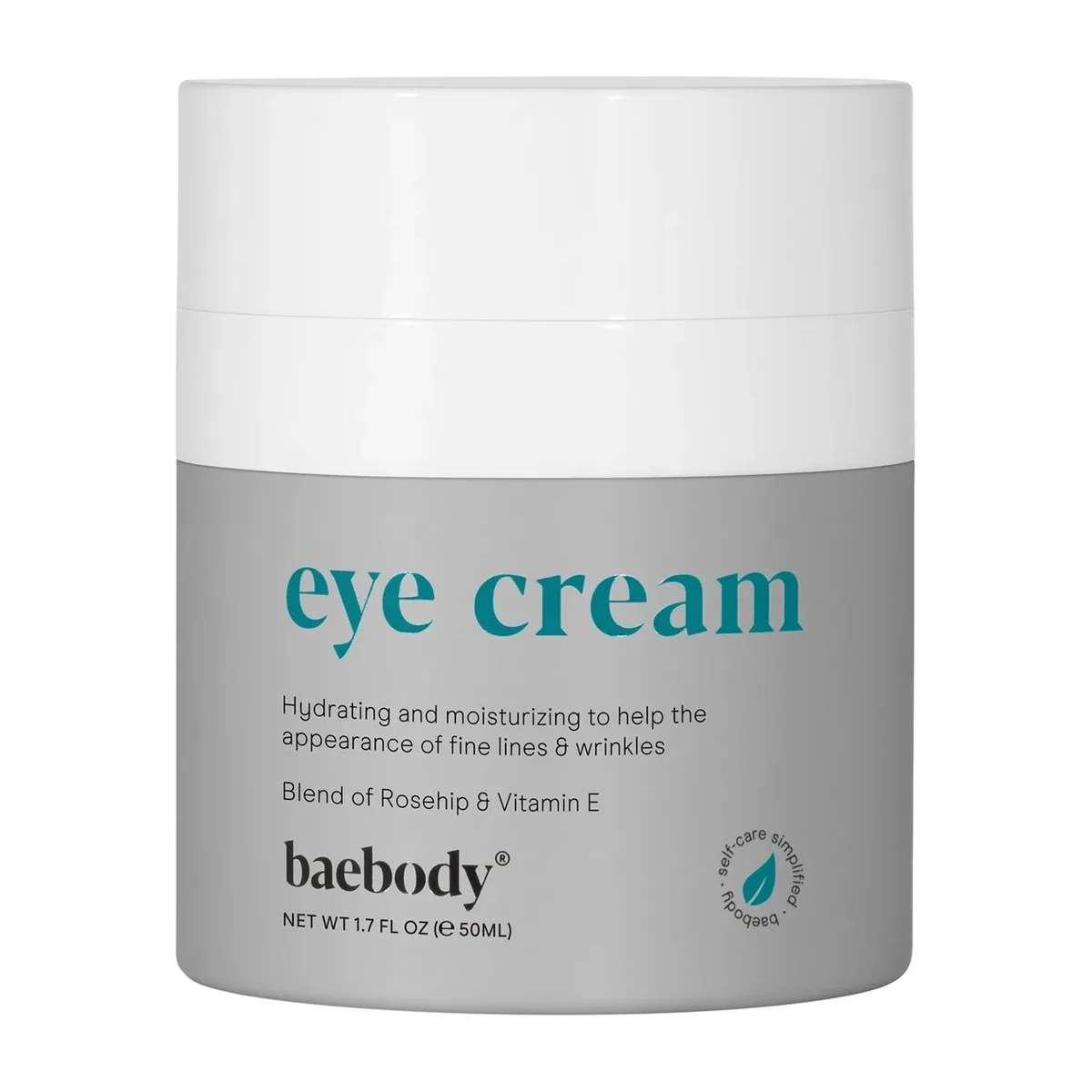
Baebody made its name on an eye gel, so it's easy to assume its eye cream is just the same thing in a thicker format. It isn't, and the difference is the most useful thing to understand before buying. These are two genuinely different products aimed at different skin and different goals, and picking the right one comes down to knowing what each actually contains — a small exercise in reading past the shared brand name to the formulas underneath.
This cream's identity is richness. It's built on organic rosehip seed oil — high in linoleic acid and natural provitamin A — with shea butter, jojoba, and sunflower oil for genuinely nourishing emollient hydration, plus hibiscus, green tea, gotu kola, and panthenol for antioxidant soothing. The result is a cushiony cream that melts into the under-eye and leaves it richly moisturized, soft, and smoother-looking. For dry under-eyes, especially overnight, that comfort is real and welcome, and it's noticeably more nourishing than the brand's lighter, watery gel. As a rich eye moisturizer, it's pleasant and does exactly what a good emollient should.
But here's the honest catch, and it's the crux of choosing between the two Baebody eye products: this cream lacks the gel's best feature. The eye gel contains a real peptide complex — three signal peptides that genuinely support the look of firmness. This cream doesn't. What it offers instead is botanical nourishment and hydration, which is lovely but isn't a targeted anti-aging or de-puffing action. It also has no dedicated caffeine, so despite the usual eye-cream reputation, it won't meaningfully de-puff, and it can't touch structural dark circles from hollows, thin skin, or pigmentation. The 'botanical hyaluronic acid' on the label, as with so many natural-brand eye products, is really caesalpinia spinosa (tara) gum — a hydrating plant polysaccharide, not the hyaluronic acid molecule it's named after. None of this makes it a bad cream; it makes it a moisturizer rather than a treatment, and one lighter on real actives than its own sibling.
So the practical guidance writes itself. Choose this cream if your under-eyes are dry and you want rich, comforting hydration, particularly at night — it's the more emollient, soothing option. Choose the brand's eye gel instead if you want the peptides and a lighter texture, better for oily or normal skin and for firming the look of the area. Neither is simply better; they're a texture-and-goal decision, and buying the cream expecting the gel's firming benefits (or vice versa) is how people end up disappointed with a perfectly fine product. If genuine puffiness or dark circles are your concern, honestly, neither is ideal — a dedicated caffeine eye product would out-target both.
There's a wider pattern worth naming here, because Baebody's two eye products illustrate it cleanly. Brands frequently sell a 'gel' and a 'cream' version of the same concept and let shoppers assume the cream is the richer, more premium upgrade — heavier must mean better, more must mean stronger. But texture and active content are independent variables. Here the lighter gel actually carries the more compelling active (the peptides), while the richer cream is the plainer, more emollient formula. That inversion is common across the industry, and it's a good reminder that 'richer' describes how a product feels, not how much it does. If you want the firming actives, you may have to accept a lighter texture; if you want the rich cushiony feel, you may be trading away some of the actives. Knowing which you're prioritizing — feel or function — is the real decision, and it's one only the ingredient list can settle. On value, it's reasonable. At around $23 for a generous 1.7 oz bottle that lasts several months, it's an affordable rich eye moisturizer, in line with the brand's accessible pricing. You're paying a fair price for nourishing oils and soothing botanicals, though not for cutting-edge actives — the value is in comfort and hydration, not in treatment power. The main tolerance note is the wild geranium extract, a fragrant botanical that can bother reactive or rosacea-prone skin, and the plant oils that make it not fungal-acne safe.
Who should buy it? People with dry under-eyes wanting rich, gentle, botanical hydration — especially for overnight use — who understand it's a nourishing moisturizer, not a de-puffing or firming treatment. Who should skip it? Anyone wanting targeted results on puffiness, dark circles, or fine lines, who should choose the brand's peptide eye gel or a dedicated caffeine product; oily skin that finds rich creams too heavy; fragrance- or geranium-sensitive and rosacea-prone skin; and fungal-acne-prone skin (the oils). Taken for what it honestly is — a rich, nourishing rosehip eye cream that's the moisturizing half of Baebody's eye duo — it's a comfortable, fair-value pick, provided you choose it for its hydration and not for actives it doesn't contain.