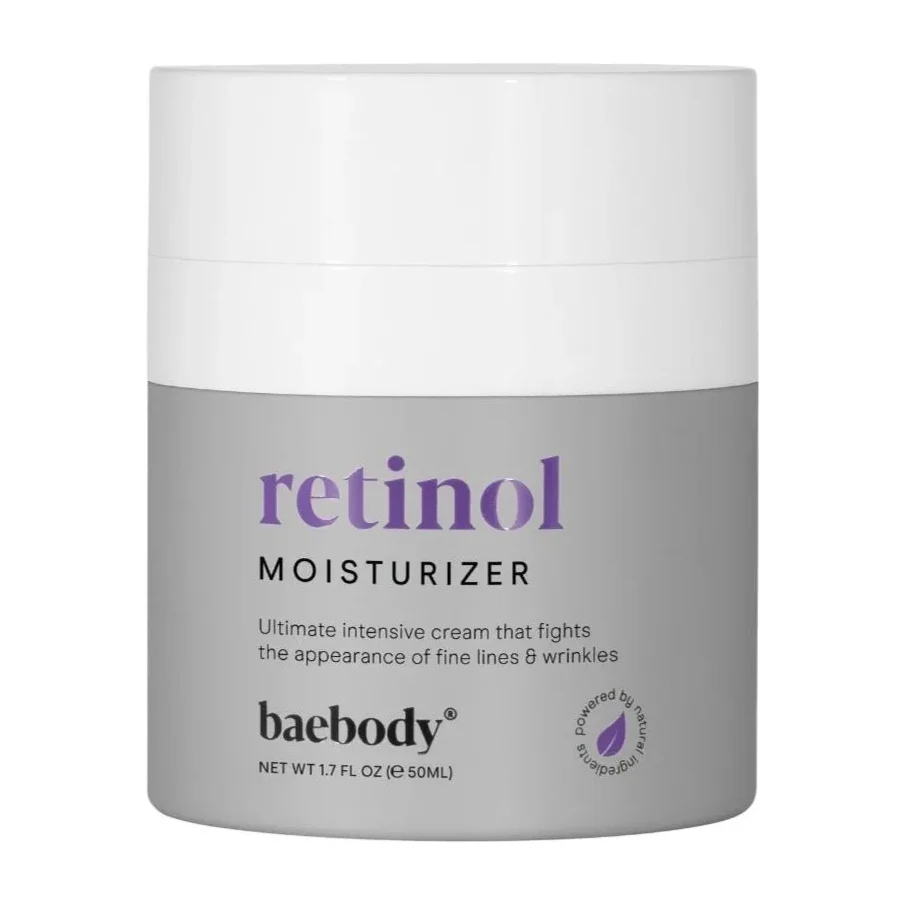
The number on the front does this cream a strange disservice. '2.5% retinol' sounds like a heavy-hitter, the kind of concentration you'd approach cautiously and expect visible results from fast. In reality, it's the most misleading thing about the product, and clearing it up is the key to judging the cream fairly. A true 2.5% pure retinol would be extraordinarily high — well beyond most prescription-adjacent formulas and harshly irritating to most skin. This gentle, well-tolerated moisturizer plainly isn't that. What '2.5% retinol' almost always means in natural-brand marketing is 2.5% of a pre-diluted retinol blend, which leaves the actual retinol a small fraction of a percent. So the honest read is: this is a low-dose, beginner-friendly retinol wearing a label that shouts a much bigger number.
Once you accept that, it's a perfectly reasonable little product. The retinol, low as it is, still does what retinol does — gently promotes cell turnover to smooth texture and soften fine lines over time — and it's delivered in a genuinely moisturizing cream rather than a bare serum. Panthenol and green tea buffer irritation, shea butter, jojoba, and sunflower oil hydrate and offset the dryness vitamin A can cause, and the whole thing is formulated to be gentle. It sinks in soft and non-greasy, rarely stings, and is mild enough for careful use around the orbital bone as well as the face. For someone dipping a toe into retinol on a budget, that gentleness and the built-in moisturizer are real advantages.
The results, accordingly, are modest and gradual — smoother texture and a fresher look over weeks, with fine-line benefits building over months. That's appropriate for a low dose and, for a beginner, arguably preferable to the redness and peeling a stronger retinoid can trigger. But it does mean anyone expecting the dramatic change the '2.5%' implies will be underwhelmed, and experienced retinol users wanting real power should look to a product that discloses a genuinely higher strength.
Several formulation specifics deserve a clear-eyed mention, because they narrow who this suits. It contains wild geranium extract, a fragrant botanical, plus a little alcohol — both potential irritants for reactive or rosacea-prone skin, which somewhat undercuts the gentle positioning for the most sensitive users. It includes propolis, a bee-derived ingredient, so despite the natural framing it isn't vegan. And it has isopropyl palmitate fairly high in the list, which is comedogenic and can contribute to breakouts in acne-prone skin — a slightly odd choice in an affordable 'natural' cream. None of these are disqualifying, but together they mean the 'gentle natural retinol' story has a few caveats the marketing doesn't mention.
And then the non-negotiable retinol rules apply in full, gentle dose notwithstanding. It's a nighttime product, it makes skin more sun-sensitive so daily sunscreen is essential, and — crucially — it is not pregnancy-safe. Gentle and natural do not equal pregnancy-compatible: retinol is a vitamin A derivative advised against in pregnancy and breastfeeding at any dose, so expecting or nursing users should choose bakuchiol or peptides instead. Its jojoba and sunflower oils likewise put it off-limits for fungal-acne-prone skin.
It's worth zooming out on the '2.5%' claim, because it's a genre, not a one-off. A whole tier of affordable 'natural' retinol products — this one included — leans on a headline percentage that sounds impressive precisely because most shoppers don't know that retinol is dosed in fractions of a percent, and that even prescription tretinoin tops out around 0.1%. Against that reality, '2.5% retinol' isn't just optimistic; it's a number that can't mean what it appears to mean. Once you learn to spot it, you'll see it everywhere in the budget retinol aisle, and it stops being persuasive and starts being a tell — a sign the brand is selling the idea of potency rather than disclosing the real thing. The irony is that the actual formula here is perfectly decent for what it is; it just doesn't need, and isn't served by, the inflated label. On value, it's a fair budget pick. At around $20 for a generous 1.7 oz bottle that lasts months, plus a cheaper trial size, it's inexpensive for a gentle retinol-in-a-moisturizer, and the low-commitment price suits a first retinol well. You're not paying for potency or premium actives — you're paying for an accessible, gentle introduction, and on that basis it's reasonable. Just calibrate expectations to the real (low) dose, not the headline number.
Who should buy it? Retinol beginners and budget shoppers wanting a gentle, moisturizing, low-dose introduction to vitamin A for face and careful eye-area use — people who'd rather start mild than risk irritation. Who should skip it? Pregnant or nursing people (the retinol), experienced users wanting disclosed, higher-strength retinol, vegans (the propolis), fragrance- or geranium-sensitive and rosacea-prone skin, and acne- or fungal-acne-prone skin (the isopropyl palmitate and oils). Taken honestly — a gentle, affordable, low-dose beginner retinol with a loud and misleading label — it's a decent entry point, as long as you read the ingredients rather than the front of the bottle and follow the standard retinol rules.