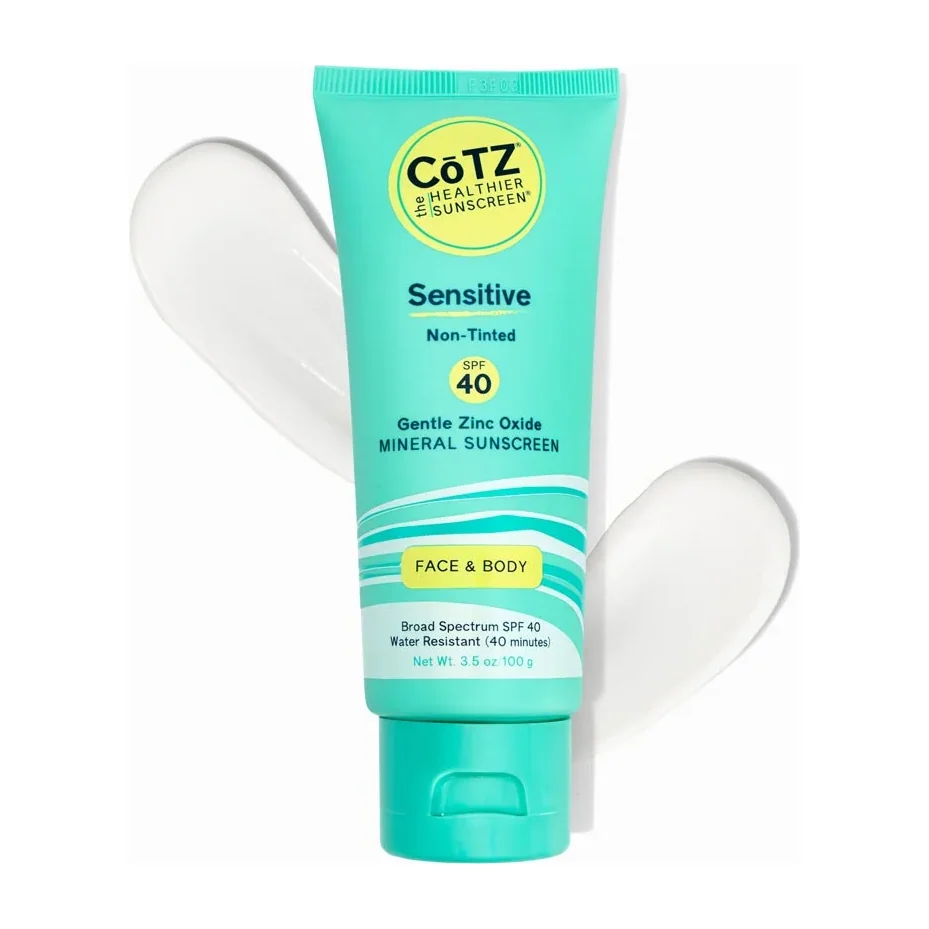
There is a small contradiction built into this product, and it is the most interesting thing about it. Mineral sunscreens and spray formats normally appeal to opposite instincts. People reach for mineral filters because they want something gentle, fragrance-free, and free of chemical actives, the careful, sensitive-skin choice. People reach for continuous sprays because they want speed and reach, the cover-your-back-in-ten-seconds choice. This product tries to be both at once: a 100% mineral SPF 50 in a continuous spray. Whether that marriage works depends entirely on understanding what a mineral spray can and cannot do, so let us be clear-eyed about it. Start with the actives, because they are genuinely robust. This runs on zinc oxide at a hefty sixteen percent, paired with titanium dioxide at three and a half percent, and that is it, no chemical filters at all. Sixteen percent zinc is a high load, and it is what allows a spray, which inherently deposits relatively little product, to reach a real SPF 50 using minerals alone. Zinc oxide is the broadest-spectrum filter available, covering UVA and UVB, and it brings the low-irritation, soothing profile that makes mineral sunscreens the go-to for reactive skin. Titanium dioxide reinforces the UVB and shorter-UVA range. Crucially, mineral filters are photostable, so unlike chemical sprays there is no avobenzone quietly degrading and no photostabilizer to fuss over. There is also no added fragrance, and the base leans gentle, with bisabolol, aloe, and a little vitamin E rounding it out. For sensitive skin that wants spray convenience, that combination is the whole appeal, and it is a legitimate one. The format delivers on convenience in the ways you would expect. The continuous-spray can with its 360-degree valve makes covering the body fast and lets you reach the middle of your back and the backs of your legs without contorting. For a full-body application before a hike, a beach day, or yard work, that speed is the difference between actually applying sunscreen and meaning to. It is far less of a chore than rubbing a thick mineral lotion over large areas, which is the very thing that makes many people avoid mineral formulas entirely. Now the part you cannot wish away, and it is the same physics that governs every mineral sunscreen. Minerals work by sitting on the skin and physically blocking light, which means two things. First, they leave a white cast, and with sixteen percent zinc, this one is visible. It lands as a slightly chalky film, more obvious on deeper skin tones, and it does not melt invisibly into the skin the way a chemical spray seems to. Second, and most importantly, you have to rub it in. The single biggest mistake people make with this kind of product is treating the spray as the whole job. Spraying alone leaves a thin, patchy, uneven layer, and a thin layer of mineral sunscreen is a thin layer of protection. The correct technique is to spray in slow, overlapping passes, close to the skin, and then rub it in with your hands to spread the minerals into an even, opaque coat and work out the cast. Done that way, the high zinc load gives you real, gentle SPF 50. Done as a quick spritz, you get a fraction of the number on the can and a streaky finish to boot. Some additional honest notes. Like most cans, it can sputter or spray unevenly toward the end, and spraying outdoors in a breeze wastes product and makes coverage harder to judge, so a windless spot and a follow-up rub are your friends. It is really a body product; for the face, spray into your palms and apply by hand rather than misting it directly, both for control and to avoid inhaling the spray. And the gentle botanical extras, aloe, banana fruit extract, bisabolol, while pleasant and unlikely to bother most people, are still botanicals, so the truly reactive should patch test even though there is no added fragrance. On value, the continuous-spray mineral format tends to cost a bit more than a basic chemical spray, and current retail pricing varies enough that it is worth checking before you buy. What you are paying for is the combination of mineral filters, fragrance-free formulation, and spray convenience in one can, which is a fairly specific niche. For someone who wants exactly that, gentle mineral protection they will actually apply to their whole body because spraying is easy, it is a sensible choice, as long as the rubbing-in step is treated as mandatory rather than optional. For the face, or for anyone who wants a truly invisible finish, a mineral lotion or a well-formulated chemical sunscreen will serve better. As a body sunscreen for the mineral-minded, though, this threads its little contradiction better than you might expect.