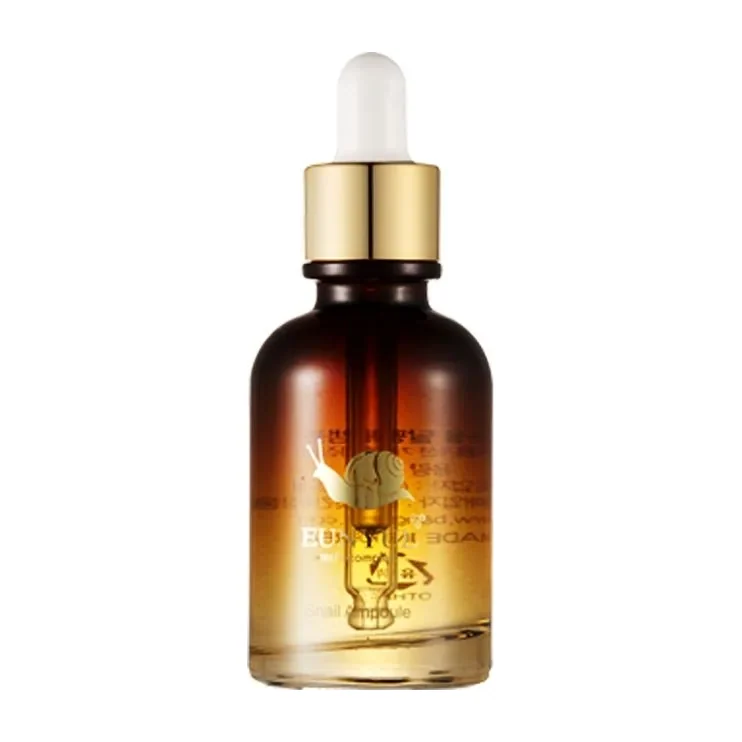
There is something quietly radical about a serum that replaces its entire water base with ginseng. Most products treat botanical extracts as garnishes — a fraction of a percent sprinkled near the bottom of an ingredient list to justify a marketing claim. Beauty of Joseon took a different approach: over 63% of this formula is Panax ginseng root water, meaning every other ingredient in the bottle is suspended in an antioxidant-rich medium rather than the purified water you would find in almost any competing product. It is the kind of formulation decision that does not photograph well on Instagram but matters enormously on your skin.
Ginseng has been central to Korean medicine for centuries, long before the K-beauty industry translated those traditions into sleek glass droppers. The Donguibogam — the 17th-century Korean medical text that inspired Beauty of Joseon's entire brand identity — documented ginseng's use for skin health and vitality. Modern research has been catching up, with studies showing that ginsenosides, the active saponins in Panax ginseng, can promote collagen synthesis and provide meaningful antioxidant protection. Using ginseng root water as the formulation base rather than plain water means your skin encounters these compounds with every single application, in a concentration that most serums never approach.
The snail mucin sits at 3.01%, which is modest compared to products that market themselves as 96% snail mucin. But context matters. This serum was never designed to be a one-note snail mucin delivery vehicle. The snail secretion filtrate here is part of a broader repair strategy, contributing glycoproteins and glycosaminoglycans that complement the ginseng's antioxidant work and the niacinamide's brightening action. It adds a textural richness to the formula and supports the skin's natural healing processes — particularly useful for fading the pink and brown marks that linger after breakouts.
The hydration architecture in this serum deserves attention. Three forms of hyaluronic acid — sodium hyaluronate for surface hydration, hydrolyzed hyaluronic acid for deeper penetration, and sodium acetylated hyaluronate for enhanced skin adhesion — create a layered moisture system that goes beyond what a single-weight HA serum can deliver. Add centella asiatica extract for soothing and adenosine for subtle anti-wrinkle activity, and you have a serum that touches hydration, repair, brightening, and anti-aging without relying on any ingredient potent enough to cause irritation.
This is where the Revive Serum genuinely excels: it is a serum you almost cannot react badly to. Fragrance-free, oil-free, silicone-free, and fungal-acne-safe, with no acids, no retinoids, and no essential oils. The Korea Dermatology Research Institute conducted a 24-hour patch test confirming its suitability for sensitive skin. For people rebuilding a compromised barrier, recovering from over-exfoliation, or simply wanting a reliable hydrating step that will not complicate their routine, this serum is almost unreasonably accommodating.
On the skin, it performs exactly as the ingredient list promises. The texture is a lightweight, watery gel — viscous enough to feel like it is doing something, thin enough to absorb in about fifteen seconds without any stickiness or residue. Two to three drops cover the entire face. The ginseng base lends a faint earthy-herbal scent that vanishes almost immediately. Underneath makeup, it sits perfectly flat. Over retinoids, it provides a soothing moisture buffer. In the morning, it gives skin a subtle dewiness that translates beautifully under sunscreen.
The results build in layers. Immediate hydration and plumpness are apparent from the first use — the triple hyaluronic acid system delivers that satisfying bounce. Within a week or two, the skin's overall texture begins to smooth out, and the complexion develops a consistent glow that was not there before. By the four to eight week mark, the niacinamide and snail mucin have had enough time to work on post-inflammatory marks and uneven tone, and many users report visible fading of acne scars and dark spots.
What it does not do is offer the dramatic before-and-after transformation of a high-strength retinoid or vitamin C serum. This is not that product. The Revive Serum is the reliable foundation layer — the one that makes every other product in your routine work better. Skin that is properly hydrated and calmed responds better to actives, tolerates retinoids with less protest, and simply looks healthier at baseline.
It is worth noting that this is the reformulated successor to the original Repair Serum, launched in 2020 and updated to the Revive version in 2022. The reformulation added centella asiatica, mushroom extracts (ganoderma and phellinus linteus), and the triple hyaluronic acid complex while cleaning up the ingredient list. It was a smart, measured upgrade that made an already good formula more versatile.
At $17 for 30 milliliters, the value proposition is strong — particularly for a serum with this many synergistic ingredients and zero irritation risk. The bottle size is admittedly modest for twice-daily users, but the formula is concentrated enough that two to three drops is genuinely sufficient. Beauty of Joseon has spent nearly a decade building credibility through this kind of ingredient-forward, no-nonsense approach, and the Revive Serum represents the philosophy at its most refined: ancient wisdom, modern formulation science, democratic pricing.