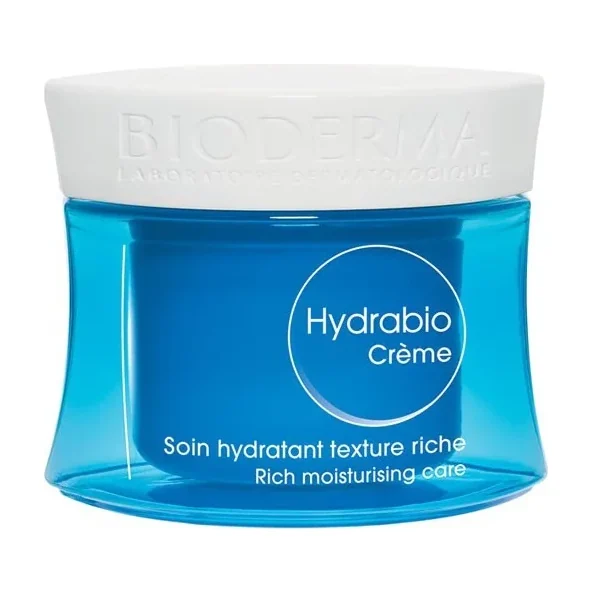
One of the most common mistakes in skincare is treating dehydrated skin like dry skin and wondering why the rich moisturizer makes everything worse. Dry skin is a skin type — it produces too little oil, and feels rough, flaky, and tight pretty much all the time. Dehydrated skin is a condition — the skin lacks water, not oil, and any skin type from oily to combination to dry can be in a dehydrated state at any moment. The two require different formulation strategies. Heavy emollient creams designed for dry skin will sit greasy on top of dehydrated skin without solving the underlying water-retention problem. Bioderma launched Hydrabio in 2007 specifically because dehydrated patients kept getting prescribed dry-skin products that didn't actually fix their issue.
The formula's distinguishing credential is the Aquagenium complex — Bioderma's patented combination of apple seed extract (Pyrus malus), rapeseed sterols (Brassica campestris), and mannitol, designed to support the expression of aquaporins. Aquaporins are the cellular water-channel proteins that let cells hold and traffic water at the membrane level. Healthy young skin produces aquaporins at sufficient density to maintain water balance; aging skin, environmentally stressed skin, and chronically dehydrated skin show reduced aquaporin expression, which translates clinically into the 'I drank water and applied a moisturizer and my skin is still tight' frustration that brings patients to dermatologists. The Aquagenium complex addresses this at the cellular mechanism, not just the surface humectant layer.
The evidence base for cosmetic aquaporin modulation is less mature than for centella or niacinamide, but Bioderma has published in vitro and clinical research supporting the complex over its near-two-decade history. The effect is modest and accumulates over weeks rather than days — users typically notice their skin tolerates active ingredients better and looks less reactive around the four-to-six-week mark, which is the timeline for measurable Aquagenium effects to compound.
Layered on top of the Aquagenium mechanism is a conventional humectant stack: glycerin listed high in the INCI, propanediol just behind it, niacinamide in the middle of the list, and sodium hyaluronate further down. The combination of three or four humectants working through different water-binding mechanisms is what gives Hydrabio its 24-hour hydration claim — single-humectant formulas plateau faster, while multi-humectant stacks deliver more sustained surface hydration.
Niacinamide deserves a specific call-out. It's listed before some of the structural emollients, suggesting a meaningful concentration — probably in the 2-4% range typical of Bioderma's other niacinamide-containing formulas. In a dehydrated-skin moisturizer, niacinamide does triple duty: reducing transepidermal water loss, supporting ceramide synthesis (which improves the barrier's water-holding capacity), and contributing modest anti-inflammatory activity that benefits the reactive subset of dehydrated users.
The texture is where Bioderma's formulation philosophy shows up. The cream is lighter than its category suggests — closer to a gel-cream than a traditional cream — with a satin finish that absorbs in about a minute. The structural emollients are silicone-based (cyclopentasiloxane, dimethicone, several crosspolymers) which is what gives the formula its slip and elegant absorption. For silicone-avoidant users, this is a deal-breaker; for everyone else, the silicone backbone is what makes Hydrabio pleasant to wear under sunscreen and makeup rather than feeling heavy or pilling.
The formula also includes squalane, sunflower seed oil, and small amounts of supporting plant ingredients that round out the emollient profile. Tocopherol and tocopheryl acetate provide antioxidant defense. The fragrance — a light, fresh, recognizably Bioderma scent — is listed at the end of the INCI and is included for the sensory experience that drives patient compliance. For the most fragrance-reactive users, this is the formula's main demerit. Bioderma's Sensibio Light Cream is the fragrance-free alternative to consider if Hydrabio's scent doesn't work.
There's also a small footnote on salicylic acid. It appears very low in the INCI, included as a preservative rather than as an active exfoliant. The concentration is far below the 0.5-2% range that constitutes a meaningful BHA treatment — probably around 0.1-0.2%, which is the typical preservative use. It's not a chemical exfoliant disguised as a moisturizer. Don't expect texture-smoothing or pore-clearing benefits from this product; for those, you need a dedicated BHA serum.
In use, the formula delivers immediate plumpness and softening on application. Most users notice within the first week that their skin tolerates active serums better and feels less reactive in the afternoon. The Aquagenium accumulation effects show up later, around the four-to-six-week mark, when users start reporting that they're using less hydrating serum because their skin holds onto water better between applications. This is the kind of slow, compounding improvement that distinguishes well-formulated pharmacy-brand products from quick-hit prestige alternatives that deliver an immediate result and then plateau.
The direct competition is La Roche-Posay Toleriane Sensitive Fluide and CeraVe Daily Moisturizing Lotion — both lighter daily moisturizers from the French pharmacy and American clinical-budget categories respectively. Toleriane is more fragrance-conscious but lacks Hydrabio's Aquagenium positioning. CeraVe is cheaper and ceramide-focused but doesn't target the dehydration mechanism specifically. For users whose primary concern is dehydration (skin that feels tight despite producing enough oil), Hydrabio's specific formulation philosophy is worth the premium over the CeraVe option.
At around twenty-three dollars for the 50 ml tube lasting two to three months, the per-application cost is competitive within the French pharmacy category. The 50 ml size is on the small side compared to U.S. brand norms (most American moisturizers come in 50-100 ml at similar price points), but the Bioderma quality and ingredient sophistication justify the premium. For users who specifically want the dehydration-targeting story backed by eighteen years of clinical use, the math works.
Who should buy this? Most adults with dehydrated skin — including oily, combination, and normal types who don't need a heavy moisturizer but do need targeted hydration support. Especially valuable for users who've tried generic 'hydrating' moisturizers and found they don't actually resolve the tight, dull, reactive feel of dehydrated skin. Less ideal for users with confirmed fragrance sensitivity (choose Sensibio instead) or active fungal acne (the polysorbate and esters may feed Malassezia).
Like most Bioderma products, this one earned its market position slowly — through pharmacist recommendations and patient retention rather than through marketing campaigns. The Aquagenium positioning is unusual in the pharmacy moisturizer category, and the multi-mechanism formulation backs the claim with documented science. For dehydrated skin specifically, this remains one of the better-formulated options on the shelf at any price point.