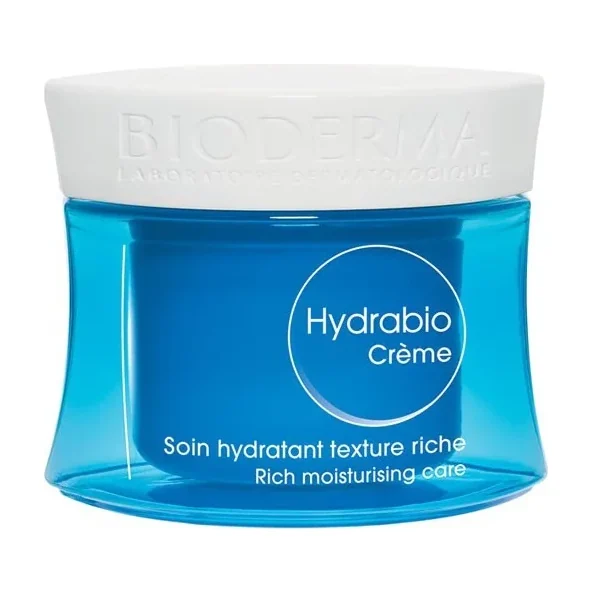
Bioderma Hydrabio Light 40ml tube with blue and white branding on white background
Good choice for Dehydration
What makes this different

Same Hydrabio platform aquaporin-supporting actives as the Rich variant (saccharide isomerate, rhamnose, niacinamide, apple seed extract) delivered in a lightweight texture appropriate for normal-to-combination dehydrated skin. The Light variant addresses the demographic that finds the Rich texture too occlusive while maintaining access to the brand's signature dehydrated-skin formulation chemistry.

Bioderma

Bioderma Hydrabio Light Review

Bioderma Lightweight Hydration Moisturizers lotion pharmacy brand Paraben free Cruelty free

The lightweight texture variant within Bioderma's Hydrabio platform, sharing the same aquaporin-supporting actives (saccharide isomerate, rhamnose, niacinamide, apple seed extract) as the Rich variant in a leaner vehicle appropriate for normal-to-combination dehydrated skin. The substantive humectant architecture delivers meaningful hydration without unwanted richness, and the universal skin-type compatibility across normal-to-oily demographics extends the formula's reach. Fragrance and dicaprylyl carbonate are the standard French pharmacy caveats.

Price $22.00 40ml · more sizes
Shopper rating 4.4 ★★★★★ 2,400 reviews
On the market 2020 Made in France
Buy at Amazon ♥
Verdicts

How well it fits each concern

One verdict per concern. Open a row for the reasoning; the receipt has every source.

The scaleRecommendedGoodSupportingEarly evidenceNot for thisAvoidhow it works

Good choicefor DehydrationGlycerin is a reference standard by mechanism for dehydration; this lotion carries it.Receipt1 source on the row · concentration not declared; studied range 20% · row checked Jul 17, 2026 · rule R5, same reading on 9,843 products · open the receipt

The case for it

  1. Multi-Humectant Pool is a reference standard by mechanism for this concern — an established physical action, not a trial result.
  2. It is plausibly present at a working level, though the concentration is not declared.
  3. The formula carries no trigger this concern is sensitive to, with the cautions noted.

Limited evidenceStandard tolerabilityNo reviews read yet

What would change this: A declared concentration would move this to a firmer reading of the dose.

Same rule for everyone. “Good choice” is the verdict on 10,340 of 45,446 concern verdicts across the catalog; rule R5 decided 9,843 of them. Unchanged since September 5, 2026, engine 5.2.0.

Brand or formulator? Disclose a concentration or correct a fact →

The full receipt: rule, row, sources, dates →All dehydration products →

Unprovenfor DullnessGlycerin has early or mechanistic evidence for dullness — a reasonable bet, not a recommendation; the other actives here are not yet assessed for it.Receipt1 source on the row · concentration not declared; studied range 2–20% · row checked Jul 17, 2026 · rule R9, same reading on 4,156 products · open the receipt

The case for it

  1. Multi-Humectant Pool has early or mechanistic evidence for this concern, not trial-backed standing.
  2. It is plausibly present at a working level, though the concentration is not declared.
  3. The formula carries no trigger this concern is sensitive to, with the cautions noted.

Limited evidenceStandard tolerabilityNo reviews read yet

What would change this: A declared concentration would move this to a firmer reading of the dose.

Same rule for everyone. “Unproven” is the verdict on 4,156 of 45,446 concern verdicts across the catalog; rule R9 decided 4,156 of them. Unchanged since October 9, 2026, engine 5.2.0.

Brand or formulator? Disclose a concentration or correct a fact →

The full receipt: rule, row, sources, dates →All dullness products →How dullness is treated →

Avoidfor Compromised Skin BarrierThis formula carries fragrance — a known trigger for compromised skin barrier — so it is not a fit however good its actives are.Receiptread from the ingredient list: fragrance · rule R1, same reading on 1,307 products · open the receipt

The case for it

  1. Niacinamide is a reference standard by mechanism for this concern — an established physical action, not a trial result.
  2. It is present at an effective concentration, declared or high in the ingredient list.
  3. The formula carries a known trigger for this concern, which decides the verdict before any efficacy question.

Limited evidenceCarries a triggerNo reviews read yet

What would change this: Removing the trigger named above would let the actives be judged on their own.

Same rule for everyone. “Avoid” is the verdict on 1,912 of 45,446 concern verdicts across the catalog; rule R1 decided 1,307 of them. Unchanged since September 5, 2026, engine 5.2.0.

Brand or formulator? Disclose a concentration or correct a fact →

The full receipt: rule, row, sources, dates →All compromised skin barrier products →

Falls shortJudged as a moisturizer, it comes up short on: seals moisture in, supplies barrier lipids.

A verdict is Dermington’s assessment of how well a product’s ingredients fit a concern — never a claim about what the product treats. Evidence dots and collected reviews sit beside it and are never blended in. Rules 0.5.1 · evidence table ev-2026.10-r231 · engine 5.2.0 · how we decide · this product’s receipt

Reader poll · Town SquareQuestion 1 of up to 3

Have you used Hydrabio Light?

One tap counts. A couple of optional follow-ups come next.

No account neededOne answer each, change it any timeCounted only in anonymous totalsHow the Square counts →
Assessment

Pros & cons

What it does well 7

  • Hydrabio platform aquaporin-supporting actives in lightweight texture variant
  • Niacinamide at working concentration extends formula beyond pure hydration
  • Substantive humectant pool (glycerin + polyols + sodium PCA + HA) addresses dehydration from multiple angles
  • Squalane provides skin-mimetic barrier support without occlusive heaviness
  • Oil-free and silicone-free composition extends reach across normal-to-oily demographics
  • Apple seed extract — Bioderma's signature Hydrabio botanical
  • Reasonable French pharmacy pricing

Where it falls short 4

  • Fragrance disqualifies it for fragrance-reactive users
  • Dicaprylyl carbonate is a flag for fungal-acne-prone routines
  • Lightweight texture too minimal for genuinely dry skin
  • Tube packaging less prestige than jar alternatives
Review

The full review

There's a particular kind of skin that almost nobody formulates for directly: skin that gets genuinely dehydrated yet hates anything rich. If you have it, you know the bind. The hydrating creams marketed at dry skin sit on your face like a film and slide around by midday, while the gel moisturizers that finally feel light enough turn out to be little more than glycerin and water with no real plan for the dehydration underneath. Bioderma built the Light variant of its Hydrabio franchise precisely for the people stuck in that gap, and it is one of the more intelligent answers to the problem at the French pharmacy tier.

The trick Bioderma pulls here is sharing the heavyweight active platform of the line's Rich variant while swapping out the lipid-heavy vehicle for something leaner. At the center sits the brand's Aquagenium complex, built around saccharide isomerate and rhamnose, which is positioned to support aquaporins, the cellular water-transport channels that move moisture between skin cells. That is a mechanistically distinct approach from the standard humectant story of pulling water in from the air, and while the evidence sits in the promising rather than ironclad category, it is the formulation's genuine point of difference. Niacinamide lands fourth on the INCI, higher than in the Rich version because the leaner base leaves more room for it, and it is one of the best-evidenced actives in all of skincare for shoring up the barrier, evening tone, and tempering inflammation. Squalane appears around sixth, contributing skin-mimetic barrier replenishment at a level calibrated for normal-to-combination skin, where any more lipid load would simply feel unwelcome.

The practical hydration, though, comes from the humectant architecture, and this is where the Light variant does most of its honest work. Glycerin sits second on the list, backed by mannitol, xylitol, sodium PCA, and sodium hyaluronate. That layered pool draws and holds water through several complementary mechanisms rather than leaning on emollient cushion, which is exactly why the formula can feel light yet still register as hydrating. Apple seed extract, Bioderma's signature Hydrabio botanical, and fructooligosaccharides round things out with prebiotic microbiome support that fits the brand's ecobiological positioning, even if those are supporting players rather than headliners.

It's worth dwelling for a moment on why the variant approach matters, because it speaks to something Bioderma understood earlier than most of the market. Dehydration is a state, not a skin type. A person with oily, breakout-prone skin can be every bit as dehydrated as someone with parched, flaky skin, but the cream that fixes the second person will smother the first. By keeping the active platform constant and only changing the vehicle, Bioderma lets the same dehydration biology be treated across wildly different skin types without forcing combination skin to choose between hydration and comfort. The Light variant exists so that someone shiny by noon can still address the tightness, dullness, and rough patches that signal a compromised water reserve, and that is a more sophisticated piece of product strategy than the marketing copy lets on. The niacinamide doubling as oil-tempering insurance only makes the fit tighter for that demographic.

In use, it behaves precisely as a lightweight hydrator should. The lotion-cream sinks in within about a minute to a comfortable, hydrated finish with no heaviness or tackiness, the dicaprylyl carbonate lending smooth slip without occlusive richness. You'll feel the softening and hydration immediately, while the cumulative barrier and skin-quality improvements settle in over two to four weeks of consistent twice-daily use. It layers cleanly under sunscreen, which makes it a sensible morning step for combination skin.

The caveats are the standard French pharmacy ones rather than formulation failures. There's a light fragrance, characteristic of the Hydrabio line and gone within minutes, but its presence rules the cream out for genuinely fragrance-reactive skin, in which case Bioderma's own Sensibio range is the better address. Dicaprylyl carbonate earns a flag for anyone managing fungal acne, since it can feed malassezia. And the lightness that makes this so wearable on combination skin is the same reason it falls short on truly dry skin, where the Rich variant's substantive lipid replenishment is what you actually want. The tube packaging is functional rather than luxurious, but that is hardly a real complaint at this price.

Value is where it quietly excels. At twenty-two dollars you get the same aquaporin-supporting active platform as the more expensive franchise members, niacinamide at a working position, a genuinely substantive humectant pool, and the credibility of a brand with nearly fifty years of research into dehydrated-skin biology behind it. That is a lot of considered chemistry for the money, and the scores reflect it, with value rated highly and the overall landing in the strong range despite the fragrance and comedogenic-flag deductions.

Where it ultimately lands is as the correct answer to a very specific request: I want the Hydrabio platform, but in a texture my normal-to-combination, sometimes-oily skin can actually live with. For that person it delivers honestly, pairing especially well with the Hydrabio Serum in a full routine. Dry skin should reach for the Rich variant, fragrance-reactive skin should look to Sensibio, and fungal-acne-prone routines should note the carbonate, but everyone in the broad normal-to-oily middle who's been quietly dehydrated and frustrated by their options will find this an easy, well-judged pick.

The science

The formulation case combines several validated mechanisms targeting dehydrated-skin biology in a lightweight vehicle. The Aquagenium complex (saccharide isomerate + rhamnose) supports aquaporin function with research support from cosmetic chemistry literature. Niacinamide at the working concentration has well-established support for barrier function, tone evening, and inflammatory modulation. Squalane provides skin-mimetic barrier replenishment. The multi-humectant pool (glycerin, polyols, sodium PCA, hyaluronic acid) addresses dehydration through multiple complementary mechanisms. The overall design represents a deliberate lightweight-texture dehydrated-skin approach.

References 3 ShowHide
  1. Aquaporins and skin hydration — Skin Pharmacology and Physiology (2012)
  2. Niacinamide: A B vitamin that improves aging facial skin appearance. — Dermatologic Surgery (2005)
  3. Glycerin in topical skin care — Journal of Cosmetic Dermatology (2016)

The clinical view

Within French pharmacy dermatological practice, Bioderma Hydrabio Light is generally recommended for patients with normal-to-combination dehydrated skin wanting integrated daily moisturizing with the brand's aquaporin-supporting active platform in an appropriate lightweight texture. The variant suits patients who find richer Hydrabio alternatives too occlusive. Fragrance-reactive patients get redirected to the Bioderma Sensibio line. Fungal-acne-prone patients to alternatives without dicaprylyl carbonate.

Formula

Key ingredients

  1. Niacinamide

    Fourth on the INCI at working concentration — higher position than in the Rich variant, reflecting the Light formula's leaner composition. Supports barrier function, tone evening, and the broader Hydrabio platform's hydration architecture.

    Established mechanism for Compromised Skin Barrier · established mechanism
  2. Saccharide Isomerate + Rhamnose (Aquaporin-Supporting)

    Bioderma's signature Aquagenium complex actives — same aquaporin-supporting platform as the Rich variant. The mechanism is mechanistically distinct from HA-style humectant action and addresses dehydrated-skin biology at the cellular water-transport level.

    Not yet assessed
  3. Squalane

    Sixth on the INCI providing skin-mimetic barrier replenishment without the heavy lipid load of the Rich variant. The squalane contributes the appropriate level of barrier support for normal-to-combination skin where additional richness would be unwelcome.

    Not yet assessed
  4. Multi-Humectant Pool (Glycerin + Mannitol + Xylitol + Sodium PCA + Sodium Hyaluronate)

    Glycerin at the second INCI position plus the polyols and PCA forms the layered humectant pool that delivers the lighter texture's hydration without relying on emollient cushion. The humectant architecture is the primary hydration mechanism in the Light variant.

    Established mechanism for Dehydration · established mechanism
  5. Apple Seed Extract + Fructooligosaccharides (Prebiotic Support)

    Apple seed extract is Bioderma's signature Hydrabio botanical. The fructooligosaccharides add prebiotic support for the skin microbiome. Together they contribute to the brand's 'ecobiological' positioning around supporting skin's native biology.

    Not yet assessed
Full ingredient list 30 ingredients ShowHide

Aqua/Water/Eau, Glycerin, Lauroyl Lysine, Niacinamide, Pentylene Glycol, Squalane, Dicaprylyl Carbonate, Glyceryl Caprylate/Caprate, Polyglyceryl-3 Methylglucose Distearate, Propylene Glycol, Arachidyl Alcohol, Carbomer, Behenyl Alcohol, Caprylyl Glycol, Fragrance (Parfum), Fructooligosaccharides, Sodium Citrate, Arachidyl Glucoside, Xanthan Gum, Mannitol, Xylitol, Hexyldecanol, Rhamnose, Sodium PCA, Citric Acid, Sodium Hyaluronate, Saccharide Isomerate, Pyrus Malus (Apple) Seed Extract, Brassica Campestris (Rapeseed) Sterols, Tocopherol.

Safety & formulation facts

  • Pregnancy safe
  • Not fragrance free
  • Alcohol free
  • Oil free
  • Silicone free
  • Paraben free
  • Sulfate free
  • Cruelty free
  • Not vegan
  • Not fungal-acne safe
Pore-clogging (comedogenic) Dicaprylyl Carbonate
Potential irritants Fragrance (Parfum)
Common allergens Fragrance (Parfum)
Compatibility

Skin types & routine

Routine step moisturizer
Time of day Morning & night
Best season All year
Finish satin, non-greasy, lightweight

Layering

Apply as the moisturizer step after treatment serums (including the Hydrabio Hyalu+ Serum for full routine coordination), before sunscreen during the day. The Light texture suits normal-to-combination skin year-round and combination-oily skin in moderate climates.

When to expect results

Immediate hydration and skin softening within minutes. Cumulative hydration and barrier improvements develop over 2-4 weeks of consistent twice-daily use.

Pairs well with niacinamidehyaluronic-acidretinolvitamin-cpeptides

A routine built around it

Morning

  1. Bioderma Sensibio cleanser
  2. Hydrabio Hyalu+ Serum (optional)
  3. Bioderma Hydrabio Lightthis product
  4. Sunscreen

Night

  1. Cleansing oil + foam cleanse
  2. Hydrabio Hyalu+ Serum
  3. Treatment serum (alternating)
  4. Bioderma Hydrabio Lightthis product
Guidance

How to use it, and who it's for

How to use

Apply a pea-sized amount to clean skin morning and night, after treatment serum (including the Hydrabio Hyalu+ Serum for full routine coordination), before sunscreen during the day. Massage gently across face and neck. The lightweight texture pulls into skin over about 60 seconds. Use morning and evening for optimal hydration support.

Is it worth the price?

$22 USD for 40ml puts the per-mL cost at approximately $0.55 — excellent value for the French pharmacy dermatologist-recommended tier with the Hydrabio platform active loading. The 40ml size lasts approximately two to three months at twice-daily use. For users committed to the Hydrabio platform in the lightweight texture variant, the math works strongly within the French pharmacy pricing.

Who should buy it

Normal-to-combination dehydrated skin focused on integrated daily moisturizing with aquaporin-supporting active chemistry in an appropriate lightweight texture. Particularly strong for users committed to the Bioderma Hydrabio platform wanting the matching Light cream alongside the Hyalu+ Serum. Users who find richer hydrating alternatives too occlusive.

Who should skip it

Genuinely dry skin should look at the Rich variant in the same line. Fragrance-reactive routines should pass and choose the Bioderma Sensibio line. Fungal-acne-prone users should avoid given the dicaprylyl carbonate content.

Ready to try it?Bioderma Hydrabio Light · $22.00 · 40ml
Details

The product, in detail

Texture
Lightweight lotion-cream that absorbs in about 60 seconds, leaving a comfortable hydrated finish without heaviness. The dicaprylyl carbonate provides smooth slip without occlusive richness.
Scent
Light Bioderma-typical fragrance characteristic of the Hydrabio line, fading within minutes.
Packaging
40ml plastic tube in the Bioderma Hydrabio line's blue-and-white branding.
How long it lasts
Approximately two to three months applied morning and evening face use.
Once opened
Use within 12 months · track your toss-by date →
Size
40ml · other sizes available
Made in
France
Launched
2020

What the first two weeks feel like

First application feels lightweight and immediately hydrating without heaviness. The cream pulls into skin over about 60 seconds. The fragrance is detectable on application but fades within minutes. Post-application skin feel is comfortably moisturized without slick or sticky finish.

The story behind it

Why it exists

Bioderma Hydrabio Light was developed as the lightweight-texture variant within the broader Hydrabio franchise, allowing the line to serve combination and normal-to-oily skin demographics that the Rich variant cannot accommodate. The variant approach reflects Bioderma's recognition that dehydrated-skin biology presents across skin types but requires different texture vehicles for different demographics.

About Bioderma Legacy Brand (20+ years)

Bioderma's Hydrabio Light is the franchise's lightweight variant designed for normal-to-combination dehydrated skin, applying the brand's signature aquaporin-supporting active platform in a less emollient vehicle than the Rich variant from the same line.

Brand founded 1977 · This product since 2020

Myth vs. reality

What people get wrong about it

MythLighter creams are watered-down versions with less active loading.

RealityNot for properly formulated variant lines like Bioderma Hydrabio. The Light and Rich variants share the same active platform (aquaporin-supporting actives, niacinamide, apple seed extract) with different texture vehicles to serve different skin-type demographics. The active loading is comparable between variants — the difference is in the lipid-and-emollient phase, not the marquee actives.

MythLightweight hydrating creams can't address serious dehydration.

RealityDehydration is primarily a water-balance issue rather than a lipid-deficiency issue, particularly in normal-to-combination skin. The Hydrabio Light delivers substantive humectant architecture (glycerin, mannitol, xylitol, sodium PCA, HA) plus the aquaporin-supporting actives that address dehydration biology directly. The Rich variant adds substantive lipid replenishment for skin types that also need barrier work; the Light variant is sufficient for users without that additional lipid need.

FAQ

Questions people ask

How is Bioderma Hydrabio Light different from the Rich variant?

Same Hydrabio platform actives (saccharide isomerate, rhamnose, niacinamide, apple seed extract) with different texture vehicles. Light has a leaner formulation appropriate for normal-to-combination skin. Rich has substantive lipid phase (squalane, triglycerides, sunflower seed wax, rapeseed sterols) appropriate for dry-to-normal skin. Choose based on skin type.

Can oily skin use Bioderma Hydrabio Light?

Yes — the lightweight texture and oil-free composition suit oily and combination skin types better than richer alternatives. The Hydrabio platform's aquaporin support addresses dehydration biology that often accompanies oily-skin presentations, particularly users who over-strip skin and create paradoxical dehydration alongside the oiliness.

Is Bioderma Hydrabio Light suitable for sensitive skin?

Generally yes — Bioderma's overall sensitive-skin compatibility extends to this product. The fragrance is the main consideration for fragrance-reactive users, who should look at the unfragranced Bioderma Sensibio line instead.

Is Bioderma Hydrabio Light pregnancy-safe?

Yes. The formula contains no retinoids, salicylic acid, hydroquinone, or restricted pregnancy actives. The aquaporin-supporting actives, niacinamide, squalane, and supporting cast are all considered acceptable during pregnancy and breastfeeding.

Should you use Bioderma Hydrabio Light with the Hydrabio Serum?

Yes — the products are designed to work together in the full Hydrabio routine. Apply the Hyalu+ Serum first as the active treatment step, then layer the Light cream over the top as the moisturizer step. For minimalist routines, the Light cream alone provides substantive hydration.

Reviews

What shoppers tend to say

Recurring themes our editors read across retailer reviews — summaries in our words, not quotations, and not a substitute for a patch test.

Common praise

  • Users consistently note effective hydration in a lightweight texture appropriate for normal-to-combination skin
  • Reasonable French pharmacy pricing
  • Pairs well with the Hydrabio Serum in the full routine
  • Universal skin-type compatibility across normal-to-oily demographic

Common complaints

  • Fragrance disqualifies it for fragrance-reactive users
  • Too lightweight for genuinely dry skin
  • Dicaprylyl carbonate is a flag for fungal-acne-prone users
Notable endorsementsFeatured in French pharmacy dermatology coverage as the lighter variant in the Hydrabio dehydrated-skin lineCited in editorial coverage for normal-to-combination skin hydration recommendations
Next stepCheck it against what you already useClashes, spacing and the right order, with everything on your shelf.