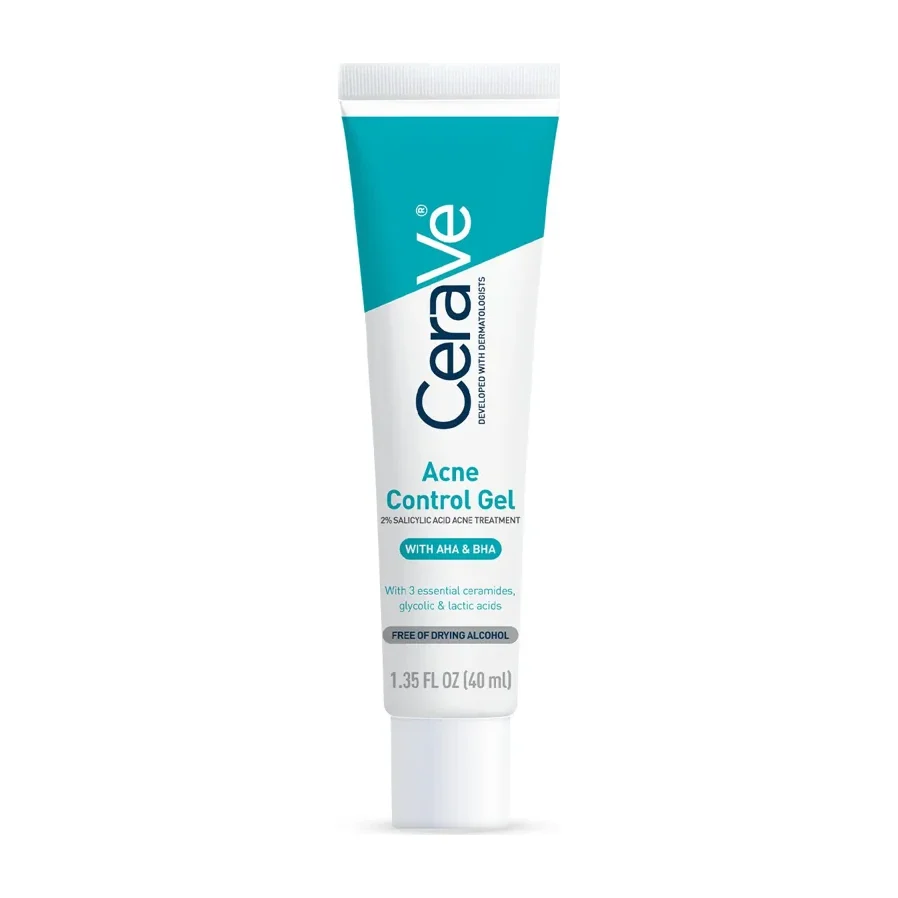
There is a boldness to CeraVe's Acne Control Gel that the brand's typically understated packaging doesn't advertise. Open the tube and you have, in a single product, three of the most evidence-backed acne-fighting ingredients in dermatology: 2% salicylic acid, glycolic acid, and retinol. This is a combination that, until recently, you would have assembled piecemeal from separate products or received as a prescription combination from a dermatologist's office. CeraVe put it all in one $16 tube and surrounded it with ceramides, because of course they did.
The triple-active approach addresses acne through distinct but complementary mechanisms. Salicylic acid, the BHA, is oil-soluble and penetrates into pores to dissolve the sebum-and-dead-cell mixture that forms comedones. Glycolic acid, the AHA, works on the skin's surface, accelerating the shedding of the outer layer of dead cells that can trap oil underneath and contribute to congestion. Retinol — the ingredient that elevated this from a good acne product to a noteworthy one — normalizes the cell turnover cycle itself, addressing the root cause of pore clogging rather than just cleaning up after it. Together, they operate on three timescales: immediate exfoliation (glycolic acid), medium-term pore clearing (salicylic acid), and long-term skin behavior change (retinol). The old warning that acids and retinol cancel each other out belongs to an earlier era of formulation; a properly buffered gel can hold both at a pH where each still works, which is precisely what's happening here.
This is also the product's greatest challenge. Three active ingredients that each individually carry warnings about sun sensitivity, potential irritation, and adjustment periods are now sharing a single formula. The first two weeks of using this gel are not comfortable. There will be tingling on application — the combined acids make sure of that. Dryness and mild peeling usually arrive around day three to five, particularly around the nose, mouth, and chin, as the retinol begins accelerating cell turnover. And there may be purging: a temporary increase in small breakouts as the salicylic acid dislodges existing comedones faster than they would have surfaced naturally. That is not the product failing. Those comedones were already forming under the surface; the actives simply moved up their arrival date, and the wave typically settles by week four to six.
This is where CeraVe's ceramide philosophy proves its worth. The three essential ceramides (NP, AP, EOP), alongside cholesterol, phytosphingosine, and niacinamide, form a barrier-support system that actively repairs what the actives are disrupting. Sodium hyaluronate holds water in the tissue the acids are busy thinning, and the brand's MVE delivery system releases the whole payload gradually rather than dumping it on the skin at once. Without this safety net, the triple-active formula would likely be intolerable for daily use. With it, most users can build to nightly application within two to three weeks of gradual introduction. The niacinamide deserves specific credit here — its anti-inflammatory properties visibly reduce the redness that the acids and retinol provoke, and its ability to boost the skin's own ceramide production means the barrier support compounds over time.
The gel texture is appropriately minimal. Clear, lightweight, and quick-absorbing, it layers well under moisturizer without pilling or greasiness, thanks in part to a little dimethicone and an acrylate copolymer that give it slip without weight. The narrow-nozzle tube is a small mercy for a product where a thin layer is genuinely all you need — the actives are potent enough that more product doesn't mean more results, just more irritation. The fragrance-free formulation eliminates one more potential irritant from a product that already asks a lot of your skin.
Performance against acne is where this gel earns its place. Comedonal acne — blackheads, whiteheads, and the sandpaper-textured congestion that covers foreheads and cheeks — responds well within four to six weeks. The dual acid approach clears existing congestion while the retinol prevents its recurrence. Post-acne texture, the rough, uneven skin surface left behind after breakouts heal, also improves noticeably at the eight-to-twelve-week mark as retinol's collagen-stimulating effects become visible. For inflammatory acne, the results are more modest — this is fundamentally a comedolytic and exfoliating product, not a bacterial one. Benzoyl peroxide remains the gold standard for inflamed, bacterial acne, and it should not share an evening with this gel, since it can degrade the retinol before either has done its job. Nor should a prescription retinoid, another acid toner, or a vitamin C serum. This tube is the treatment step; everything else that night is cleanser, moisturizer, and patience. Morning sunscreen is not optional — all three actives leave skin more vulnerable to UV. And with retinol plus salicylic acid on the label, it is off the table entirely during pregnancy.
The 1.35-ounce tube is the most legitimate criticism. At approximately $16, it looks reasonable on the shelf, but nightly full-face application burns through the product in six to eight weeks. This translates to roughly $8-11 per month, which is still affordable by treatment-product standards but may surprise users who expected drugstore-sized quantities for a drugstore price; the FSA/HSA eligibility takes a little of the edge off. Using the gel only on acne-prone zones rather than the full face extends the tube meaningfully and is a perfectly valid approach for targeted breakout management.
For users with the skin tolerance to handle it — oily and combination types with comedonal acne, blackheads, and post-acne texture — this gel delivers a sophisticated treatment protocol in a single step. Across thousands of reviews the pattern is consistent and honest: high marks from people whose skin could take it, sharp complaints from those who went nightly on day one. It is emphatically not a starter product. Beginners should build tolerance with single-active products first. But for those who have already established that their skin can handle BHA, AHA, or retinol individually, the efficiency of combining all three with barrier protection at this price point is compelling. CeraVe essentially bottled a dermatologist's multi-active prescription approach and put it on the drugstore shelf. The ceramides are what make that audacity work.