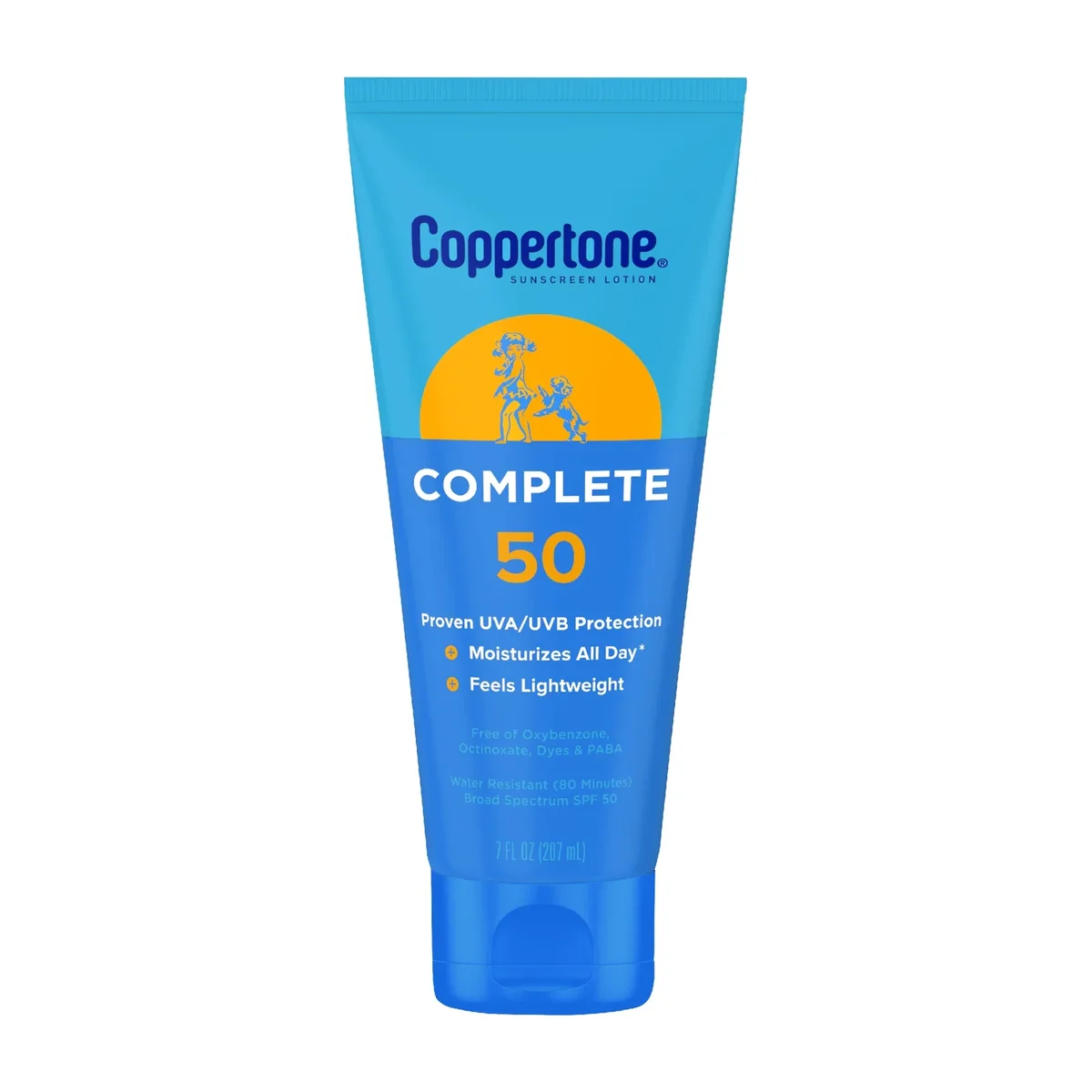
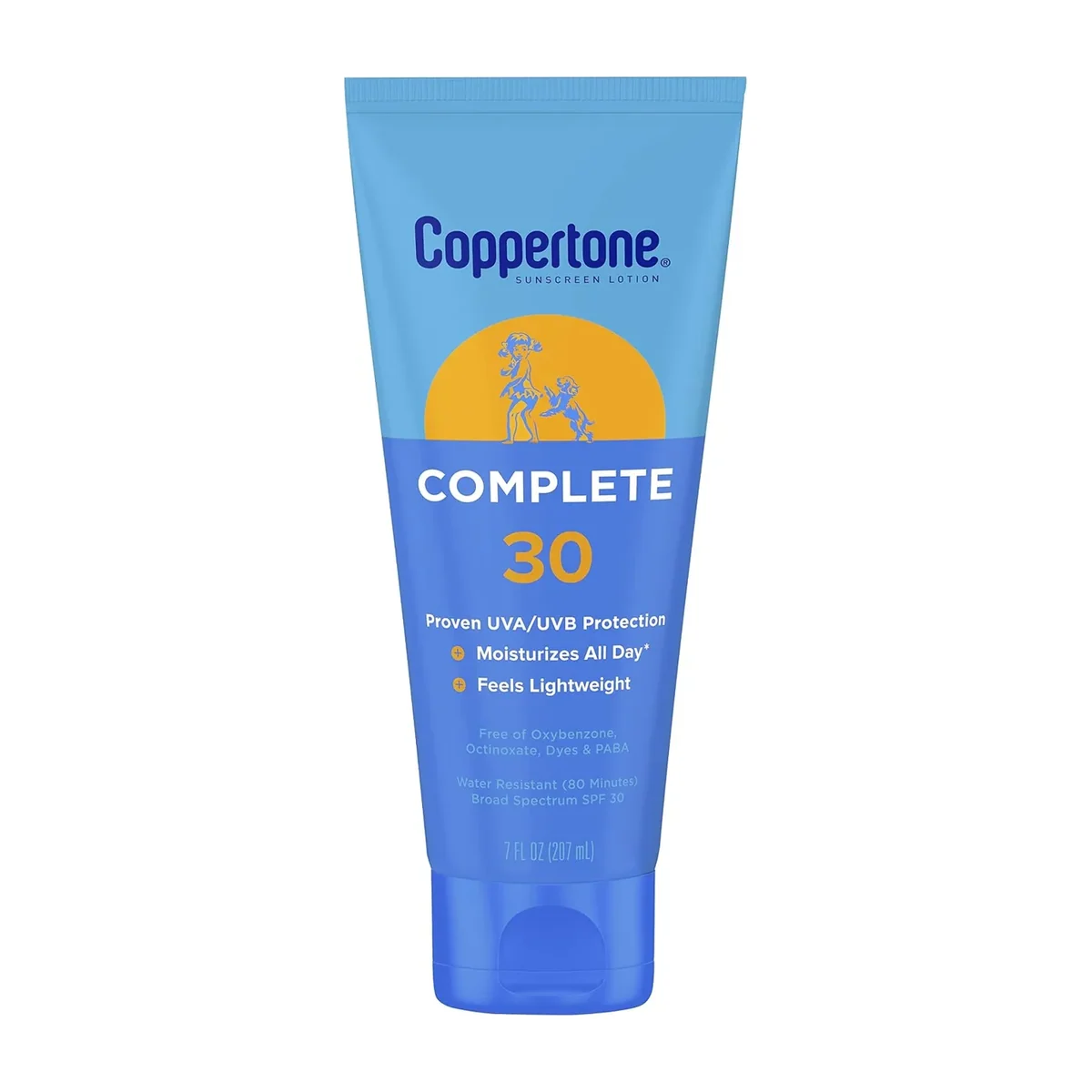
Coppertone Tanning Sunscreen Lotion SPF 8 bottle on white background
Does the job as a sunscreen
What makes this different

It's a deliberate low-SPF tanning lotion — the protection is dialed down to 8 specifically so UVB reaches the skin and a tan develops, the opposite design goal of a modern high-SPF sunscreen. It pairs that with a moisturizing base and the brand's signature nostalgic scent rather than chasing maximum protection.

Coppertone

Coppertone Tanning Sunscreen Lotion SPF 8 Review

Old-School Tanning Lotion Sunscreens lotion drugstore Paraben free Fungal-acne safe Not cruelty free

An old-school tanning lotion that does exactly what it was built to do — moisturize and lend a pleasant feel while letting UV through to develop a tan. The filter system is fine and the price is low, but an SPF of just 8 means this offers minimal real protection and exists to facilitate sun exposure that dermatology overwhelmingly advises against. Judged as sun protection, it scores low by design.

Price $7.79 8 oz · more sizes
Shopper rating 4.6 ★★★★★ 5,000 reviews
Buy at Amazon ♥
Verdicts

How well it fits each concern

No concern verdicts yet.

The scaleRecommendedGoodSupportingEarly evidenceNot for thisAvoidhow it works

Does the jobDoes what a sunscreen is for: UVA coverage, holds up in sunlight. Not measured from the label: pleasant enough to actually use.

A verdict is Dermington’s assessment of how well a product’s ingredients fit a concern — never a claim about what the product treats. Evidence dots and collected reviews sit beside it and are never blended in. Rules 0.5.1 · evidence table ev-2026.10-r231 · engine 5.2.0 · how we decide · this product’s receipt

Reader poll · Town SquareQuestion 1 of up to 3

Have you used Tanning Sunscreen Lotion SPF 8?

One tap counts. A couple of optional follow-ups come next.

No account neededOne answer each, change it any timeCounted only in anonymous totalsHow the Square counts →
Assessment

Pros & cons

What it does well 6

  • Lightweight, fast-absorbing, non-greasy feel
  • Glycerin base keeps sun-exposed skin moisturized
  • Photostabilized avobenzone for the UVA coverage it does offer
  • Free of oxybenzone and PABA
  • Inexpensive with larger sizes available
  • Nostalgic, well-loved classic Coppertone tanning scent

Where it falls short 5

  • SPF 8 provides inadequate sun protection by modern standards
  • Designed to permit tanning UV, raising sun-damage and cancer risk
  • Strong added fragrance is a common sensitizer
  • Not suitable for face or high-risk sun-damage areas
  • Unsuitable for anyone with melasma, dark spots, or photosensitivity
Review

The full review

Some products are time capsules, and this is one of them. Coppertone more or less invented the consumer suntan lotion in the 1940s, back when a deep bronze was the entire point of a beach day and the marketing showed a puppy tugging down a little girl's swimsuit to reveal her tan line. This SPF 8 tanning lotion is a direct descendant of that world, and it's genuinely strange to encounter in 2026, when the rest of the sun-care aisle is a wall of SPF 50 and 70 promising to block as much UV as physically possible. Reviewing it fairly means doing two things at once: assessing whether it's a competent example of what it is, and being honest about whether what it is should still exist. Both matter, so let's take them in turn.

As a piece of formulation, it's perfectly competent. The filter system is avobenzone at 2 percent, homosalate at 5, octisalate at 4.5, and octocrylene at 3 — the same family of filters Coppertone uses across its range, just dosed low on purpose. The avobenzone provides some UVA coverage and is photostabilized by the octocrylene, which is a genuinely sensible touch: even at this low SPF, the UVA protection that's present won't collapse the moment the sun hits it. The base is light and pleasant, built around glycerin for hydration with a silica-and-starch system that keeps it from feeling greasy, so it absorbs fast and leaves skin moisturized and lightly satin rather than coated. There's a little sodium ascorbyl phosphate (a vitamin C derivative) tucked in, more gesture than active at this level. And of course there's the scent — that warm, sweet, unmistakable Coppertone tanning fragrance that for a certain generation is pure sense-memory of summer. As a sensory experience, the lotion is lovely. It does the moisturizing, nice-to-wear part of its job well.

But here's where honesty has to take over, because the defining feature of this product is the number on the front, and that number is 8. An SPF of 8 blocks roughly 87 percent of UVB. SPF 50 blocks about 98 percent. That gap sounds small as percentages but it's enormous in practice: SPF 8 lets through more than six times as much burning UVB as SPF 50, and the entire design intent is to permit that UV so the skin tans. This isn't a sunscreen that happens to be weak — it's a tanning aid that includes just enough filtering to slow the burn while you bronze. And a tan, however much we culturally romanticize it, is not a sign of health. It's the visible result of UV-induced DNA damage; the pigment is the skin's emergency response to injury. Cumulative UV exposure of the kind this lotion is designed to facilitate is the primary driver of photoaging — wrinkles, leathery texture, sunspots — and, far more seriously, of skin cancers including melanoma. There is no version of deliberate UV tanning that the current dermatological consensus considers safe, and a product engineered to enable it sits squarely against that consensus.

So how do you score something like this? Not by pretending the trade-off doesn't exist. As a moisturizing lotion with a nice feel and a nostalgic scent at a low price, it delivers. As a sun-protection product — which is the category it lives in and the lens this review must apply — it provides inadequate protection by any modern standard, and it actively encourages the behavior most likely to cause long-term harm. That's why the suitability and safety-adjusted scores here are low. It's not that the lotion is poorly made; it's that its core purpose is one dermatology spent the last several decades arguing against.

If someone is going to use it regardless — and people do, out of habit, nostalgia, or a deliberate choice to tan — the harm-reduction advice is straightforward. Keep this off the face, chest, ears, and shoulders, the areas most prone to sun damage and skin cancer, and protect those with a real high-SPF sunscreen. Reapply often, because even the modest protection it offers degrades. Never use it to extend time in the sun beyond what you'd otherwise tolerate. And anyone with a history of skin cancer, melasma, significant hyperpigmentation, or photosensitivity should not use it at all — for them the math isn't close.

The value, narrowly, is fine: around eight dollars for an 8 oz bottle of a pleasant, moisturizing lotion is cheap, and larger sizes drop the per-ounce cost further. But value is the wrong frame here. The real question isn't whether it's worth eight dollars; it's whether the goal it serves is one worth pursuing, and on that the evidence is unambiguous. A sunless self-tanner achieves the bronze with none of the UV risk, and a high-SPF sunscreen achieves the protection this one deliberately omits.

The bottom line: this is a well-made, nice-feeling, inexpensive lotion built for a purpose that modern skin science can't endorse. It earns no points for protection because protection isn't what it's for, and it loses points because what it is for carries real, well-documented risk. If nostalgia and a low SPF are genuinely what you want, it does that competently — but go in with clear eyes about the cost, and protect the high-risk areas with something stronger.

The science

The honest science here is about what an SPF of 8 does and does not do. SPF measures protection against UVB, the wavelength that causes burning and a large share of UV-driven skin-cancer risk: SPF 8 blocks roughly 87 percent of UVB, compared with about 98 percent at SPF 50, meaning skin under SPF 8 receives several times more burning UV. The filter chemistry itself is sound — avobenzone supplies UVA coverage, octocrylene photostabilizes it, and the salicylates add UVB — but the doses are intentionally low so the SPF lands at 8 and tanning UV reaches the skin. That intent runs counter to the dominant body of evidence on sun exposure. A tan is a marker of UV-induced DNA damage and the upregulation of melanin as a stress response; epidemiological and mechanistic research links cumulative UV exposure and intentional tanning to photoaging and to skin cancers including melanoma, and major dermatology organizations recommend broad-spectrum SPF 30 or higher with no safe threshold for intentional tanning. The American Academy of Dermatology and similar bodies are explicit that there is no such thing as a safe tan from UV. The vitamin C derivative in the base offers a minor antioxidant gesture but does not meaningfully offset the exposure the low SPF permits. In short, the formulation is competent, but the product's purpose places it at odds with current photoprotection science.

References 2 ShowHide
  1. Sunscreen photoprotection and the percentage of UVB blocked at varying SPF levels — Journal of the American Academy of Dermatology (2017)
  2. Indoor and outdoor UV tanning and risk of melanoma and skin cancer: a review — International Journal of Cancer (2014)

The clinical view

Low-SPF tanning lotions are generally discouraged in clinical practice, since dermatology holds that there is no safe tan from ultraviolet exposure — a tan reflects UV-induced DNA damage rather than skin health. Standard guidance is broad-spectrum SPF 30 or higher for sun protection, which makes an SPF 8 product designed to facilitate tanning a poor fit with current recommendations. When patients are determined to tan, clinicians typically redirect toward sunless self-tanning products, which deliver color with no UV risk, and emphasize protecting high-risk areas like the face, ears, chest, and shoulders. People with a personal or family history of skin cancer, melasma, or photosensitizing conditions are routinely advised against intentional sun tanning entirely. The lotion's pleasant feel does not change this underlying risk calculus.

Formula

Key ingredients

  1. Avobenzone 2% 2%

    The UVA filter, dosed lower than in the brand's high-SPF products because this lotion is engineered to permit, not block, much of the UVB that drives tanning — it still provides some long-wave protection, stabilized by the octocrylene.

    Not yet assessed
  2. Homosalate 5% 5%

    A UVB filter held to a low level deliberately, so the SPF lands at just 8 — enough to slow burning while letting substantial tanning UV reach the skin.

    Not yet assessed
  3. Octocrylene 3% 3%

    Provides some UVB coverage and, importantly, photostabilizes the avobenzone so the modest UVA protection that is present doesn't collapse during long sun exposure.

    Not yet assessed
  4. Glycerin

    A humectant that keeps sun-exposed skin from feeling tight and dry, supporting the lotion's moisturizing, radiant-tan positioning while the low filter load does its limited protective work.

    Not yet assessed
Full ingredient list 24 ingredients ShowHide

Active Ingredients: Avobenzone 2%, Homosalate 5%, Octisalate 4.5%, Octocrylene 3%. Inactive Ingredients: Water, Aluminum Starch Octenylsuccinate, Glycerin, Silica, Phenoxyethanol, Isododecane, Ethylhexylglycerin, Polyester-27, Styrene/Acrylates Copolymer, Acrylates/C10-30 Alkyl Acrylate Crosspolymer, Arachidyl Alcohol, Neopentyl Glycol Diheptanoate, Glyceryl Stearate, PEG-100 Stearate, Beeswax, Fragrance, Behenyl Alcohol, Arachidyl Glucoside, Potassium Hydroxide, Disodium EDTA, Sodium Ascorbyl Phosphate

Safety & formulation facts

  • Pregnancy safe
  • Not fragrance free
  • Alcohol free
  • Oil free
  • Silicone free
  • Paraben free
  • Sulfate free
  • Not cruelty free
  • Not vegan
  • Fungal-acne safe
Potential irritants FragranceHomosalate
Common allergens Fragrance
Compatibility

Skin types & routine

Routine step sunscreen
Time of day Morning
Best season summer
Finish lightweight, non-greasy, satin

Layering

If you choose to use it, apply generously to the body before deliberate sun exposure and reapply often. This is not a protective daily sunscreen — never layer it as your everyday facial SPF or use it to extend sun exposure on areas prone to dark spots or melasma.

When to expect results

A tan develops over hours-to-days of repeated exposure; this lotion only modestly slows burning during that time. There is no skin-health benefit — and cumulative UV exposure at SPF 8 carries real long-term sun-damage and skin-cancer risk.

Pairs well with After-sun moisturizerA higher-SPF sunscreen for the face and sensitive areas

A routine built around it

Morning

  1. Shower
  2. Coppertone Tanning Lotion SPF 8 on the body (if tanning deliberately)
  3. Higher-SPF sunscreen on face, chest, and shoulders
  4. Reapply and seek shade periodically

Night

  1. Cleanse
  2. After-sun or hydrating moisturizer
Guidance

How to use it, and who it's for

How to use

If you choose to use it, apply a generous, even layer to the body before sun exposure and reapply at least every two hours and after swimming or toweling. Keep it off the face, ears, chest, and shoulders — protect those high-risk areas with a broad-spectrum SPF 30 or higher instead. Do not use it to extend your time in the sun, and pair any session with shade and a hat. Follow up with an after-sun or hydrating moisturizer. Anyone with a history of skin cancer, melasma, dark spots, or photosensitivity should avoid it and use a sunless self-tanner for color instead.

Is it worth the price?

At roughly eight dollars for 8 oz, with larger sizes cheaper per ounce, the price is low and the moisturizing base is pleasant — so in narrow dollar terms it's inexpensive. But value framing misses the point with a product like this. You're buying a lotion whose central purpose, facilitating a UV tan, carries real and well-documented long-term costs to skin health that no price makes worthwhile. A high-SPF sunscreen delivers the protection this one omits for a similar price, and a sunless self-tanner delivers the color without the UV. Measured against either of those better-aligned alternatives, the tanning lotion is hard to recommend on value regardless of how cheap the bottle is.

Who should buy it

Honestly, very few people by current standards. It suits only adults deliberately seeking a tan who understand and accept the UV risks, have no history of skin cancer or photosensitivity, and will still protect their face and high-risk areas with a stronger sunscreen. Even then, a sunless tanner is the safer route to color.

Who should skip it

Skip it if you want actual sun protection, have sensitive skin, or have any history of skin cancer, melasma, hyperpigmentation, or photosensitivity. Anyone following modern dermatological guidance should choose a broad-spectrum SPF 30 or higher, and reach for a self-tanner if a bronze look is the goal.

Ready to try it?Coppertone Tanning Sunscreen Lotion SPF 8 · $7.79 · 8 oz
Details

The product, in detail

Texture
A light, fast-absorbing lotion that sinks in without grease, leaving skin feeling moisturized and slightly satin rather than coated.
Scent
Classic warm, sweet Coppertone tanning fragrance — strongly perfumed and tied to the nostalgic beach association.
Packaging
Squeeze bottle with a flip-top cap in the brand's tanning-line styling.
How long it lasts
An 8 oz bottle lasts roughly 8-12 full-body applications, about a week or two of regular beach or poolside tanning.
Once opened
Use within 12 months · track your toss-by date →
Size
8 oz · other sizes available
Made in
USA

What the first two weeks feel like

Spreads thin and absorbs fast with a moisturized, non-tacky feel and the unmistakable sweet tanning scent. What you won't get is meaningful sun protection — at SPF 8, skin will continue to receive substantial UV, so burning is a real risk during long exposure.

The story behind it

Why it exists

Coppertone essentially invented the consumer suntan-lotion category in the 1940s, and this low-SPF tanning lotion is a direct descendant of that heritage — a product from an era when a deep tan was the goal. It survives today as a nostalgia-and-habit purchase rather than a dermatologically recommended one.

About Coppertone Legacy Brand (20+ years)

Coppertone, founded in 1944, essentially built the modern tanning-lotion category, and its low-SPF tanning line is the brand's heritage product. This SPF 8 is an FDA-regulated OTC sunscreen, though its low protection level reflects an older sun-tanning philosophy rather than current dermatological guidance.

Brand founded 1944

Myth vs. reality

What people get wrong about it

MythA tan from SPF 8 lotion is a 'safe' or 'controlled' tan.

RealityThere is no safe tan from UV exposure. A tan is the skin's response to DNA damage, and an SPF of 8 lets through far more UV than dermatologists consider safe. The lotion slows burning slightly but does not make tanning safe.

MythSunscreen in the name means it protects like a normal sunscreen.

RealityAt SPF 8 this blocks only about 87% of UVB versus roughly 98% at SPF 50, and it's designed to permit tanning UV. It's a tanning aid with minimal protection, not a substitute for a protective daily sunscreen.

FAQ

Questions people ask

Is SPF 8 enough sun protection in Coppertone Tanning Lotion?

No, not by modern standards. SPF 8 blocks only about 87% of UVB versus roughly 98% at SPF 50, and it's designed to let tanning UV through. Dermatologists recommend broad-spectrum SPF 30 or higher; this lotion is a tanning aid, not real protection.

Can you still tan while wearing Coppertone Tanning Lotion SPF 8?

Yes — that's its purpose. The low SPF intentionally permits substantial UVB to reach the skin so a tan develops while modestly slowing burning. That same design is exactly why it carries real long-term sun-damage and skin-cancer risk.

Does Coppertone Tanning Lotion SPF 8 contain oxybenzone?

No. It's free of oxybenzone and PABA, using avobenzone, homosalate, octisalate, and octocrylene as its filters. It does contain added fragrance, however, which can be a sensitizer for reactive skin.

Can I use Coppertone Tanning Lotion SPF 8 on my face?

It's not recommended. The face is among the highest-risk areas for sun damage and skin cancer, so it should be protected with a broad-spectrum SPF 30 or higher rather than a low-SPF tanning lotion. Keep this to the body if you use it at all.

Is there a safer way to get the tan this lotion gives?

Yes. Sunless self-tanning lotions and mousses deliver a bronze color with no UV exposure and none of the associated skin-cancer or photoaging risk. Dermatologists recommend them as the safe alternative to UV tanning.

Who should avoid Coppertone Tanning Lotion SPF 8 entirely?

Anyone with a history of skin cancer, melasma, significant hyperpigmentation, or a photosensitizing condition should avoid it completely, as the deliberate UV exposure it enables is especially risky for them. Most dermatologists advise against intentional UV tanning for everyone.

Reviews

What shoppers tend to say

Recurring themes our editors read across retailer reviews — summaries in our words, not quotations, and not a substitute for a patch test.

Common praise

  • Promotes a fast, even tan
  • Lightweight and non-greasy
  • Moisturizes while in the sun
  • Nostalgic Coppertone scent

Common complaints

  • SPF 8 is too low for real protection
  • Can lead to sunburn if used carelessly
  • Fragrance is strong
  • Encourages risky sun exposure
Notable endorsementsLong-running classic in the tanning categoryOxybenzone- and PABA-free
Related conditions Sun Damage
Next stepCheck it against what you already useClashes, spacing and the right order, with everything on your shelf.