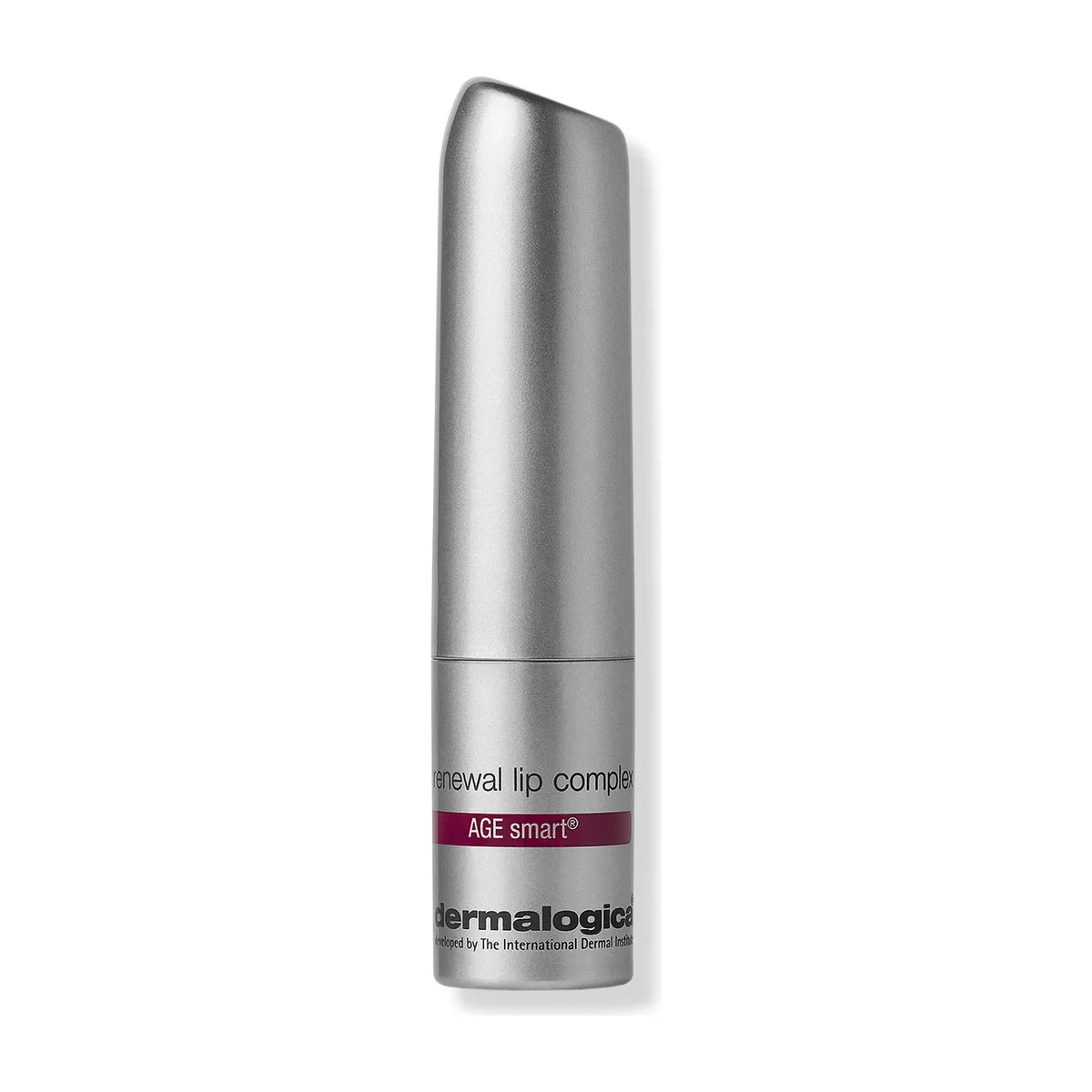
The science
Lip skin has a thinner stratum corneum, no sebaceous glands and no hair follicles, which is why it loses water faster than facial skin and why occlusion is the dominant mechanism in any effective lip product. The base here is well suited to that: bis-diglyceryl polyacyladipate-2 is a branched ester developed as a lanolin substitute with strong film-forming and water-vapour-resisting properties, and castor oil, with its ricinoleic acid content, is the classic high-viscosity lipstick carrier that adheres to the lip surface and resists rub-off. Together with candelilla wax, synthetic beeswax and the C18-38 alkyl hydroxystearoyl stearate structurant, they produce an occlusive film that instrumental studies of similar wax-and-ester systems show reduces transepidermal water loss on the lips for several hours, longer than lighter petrolatum balms that migrate quickly. Shea and cocoa butters and avocado oil contribute oleic, stearic and linoleic acids plus unsaponifiables with evidence for softening and improving barrier lipids in dry skin, and squalane adds a sebum-mimetic emollient. Tocopheryl acetate provides antioxidant protection to the oils and has weak evidence for conditioning benefits at the levels found in balms. The anti-aging claim rests on palmitoyl tripeptide-1, which has in-vitro data for stimulating collagen and glycosaminoglycan synthesis in fibroblasts and, in facial creams at around 3 to 5 ppm within a water-based vehicle, small trials showing modest reductions in wrinkle depth over 2 to 6 months; no study has examined it in an anhydrous lip stick, its thirteenth-place listing suggests a trace concentration, and delivery from a wax matrix to the dermis is doubtful. The visible smoothing of vertical lip lines with occlusive balms is well documented and attributable to hydration-driven plumping of the stratum corneum, which is temporary and independent of any peptide. On tolerability, the flavouring system of stevioside and aroma is the main sensitisation risk, as flavours are a leading cause of cheilitis in patch-test series, and lauryl lactate can be mildly irritating on damaged lips; ethylhexyl palmitate is a mid-range comedogen relevant only where the balm strays onto perioral skin. The formula is an evidence-backed occlusive lip conditioner whose peptide claim is unsupported at this dose and vehicle.