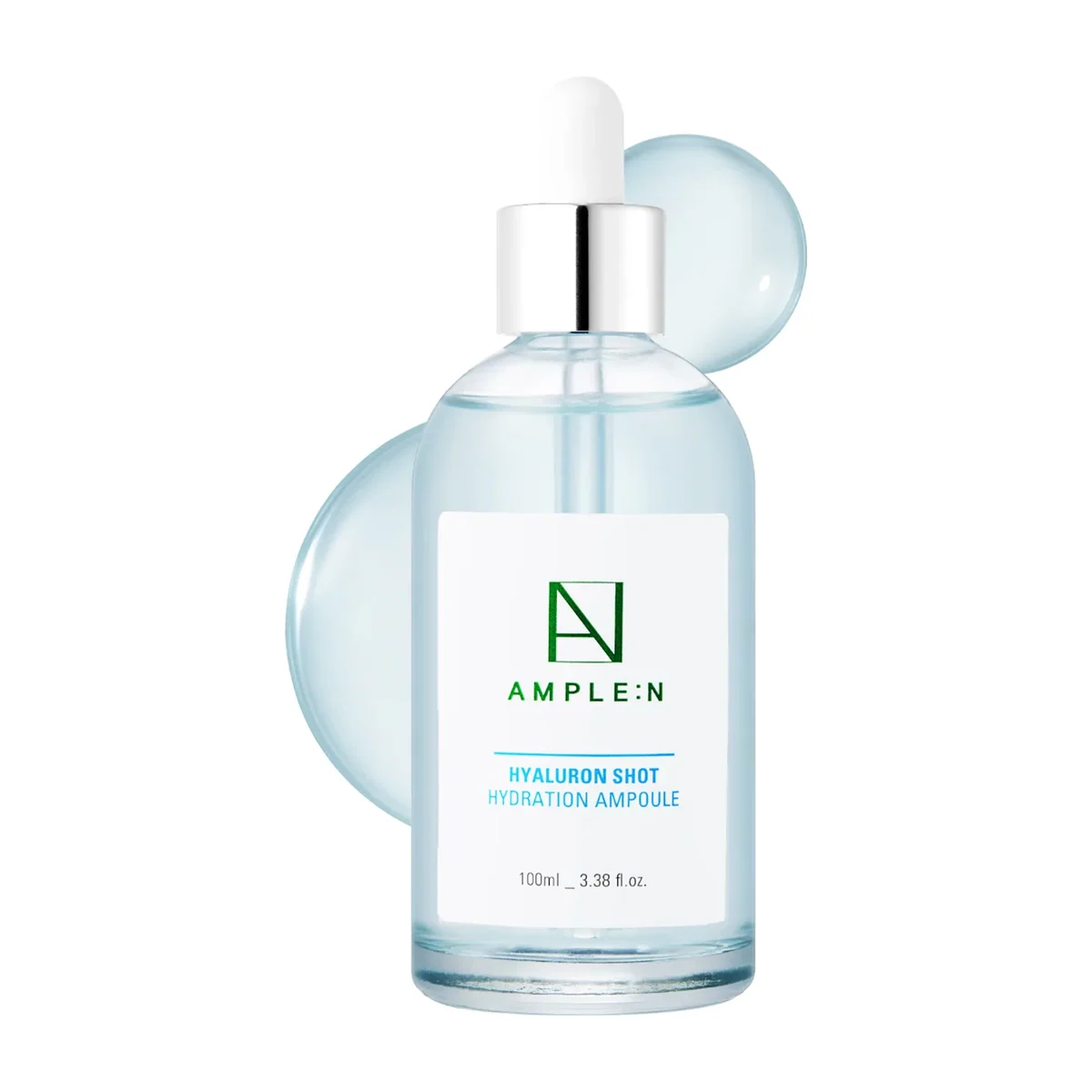
That big '97%' stamped across the bottle is doing an enormous amount of work, and it's the first thing worth untangling — because it sets up the one real disappointment people walk away with: the assumption that they've bought something close to pure hyaluronic acid. They haven't, and they couldn't have, because pure hyaluronic acid at that concentration would be a brittle solid, not a pourable serum. What the number actually describes is the proportion of a hyaluronic acid water solution in the formula, not the share of pure acid. Reframe it that way and the product stops being a gimmick and becomes exactly what it is: a stripped-back, concentrated humectant ampoule for roughly the price of a sandwich.
And taken as that, it's quietly excellent. The ingredient list is almost startlingly short — a high-percentage sodium hyaluronate solution, adenosine, a buffer, a thickener, and a preservative, and not much else. No fragrance, no essential oils, no parade of botanical extracts that photograph well on a box and do nothing in the bottle. For anyone whose skin reacts to the usual cocktail of additives, that minimalism is the entire appeal: you're getting the humectant and almost nothing else to react to, which is why this scores so well on both gentleness and breadth of suitability despite being so basic.
The hyaluronic acid does precisely what hyaluronic acid does, and the science there is well-established — sodium hyaluronate binds many times its weight in water within the stratum corneum, improving surface hydration and the immediate look of plumpness. The product-specific nuance is the concentration and how you deliver it. A near-single-ingredient solution maximizes the humectant load, but it also maximizes hyaluronic acid's defining habit of moving water down its gradient, which is why applying it to damp skin and sealing it under a moisturizer isn't a nice-to-have but a mechanistic requirement. The more interesting wrinkle is the adenosine. It's the only genuine functional active here, and because this is a leave-on rather than a wash-off, it gets the sustained contact time it needs to actually contribute. Adenosine holds Korean functional-cosmetic status as an anti-wrinkle active, so it lends a modest smoothing signal that nudges the product from pure hydrator toward a light dual-purpose ampoule. Don't oversell it to yourself — adenosine is no retinoid, and the evidence is promising rather than dramatic — but it's a meaningful bonus at this price. Arginine rounds things out as an amino-acid pH buffer, keeping the high-solute solution within a skin-comfortable, sting-free range.
Texturally, it's a clear gel-liquid that hovers between watery and tacky. The cool, slick first feel settles into a soft cushion, and skin looks plumper within minutes of the first use. Here's the single technique note that decides whether you love it or merely tolerate it: this is a humectant, and humectants pull water toward themselves from wherever it's available. On damp skin, sealed with a cream, that water comes from your routine and the surrounding air, and the result is supple and comfortable. On a bare, dry face in dry air, a strong humectant can instead draw moisture up out of the deeper skin and leave a faintly tight, sticky film. So the rule is simple and non-negotiable — apply to damp skin, always layer a moisturizer over it. Follow it and the stickiness complaints largely evaporate; the suppleness builds over one to two weeks of daily layering.
The drawbacks are limitations of ambition rather than execution, and the formula doesn't pretend otherwise. This is a single-purpose product: it hydrates, full stop. It won't brighten meaningfully, treat acne, or resurface texture, and the marketing-flavored '97%' naming genuinely oversells what's a fairly basic build. Over-apply it and the tackiness is real; forget to seal it and the benefit is short-lived. It's also not going to thrill anyone chasing a sensorial, luxurious serum moment — it's a utilitarian tool, not a treat, and the experience is frankly unglamorous. But none of that is a flaw in what it sets out to do; it's just the honest boundary of a product that does one job.
On value, it's close to unbeatable, which is where most of its overall score comes from. A 50ml bottle lasts months because a few drops cover the whole face, it's fragrance-free enough for reactive skin, oil-free and fungal-acne-safe, and it costs a fraction of the boutique hyaluronic serums that do essentially the same thing with more marketing wrapped around them. Elizavecca is an established Korean indie brand without a deep bench of independent clinical validation, and the headline percentage is exactly the kind of attention-grabbing flourish that built its reputation — but the no-frills formula underneath has kept this a perennial budget recommendation long after the mid-2010s hyaluronic acid boom that launched it cooled off.
Who should buy it: anyone who wants one cheap, reliable, low-risk way to add a pure hydration layer to any routine — whether that's a teenager's first three-step regimen or a layered ten-step ritual — and especially anyone with reactive skin who needs to avoid extra irritants. Who should skip it: anyone expecting a multi-tasking treatment, anyone unwilling to commit to the damp-skin-and-seal technique it depends on, or anyone who wants a serum that feels like an indulgence. Buy it for what it actually is, not for what the number on the front implies, and it punches well above its price.