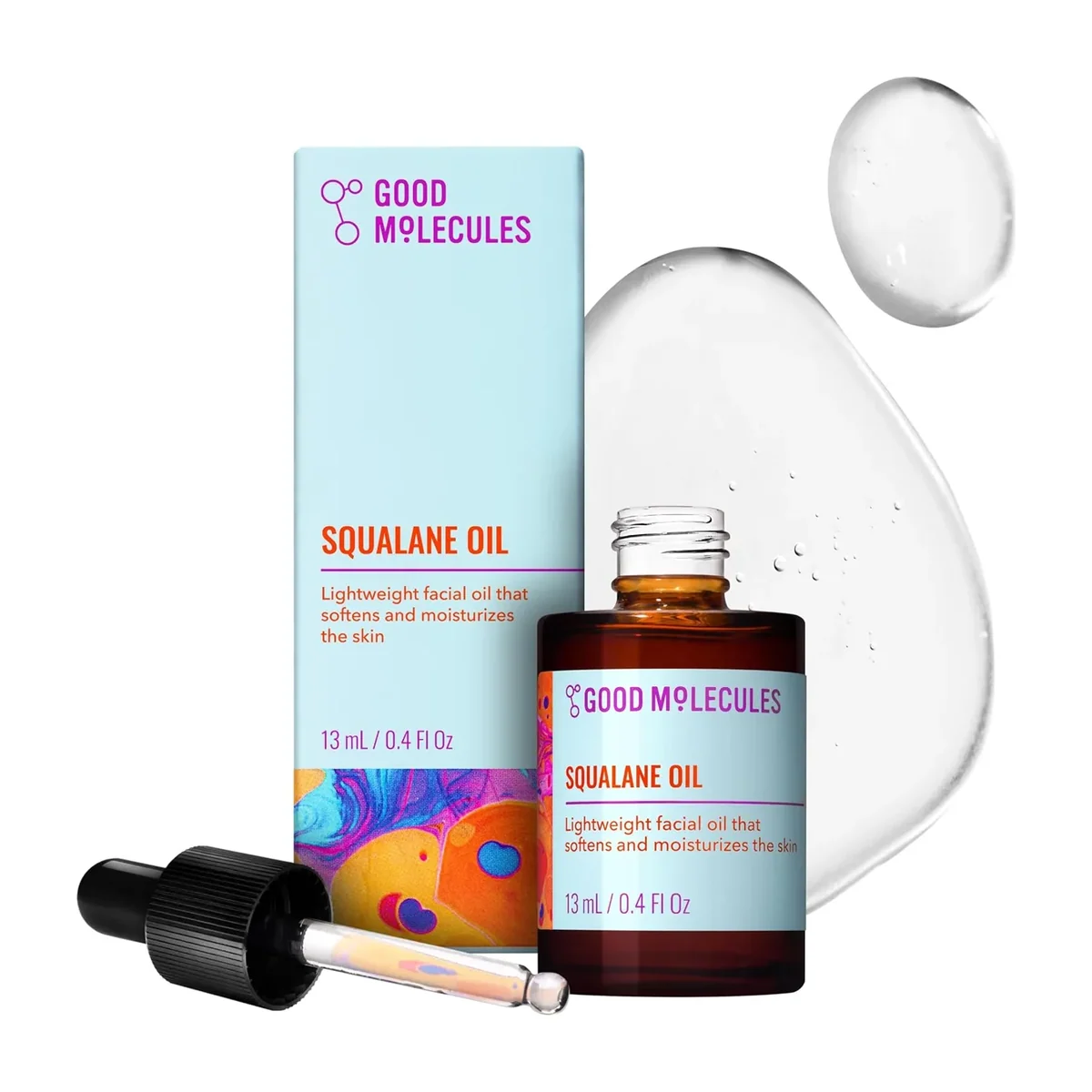
A review normally weighs the formula, and this bottle has none. The label reads Squalane 100%, Good Molecules prints percentages on everything so there is no ambiguity, and the only questions left are what the molecule does, whether this version of it is a good one and whether $8 for 13 millilitres is the right price. Those turn out to be enough questions to fill a review, because squalane is one of the few skincare ingredients that does more or less what it is said to do, and the interesting judgement is where it belongs in a routine.
Squalane is the hydrogenated, fully saturated form of squalene, the hydrocarbon that makes up around a tenth of human sebum and that oxidises quickly on the skin's surface. Saturating it removes the double bonds that oxidise, so squalane stays stable, does not go rancid in the bottle or on the face, does not feed the yeast behind fungal acne and scores at or near zero on comedogenicity assays. It sinks into the outer skin as a light emollient, smoothing rough surfaces and slowing the escape of water, and it does this without the heaviness of a triglyceride oil or the film of a silicone. The commercial versions were once distilled from shark liver; the modern ones, including this, are made from olive oil or sugarcane fermentation, and the molecule is identical. That is the whole science, and it is solid, which is more than can be said for most of the ingredients that share a shelf with it.
The Good Molecules bottle is olive-derived, vegan, odourless and clear, and in use it behaves as squalane should: two or three drops pressed over a moisturiser feel lighter than most plant oils, slip for a minute, and settle within five into a soft, faintly satin finish with no residue. On retinoid nights it is the cheapest good buffer there is, pressed over the treatment or the cream that follows it, and the flaking that tretinoin or an acid produces is visibly softer by morning. On oily skin one drop at night is the right dose and three is too many, which is a matter of quantity rather than chemistry; on very dry skin in winter it softens but does not seal enough on its own and wants a richer occlusive over it. Mixed into a moisturiser that feels too thin, or a drop into foundation, it does what people buy face oils to do without a scent to argue with. The record is enormous for a product this simple, over fifteen thousand Amazon ratings in five years plus Ulta and Beautylish pools, and its complaints are the predictable ones: the bottle is tiny, the dropper is fiddly, it occasionally pills under a sunscreen applied too soon, and it does nothing except moisturise, which some reviewers say as if it were a surprise. The volume of that record matters less than it would for a complex formula, because there is nothing hidden in the bottle for fifteen thousand people to discover, but it does confirm that the oil is what it claims and arrives fresh.
That last point is the honest limit. Squalane adds no water, so on dehydrated skin used alone it makes the surface smoother without replenishing anything, and it belongs over a humectant serum or onto damp skin rather than in place of them. It brightens nothing, firms nothing, treats nothing, and a buyer who reads 'improves fine lines' on a squalane label anywhere is reading the softening of dehydration lines that any emollient produces. It is a final step, not a treatment, and used as one it is among the most reliable products in a routine.
On price the arithmetic is more nuanced than the sticker. Eight dollars is cheap, but 13 millilitres is small, and larger squalane bottles from other brands cost less per millilitre; what the Good Molecules format offers is a low entry price and a size that will not go stale before it is finished, which suits a first-timer or a one-drop-a-night oily-skinned user better than a 100 millilitre bottle would. At two or three drops a night it lasts two to three months, and there is nothing in it that a more expensive squalane improves on, because there is nothing in it but squalane; the premium squalanes on the market are selling a bottle and a brand, not a better molecule.
So the recommendation is uncomplicated. For anyone with dry, normal, combination, sensitive or retinoid-worn skin who wants a light, fragrance-free, non-comedogenic emollient to finish a routine, this is a very good bottle at a price that removes the risk of trying it. For oily skin it works at one drop. For very dry winter skin it is a layer rather than the answer, and for anyone hoping a face oil will do something beyond softening and sealing, no squalane will, and this one is at least honest enough to print that on the label.