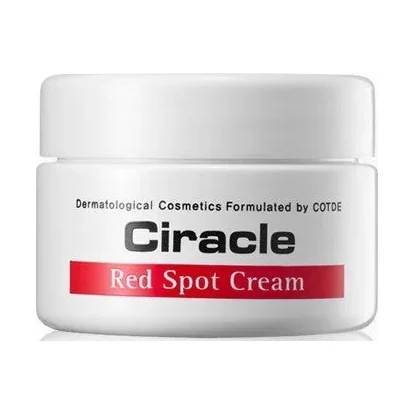
Japan treats acne products a little differently than the West does, and this gel cream is a neat illustration of that philosophy. It carries the label 'medicated,' which under Japan's quasi-drug regulations is a meaningful designation: to use it, a product must contain an officially sanctioned active for the claim it makes. But notice which active Ishizawa chose. It is not a high-strength peroxide or a pore-blasting acid. It is dipotassium glycyrrhizate, a licorice-derived anti-inflammatory whose entire job is to calm the redness and swelling of an angry pimple. That single choice tells you everything about the product's intent. Where a lot of acne treatment culture in the West revolves around drying a breakout out as fast as possible, this one is built to soothe it.
That soothing-first approach shapes the whole formula. The medicated active sits alongside tea tree oil, which supplies the antibacterial angle most people expect from an acne product and contributes the cooling, herbal note you smell the moment you open the tube. Tea tree on its own can be astringent and a touch drying, so the formulators surrounded it with a 15-herb botanical blend that is the line's signature flourish: witch hazel and sage for mild, oil-controlling astringency; chamomile, calendula, and aloe to counter irritation; arnica, hops, and a parade of others rounding it out. The effect is a treatment that toes the line between active and calming rather than committing fully to either.
What keeps it from feeling like a harsh spot dab is the base. Plant-derived squalane, macadamia oil, shea butter, and jojoba give the gel cream a genuinely emollient cushion, which means you can wear it as a leave-on layer over your breakouts instead of just touching it onto individual spots. The texture is a cushiony, translucent gel cream that goes on slightly tacky and settles into a soft, semi-matte film. For oily and combination skin it can honestly stand in as a light moisturizer; drier skin will still want something richer on top.
In use, the first thing you notice is the cooling, faintly tingling sensation as the essential oils hit the skin. That is normal, and for most people the payoff arrives quickly: active pimples look calmer and less inflamed within a few days, and the formula does this without the tight, flaky aftermath that aggressive treatments leave behind. Worn consistently over a few weeks, it reads less as a dramatic acne-clearer and more as a steady de-escalator, taking the heat out of breakouts so they settle faster.
Now the honest caveat, and it is a significant one. This is a formula absolutely loaded with fragrant botanicals: tea tree, lavender, eucalyptus, and rosemary oils all appear, along with arnica. For resilient oily skin that tolerates essential oils, that is part of the charm. For sensitive, reactive, rosacea-prone, or eczema-prone skin, it is a minefield. Those same oils are common sensitizers, and what feels like a pleasant tingle on tough skin can be a stinging, flushing irritant on delicate skin. A patch test on the inner arm before you ever put this on your face is not optional here, it is the responsible move. The medicinal-herbal scent, while it fades after application, is also strong enough in the tube to bother the fragrance-averse, even though there is no added synthetic perfume.
It is also worth being clear-eyed about what 'medicated' does and does not promise. The anti-inflammatory active calms; it does not unclog pores or oxidize acne bacteria the way a retinoid or benzoyl peroxide does. Tea tree adds some antibacterial support, but at the levels used here it is a contributor, not a heavyweight. For mild, inflammatory breakouts and the general goal of keeping irritated skin comfortable, this gel cream is a lovely tool. For moderate-to-severe or persistent acne, it works best as the gentle, barrier-supporting partner to proven actives rather than as the headline treatment.
On value, the math is reasonable. Around sixteen or seventeen dollars buys a small 33 g tube that lasts anywhere from a month and a half to three months depending on whether you use it as an all-over layer or a targeted spot treatment. You are paying for a regulator-recognized active and a thoughtfully buffered, oil-rich formula rather than for hype, which makes it a fair, if not bargain-basement, proposition. The small size and patchy Western availability are the practical frustrations; this is a product you often have to seek out through specialty importers.
The overall picture is of a well-conceived, philosophically distinct acne product that knows exactly what it wants to be. It rewards oily, breakout-prone skin that runs irritated with a calming, comfortable treatment layer, and it deserves credit for refusing the strip-it-dry orthodoxy. But its generous use of essential oils is a real liability for sensitive skin, and its gentle mechanism means it is a soothing complement to a serious acne routine, not a one-product fix. Go in knowing that, patch test first, and it earns its place as one of the more pleasant ways to take the sting out of a breakout.