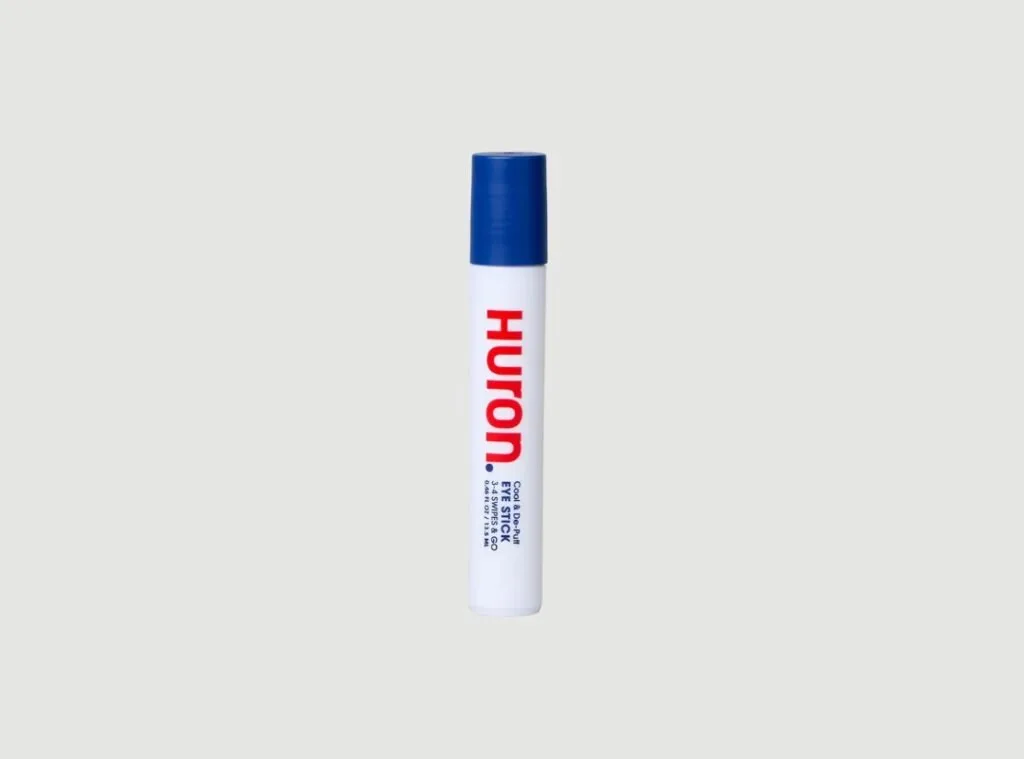
Everyone knows the cold-spoon trick: press something chilled under your puffy morning eyes and watch the swelling temporarily retreat. Kiehl's Facial Fuel Eye De-Puffer is essentially that trick engineered into a twist-up stick, with caffeine and horse-chestnut extract along for the ride. Understanding it that way — as a clever cosmetic quick-fix rather than a treatment — is the key to whether it's worth tracking down, especially now that it's been discontinued and exists only as scattered remaining stock.
The mechanism is straightforward and, to its credit, honest about what it does. Caffeine is the lead actor: applied topically, it constricts the small blood vessels under the thin eye skin, which temporarily reduces the look of puffiness and that morning swollen appearance. The stick format reinforces this with simple cold — the chill of the gel stick itself prompts the same vasoconstriction, which is why the cooling sensation isn't just pleasant but functional. Escin, a saponin from horse chestnut with a traditional reputation for supporting microcirculation and reducing fluid pooling, backs caffeine up on the same decongesting goal. Honey and sorbitol act as humectants to keep the delicate area soft, and hibiscus extract adds a light antioxidant, conditioning note. It's a sensibly assembled little formula for its stated purpose.
The format is genuinely the best part. A rounded twist-up tip lets you roll the product directly under your eye with no fingers, no dipping into a jar, no mess — you can do it in fifteen seconds before walking out the door, or stash it in a bag for a midday refresh. The cooling hit is immediate and, on a tired morning, legitimately refreshing. Within a few minutes the under-eye area looks a little tighter and less swollen. For someone who wakes up puffy after a late night, a salty dinner, or poor sleep, that quick decongesting effect is exactly what they want, and the stick delivers it reliably.
Now the honesty the product itself doesn't always get credit for. This is temporary and cosmetic, full stop. The de-puffing effect wears off within a few hours as your circulation returns to normal — there's no cumulative change, no structural improvement, nothing that builds over weeks. It's the topical equivalent of cold spoons: real, useful, and fleeting. Just as importantly, this targets puffiness, not dark circles. If your under-eye concern is pigmentation or the bluish look of vessels showing through thin skin, a caffeine de-puffer won't address it, and you'll be disappointed if you buy it expecting otherwise. And persistent, structural under-eye bags — the kind that are genetic or age-related — are beyond what any topical stick can fix. Set your expectations to 'morning refresh,' not 'eye transformation,' and it delivers.
The ingredient list is fairly gentle overall, which is welcome for the sensitive eye area: it's effectively fragrance-free and free of alcohol, so most skin types tolerate it well. The one flag worth noting is honey, which is a potential allergen for a small number of people, so anyone with a known honey or bee-product sensitivity should patch test or steer clear. Beyond that, it's a low-risk product to use, and the eye-area-friendly formulation is one of the things it genuinely got right.
It's also worth being honest about the category as a whole, because it frames what you're really deciding here. Under-eye puffiness has several different causes — fluid retention from sleep position or salt, allergies, thin skin, fat pads that shift with age, and simple genetics — and a topical caffeine de-puffer only meaningfully touches the fluid-and-circulation kind. That's why it works beautifully for some people and does almost nothing for others; if your morning puffiness is the watery, slept-funny variety, this is a satisfying fix, but if your 'bags' are structural, no stick is going to change them. Understanding which camp you fall into before you spend money is the single most useful thing you can do. For the fluid-retention crowd, the combination of caffeine and cold is the active mechanism, and that's exactly what a chilled product like this delivers — which is also precisely why a refrigerated eye cream, cold spoons, or even a bag of frozen peas wrapped in a towel produces a comparable morning result for free. The Eye De-Puffer packaged that effect conveniently and elegantly; it never had a monopoly on it.
The real complication now is availability and value. Kiehl's has discontinued the Eye De-Puffer, so it's no longer sold through the brand directly. What remains is limited stock at third-party retailers, much of it sold out, with prices that fluctuate and can't be reliably verified. That changes the calculus considerably. Even at its original price, this was a premium ask for a small stick delivering a temporary effect — and chasing discontinued inventory at uncertain markups makes it harder to recommend on value alone. The cooling-stick concept is sound, but the specific magic here isn't so unique that it's worth paying a scarcity premium; the active mechanism is caffeine plus cold, which other eye products and even DIY methods replicate.
The bottom line: this was a likeable, well-designed morning de-puffing tool that did its narrow job well, and fans of the format have good reason to miss it. If you already own one, enjoy it as the quick cosmetic refresh it is. If you're hunting for it now, go in clear-eyed — you're buying a temporary puffiness fix, not a dark-circle treatment or a lasting solution, and the discontinuation means you may pay more than the effect justifies. A current caffeine eye product, or simply a cold compress, will get you most of the same morning result.