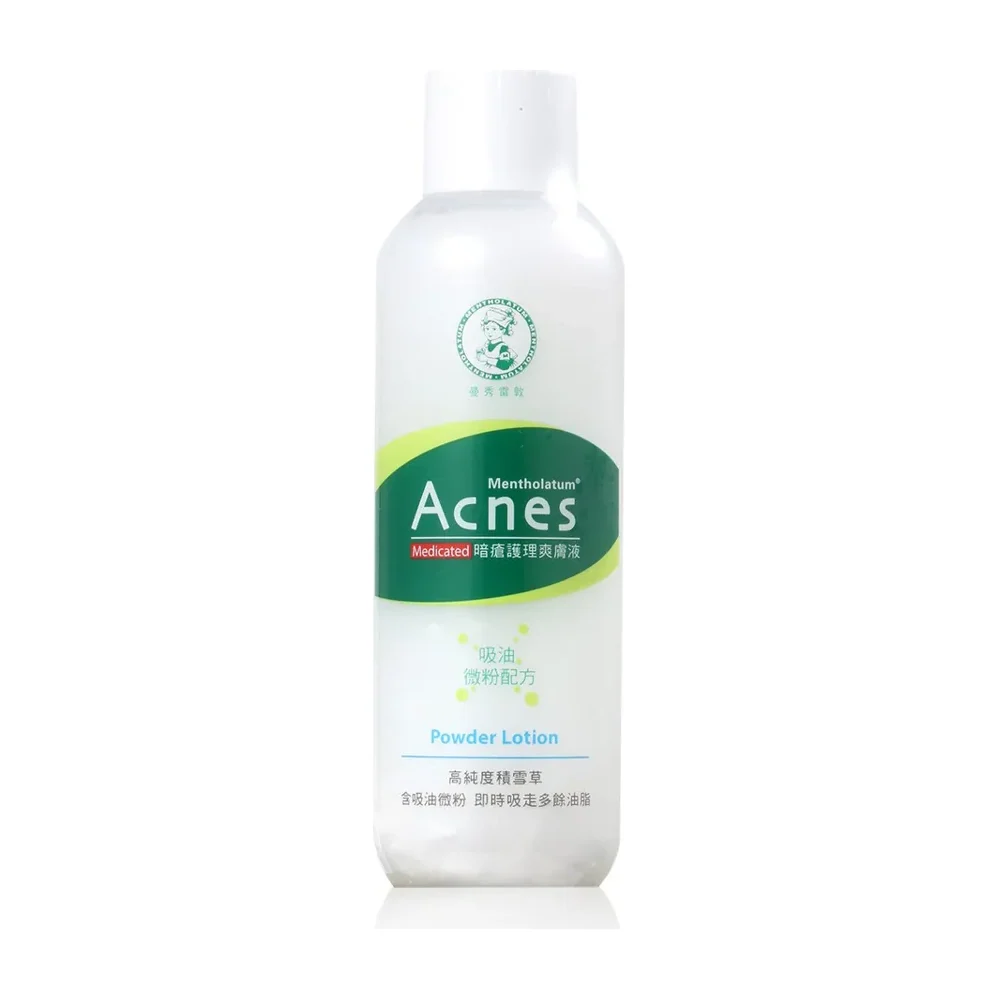
Mentholatum Acnes Lotion 180ml bottle
Promising for Acne
What makes this different

It stacks four kinds of action into one cheap drugstore toner — antibacterial IPMP, AHA exfoliation, a licorice anti-inflammatory and a vitamin C derivative — a distinctly Japanese 'medicated' approach to oily, breakout-prone skin rather than a single-ingredient treatment.

Mentholatum

Mentholatum Acnes Lotion Review

Drugstore Acne Toner Toners liquid j beauty Paraben free Fungal-acne safe Not cruelty free

A cheap, genuinely multi-active Japanese drugstore acne toner: antibacterial IPMP, an AHA pair for exfoliation, a licorice anti-inflammatory and a vitamin C derivative, all in one bottle. For oily, breakout-prone skin it's a functional, affordable workhorse. The catch is an alcohol-and-fragrance base that makes it drying and a poor fit for dry or sensitive skin.

Price $13.99 180ml
Shopper rating 4.1 ★★★★★ 800 reviews
Buy at Amazon ♥
Verdicts

How well it fits each concern

As a Japanese quasi-drug, this product relies on established antibacterial and anti-inflammatory actives, and its translated ingredient list reads clearly, but independent clinical data on the exact formula is limited and the price is an overseas-retail figure converted to dollars rather than a fixed US price. The acne-fighting logic is sound for oily skin; the alcohol and fragrance content, and how individual skin tolerates them, are the main variables behind the moderate confidence rating.

One verdict per concern. Open a row for the reasoning; the receipt has every source.

The scaleRecommendedGoodSupportingEarly evidenceNot for thisAvoidhow it works

Promisingfor AcneGlycolic Acid has trial-level evidence for acne but no guideline or regulatory standing yet — promising, short of a recommendation; the other actives here are not yet assessed for it.Receipt4 sources on the row · concentration not declared; studied range 10% · row checked Jul 17, 2026 · rule R9p, same reading on 4,872 products · open the receipt

The case for it

  1. Glycolic + Lactic Acid has at least one trial behind it for this concern but no guideline or regulatory standing yet.
  2. It is plausibly present at a working level, though the concentration is not declared.
  3. The formula carries no trigger this concern is sensitive to, with the cautions noted.

Moderate evidenceStandard tolerabilityNo reviews read yet

Cautions: fragrance; fungal-acne triggers.

What would change this: A declared concentration would move this to a firmer reading of the dose.

Same rule for everyone. “Promising” is the verdict on 4,872 of 45,446 concern verdicts across the catalog; rule R9p decided 4,872 of them. Unchanged since September 5, 2026, engine 5.2.0.

Brand or formulator? Disclose a concentration or correct a fact →

The full receipt: rule, row, sources, dates →All acne products →How acne is treated →

Promisingfor BlackheadsGlycolic Acid has trial-level evidence for blackheads but no guideline or regulatory standing yet — promising, short of a recommendation; the other actives here are not yet assessed for it.Receipt4 sources on the row · concentration not declared; studied range 5–10% · row checked Jul 17, 2026 · rule R9p, same reading on 4,872 products · open the receipt

The case for it

  1. Glycolic + Lactic Acid has at least one trial behind it for this concern but no guideline or regulatory standing yet.
  2. It is plausibly present at a working level, though the concentration is not declared.
  3. The formula carries no trigger this concern is sensitive to, with the cautions noted.

Moderate evidenceStandard tolerabilityNo reviews read yet

Cautions: fungal-acne triggers.

What would change this: A declared concentration would move this to a firmer reading of the dose.

Same rule for everyone. “Promising” is the verdict on 4,872 of 45,446 concern verdicts across the catalog; rule R9p decided 4,872 of them. Unchanged since September 5, 2026, engine 5.2.0.

Brand or formulator? Disclose a concentration or correct a fact →

The full receipt: rule, row, sources, dates →All blackheads products →How blackheads is treated →

Not for thisfor Large PoresThe actives here have been researched for large pores and the evidence does not support the claim.Receipt3 sources on the row · concentration not declared; studied range 5–10% · rule R10, same reading on 489 products · open the receipt

The case for it

  1. Glycolic + Lactic Acid has been researched for this concern and the evidence does not support it.
  2. It is plausibly present at a working level, though the concentration is not declared.
  3. The formula carries no trigger this concern is sensitive to, with the cautions noted.

Not from a trial rowStandard tolerabilityNo reviews read yet

What would change this: A declared concentration would move this to a firmer reading of the dose.

Same rule for everyone. “Not for this” is the verdict on 489 of 45,446 concern verdicts across the catalog; rule R10 decided 489 of them. Unchanged since September 5, 2026, engine 5.2.0.

Brand or formulator? Disclose a concentration or correct a fact →

The full receipt: rule, row, sources, dates →All large pores products →

Also listed for Excess Oiliness — the actives here (isopropylmethylphenol, licorice extract, Vitamin C, Glycolic Acid) are in our research queue for that concern; there is no verdict until their evidence rows are written. That is a gap in our table, not a mark against the product.

Does the jobDoes what a toner is for: adds something real, not alcohol-driven. Not measured from the label: restores skin pH, plays well with what follows.

A verdict is Dermington’s assessment of how well a product’s ingredients fit a concern — never a claim about what the product treats. Evidence dots and collected reviews sit beside it and are never blended in. Rules 0.5.1 · evidence table ev-2026.10-r231 · engine 5.2.0 · how we decide · this product’s receipt

Reader poll · Town SquareQuestion 1 of up to 3

Have you used Acnes Lotion?

One tap counts. A couple of optional follow-ups come next.

No account neededOne answer each, change it any timeCounted only in anonymous totalsHow the Square counts →
Assessment

Pros & cons

What it does well 6

  • Antibacterial IPMP genuinely targets acne bacteria
  • AHA pair keeps pores clear of dead-cell buildup
  • Licorice anti-inflammatory calms breakout redness
  • Vitamin C derivative helps fade post-acne marks
  • Very affordable; large bottle lasts for months
  • Light, matte, mattifying finish for oily skin

Where it falls short 5

  • Alcohol-based, so drying on many skin types
  • Added fragrance raises sensitization risk
  • Can sting on active or broken-out spots
  • Unsuitable for dry, sensitive, or reactive skin
  • AHAs require careful layering and daily sunscreen
Review

The full review

Walk into any Japanese or Southeast Asian drugstore and the Acnes range is on the shelf at eye level, cheap and unglamorous, aimed squarely at teenagers fighting breakouts. The Lotion is the toner step of that line, and what's interesting about it is how much it tries to do for the price. Rather than chasing a single hero ingredient, it stacks four kinds of action into one inexpensive bottle, which is a very Japanese approach to over-the-counter acne care: treat the problem from several angles at once and keep it affordable.

Those angles are worth laying out, because they're the reason it works. Leading the formula is isopropylmethylphenol, a medicated antibacterial that targets the bacteria involved in acne. Behind it sit glycolic and lactic acids, a small AHA pairing that loosens the dead-cell buildup that clogs pores, and dipotassium glycyrrhizate, a licorice-derived anti-inflammatory that calms the redness of active spots. A stable vitamin C derivative rounds things out for brightening and a little moisture, useful for the post-acne marks oily skin so often carries. Kill the bacteria, clear the congestion, calm the inflammation, fade the marks — for a drugstore toner, that's a genuinely complete logic.

In use it behaves like the astringent acne lotion it is. It's thin and watery, goes on cool, and leaves skin matte and fresh with a quick dry-down. Oily and combination skin tend to like that bracing, mattifying feel, and over a few weeks of consistent use it can meaningfully help keep breakouts and shine in check. As a budget step in an oily-skin routine, it earns its place.

The honest catch is the base it's built on, and it's a real one. The formula contains alcohol and added fragrance, both of which contribute to that tight, fresh feel but also to its drying, potentially irritating character. On resilient oily skin that's usually a fair trade; on dry, sensitive, rosacea-prone, or barrier-compromised skin it can sting on active spots and leave skin stripped, and the fragrance adds a sensitization risk that a medicated product aimed at inflamed skin would be better without. This is firmly an oily-and-acne-prone-skin product, and it shouldn't pretend otherwise.

It's also worth dispelling the 'deep clean' impression. The tight, squeaky feel after using it comes from the alcohol and astringency, not from pores being physically emptied. The real work is chemical — the antibacterial, the AHAs, the anti-inflammatory — and chasing that stripped sensation by overusing it is how people tip from oily-but-healthy into dry-and-irritated. Less is more: once or twice a day, always followed by a moisturizer.

There's a layering caution that follows from the AHAs, too. Because exfoliating acids are already in the formula, stacking it with a retinoid, a strong salicylic acid, or another acid toner the same day raises the odds of over-exfoliation and barrier damage. If you use other actives, alternate them, keep everything else gentle and hydrating, and wear sunscreen daily, since AHAs increase sun sensitivity.

The brand-and-data picture is the legacy-drugstore one: Acnes is a long-running Rohto Mentholatum quasi-drug line with a huge, loyal user base and reliably positive feedback for breakout control, though there's little independent clinical literature on this specific formula. It's trusted because it's cheap, available and it works for its target user, not because it's been studied in isolation.

Value is the strong suit. It's an inexpensive import — roughly mid-teens in dollars, depending on where you buy it — for a large bottle that lasts months and does several jobs that might otherwise take two or three separate products. For oily, acne-prone skin on a budget, the cost-per-benefit is excellent, which is exactly why it's been a drugstore staple for so long.

Some cultural context helps explain what this is. In Japan it's classed as a 'quasi-drug' (iyakubuhin), a regulatory tier between cosmetic and medicine that lets a product make specific anti-acne claims around approved actives like isopropylmethylphenol — which is why the marketing language is so confidently medicinal compared with a Western 'toner.' Acnes itself has been a teen-acne shelf staple across Japan and Southeast Asia for decades, the kind of cheap, reliable product people reach for at the first sign of a breakout rather than a considered skincare purchase. Judged against that heritage it makes sense: it's not trying to be an elegant modern essence, it's trying to be an effective, affordable medicated step for oily teenage and young-adult skin, and on those terms it largely succeeds. Compared with a Western salicylic-acid toner it takes a different route to a similar goal — antibacterial plus AHA rather than BHA — and the two can even be redundant if stacked, which is worth keeping in mind if you already use a BHA product.

The bottom line: a functional, affordable, multi-active acne toner that does real work for oily, breakout-prone skin and has earned its drugstore-staple status. For that audience it's an easy, cheap recommendation. For dry, sensitive, or barrier-stressed skin, the alcohol-and-fragrance base makes it the wrong tool, and a gentler niacinamide or low-percentage BHA toner would serve far better.

The science

This toner takes a multi-target approach to acne grounded in established Japanese OTC actives. Isopropylmethylphenol (IPMP) is an antiseptic with documented antibacterial activity used widely in Japanese acne and oral-care products, providing the antimicrobial arm against acne-associated bacteria. Glycolic and lactic acids are alpha-hydroxy acids with strong evidence for promoting desquamation and keeping follicular openings clear, addressing the comedogenic buildup that precedes breakouts. Dipotassium glycyrrhizate, a licorice-root derivative, has recognized anti-inflammatory activity that helps moderate the redness of inflammatory acne, and magnesium ascorbyl phosphate is a stable vitamin C derivative with supportive evidence for brightening and mild antioxidant benefit, relevant to post-inflammatory marks. The formulation's principal drawbacks are not its actives but its base: alcohol contributes astringency and rapid dry-down but can compromise the barrier and increase transepidermal water loss with overuse, and added fragrance is a recognized contact sensitizer poorly matched to inflamed skin. The AHA content also confers photosensitivity, making daily sunscreen important. Overall the active strategy is rational and evidence-aligned for oily, acne-prone skin, with tolerability — not efficacy — being the limiting factor.

The clinical view

Clinically, this represents a reasonable over-the-counter, multi-mechanism approach to mild-to-moderate acne in oily skin: antibacterial, keratolytic (AHA), and anti-inflammatory actions combined in one product. Such combinations can be effective for comedonal and mildly inflammatory acne, and the inclusion of a licorice-derived anti-inflammatory is a sensible touch. The main clinical reservations concern tolerability and patient selection. The alcohol content and added fragrance make it drying and potentially irritating, so it is best limited to oily, resilient, non-sensitive skin and avoided in dry, sensitive, rosacea-prone, or barrier-impaired patients. Because it contains AHAs, it should not be layered with other strong exfoliants or retinoids without spacing, and daily photoprotection is essential given AHA-related photosensitivity. Used judiciously by the appropriate skin type and followed with a moisturizer, it is a defensible budget option, but it is not a substitute for prescription therapy in moderate-to-severe acne.

Formula

Key ingredients

  1. Isopropylmethylphenol (IPMP)

    The medicated antibacterial that leads the formula — IPMP targets acne-causing bacteria, and pairing it with the anti-inflammatory licorice derivative is the core 'kill-and-calm' logic this Japanese acne toner is built on.

    Not yet assessed
  2. Glycolic + Lactic Acid (AHA blend)

    A small AHA pairing that loosens dead surface cells to keep pores clear, working with the antibacterial IPMP so the toner both exfoliates congestion and tackles the bacteria behind breakouts.

    Limited for Acne
  3. Dipotassium Glycyrrhizate

    A licorice-derived anti-inflammatory that calms the redness and irritation of active breakouts, the soothing counterweight to the antibacterial and exfoliating actives in an otherwise astringent formula.

    Not yet assessed
  4. Magnesium Ascorbyl Phosphate (Vitamin C)

    A stable vitamin C derivative added for brightening and a touch of moisture, helping with the post-acne marks that oily, breakout-prone skin often deals with alongside the active spots.

    Not yet assessed
Full ingredient list 19 ingredients ShowHide

Isopropylmethylphenol, Dipotassium Glycyrrhizinate, Magnesium Ascorbyl Phosphate, Glycolic Acid, Lactic Acid, Tocopheryl Acetate, Coix Lacryma-Jobi (Job's Tears) Seed Extract, Aloe Barbadensis Leaf Extract, Glycerin, Butylene Glycol, Arginine, PEG-30, Disodium Succinate, PEG-Hydrogenated Sunflower Oil, Disodium EDTA, Succinic Acid, Alcohol, Methacryloyloxyethyl Phosphorylcholine/Butyl Methacrylate Copolymer, Fragrance

Safety & formulation facts

  • Pregnancy safety unverified
  • Not fragrance free
  • Not alcohol free
  • Oil free
  • Silicone free
  • Paraben free
  • Sulfate free
  • Not cruelty free
  • Not vegan
  • Fungal-acne safe
Potential irritants AlcoholFragranceGlycolic AcidLactic Acid
Common allergens Fragrance
Compatibility

Skin types & routine

Routine step toner
Time of day Morning & night
Best season summer
Finish matte, fresh, non-greasy

Layering

Sweep over clean skin on a cotton pad or palms before serums and moisturizer; because it contains alcohol and AHAs, follow with a hydrating, barrier-supportive routine and don't stack it with other strong exfoliants the same day.

When to expect results

An immediate astringent, mattifying feel; fewer and calmer breakouts typically build over 2-4 weeks of consistent use on oily, acne-prone skin.

Pairs well with niacinamidehyaluronic-acid
Don't combine with retinolsalicylic-acid

A routine built around it

Morning

  1. Acne cleanser
  2. Acnes Lotionthis product
  3. Oil-free moisturizer
  4. Sunscreen

Night

  1. Acne cleanser
  2. Acnes Lotionthis product
  3. Lightweight moisturizer
Guidance

How to use it, and who it's for

How to use

After cleansing, apply to the face on a cotton pad or with the palms, avoiding the eye area, then follow with a lightweight, hydrating moisturizer to offset the drying base. Start once daily and build to twice if your skin tolerates it well; reduce frequency if you feel tightness or stinging. Because it contains AHAs, wear sunscreen every morning and avoid stacking it with other strong exfoliants or retinoids on the same day. Keep the rest of the routine gentle and barrier-supportive to balance its astringency.

Is it worth the price?

On price, it's hard to beat: a large 180ml bottle at a low import price — roughly the mid-teens in dollars depending on the retailer — that lasts for months and consolidates antibacterial, exfoliating, anti-inflammatory and brightening functions into a single inexpensive step. For oily, acne-prone skin on a budget, that multi-tasking is excellent cost-per-benefit and a big part of why the line has endured. The value caveat is fit rather than cost: it's only worthwhile if your skin tolerates an alcohol-and-fragrance base, since dry or sensitive skin would be spending even a small amount on something likely to irritate. Note that pricing is an overseas-retail figure and varies by import seller.

Who should buy it

Reach for this if you have oily, combination, or breakout-prone skin, want an affordable medicated toner that tackles bacteria, congestion and inflammation at once, and your skin tolerates alcohol and fragrance. It's a strong-value daily step for oily skin fighting breakouts, especially in warm, humid weather.

Who should skip it

Avoid it if your skin is dry, sensitive, rosacea-prone, or barrier-compromised — the alcohol and fragrance will likely strip and irritate — or if you want a fragrance-free or alcohol-free toner. Those already using a retinoid or strong BHA should be wary of over-exfoliation, and anyone seeking gentle hydration rather than acne control should look elsewhere.

Ready to try it?Mentholatum Acnes Lotion · $13.99 · 180ml
Details

The product, in detail

Texture
A thin, watery lotion that feels astringent and quick-drying on application.
Scent
Noticeably fragranced, with a fresh, slightly medicinal note.
Packaging
A 180ml bottle.
How long it lasts
Several months of daily use from the 180ml bottle.
Once opened
Use within 12 months · track your toss-by date →
Size
180ml
Made in
Japan

What the first two weeks feel like

Goes on cool, watery and astringent, leaving skin matte and fresh; the alcohol and AHAs can sting slightly on active or broken spots and may feel drying at first. Oily skin usually adjusts quickly, but dry or sensitive skin may find it too stripping.

The story behind it

Why it exists

Acnes is Rohto Mentholatum's long-running OTC acne line for teenage and oily skin, and the Lotion is its medicated toner step, formulated as a quasi-drug around antibacterial and anti-inflammatory actives standard in Japanese acne care.

About Mentholatum Legacy Brand (20+ years)

Acnes is Rohto Mentholatum's mass-market medicated acne line, a fixture of Japanese and Southeast Asian drugstores. It's an over-the-counter, quasi-drug range built on antibacterial and anti-inflammatory actives rather than trend ingredients, with a long track record but little independent clinical literature on the specific formulas.

Brand founded 1920

Myth vs. reality

What people get wrong about it

MythAn astringent, alcohol-based acne toner 'deep cleans' pores.

RealityThe tight, matte feel comes from alcohol and the astringent base, not from pores being physically emptied. What actually helps here is the antibacterial IPMP, the AHA exfoliation and the anti-inflammatory licorice — chemistry, not a deep-clean sensation. The alcohol mostly provides that bracing feel and fast dry-down, and on dry or sensitive skin it can do more harm than good.

FAQ

Questions people ask

What does Mentholatum Acnes Lotion do?

It's a medicated acne toner for oily, breakout-prone skin. It combines an antibacterial (isopropylmethylphenol) to target acne bacteria, glycolic and lactic acids to clear dead-cell buildup, a licorice-derived anti-inflammatory to calm redness, and a vitamin C derivative for brightening and a little moisture. Used after cleansing, it helps control breakouts and oil.

Is Acnes Lotion too drying?

It can be, because it contains alcohol along with AHAs. Oily and combination skin usually tolerate it well and appreciate the matte, fresh finish, but dry or sensitive skin may find it stripping or stinging on active spots. Always follow with a hydrating, barrier-supportive moisturizer, and reduce frequency if your skin feels tight.

Who should use it?

It's best for oily, acne-prone, and combination skin that wants an affordable, multi-active medicated toner. The antibacterial-plus-AHA approach suits congested, breakout-prone skin in warmer weather. It's not the right pick for dry, sensitive, rosacea-prone, or barrier-compromised skin, which will likely find the alcohol and fragrance too harsh.

Can I use it with other acne actives?

Be cautious. It already contains AHAs, so stacking it with additional strong exfoliants, retinol, or high-strength salicylic acid the same day raises the risk of irritation and barrier damage. If you use a retinoid or BHA, alternate days or times, keep the rest of your routine gentle and hydrating, and always wear sunscreen, since AHAs increase sun sensitivity.

Is it fragrance-free or alcohol-free?

Neither — it contains both added fragrance and alcohol, which contribute to its astringent, mattifying feel but also to its drying potential. If you specifically need a fragrance-free or alcohol-free acne toner, this isn't it; a gentler niacinamide or low-percentage BHA toner would be a better fit for reactive skin.

Reviews

What shoppers tend to say

Recurring themes our editors read across retailer reviews — summaries in our words, not quotations, and not a substitute for a patch test.

Common praise

  • Helps control breakouts and oil
  • Affordable and long-lasting
  • Mattifying, fresh feel
  • Multi-active for the price

Common complaints

  • Drying with alcohol
  • Fragranced
  • Can sting on active spots
  • Too harsh for sensitive skin
Next stepCheck it against what you already useClashes, spacing and the right order, with everything on your shelf.