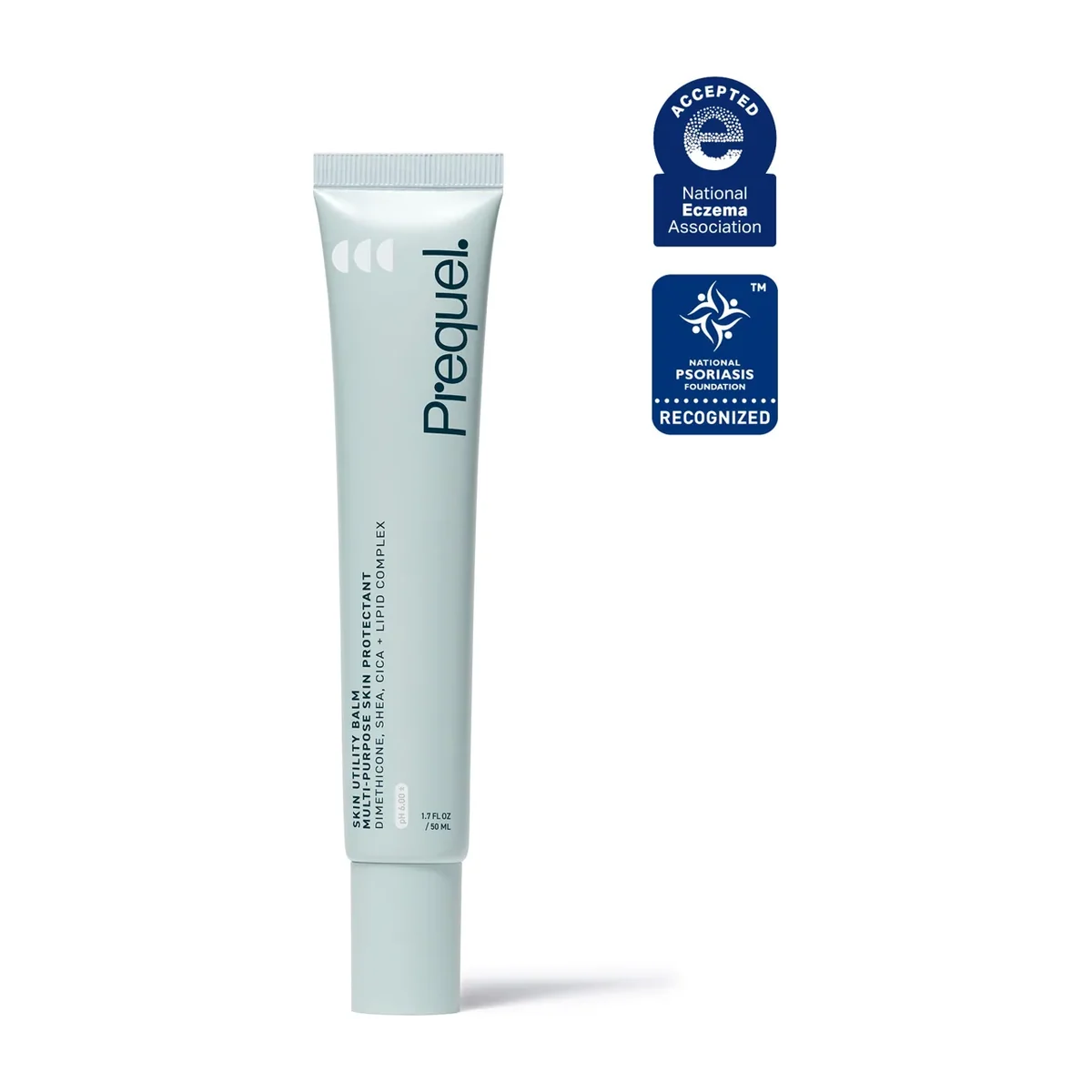
Listing dimethicone as a 5.25% OTC skin protectant rather than burying it mid-INCI tells you exactly what Prequel was thinking when they built this balm. Slugging, the practice of sealing a routine with an occlusive final layer overnight, rode TikTok and Korean-beauty crossover culture into the mainstream, and the default tool for it has long been petrolatum or a petrolatum-rich ointment. Those work, but they come with real annoyances: they don't cooperate with morning makeup, they transfer heavily onto pillowcases, and the heavy, greasy feel genuinely puts some people off. Prequel looked at that and asked whether the same moisture-sealing outcome could come from different chemistry, and the answer they landed on is a registered dimethicone active doing the occlusive job.
Dimethicone has been recognized by the FDA as an OTC skin protectant for decades, with well-documented activity reducing transepidermal water loss and forming a semi-permeable protective film. The practical difference from petrolatum is feel and behavior: dimethicone retains moisture and shields the barrier without the suffocating heaviness, and it layers and washes off more agreeably. That's the whole pitch, and it's a sound one. But the formula doesn't stop at the active, which is where it earns its keep. Shea butter and an undecane/tridecane plant-derived emollient complex build a secondary occlusive layer beneath the silicone film, and underneath that sits a complete ceramide NP, cholesterol, and phytosphingosine trio. That three-component lipid system isn't decorative; it mirrors the natural composition of healthy stratum corneum, where these lipids form the intercellular mortar that holds the barrier together, and dermatology research has shown multi-lipid combinations like this outperform single-ceramide formulas at restoring barrier function. Centella asiatica adds anti-inflammatory soothing through its well-characterized madecassoside and asiaticoside chemistry, which is among the better-documented botanicals in modern cosmetic dermatology and especially useful in post-procedure and compromised-skin contexts. Silica modulates the texture so the whole thing feels less greasy than its lipid load suggests.
The format is a thick balm-cream rather than a true wax balm or ointment, dispensed from a sanitary, travel-friendly 50g squeeze tube. On application it warms and softens into a substantial film that spreads cleanly without dragging. The 'utility' in the name is earned by how many ways it slots into a routine: a full-face slugging step overnight, a spot occlusive on stubborn dry patches or recovering skin, a winter barrier layer under more aggressive actives, or a multi-purpose hand-and-cuticle balm when your hands are taking a beating. Protection is immediate the moment it's on, and the cumulative dryness improvement on dehydrated or barrier-compromised skin tends to show over a week or two of nightly use, which is a realistic timeline rather than an overnight miracle.
The limitations are predictable from the texture. This is a final-step balm, not a daytime moisturizer, and it's too heavy for full-face daytime wear on most skin types. The cetearyl alcohol and shea butter, barrier-friendly as the overall formula is, can aggravate genuinely acne-prone skin, so very breakout-prone users should approach it as a targeted occlusive rather than an all-over cream. It's also not fungal-acne-safe, because the fatty-acid content can feed Malassezia, which rules it out for anyone managing that picture. And while 50g at twenty dollars is reasonable, it's a smaller pot than the jumbo petrolatum tubs people are used to slathering on, so it won't stretch as far if you're using it generously every night.
On value, though, this is a genuinely strong showing for an emerging indie brand. Twenty dollars buys a thoughtfully constructed dimethicone-based slugging alternative with a complete barrier-lipid complex and cica, which is a meaningfully more sophisticated formula than any drugstore occlusive in the same price range offers. Plain petrolatum ointments are cheaper per ounce, no argument there, but none of them deliver the ceramide-cholesterol-phytosphingosine system paired with centella, and that's the real point of difference. With a medium data-confidence rating backed by a solid base of reviews, the high scores here rest on both the formulation logic and accumulated user feedback rather than hopeful speculation.
It's worth dwelling a moment on why the dimethicone-versus-petrolatum distinction actually matters in daily practice, because it's easy to wave off as a marketing differentiator. Petrolatum is an outstanding occlusive and genuinely cheap, and nobody serious disputes its effectiveness; the friction is purely cosmetic and behavioral. Its heaviness and tendency to migrate onto pillowcases and into makeup means a lot of people who would benefit from slugging simply don't stick with it. Dimethicone's lighter, more cooperative film lowers that barrier to consistency, and consistency is what actually determines whether a barrier improves. A slightly less occlusive seal that you'll happily use every night often beats a maximally occlusive one you abandon after a week. That's the real argument for this balm, and it's a sound one even if it isn't flashy.
The other quiet strength is the deliberate completeness of the lipid story. Plenty of products tout 'ceramides' while including a single token ceramide at a trace level; assembling NP, cholesterol, and phytosphingosine together in the correct conceptual ratio is the harder, more expensive, more genuinely useful path, and it's what justifies treating this as barrier repair rather than mere occlusion. Paired with cica's soothing, the formula reads as something you could reasonably reach for on irritated, post-actives, or post-procedure skin and trust not to make things worse. That versatility is the whole 'utility' premise made literal.
The clear buyer is anyone with dry, sensitive, or seasonally cranky skin who wants the moisture-sealing payoff of slugging without petrolatum's cosmetic drawbacks, plus people recovering from procedures or fighting winter barrier damage who need a calming occlusive that also actively supports repair. Anyone whose main concern is acne or fungal acne, or who simply wants a daytime moisturizer, should look elsewhere. For everyone else chasing modern barrier chemistry in a do-everything balm, this is an easy, confident recommendation that does exactly what it sets out to do.