Here's an industry secret that nobody likes to admit out loud: a lot of eye cream 'results' in before-and-afters are optical. Not in the marketing sense, in the literal physics sense. Light-reflecting minerals like mica and synthetic fluorphlogopite, combined with trace iron oxide pigments, can make a tired under-eye area look smoother and more luminous the moment the product goes on, not because anything has changed in the skin but because the light is bouncing differently off the surface. This is the same principle that makes flash photography from the 1990s look different from flash photography today — the physics of how photons interact with particles on a surface. When it's done well, it's a small miracle; when it's done cynically, it's makeup being sold as skincare at a premium.
SkinCeuticals A.G.E. Eye Complex, originally launched in 2010, sits somewhere between those two poles. It's the older sibling in the A.G.E. eye cream lineup, and its identity is defined more by the optical diffuser system and the popular metal applicator tip than by the underlying active ingredient deck. What it does well, it does immediately: put it on, look in the mirror, and the under-eye shadows look softer, the fine lines look blurred, and concealer goes on more smoothly on top. This is a real benefit for a lot of users, and it's the reason the product has persisted in the SkinCeuticals lineup for over a decade alongside the newer Advanced Eye formulation.
The A.G.E. premise — the thesis that glycation (sugar molecules cross-linking with collagen) is a meaningful contributor to skin aging — was pioneering when this cream launched, and it's still a legitimate target. The formula's blueberry extract provides anthocyanins that have in vitro evidence for inhibiting AGE formation, and proline provides raw material for collagen synthesis in damaged areas. The long-term benefit story is real but modest; this isn't a dramatic anti-aging transformation, it's a gradual improvement in texture and tone that builds over 8-12 weeks of consistent use.
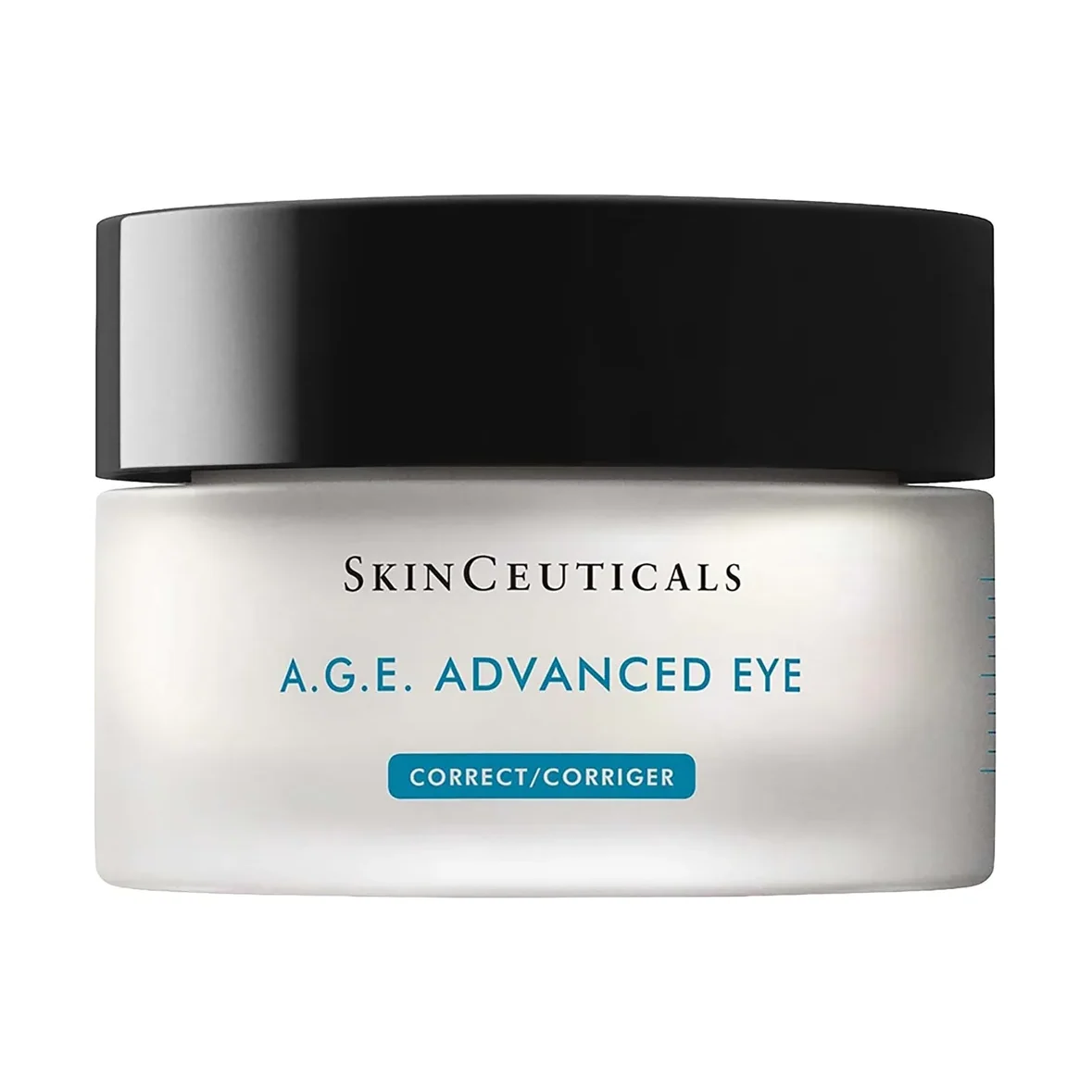
The problem with A.G.E. Eye Complex in 2026 is that the newer A.G.E. Advanced Eye exists, and it's a better formula. Advanced Eye adds peptides (palmitoyl tripeptide-8), higher niacinamide, a more robust moisturizing base, and drops the optical diffuser crutch in favor of actual active ingredients doing more of the work. If you're shopping between the two, Advanced Eye wins on performance by a meaningful margin. The Eye Complex wins on one thing only: that metal applicator tip, which devoted users genuinely love for its cool-touch sensation and the tactile ritual of applying with something other than their finger.
On texture, Eye Complex is a light, slightly pearlescent cream that spreads easily and absorbs to a natural finish with a subtle glow. It layers beautifully under concealer — maybe the best thing I can say about it is that it's one of the few eye creams that reliably improves how makeup sits on top rather than causing pilling or slippage. The cooling metal tip is pleasant, especially in the morning when the under-eye area tends to be mildly puffy. The tip can be used for gentle tapping massage, and some users roll it along the orbital bone as a depuffing ritual. Is this meaningful puffiness reduction? Honestly, no — any constriction effect is modest and short-lived. But the sensory experience is genuinely nice, and sensory experience matters in a category where people are looking for rituals as much as results.
The honest weaknesses: the formula contains added fragrance, which is a bad choice for the eye area, and the ingredient list is thinner on active workhorses than you'd expect for a $98 product in 2026. Propylene glycol and ethylhexyl palmitate are present, neither a deal-breaker but both reasons sensitive or acne-prone users might prefer other options. The optical-diffuser-heavy approach means the 'before and after' you see in the mirror is largely cosmetic rather than skin-changing, and if you wipe your face with a cloth, the apparent improvement goes with it.
The pricing is where the critique sharpens. Ninety-eight dollars for 0.5 oz of what amounts to a well-executed optical-effect eye cream is a lot to pay, particularly when cheaper eye creams from CeraVe, RoC, or La Roche-Posay use similar optical strategies for a fraction of the price. SkinCeuticals loyalists will pay the premium for the brand experience, the clinical heritage, and the applicator tip, and that's a reasonable choice if you know what you're buying. First-time buyers should probably go straight to Advanced Eye instead, where the ingredient list better justifies the clinical positioning.
Who should buy it: makeup-focused users who want immediate blurring under concealer, SkinCeuticals loyalists, and people who specifically want the metal applicator tip experience. Who should skip: anyone wanting meaningful ingredient-driven improvement (go with Advanced Eye), fragrance-sensitive users, and budget shoppers for whom an optical-effect eye cream at a third of the price would do the same job. This is a product defined by its aesthetic experience more than its active deck, which isn't a criticism as much as an honest description — if that's what you want, it delivers it well.